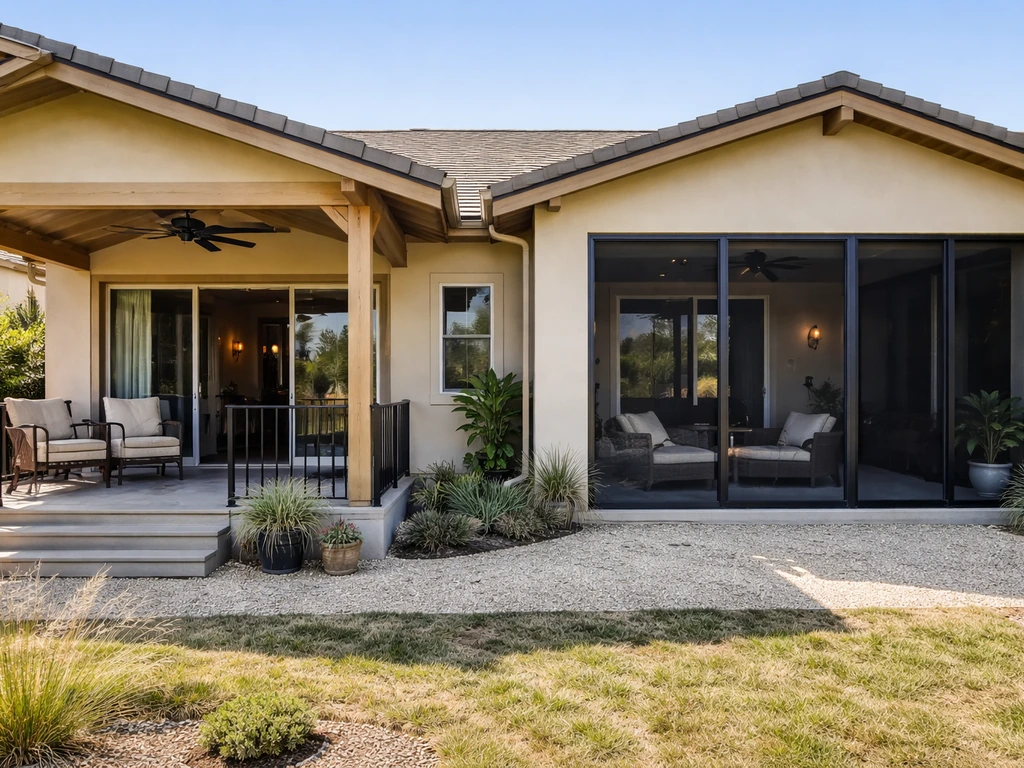
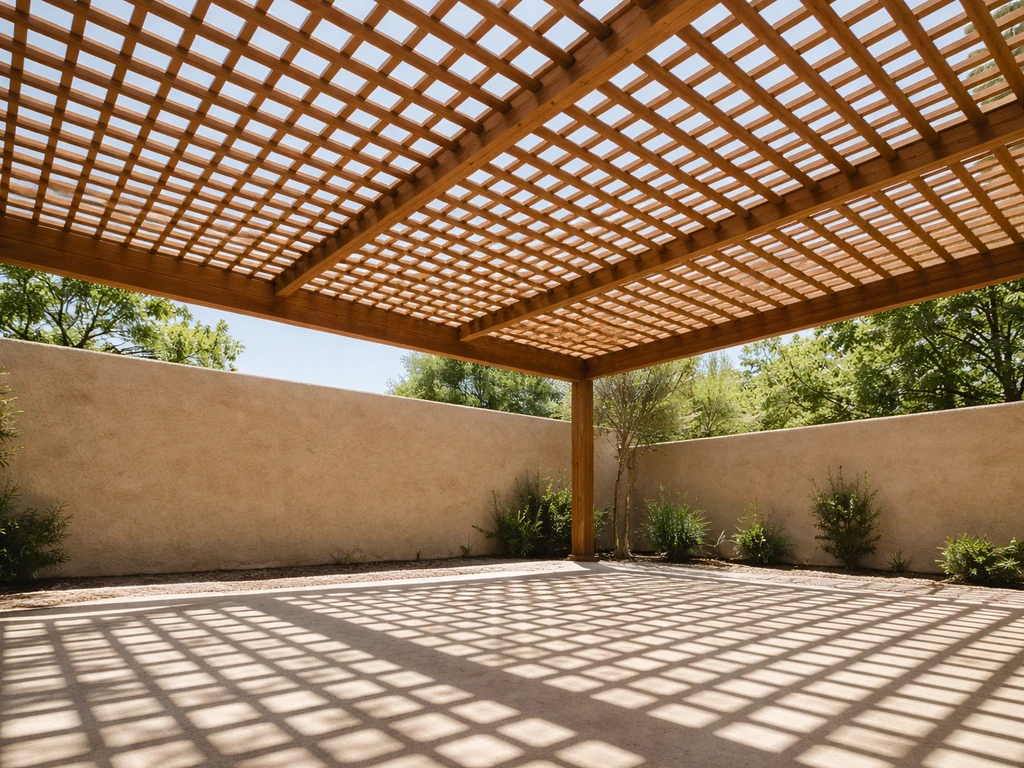
A lattice patio cover is a patio cover structure that uses an open, grid-style lattice pattern as its overhead surface instead of a solid or insulated roof panel. The lattice can be made from wood, vinyl, or aluminum, and it sits on top of a beam-and-rafter framework attached to your house or built as a freestanding unit. It lets sunlight, air, and even light rain pass through, so it gives you partial shade and an outdoor feel without fully enclosing the space. Think of it as the middle ground between a bare pergola and a fully solid patio cover.
What Is a Lattice Patio Cover? Pros, Costs, and Options

Miles Hart
4 Jul 2026
What exactly makes it a lattice cover (and not something else)
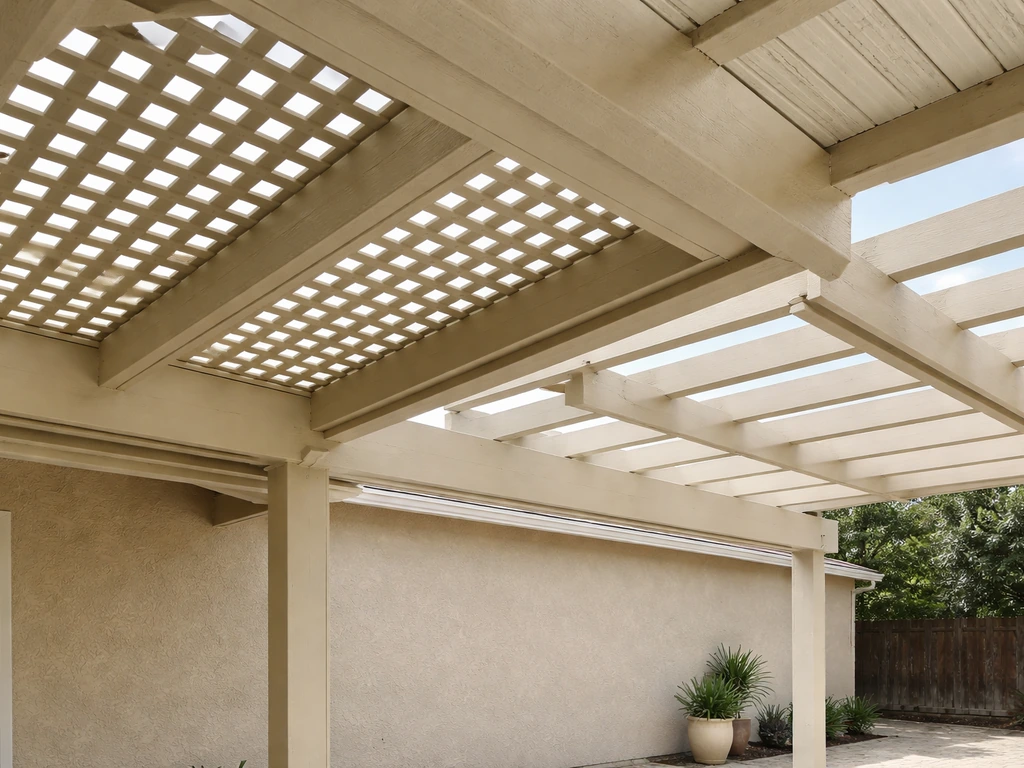
The confusion around lattice patio covers usually comes from a few look-alikes. A pergola is structurally similar but typically has open rafters with no lattice fill between them, just sky. A solid patio cover has an opaque roof that blocks rain and direct sun completely. A screened-in patio is fully enclosed on the sides with mesh. A lattice cover is specifically one where the overhead surface is a woven or spaced-grid lattice panel integrated into the roof structure. It provides more visual enclosure than a bare pergola but more airflow and natural light than a solid cover.
Another thing worth clarifying: lattice used as a privacy screen along the side of a patio or as a trellis for climbing plants is not a lattice patio cover. The defining feature of a patio cover is that the lattice is overhead, functioning as the roof surface. If it's only on the sides or running up a wall, it's a screen or trellis, not a cover.
Materials, designs, and how the configuration changes what you get
Lattice patio covers come in a handful of material options, and the choice affects durability, maintenance, cost, and appearance more than almost any other decision.
| Material | Typical Look | Maintenance | Durability | Relative Cost |
|---|---|---|---|---|
| Wood (cedar, redwood, pine) | Natural, warm, customizable | Stain/seal every 1-3 years | Good if maintained; prone to rot and warp | Low to mid |
| Vinyl/PVC | Clean, white or tan, uniform | Occasional wash, no painting | Very good; resists moisture and insects | Mid |
| Aluminum (spaced tubes or panels) | Modern, industrial or clean | Minimal; rinse off debris | Excellent; won't rot, rust-resistant | Mid to high |
| Composite | Wood-like appearance | Low; no staining needed | Good; resists moisture better than wood | Mid to high |
Beyond material, the configuration makes a big difference in how the cover actually performs. The two main layout decisions are attachment style and lattice density. On attachment, you can go attached (ledger-bolted directly to the house) or freestanding (its own post system). Attached covers are more common because they're cheaper to build, use your house wall for structural support, and integrate better visually. Freestanding units work well when you can't attach to the house, want coverage away from the structure, or are covering a detached space like a pool deck.
Lattice density is the other major lever. Slat spacing determines how much shade you get. Wider gaps between slats mean more light and breeze but less protection from the sun. Tighter spacing gives denser shade but reduces airflow and can feel more enclosed. Some aluminum lattice cover systems let you choose a specific coverage percentage, typically ranging from around 40% to 60% shade reduction. Wood lattice panels are usually fixed patterns, but you can choose between standard diamond or square grid openings when you order or cut custom.
Freestanding vs attached: which setup fits your yard
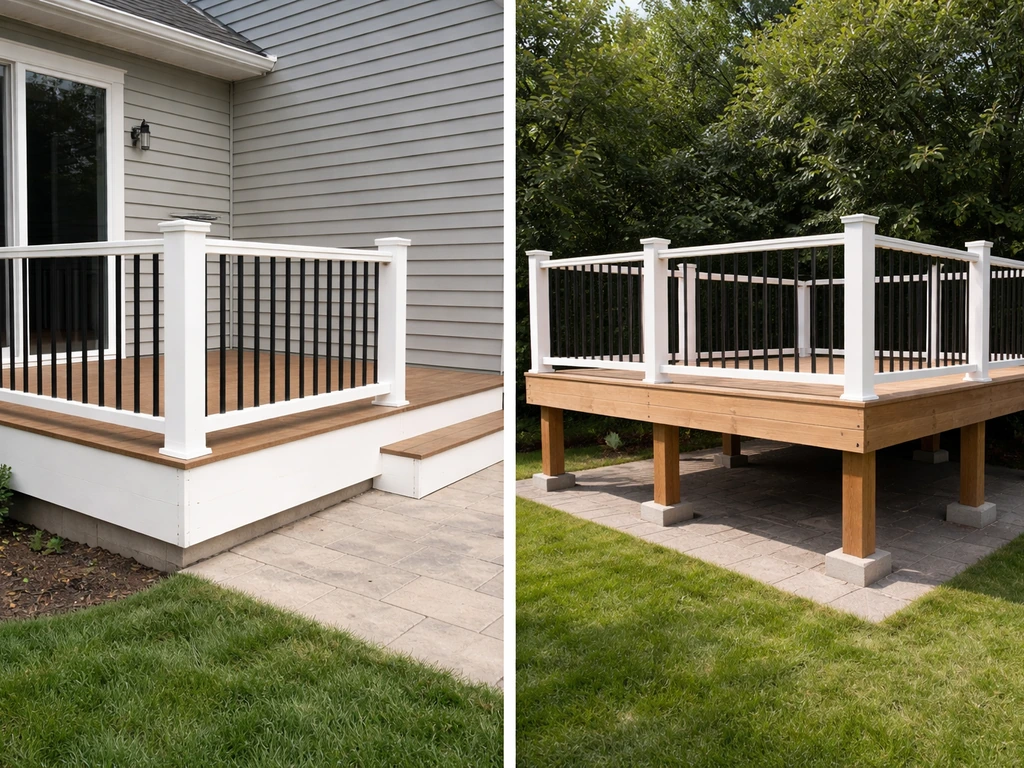
- Attached to house: Lower cost, shares wall for structural support, feels integrated with the home, requires drilling into exterior framing or masonry
- Freestanding: More flexible placement, no house penetration needed, typically costs more due to additional posts and footings, better for pools or detached patios
- Hybrid (attached on one side, post-supported on the other): Most common configuration for standard backyard patios
How lattice covers compare to other patio cover options
If you're deciding between a lattice cover and something else, the honest comparison comes down to what you're trying to solve. Here's how the main options stack up.
| Cover Type | Shade Level | Rain Protection | Airflow | Privacy | Typical Cost Range |
|---|---|---|---|---|---|
| Lattice patio cover | Partial (40-60%) | None to minimal | High | Low to moderate | $3,000–$12,000+ |
| Solid/flat patio cover | Full | Yes (if pitched/drained) | Low | High (from above) | $6,000–$20,000+ |
| Insulated aluminum cover | Full | Yes | Low | High | $8,000–$25,000+ |
| Pergola (open rafters) | Very low to minimal | None | Very high | Very low | $2,500–$10,000+ |
| Screened-in patio/enclosure | Variable (roof type) | Yes (with solid roof) | Moderate (mesh) | High (all sides) | $10,000–$35,000+ |
The clearest reason to pick a lattice cover over a solid cover is airflow and light. In many climates, comparing awnings versus patio covers comes down to how much rain protection and airflow you need awning vs patio cover. If you live somewhere hot but want to avoid that stuffy, enclosed feeling that a solid roof creates, lattice gives you meaningful shade reduction (roughly 40 to 60 percent of direct sun exposure) while still letting a breeze move through. The tradeoff is that it won't protect your outdoor furniture from rain the way a solid cover does, and on very hot afternoons it won't cool the space as aggressively as a fully shaded structure.
Compared to a bare pergola, a lattice cover gives you more usable shade with less direct sun hitting you. But if your priority is a naturalistic look with climbing vines trained along open rafters, a pergola might still suit you better since lattice panels can look more uniform and manufactured. For anyone weighing a fully enclosed screened-in patio or insulated cover, the main thing lattice can't match is weather protection and year-round usability. The upside is it costs considerably less.
What a lattice patio cover actually costs
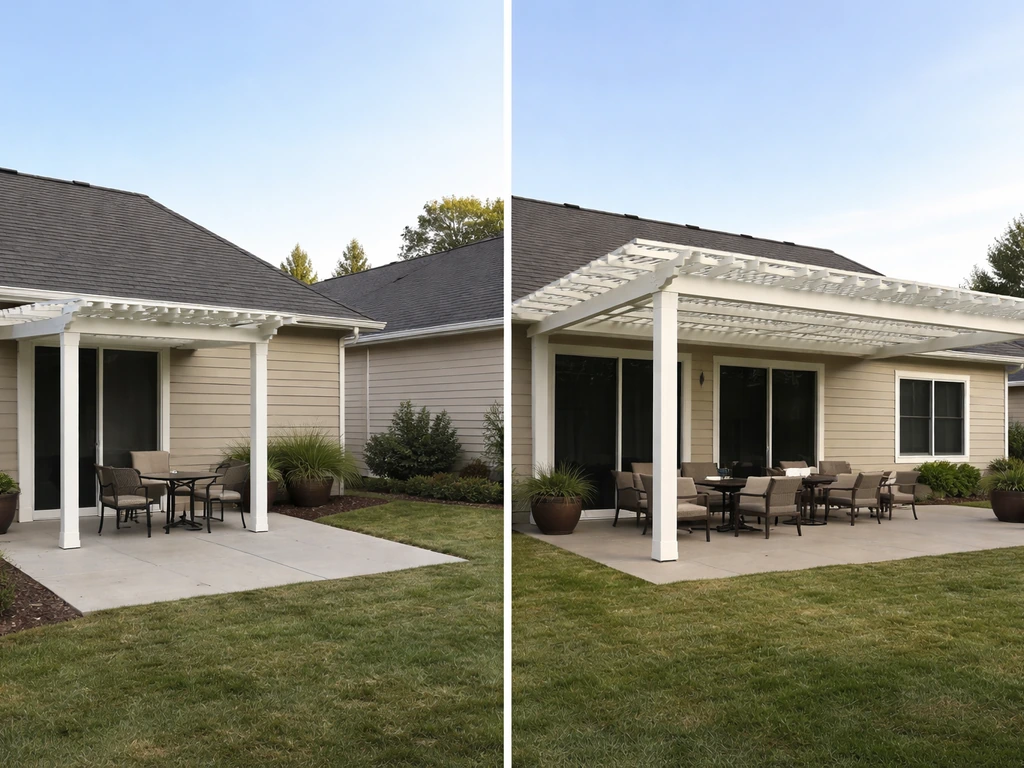
Installed costs for a lattice patio cover typically run between $3,000 and $12,000 for a standard attached cover on a single-family home. That's a wide range, so here are the factors that move the number most.
- Size: A 10x10 cover costs far less than a 20x20 one. Material and labor scale roughly with square footage
- Material choice: Pressure-treated wood is usually the cheapest starting point; aluminum systems and composite cost more but save on long-term maintenance
- Attachment method: Attaching to the house is generally cheaper than engineering a fully freestanding system with independent footings
- Lattice coverage area: A simple overhead lattice panel over an open rafter system costs less than a fully integrated lattice-on-every-surface design
- Engineering and load requirements: In areas with heavy snow loads or high winds, you may need engineered drawings, thicker posts, deeper footings, or hurricane ties, all of which add cost
- Permits and inspections: Permit fees vary by municipality, but budget $150–$500 for most residential permits and plan for at least one inspection
- Regional labor rates: Contractor labor in California, the Pacific Northwest, or the Northeast will run higher than in the South or Midwest
A basic wood lattice cover in a low-cost labor market might come in around $3,000 to $5,000 installed for a 12x16 space. A comparable aluminum system with commercial-grade lattice panels in a higher-cost metro could land at $8,000 to $12,000 or more. If you're adding features like integrated lighting, ceiling fans, or decorative post wraps, expect to add $500 to $2,000 depending on complexity.
DIY vs hiring a contractor: what you can realistically take on
A wood lattice patio cover is one of the more DIY-friendly outdoor structure projects out there, provided you're comfortable with basic framing, a post-hole digger, and a level. If you're attaching to your house, the most critical skill is properly finding and anchoring into the rim joist or wall framing so the ledger board is structural. A missed or inadequate connection here is a real safety issue. If you nail that part, the rest of the project, setting posts in concrete, installing beams, nailing rafters, and dropping lattice panels into place, is manageable for an experienced DIYer in a weekend or two.
Aluminum lattice cover systems sold through big-box retailers like Home Depot are specifically designed for homeowner installation. They come with pre-cut components, hardware kits, and instructions. The tradeoff is that they look more uniform and manufactured than a custom wood build, which suits some homeowners and doesn't suit others.
When should you hire a contractor? If your project requires engineering (snow/wind load areas), if you're attaching to a masonry or stucco wall, if you need electrical for fans or lights, or if the structure is large enough that your municipality requires a licensed contractor to pull permits, go with a pro. Structural errors on a patio cover can be dangerous, and a contractor who messes up an attachment to your home can cause water intrusion damage that costs far more to fix than the original cover.
Maintenance, durability, and what to expect over time
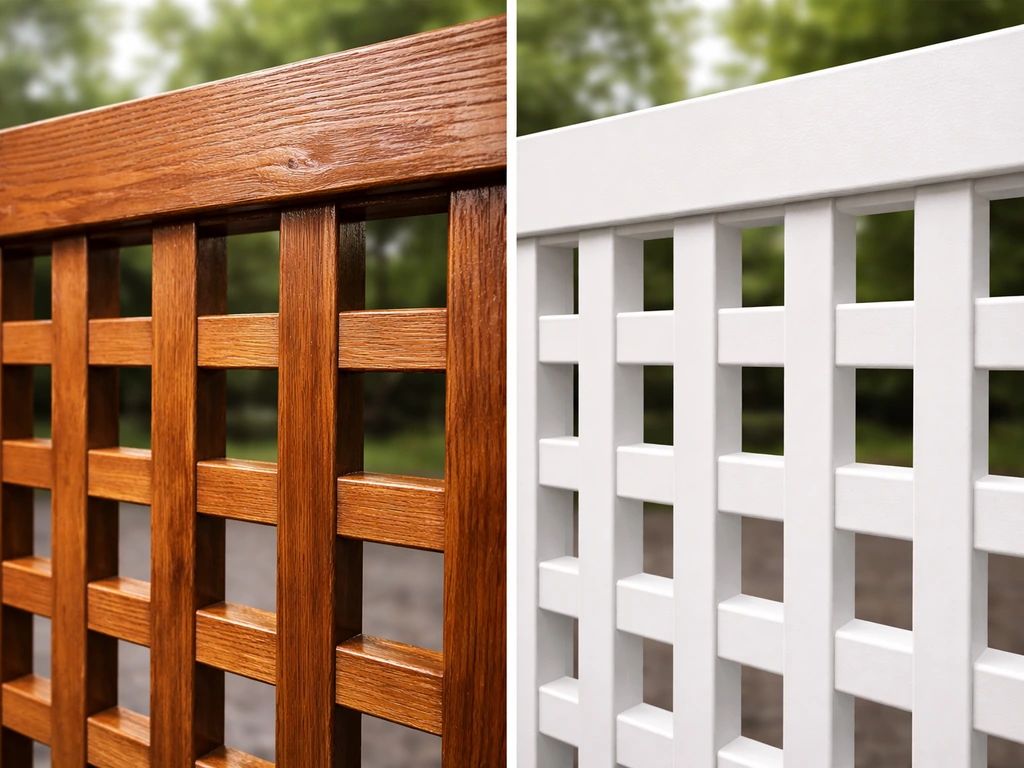
How much ongoing work a lattice cover requires depends almost entirely on material. Wood lattice covers need the most attention. You'll want to stain or seal the wood every one to three years depending on your climate, check for any soft or rotted sections in the lattice panels and replace them, and keep debris from accumulating in the grid openings where moisture can pool. Cedar and redwood hold up better than pressure-treated pine, but even those need regular maintenance to stay looking good and stay structurally sound.
Vinyl and aluminum covers are much lower maintenance. Vinyl can fade over many years in intense UV exposure, but a good-quality vinyl lattice cover should look reasonable for 15 to 25 years with just periodic washing. Aluminum won't rot, won't warp, and resists insects. The main thing to check on aluminum systems is that hardware connections haven't loosened over time and that the finish (usually a powder coat) hasn't chipped in spots that could eventually rust if the underlying material isn't true aluminum alloy.
One durability issue specific to lattice covers is sagging. Lattice panels, especially wood, can sag or bow in the middle of large spans if they're not adequately supported. If you're spanning more than 8 feet between supports, add a center beam or purlin underneath the lattice to prevent this. Wind is the other concern: lattice acts almost like a sail if the panels aren't well-secured, and panels can lift or rattle in heavy gusts if the fasteners are inadequate. Use appropriate hardware rated for your wind zone and make sure panels are captured on all four edges.
Because lattice covers don't block rain, they're not a substitute for a solid roof if you want to keep furniture dry. Anything you store under a lattice cover should be weather-resistant, or you'll need to add waterproof furniture covers. The upside is you don't have to worry about drainage design the way you do with a solid patio cover, since water just passes through.
Permits, codes, and planning considerations
Most municipalities require a permit for a permanent attached or freestanding patio cover, including lattice types. Whether yours qualifies as "open" or "solid" in your local code matters, because open patio covers often have different (sometimes simpler) requirements. For example, the City of San Diego distinguishes between open patio covers and solid-roof structures, with different approved framing details for each. An open lattice cover with adequate spacing between slats may qualify as an open structure, which can simplify the approval process.
The key code variables to check before you design anything are setbacks (how close the structure can be to property lines), height restrictions, attachment requirements (especially if attaching to an existing wood-framed wall), and load requirements. In areas with significant snowfall, your cover design needs to account for snow load, which can require thicker lumber sizes, closer rafter spacing, or engineered plans. Wind load matters in coastal or high-wind regions and affects post sizing, footing depth, and connection hardware.
HOA rules are a real factor in many neighborhoods. Some HOAs restrict what materials, colors, or structure types are allowed in the backyard, and some require design approval before you build. Check your CC&Rs before you go too far down any design path. Getting HOA sign-off after the fact is often a headache.
If you're attaching the cover to your house, the ledger connection almost always requires a permit and inspection because it's a structural attachment to the building. Don't skip this step. An inspector will verify that you're anchoring into adequate framing, using the right hardware, and not creating a water intrusion point where the ledger meets the house.
How to decide if a lattice cover is right for your situation
A lattice patio cover makes the most sense when you want meaningful shade reduction without losing that open-air feel. It's particularly well-suited to mild climates where rain protection is less critical, to homeowners who prioritize aesthetics and airflow over full weather protection, and to projects where budget matters and a solid or insulated cover would push costs too high. If you're in a region with heavy rain or intense heat where you need real cooling performance from the structure, a solid cover, or even an insulated aluminum panel cover, will serve you better.
It's also worth thinking about how the cover compares to related alternatives depending on your goals. If your main concern is noise, privacy, and year-round use, a screened-in structure or california room enclosure will do things a lattice cover simply cannot. If you want maximum airflow and a naturalistic look, a pergola is worth considering alongside the lattice option. And if you're comparing coverage levels and insulation in a solid cover product, the tradeoffs between insulated and non-insulated options become relevant once you decide you want a full roof.
Your next steps before you commit
- Measure your patio space: Get the exact dimensions (width, depth, and ceiling/eave height on the house side) so any contractor or kit system you look at is sized correctly from the start
- Decide on attachment style: Determine whether you want to attach to the house or build freestanding, and check whether your house wall at that location has accessible framing behind it
- Check local permit requirements: Call or visit your local building department's website and ask specifically about open patio cover permits, what drawings are required, and whether your project qualifies for any simplified approval path
- Check your HOA rules if applicable: Pull out your CC&Rs or email the HOA board before you finalize any design or material choice
- Decide on your shade priority: Think about what percentage of sun reduction you actually want. If you need 70% or more shade, a denser solid lattice or full solid cover may serve you better
- Get at least three quotes from licensed contractors: Ask each one specifically what material they're proposing, how they'll handle the ledger attachment, what's included in the permit process, and what the warranty covers
- Ask installers about wind and snow ratings: In any region with weather extremes, confirm that the proposed design meets local load requirements before signing a contract
The bottom line is that a lattice patio cover is a practical, cost-effective way to add defined outdoor living space with partial shade and a finished look. It's not trying to be a weatherproof room, and it doesn't need to be. A California room, on the other hand, is usually designed as a more enclosed, room-like addition that provides greater climate control than a lattice patio cover. If that matches what you're actually trying to build, it's a very solid option at a competitive price point.
FAQ
How can I tell if my structure is actually a lattice patio cover versus a privacy screen or trellis?
A lattice patio cover is considered a roof element only when the lattice grid forms the overhead surface (covering the top). If lattice is only installed on the sides for privacy, it is treated as a screen or trellis in most planning and permitting discussions, not a patio cover.
Will a lattice patio cover keep my outdoor furniture dry in light rain?
Even with a “no solid roof” design, most lattice covers still shed some water, and rain can run through the grid onto furniture. If you want to keep cushions or stackable furniture usable, plan on weather-resistant materials and consider simple additions like waterproof furniture covers or a small drip edge at the perimeter to reduce splashback.
Is a lattice patio cover safe in heavy wind or areas with snowfall?
Lattice covers are typically lighter than solid roofs, but they still must handle local snow and wind loads. The safest approach is to confirm your span length and wind zone with your design (or installer) and make sure the system uses components rated for your region, not just a generic kit size.
Can I add lighting or ceiling fans under a lattice patio cover?
Yes, but it changes the look and the performance. Adding a ceiling fan is usually fine with wood or aluminum systems, but you must attach the fan to framing that can carry the vibration load, not just the lattice panels. For electrical work, run wiring through approved raceways and locate switches in a weather-safe junction box.
What causes sagging in lattice patio covers, and how do I prevent it?
The most common mistake is under-supporting the lattice spans, which leads to sagging or bowing (especially in wood). If you have long runs, plan for center beams or purlins and verify that the lattice panels are captured on all edges so wind gusts cannot lift them.
How do lattice spacing and coverage percentage change real-world shade and cleaning?
Gaps between slats control shade, but they also affect debris and airflow patterns. Tighter lattice can hold moisture longer and make cleaning more tedious, while wider lattice can admit more sun and wind-driven rain splash. If you have specific sun exposure goals, measure the sun angle at your patio and choose lattice density accordingly.
What’s the difference in permitting and structural risk between an attached lattice cover and a freestanding one?
It depends on how it is attached. An attached cover generally requires structural connection to the house (often through permitted ledger attachment into framing), while a freestanding cover needs appropriate post footing sizing and bracing for lateral forces.
How often should I inspect and clean my lattice patio cover, especially for vinyl or aluminum?
Vinyl and aluminum typically need less upkeep than wood, but they still require periodic inspection. Check annually for loose hardware, chipped powder coat spots, and signs of water getting into joints, and wash surfaces to remove pollen and grit that can trap moisture in the grid.
What are early warning signs that a wood lattice cover needs repair or replacement?
Wood lattice covers usually require the most maintenance, stain or seal every one to three years (timing varies by sun and rain exposure). If you see soft areas, cracking at joints, or persistent discoloration after cleaning, replace affected sections early because water intrusion can spread past the visible lattice panel.
Do I need special drainage planning with a lattice patio cover since water passes through?
Yes, but you need to plan the roofline for how water flows off the edges. Add or verify gutters and downspouts on the attached side if water is shedding toward windows or landscaping, and consider a small drainage strategy for the area directly below the perimeter so splash does not undermine footings or damage nearby walls.
What code details should I confirm with my building department before I buy a lattice cover kit?
Many municipalities differentiate open versus enclosed roof assemblies, and the approved requirements can vary. Before ordering components, ask your building department whether your “open lattice” configuration qualifies under their open patio cover rules, and bring dimensions so they can verify setbacks, height, and load criteria.
How do HOA rules typically affect a lattice patio cover project?
If you live in a homeowners association neighborhood, approvals often depend on visibility from the street and how the structure changes the yard’s appearance. Provide the material, color, and layout to the HOA early, because changing from wood to aluminum or changing lattice density can trigger another review.
Next Article
California Room vs Covered Patio: Which Is Better?
California room vs covered patio comparison: costs, comfort, insulation, permits, upkeep, and how to choose for year-rou