If your patio gets brutally hot in summer or you want to use it year-round, an insulated patio cover is worth the extra cost. If you're mostly looking for shade and rain protection on a budget, a non-insulated cover does the job. The real decision comes down to three things: your climate, how you actually use the space, and whether you're willing to spend roughly 30–50% more upfront for noticeably better comfort and noise control.
Insulated vs Non-Insulated Patio Covers: Costs and Comfort

Miles Hart
7 May 2026
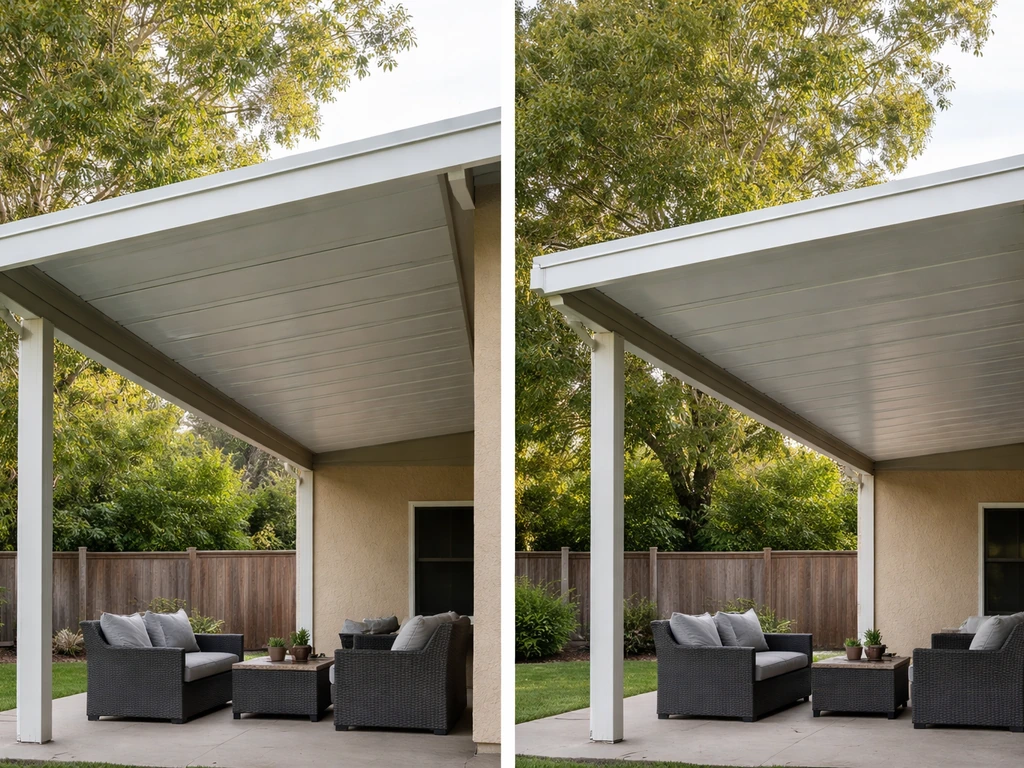
What 'insulated' actually means in a patio cover
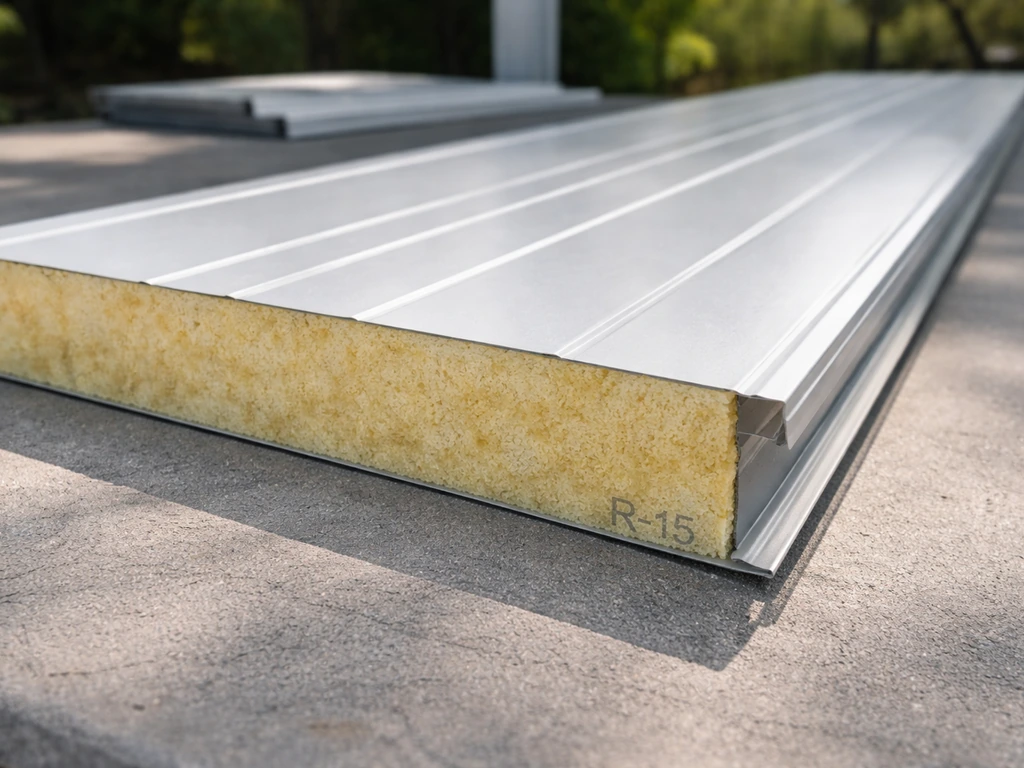
In most patio cover systems, insulation is built into the roof panels themselves, not added afterward like attic insulation. blank" rel="noopener noreferrer">The standard construction is a sandwich panel: two aluminum skins bonded to a foam core. The foam is continuous, meaning there are no gaps or cavities where heat can sneak through. What varies is the thickness of that foam core and the resulting R-value it delivers. For a quick comparison, see insulated vs non insulated aluminum patio cover to understand how the insulation choice changes comfort, noise, and cost.
Common panel sizes from manufacturers like Sunspace run 3 inches (R-12), 4 inches (R-16), and 6 inches (R-24). Those R-values are real and meaningful. For context, a standard uninsulated aluminum patio roof panel has an R-value close to zero because it's essentially just a thin sheet of metal. The gap in thermal performance is significant.
The insulation approach also affects the structural design. Engineered insulated systems factor in snow load requirements and target R-values when sizing beams and panels. This is different from simply bolting a shade structure to your house. Non-insulated covers, including lattice styles and basic corrugated aluminum, are typically simpler structures designed primarily for shade and weather protection, not thermal performance.
There are other insulation methods used in custom or stick-built patio covers: spray foam applied to the underside of the roof deck, rigid foam boards attached above or below the roof sheathing, or insulation batts placed between rafters. Each has trade-offs around cost, condensation risk, and whether you end up with a vented or unvented assembly. But for most homeowners comparing off-the-shelf aluminum patio cover systems, the choice is really between a solid insulated sandwich panel and a non-insulated panel or lattice cover. If you are comparing awnings vs patio cover options, the insulation and roof-panel type are usually the biggest factors in comfort and noise patio cover systems.
Comfort, temperature swings, and seasonal use
This is where the difference is most obvious in everyday use. An uninsulated metal patio roof absorbs solar radiation and re-radiates heat downward. On a 95-degree day, the underside of a bare aluminum panel can feel like a heat lamp overhead, making the space genuinely uncomfortable even in the shade. An insulated panel with a foam core dramatically reduces that radiant heat transfer. The space underneath stays cooler because the panel itself doesn't heat up and radiate downward the same way.
In cooler months, the difference works in reverse. An insulated cover retains some warmth under the roof when you add a patio heater, making shoulder-season use (spring and fall evenings) much more practical. A non-insulated cover offers no retention at all. Heat goes straight through.
If you're in a climate with hot summers and mild winters and you only use the patio during the day for casual dining, a non-insulated cover might be enough, especially if you're relying on fans and misters for comfort anyway. But if you've got outdoor TVs, speakers, or comfortable furniture out there and you're treating it like a living space, the temperature regulation an insulated cover provides makes a real quality-of-life difference.
| Feature | Insulated Cover | Non-Insulated Cover |
|---|---|---|
| Typical R-value | R-12 to R-24 (3"–6" panel) | Near zero |
| Radiant heat reduction | Significant (foam core blocks downward re-radiation) | Minimal (bare metal heats up and radiates down) |
| Shoulder-season comfort | Good (retains warmth with heaters) | Poor (no heat retention) |
| Year-round usability | High in most climates | Seasonal (primarily warm months) |
| Snow load design | Engineered for load (where applicable) | Varies; simpler structures may not be rated |
What insulation actually changes about energy costs
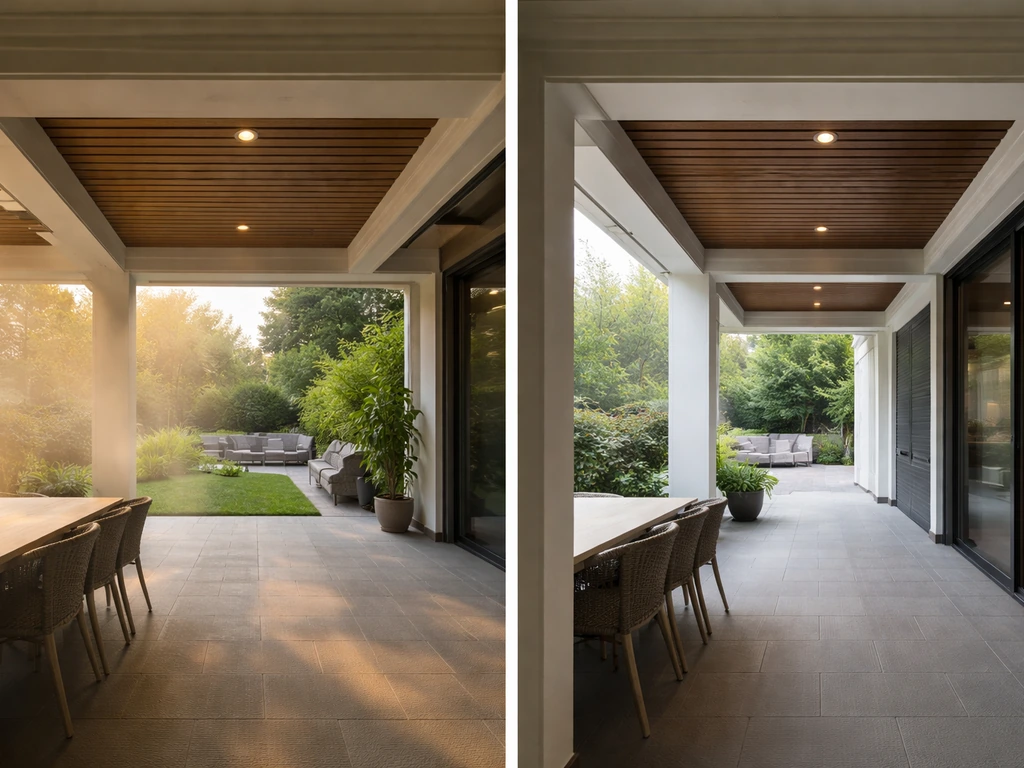
If your patio is completely open on the sides, insulation in the roof alone won't meaningfully lower your home's energy bills. Heat doesn't stay under an open structure long enough to matter. But there are two scenarios where the energy impact is real.
First, if your patio cover is attached to the house and the wall it connects to has windows or sliding doors, a cooler space under an insulated cover means less heat pushing into your home when those doors open. The buffer zone effect is modest but real in hot climates. Second, if you're running a ceiling fan, misting system, or any cooling equipment under the cover, an insulated roof keeps the space cooler to begin with, so those systems work less hard and run less often.
The energy payback calculation for insulation on a standalone patio cover (not enclosed) is longer than you'd see for home insulation because you're not conditioning the space. Don't expect to recoup the cost premium purely through utility savings. The real payback is in comfort and usability, which is harder to put a number on but genuinely valuable if you're actually using the space.
Rain noise, condensation, and moisture control
Noise: why insulated covers are much quieter
Rain on a bare aluminum patio roof is loud. That's the single biggest complaint homeowners have about non-insulated metal covers, and it's a legitimate problem if your patio is near a bedroom or if you're trying to have a conversation outside during rain. The foam core in a sandwich panel absorbs and dampens that impact noise significantly. Insulated systems are described consistently as quieter, and in practice the difference is dramatic. It's the same principle as dense-pack insulation being used specifically for sound control in roofs.
If noise is a concern and you're comparing lattice covers or open-style structures, keep in mind that those don't create rain noise at all because rain passes through. The noise issue is specifically with solid non-insulated panels. If you want a solid waterproof roof and you have any neighbors nearby, bedrooms adjacent to the patio, or plans to use the space in rainy weather, insulated panels are the obvious choice.
Condensation: the thing most people don't think about
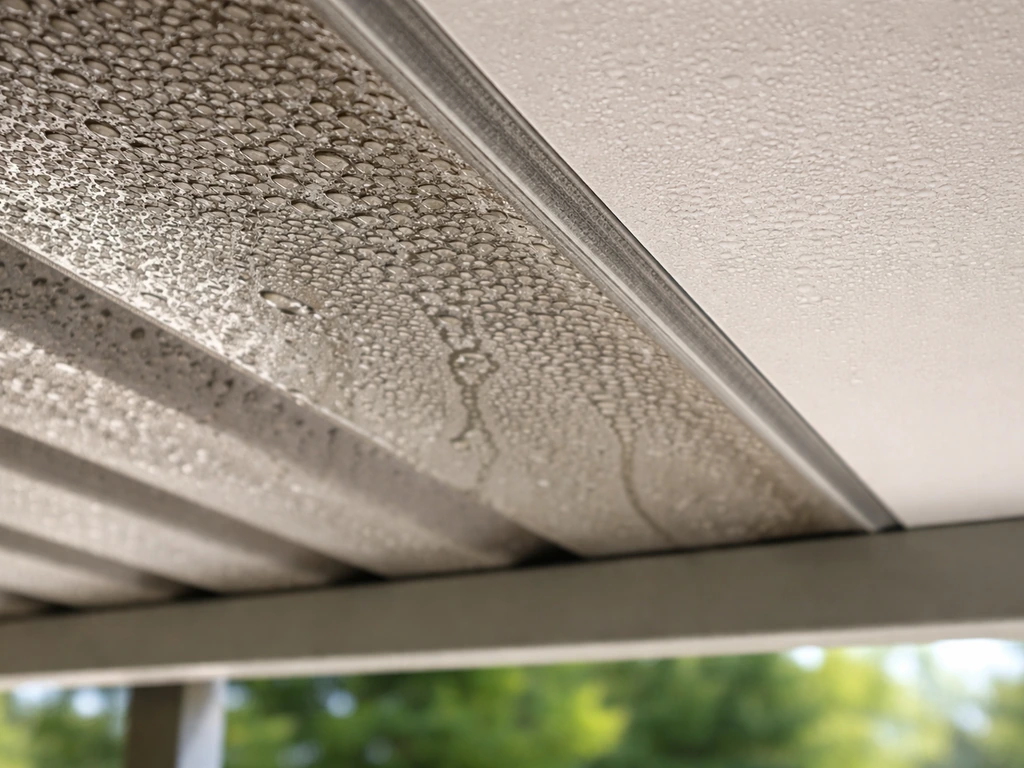
Condensation forms when a surface temperature drops to the dew point of the surrounding air. In patio covers, this matters most in spring and fall when nights are cool and days are warm. An uninsulated metal roof can drip condensation on the underside in those conditions. An insulated panel's foam core keeps the inner aluminum skin warmer, reducing the risk of that surface hitting the dew point. A MetalConstruction Association educational white paper also explains that air-leakage condensation cannot occur within the body of insulated metal panels even when vapor-related functions are involved An insulated panel's foam core keeps the inner aluminum skin warmer, reducing the risk of that surface hitting the dew point..
That said, insulated patio cover assemblies still need to handle moisture correctly. Vapor barrier placement matters. In fully insulated low-slope roof systems, air leakage and vapor drive can push moisture to places where it condenses inside the assembly if the panels aren't properly sealed and installed. This is less of an issue with factory-made sandwich panels (which are sealed by design) than with custom assemblies using separate insulation layers. If you're doing a custom build with rigid foam or spray foam, make sure your contractor understands how to detail the vapor barrier placement for your climate.
Drainage is also worth thinking about. Both insulated and non-insulated solid patio covers need adequate slope (typically at least 1/4 inch per foot) and proper guttering or drip edges so water doesn't pool. Pooling water on a flat insulated panel is just as much of a problem as on a non-insulated one.
Cost comparison: installed price, long-term costs, and home value
Here's the straightforward cost picture. Non-insulated patio covers typically run about $15 to $25 per square foot installed. Insulated aluminum patio cover systems run roughly $20 to $35 per square foot at the moderate end, with higher-end engineered systems pushing $30 to $60 per square foot installed depending on your region, structural requirements, and finish level. For a 200-square-foot patio (a pretty typical 10x20 cover), that's roughly $3,000 to $5,000 for non-insulated versus $4,000 to $12,000 for insulated, with most mid-range projects landing in the $6,000 to $8,000 range.
What drives the price up on insulated systems: thicker panels (6-inch R-24 costs more than 3-inch R-12), heavier structural requirements to support the added weight, more complex flashing and integration with the house, and labor time. What drives it down: simpler attachments, smaller coverage area, standard panel sizes, and DIY installation if you're using a kit system.
On the home value side, covered patios generally add value, but the premium for insulated over non-insulated is harder to quantify at resale. In hot climates like Phoenix or Las Vegas where outdoor living rooms are a major selling point, a well-finished insulated patio cover with ceiling fans and lighting can genuinely move the needle. In cooler climates where covered patios are less expected, the value bump is smaller. Neither type is likely to hurt resale value as long as it was properly permitted and installed.
| Cost Factor | Non-Insulated | Insulated |
|---|---|---|
| Typical installed cost | $15–$25/sq ft | $20–$60/sq ft (mid-range: $30–$45) |
| 200 sq ft project estimate | $3,000–$5,000 | $6,000–$12,000 |
| Labor premium | Baseline | Roughly $7–$15/sq ft more depending on region |
| Energy savings payback | N/A | Long (comfort-based, not utility-based for open patios) |
| Rain noise reduction | None | Significant |
| Home value impact | Moderate | Moderate to good in hot/outdoor-living climates |
How to pick the right option for your situation
Climate is the first filter. If you're in a hot-summer climate (Arizona, California, Texas, Florida), the radiant heat reduction from an insulated cover is immediately noticeable and makes a real difference in usability. If you're in a mild, overcast climate (Pacific Northwest, parts of the Northeast), the case for insulation is weaker unless noise is a specific concern.
How you use the space is the second filter. A dining area used occasionally in summer doesn't need insulation. A space with a TV, furniture, speakers, and regular evening use does. If you're near bedrooms and rain noise would wake people up, that alone might justify the upgrade. If you're planning to screen or glass in the patio later, insulated panels are almost always the right starting point.
Budget is the third filter. If the difference between insulated and non-insulated pricing means the project doesn't happen at all, a non-insulated cover is far better than no cover. You can always add shade sails, ceiling fans, and misters to improve comfort on a non-insulated structure.
- Hot climate + frequent use + near bedrooms: insulated is the clear choice
- Mild climate + occasional seasonal use + tight budget: non-insulated works fine
- Planning to enclose the patio later: start with insulated panels
- Primary concern is aesthetics or lattice-style look: non-insulated or open-style covers are worth considering
- Rain noise is a deal-breaker: avoid non-insulated solid panels; choose insulated or open lattice
- Comparing aluminum-specific options: the insulated vs non-insulated aluminum patio cover breakdown goes deeper on panel specs
DIY vs pro installation, permits, and specs to request
DIY is possible but not always smart
Non-insulated aluminum patio cover kits are genuinely DIY-friendly. Most are designed to be assembled with basic tools and come with installation instructions. Labor typically adds $7 to $11 per square foot in competitive markets, so a confident DIYer can save several thousand dollars on a standard project. Insulated panel systems are heavier and the structural connections to the house are more critical, so the margin for error is smaller. If you're comfortable with basic carpentry and following engineered plans, a kit-based insulated system is doable. A fully custom insulated cover with complex rooflines or large spans is genuinely a job for a licensed contractor.
Permits: don't skip this step
Most attached patio covers require a building permit. The threshold varies by jurisdiction, but any structure attached to your house, any cover over a certain square footage, and anything involving electrical work (ceiling fans, lighting, outlets) typically triggers permit requirements. Electrical work almost always requires a separate electrical permit, and GFCI outlet placement is typically required outdoors. If you're in a snowed-in climate, the permit reviewer will check that your structure is rated for the local snow load, which is one reason engineered insulated systems that already factor in snow load are easier to permit.
Questions to ask your contractor and specs to request
- What R-value do your panels provide, and what panel thickness does that correspond to? (Request R-12, R-16, or R-24 in writing.)
- Are the panels factory-made sandwich construction or site-assembled with separate insulation layers?
- How is the panel attached to the house ledger, and what is the ledger fastening specification?
- Is the design engineered for local snow load and wind uplift requirements?
- Who pulls the permit, and does your quote include permit fees?
- How is moisture and drainage handled at the low end of the roof slope?
- If I add electrical (fan, lights, outlets), does that require a separate electrical permit and a licensed electrician?
- What is the manufacturer warranty on the panels and the finish (paint/coating)?
- Is the structure rated for the weight of a ceiling fan, and where are the structural attachment points?
- What maintenance is required, and how are panel seams or joints sealed against water intrusion?
One more thing to check before you sign anything: make sure the contractor is pulling permits in your name (not theirs), so the work is tied to your property record. Unpermitted additions can complicate home sales and homeowner insurance claims. It's worth the extra paperwork.
FAQ
If my patio is open on the sides, do I still need an insulated vs non insulated patio cover to keep it comfortable?
Side openings reduce how much the roof can “hold” heat, so insulation mostly helps with radiant heat and comfort under the panel rather than big indoor energy savings. If you mainly want cooler surface temperatures and less rain noise, insulated still helps. If you want meaningful year-round temperature control, plan for windbreaks, curtains, or screening, because insulation in the roof alone cannot block outside air movement.
How do I choose an R-value (for example R-12 vs R-16 vs R-24) without overspending?
Start with how many hours the space gets strong sun and whether you use it evenings. For hot, sunny regions where midday comfort matters, R-16 is often a practical middle ground, R-24 is usually for heavier use, colder shoulder seasons, or particularly hot roof orientations. If your patio use is mostly daytime dining in mild climates, R-12 may be adequate. Also confirm the panel thickness, because R-value can’t be compared if the system uses different construction or finishes.
Will condensation and dripping be worse with insulated panels?
Properly sealed insulated sandwich panels usually reduce dripping compared with bare metal, because the inside-facing surface stays warmer. Condensation risk is most likely during spring and fall temperature swings, and the real variable is how air leaks and vapor barriers are detailed. If the system is factory sealed, risk is lower, but custom builds with separate insulation layers must have correct vapor barrier placement for your climate zone.
Are non-insulated patio covers really quiet in the rain?
No, solid non-insulated aluminum panels typically create noticeable rain impact noise, which is the biggest complaint for this category. Open or lattice-style covers are different because rain passes through, so the “noise” complaint is less relevant. If your patio is near bedrooms or you plan to talk or watch TV during storms, that’s a strong signal to prioritize insulated solid panels.
What drainage details matter for both insulated and non-insulated patio covers?
Even a well-insulated roof can leak or pool if slope and water management are wrong. Confirm at least the typical slope requirement (often 1/4 inch per foot) and verify that drip edges, flashing, and gutters or scuppers are included. Also ask how the contractor prevents water from migrating behind trim at the house connection, because that is a common failure point.
Can I add fans, heaters, or misters to make a non-insulated patio cover feel like an insulated one?
You can improve comfort a lot, especially with ceiling fans and misting, but you cannot fully replace the benefit of reduced radiant heat and dampened rain impact. Fans help with perceived cooling and airflow, misters reduce skin temperature, and heaters extend usability in shoulder seasons. Insulated panels still usually let these systems run more effectively because the roof underside starts from a lower temperature and stays more stable.
Is it worth it if I’m insulating for home energy savings instead of patio comfort?
For a standalone, unenclosed patio cover, utility savings are usually limited because you are not conditioning a space. Where the impact is more real is when the covered area buffers nearby doors or windows, or when cooling equipment runs under the cover. If your goal is energy payback alone, set expectations low and evaluate the project mainly as a comfort and usability upgrade.
What should I check if I want to DIY an insulated vs non insulated patio cover kit?
Non-insulated kits are typically more forgiving. Insulated systems are heavier and require stricter alignment and attachment at the house connection, plus careful sealing to avoid air leaks that can create moisture problems. Ask whether your kit includes engineered fastening details for your span and local conditions. If your roofline is complex or spans are large, a licensed contractor is the safer choice.
Do I need permits for attached patio covers, and what goes wrong if I skip them?
Many jurisdictions require permits when a cover is attached to the house, when it exceeds certain square-footage thresholds, and when electrical work is included (ceiling fans, lights, outlets). A common issue is that unpermitted work can complicate resale and can also affect insurance claims after damage. Before signing, confirm the contractor pulls permits in your name and that the permit scope matches the final build.
How does the patio cover get integrated if I plan to screen or glass in later?
Insulated solid panels are usually the best starting point because you will have more consistent temperatures once the space becomes semi-enclosed. Even if you start open, insulated panels reduce the roof’s radiant heat and rain noise, which improves comfort from day one. Ask the installer to leave space and detailing suitable for future screening or glazing at the attachment points.
Next Article
Grass Is Higher Than Patio: Causes, Fixes & Deck vs Patio
Grass higher than patio? Causes, slope checks, repair options, lower lawn, raise patio, or build a deck, with costs & DIY