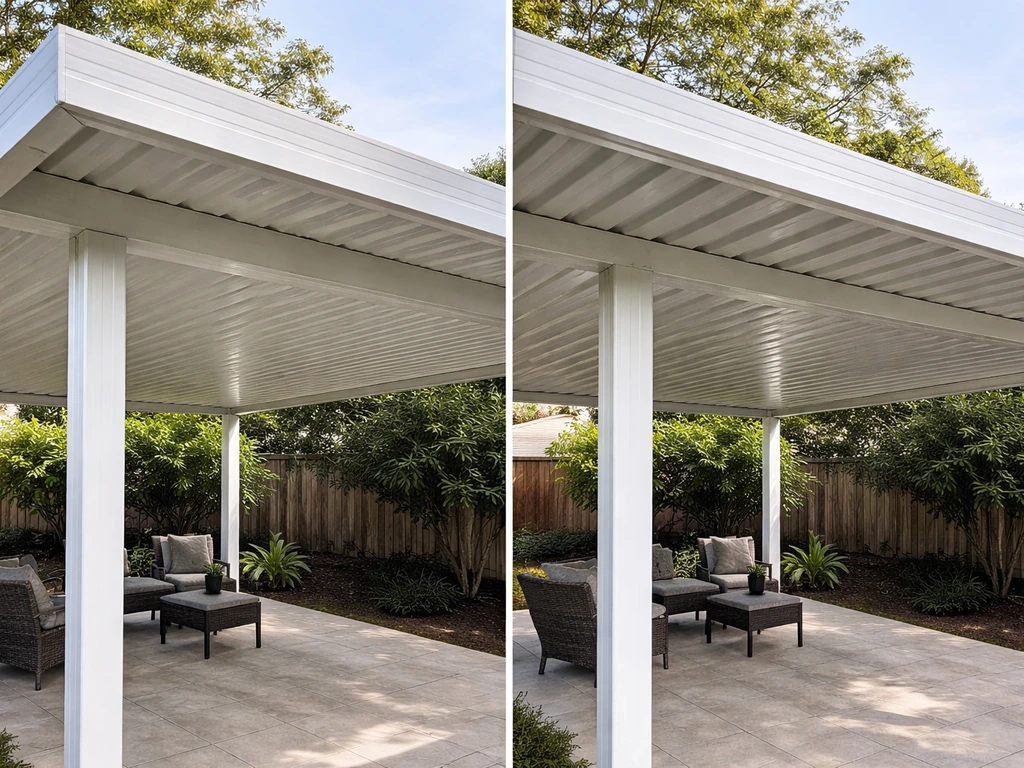
A California room and a covered patio are not the same thing, even though contractors sometimes use the terms interchangeably. A covered patio is a roofed structure over an outdoor slab or deck, open on the sides, used mainly to block sun and rain. A California room goes a step further: it is partially enclosed with walls, screens, or panels on at least some sides, creating a sheltered outdoor living space that feels more like a room.
California Room vs Covered Patio: Which Is Better?

Miles Hart
9 Jun 2026
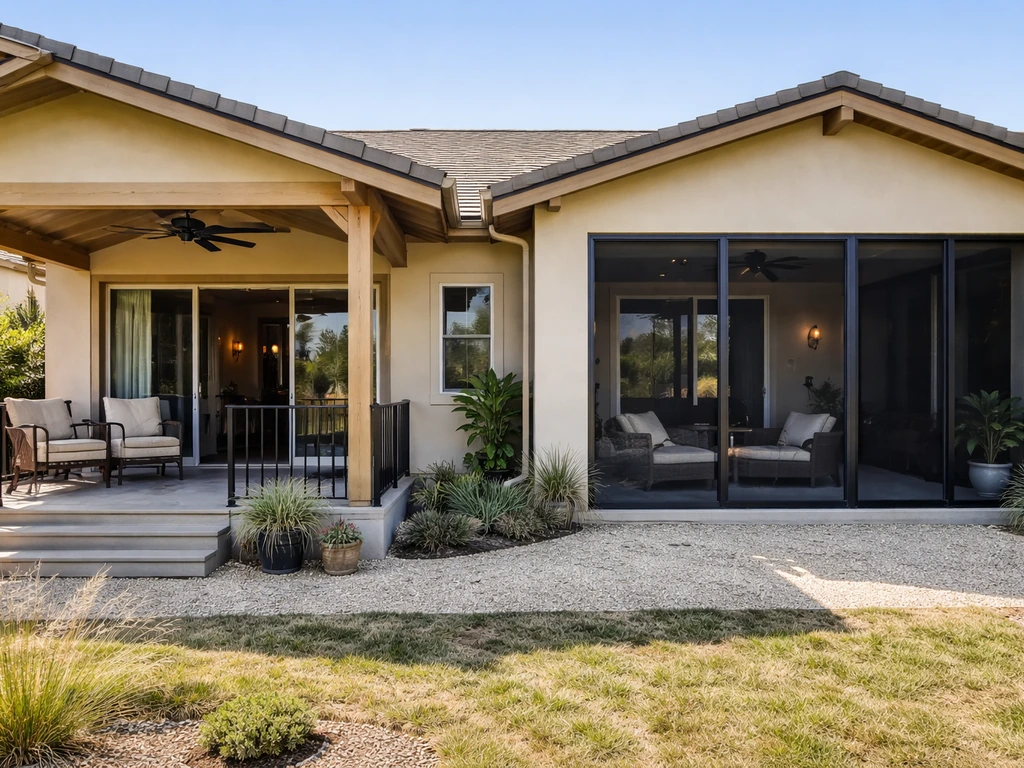
The key difference is enclosure. If you want shade and a dry place to sit, a covered patio does the job. If you want something that works across more seasons, keeps bugs out, and feels more like an extension of your home, a California room is the direction to go.
What each one actually is
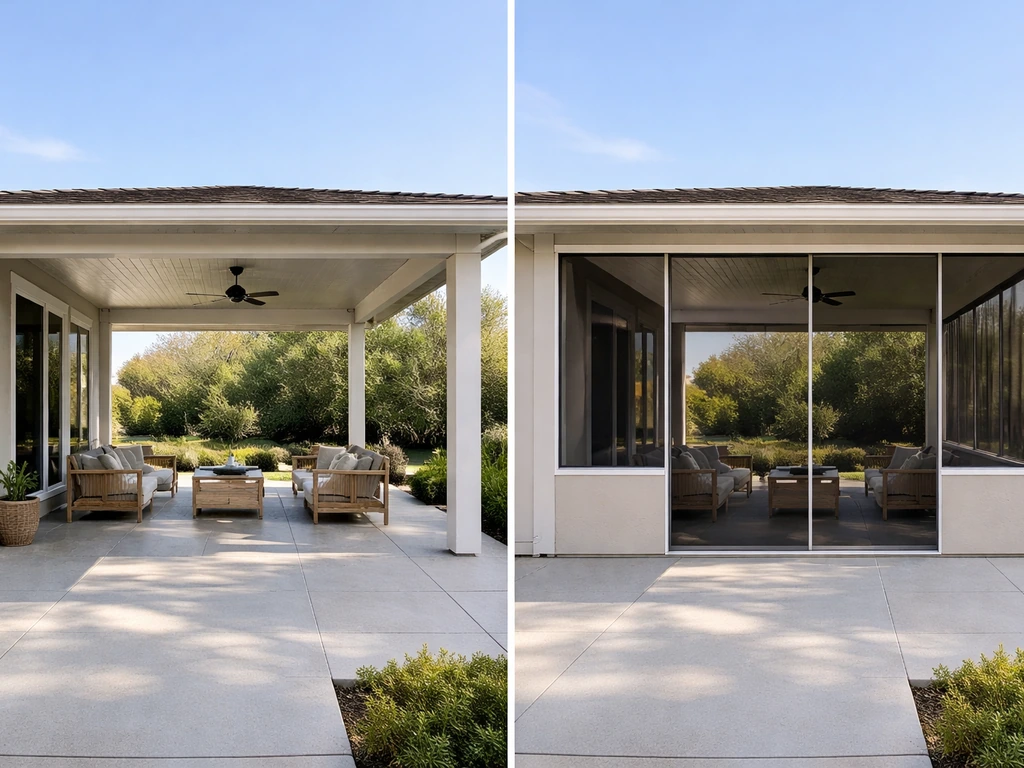
A covered patio, as defined in the California Building Code, is a one-story roofed structure no more than 12 feet above grade, open on at least two sides, used for recreational or outdoor living purposes. The roof keeps rain and direct sun off. The sides stay open. That openness is not a design choice so much as a code requirement: once you start enclosing the sides, you move into a different category of structure with different permit requirements.
A California room takes the covered patio concept and adds partial walls or screened enclosures to at least some sides. California Building Code Appendix Q describes California rooms as partially enclosed outdoor spaces where at least 50% of the wall area must remain open or include openings. In practice, that means screened walls, slatted panels, or partially open sides rather than solid glass windows on every wall. This is an important distinction from a sunroom, which is fully glazed on all sides and typically conditioned or treated as habitable space. A California room sits in the middle: more sheltered than a covered patio, but still genuinely open to the outdoors.
One thing that trips people up is the language. Contractors, designers, and permit offices use the terms 'California room,' 'patio enclosure,' 'screened room,' and 'sunroom' in overlapping ways. When you are talking to a contractor or your local building department, always clarify what percentage of the walls will be enclosed, whether there will be operable windows or just screens, and whether the space will be conditioned (heated or cooled). Those three questions will determine which category the project falls into and what it will cost and require.
How they actually feel to use
A covered patio is comfortable on pleasant days and nearly unusable on bad ones. A hot afternoon with direct sun coming in from the sides, a windy day that blows rain under the roof, or a warm night full of mosquitoes will push you back inside. You get overhead protection, but that is about it. If your climate is mild most of the year and you mostly want shade, that might be completely fine.
A California room changes the equation considerably. The partial walls block wind-driven rain and cut down on direct sun from the sides. Screens keep bugs out so you can actually use the space at dusk in the summer. The airflow stays good because at least half the wall area remains open, which is one advantage it has over a fully enclosed sunroom: you get real outdoor air without being at the mercy of the weather. In a California or similar warm climate, a well-designed California room can be genuinely usable for nine to eleven months of the year.
Privacy is another difference. A covered patio offers almost none. A California room, depending on how the walls are configured, can provide meaningful privacy from neighbors on one or two sides while still feeling open. Noise attenuation is modest but real, especially with an insulated roof panel that dampens rain noise compared to a standard solid aluminum cover.
What it costs: realistic ranges and what drives price
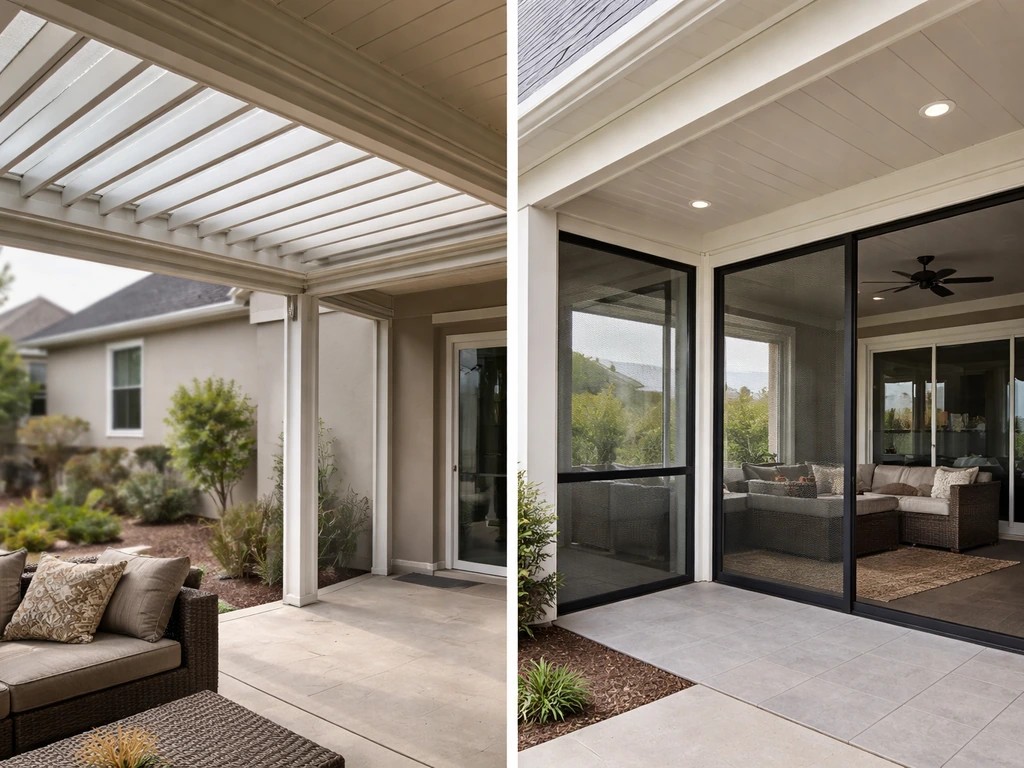
A covered patio is the more affordable starting point. Using aluminum patio cover systems (the most common choice in California because of their durability and low maintenance), installed costs typically run $15 to $30 per square foot. A 200-square-foot cover lands you in the $3,000 to $6,000 range on the low end with a basic solid or lattice cover, and higher with insulated panels. Lattice patio covers are a popular option when you want partial shade with good airflow. For a larger 400-square-foot cover with insulated roofing, you can reasonably expect $8,000 to $12,000 installed. These numbers vary by region, roof complexity, attachment type, and whether electrical work is included.
A California room costs more because of the added enclosure work. The roof structure is similar to a covered patio, but now you are also budgeting for framing partial walls, installing screens or panels, and potentially running electrical for fans, lights, or outlets. Patio enclosure projects typically range from $8,000 to $25,000 depending on size and scope.
HowMuchStuff's 2026-style sunroom cost calculator estimates installed costs of about $50 to $175 per square foot, varying by 3-season versus more enclosed and conditioned setups sunroom-cost-per-square-foot estimates. A modest 200-square-foot California room with screened walls and basic electrical is often in the $10,000 to $15,000 range. Add a more substantial enclosure system, insulated roof panels, ceiling fans, and lighting and a 400-square-foot project can push $20,000 to $30,000 or more.
The biggest cost drivers beyond size are the roof system choice (lattice vs. solid vs. insulated panel), whether the structure is attached to or detached from the house (attached is more complex structurally), electrical and lighting requirements, footing and foundation work if the existing slab is not adequate, and whether any HVAC or ventilation is added. If you want to add a ceiling fan and two outdoor-rated circuits, budget at least $800 to $1,500 for the electrical work alone.
| Feature | Covered Patio | California Room |
|---|---|---|
| Typical installed cost (200 sq ft) | $3,000–$8,000 | $10,000–$18,000 |
| Typical installed cost (400 sq ft) | $8,000–$14,000 | $18,000–$30,000+ |
| Roof options | Lattice, solid aluminum, insulated panel | Insulated panel most common; solid also used |
| Wall enclosure | None (open sides) | Partial: screens, louvered panels, or partial walls |
| Electrical typical add-on | $500–$1,500 | $800–$2,500+ |
| DIY feasibility | Moderate (kit systems available) | Lower (more trades involved) |
Permits, zoning, and HOA: what to expect
Both structures almost always require a building permit. Even simple patio covers are typically permit-reviewed in California cities. Chula Vista, for example, explicitly notes that even where a building permit is not strictly required, the structure must still comply with all applicable building and zoning codes. Cities like Milpitas and Ventura have dedicated permit pathways for patio covers and patio enclosures that are separate from general remodeling workflows, which means you should contact your local building department early and ask specifically about 'patio cover' and 'patio enclosure' requirements.
For a standard covered patio, the permit review typically checks roof height (must stay at or under 12 feet above grade), setback compliance from property lines, structural connections if attached to the house, and drainage. Ventura's guidelines, for instance, require an architectural floor plan and roof framing plan for review, even for simple patio cover work.
For a California room, the review gets more complex. More enclosure means closer scrutiny of wall openings (the 50% minimum open wall requirement under Appendix Q), electrical requirements, and whether the space creeps into 'habitable room' territory. California regulations require habitable rooms to have electrical outlets, at least one electric light, and meet ventilation standards. If your California room is framed and wired to a level that looks like a habitable room, a building inspector may require it to meet those standards. Keeping the design clearly non-habitable (open screens, no HVAC, no solid glazed walls on all sides) is one way to manage that risk.
HOA rules are a separate layer. Many HOAs in California have specific rules about covered structures, enclosures, and what materials are acceptable. Some restrict solid roofing colors or require matching the existing home's roof material. Others have blanket rules against enclosures of any kind in rear yards visible from common areas. Check your CC&Rs and submit for HOA approval before pulling a building permit, because HOA approval and city permit approval are independent processes.
Maintenance, durability, and weather
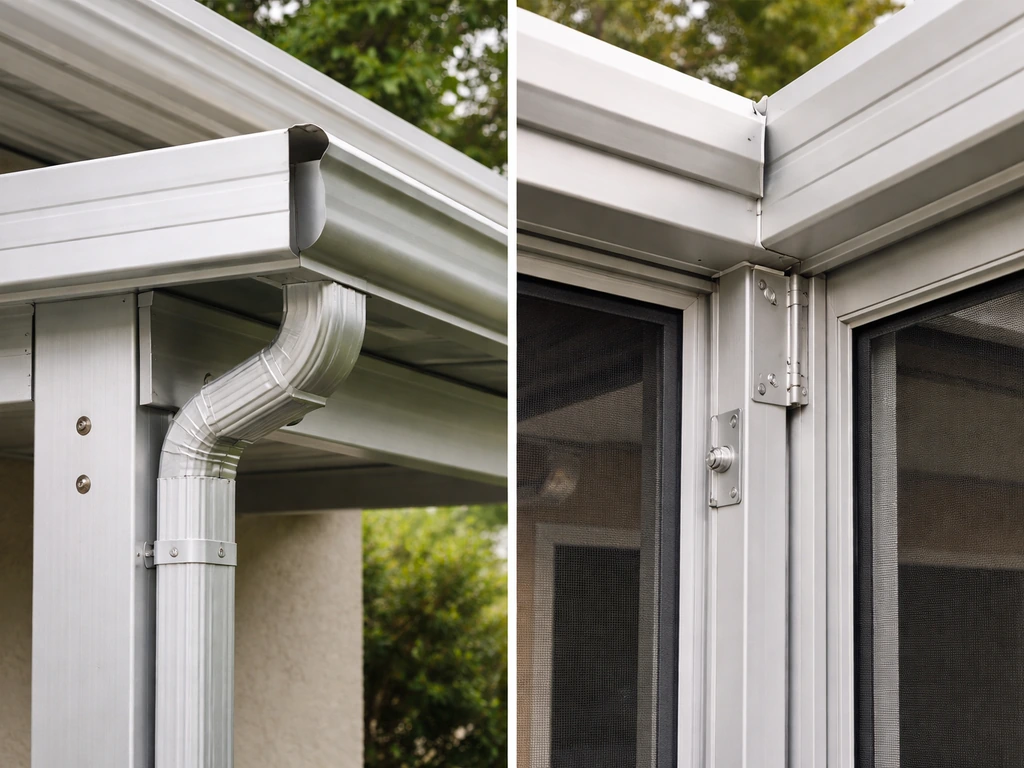
Aluminum is the dominant material for both covered patios and California rooms in California, and for good reason. It does not rot, resists corrosion well in most coastal and inland climates, and requires minimal maintenance beyond occasional cleaning. A well-installed aluminum patio cover or California room framing can last 20 to 30 years with normal upkeep. The main maintenance points are cleaning gutters and drainage if applicable, checking fasteners at the ledger board attachment every few years, and cleaning screens or panels on the California room enclosure.
The roof system choice matters more for maintenance than the framing. A basic lattice cover requires almost no upkeep but provides limited weather protection. A solid aluminum pan cover is more protective but can be loud during rain.
An insulated panel with an EPS foam core significantly reduces rain noise and heat transfer, which is a real quality-of-life improvement in warmer climates, and the insulation means the panel itself is less likely to expand and contract aggressively through temperature swings. For many homeowners, the main reason to choose insulated panels over standard solid covers is better comfort by reducing rain noise and heat transfer insulated vs non insulated patio cover.
For a California room where you intend to spend meaningful time, insulated panels are worth the extra cost.
Screen enclosures require the most ongoing attention. Screen material degrades over time from UV exposure and physical wear. Standard fiberglass screening typically lasts 7 to 10 years before it looks worn or develops holes. Heavy-duty pet-resistant or UV-stabilized screens can last longer but cost more upfront. Budget for a re-screening every decade or so as part of your California room ownership cost.
How each one affects home value
Both structures add usable square footage to your outdoor living space, which buyers in California generally respond well to. A covered patio is a baseline expectation in many California neighborhoods and is viewed positively but rarely as a significant price differentiator on its own. It adds appeal and perceived value without dramatically moving the appraisal needle.
A California room tends to generate more buyer interest because it reads as a livable, flexible space rather than just a shaded slab. In warm-climate markets, buyers who work remotely or entertain frequently often specifically look for this kind of outdoor-but-sheltered living area. However, a California room does not add square footage to the appraised living area of the home the way a permitted room addition would, because it is not a conditioned habitable space. What it adds is lifestyle value and perceived square footage, which influences buyer offers even if it does not formally change the appraised number.
One risk: unpermitted enclosures can hurt value or complicate a sale. If a previous owner built a California room without permits and it shows up on inspection, you may be required to bring it into compliance or remove it before closing. Always permit the work. A properly permitted, well-finished California room is a genuine asset. An unpermitted structure is a liability.
Which one to choose: a practical decision guide
The right choice depends on how you actually plan to use the space, what your climate demands, and what your budget allows. Here is how to think through it.
Choose a covered patio if...
- Your budget is under $10,000 and you need a functional covered outdoor space without a lot of complexity
- Your climate is mild enough that bugs, wind, and rain are not major issues for most of the year
- You primarily want shade for dining or grilling and do not need the space to feel enclosed or private
- You plan to DIY the project or use a prefab aluminum cover kit, which is a reasonable option for covered patios
- You want flexibility to use the space fully open without feeling hemmed in by walls or screens
- Your HOA or zoning has restrictions on enclosed structures but allows standard patio covers
Choose a California room if...
- You want the space to function across more seasons, especially evenings when bugs are a real problem
- You plan to put a TV, hot tub, or furniture you want protected from wind and light rain
- Privacy from neighbors matters and you want at least partial visual screening
- Your budget can accommodate $12,000 to $25,000 or more for a properly built and permitted enclosure
- You work from home or entertain regularly and want an outdoor space that feels like a real room
- You are in a coastal or valley climate where morning marine layer or afternoon wind makes a fully open patio less comfortable
A quick checklist before you decide
- Measure the area you have to work with and check your setback requirements with your local planning department before designing anything
- Pull your HOA CC&Rs and check both the enclosure rules and any materials/color restrictions
- Decide on your primary use case: shade only, bug-free dining, year-round lounging, hot tub area, or remote work space
- Set a realistic budget including permits, electrical, and any concrete or footing work, not just the cover materials
- Ask at least two contractors to quote both options so you can compare the price gap for your specific site
- Confirm with your building department whether your planned enclosure level triggers habitable room requirements or just patio enclosure review
- Consider the roof system (lattice vs. solid vs. insulated panel) independently of the enclosure decision, since it affects comfort and cost for both structure types
Questions to ask contractors before signing
- Will you pull the permit, and what is your experience with patio enclosure permits in this city specifically?
- What percentage of the wall area will remain open, and how does that comply with Appendix Q or local code?
- What roof system do you recommend for this climate and why: lattice, solid aluminum, or insulated panel?
- Does the existing slab and ledger support the load, or will footings or structural work be needed?
- What electrical is included in the quote, and what is not?
- How long has the company been doing this specific type of work, and can I see a recent local project?
One last thing worth knowing: the covered patio vs. California room decision is not a one-time binary choice. Many homeowners start with a covered patio and later add screens or partial enclosure panels as their needs and budget evolve. If you think you might want a California room eventually, plan the initial covered patio structure with that upgrade in mind: use a post spacing and header sizing that can support the added enclosure panels later, and rough in electrical while the structure is being built. It is much cheaper to run conduit during construction than to retrofit it afterward.
FAQ
Can I convert a covered patio into a California room later, without starting over?
Often yes, but it depends on what was built. If the original patio cover was designed with the right post spacing, header/beam sizing, and attachment points, you can add partial walls and screens later. You should also rough in electrical conduit during the first phase so you do not have to open the roof system or drill new paths afterward.
What wall openings count toward the “50% open wall” requirement for a California room?
Typically, openings include areas that are genuinely open to the outdoors, or openings that are countable as vents or removable panels, not solid, continuously glazed surfaces. To avoid approval problems, ask your permit reviewer how they plan to measure wall area (by elevation and segment) and whether screens count at full area or only where the screen is mechanically open.
Will adding an outdoor TV, speakers, or ceiling fan push my California room into “habitable room” territory?
It can raise scrutiny. The article notes habitable-room electrical and ventilation concepts, so if your design looks and behaves like a room (solid enclosed sides, extensive lighting, frequent use like a living area), inspectors may require habitable standards. If you want to stay in the California-room category, keep walls partially open with screens or slats, avoid full glazing on every side, and do not add HVAC unless your plan is intended as conditioned space.
Do I need a building permit if the structure is “just a screen” or “just add panels” to an existing patio?
Usually still yes, because changing the enclosure affects height, setbacks, and how the structure is categorized. Even if the roof already exists, adding walls, screens, or solid panels can alter compliance. Check whether your city treats this as a patio enclosure project rather than a minor accessory update.
How do roof height and setbacks affect my options for both patio covers and California rooms?
Height limits and setbacks can control how far you can extend, where you can attach, and whether you need a different configuration. A covered patio is capped by a stated height guideline (12 feet above grade in the code description), so if you want taller or wider roof framing to support future enclosure panels, confirm the height early with your plans rather than after framing.
What is the safest way to place outdoor electrical in a California room or covered patio?
Use outdoor-rated devices, properly protected conduit, and GFCI protection where required. Ask your electrician to route wiring so it can accommodate screen panels or future enclosure changes, and confirm whether the circuits will be treated as “outdoor wet location” or “covered sheltered” so ratings match the actual exposure.
Why do some patio covers require more structural work than others?
Wind load, snow or debris considerations, and how the cover is attached can drive complexity. An attached design is often more structurally demanding because it may need ledger board engineering and connection detailing to the house framing. If your patio is exposed to prevailing wind or you are adding screens that increase wind pressure on panels, ask for a design that accounts for that added surface area.
How should I think about privacy and views if I am using screens instead of solid walls?
Screens provide visual privacy only at certain angles and distances, and they still allow light and airflow. If neighbors are close or you face direct sight lines, consider mixing screen sections with partially solid slats or higher panels on the sides that matter most, while keeping at least part of each wall open enough to satisfy the enclosure rules.
What screen materials last best in California, and do pet-resistant screens change approval or airflow?
UV-stabilized or pet-resistant screen types generally last longer than basic fiberglass and can reduce the frequency of re-screening. They can be heavier and may require different framing or tensioning, which is important for wind performance. For compliance, make sure the final enclosure still meets the open-area measurements used by your local reviewer.
If I sell my home, will a California room affect appraisals the way a permitted addition does?
Usually it does not increase the home’s appraised living area the same way a permitted, conditioned room addition does, since it is not treated as habitable space in the appraisal sense. However, it can still influence offers because buyers value usable outdoor living. The key is to keep it properly permitted and consistent with what was approved, so it does not become a disclosure or compliance issue.
Next Article
Insulated vs Non Insulated Aluminum Patio Covers
Insulated vs non insulated aluminum patio covers compared for comfort, noise, condensation, costs, and which fits your c