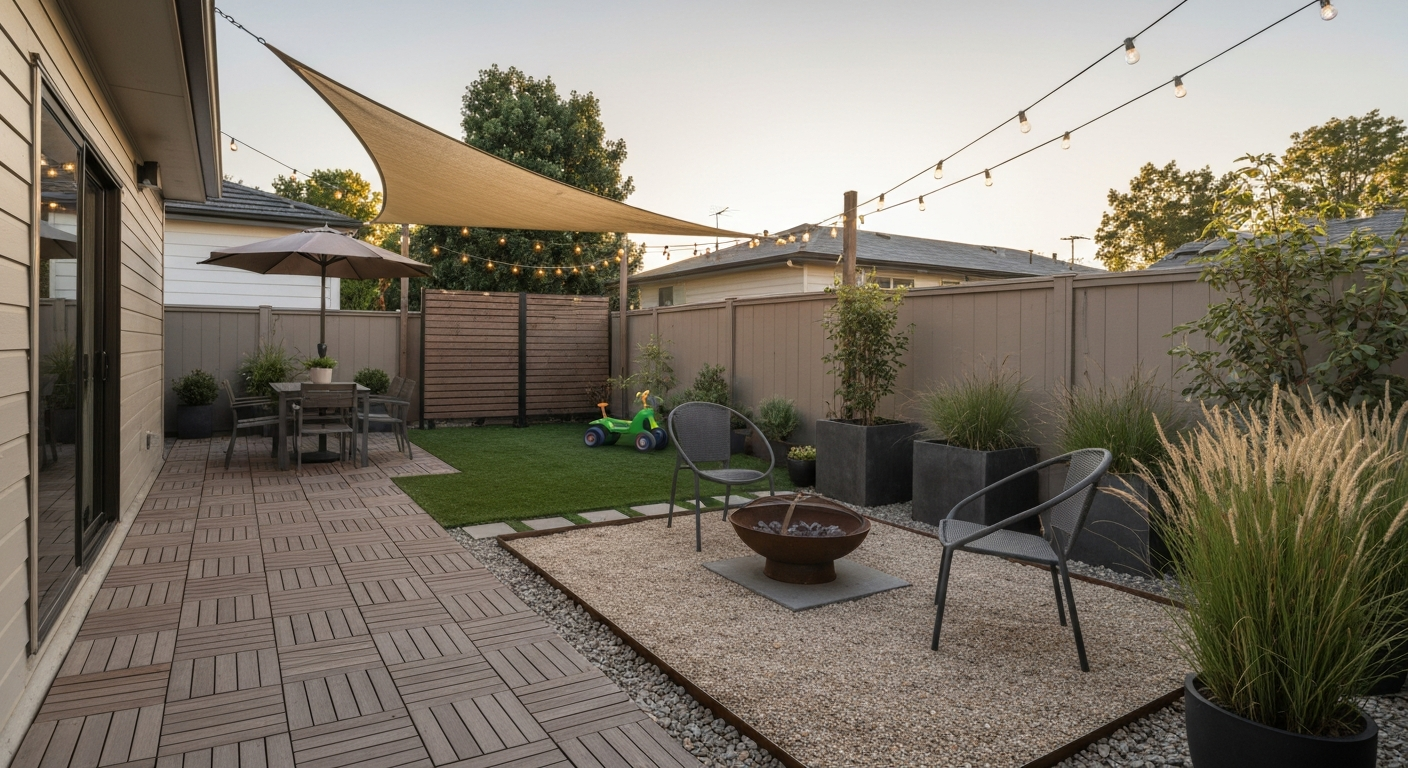
For most patios, the most practical privacy options fall into five broad categories: fences and solid panels, freestanding or retractable screens, pergolas fitted with curtains or shade screens, trellises and living green walls, and tall planters or hedges. Which one works for you depends on whether you own or rent, whether your HOA has restrictions, how permanent you want the solution to be, and what your budget looks like. This guide walks through every realistic option, with cost ranges, DIY difficulty ratings, and honest tradeoffs, so you can match a solution to your actual situation rather than just picking what looks good on Pinterest. For a focused checklist of choices and quick recommendations, see our guide on what to put around a patio for privacy.
What Can I Use for Privacy on My Patio: 12 Best Options

Who this guide is for and how to use it
This guide is written for anyone with a patio, deck, or balcony who wants more privacy, whether you own a detached home with a fenced yard, live in a townhouse or condo with HOA rules, or rent an apartment with a shared balcony. If you live in a townhouse, see our guide on how to decorate a townhouse patio for layout and styling ideas tailored to attached homes. The situations are genuinely different. A homeowner with a 20-foot-wide backyard patio has almost unlimited options. A renter on a third-floor balcony is constrained by lease language (most model leases prohibit exterior alterations without written landlord consent), weight limits, and fire codes. A condo owner answers to both their HOA's Architectural Review Committee and local building codes. I've organized this article so you can start with the quick checklist below to narrow your options, then jump to the sections that apply to your property type. For step-by-step methods on how to make patio private, see this focused guide. The comparison table in the next section gives you a fast side-by-side view before you read the full breakdowns.
Quick decision checklist before you pick anything
Running through these questions takes about five minutes and eliminates most of the options that won't work for your situation. Be honest with yourself on the structural and HOA points especially, because those are the areas where people spend money and then have to undo the work.
- Do you own or rent? Renters need written landlord approval for any exterior alteration and should default to freestanding, non-penetrating solutions.
- Is there an HOA or condo board? If yes, check your CC&Rs before buying anything. Most ARC processes take 10 to 30 business days, so plan ahead. Request written approval and keep a copy.
- What is your budget ceiling? Under $300 points you toward fabric screens, bamboo rolls, or tall planters. $300 to $1,500 opens up retractable screens, pergola curtains, and trellis kits. Over $1,500 makes fences, composite panels, and custom pergolas realistic.
- Do you want a permanent or temporary solution? Temporary solutions (freestanding screens, planters, curtains) require no permits and are reversible. Permanent structures (attached pergolas, masonry walls, fences over a certain height) often require permits.
- What are your local permit thresholds? Fences typically require permits above 6 feet in most jurisdictions. Attached patio covers and pergolas almost always require permits. Los Angeles, for example, requires a building permit for any attached patio cover, and many cities require plan-check review for decks elevated 30 inches or more above grade.
- Is your patio on the ground or elevated? Elevated balconies have structural weight limits. Many residential balconies are designed for 40 to 60 pounds per square foot. A single saturated 25-gallon planter can weigh 100 to 250 pounds, so you need to think carefully about total load before lining a balcony with large containers.
- What is the primary privacy gap: neighbors on the side, overlooking from above, street view, or all three? The direction of the intrusion determines the height and placement of your solution.
- How much maintenance are you willing to do? Wood needs staining or sealing every 1 to 3 years. Living screens need watering, training, and pruning. Vinyl and composite require almost none.
All the main options at a glance
The table below covers the most common patio privacy solutions. Privacy level is rated on a rough scale of low, medium, or high. Cost ranges are for typical residential installations in the continental U.S. as of mid-2026, including materials but excluding engineering or permit fees where those apply.
| Solution | Privacy Level | Permanence | Typical Cost Range | DIY Difficulty | Permit Usually Needed? |
|---|---|---|---|---|---|
| Wood fence (6 ft) | High | Permanent | $15–$30/linear ft installed | Medium | Often yes, check local height limits |
| Vinyl fence (6 ft) | High | Permanent | $20–$40/linear ft installed | Medium | Often yes |
| Composite panel fence | High | Permanent | $30–$60/linear ft installed | Medium–Hard | Often yes |
| Metal (aluminum/steel) fence | Medium–High | Permanent | $25–$50/linear ft installed | Hard | Often yes |
| Freestanding screen/partition | Medium–High | Temporary/Portable | $50–$400 per panel | Easy | No |
| Roll-up bamboo/reed screen | Medium | Temporary | $20–$80 per roll | Easy | No |
| Retractable fabric screen | Medium–High | Semi-permanent | $200–$800 per unit | Easy–Medium | Rarely |
| Pergola with curtains or shade screen | Medium–High | Semi-permanent to permanent | $1,500–$8,000+ | Medium–Hard | Often yes if attached |
| Shade sail | Low–Medium (overhead only) | Semi-permanent | $100–$600 installed DIY | Medium | Sometimes |
| Masonry privacy wall | High | Permanent | $50–$120/linear ft installed | Hard | Yes |
| Timber panel wall | High | Permanent | $30–$70/linear ft installed | Medium | Often yes |
| Gabion panel/wall | Medium–High | Permanent | $40–$100/linear ft installed | Medium | Sometimes |
| Glass privacy panel | Low–Medium | Permanent | $60–$150/sq ft installed | Hard | Yes |
| Trellis with climbing vines | Medium (grows to high) | Semi-permanent | $200–$1,200 installed | Easy–Medium | Rarely |
| Tall planters with hedges/shrubs | Medium | Portable/Permanent | $100–$600 per planter setup | Easy | No (watch weight on balconies) |
| Landscape berm with plantings | Medium–High (over time) | Permanent | $500–$3,000+ | Hard | Rarely |
Fences: wood, vinyl, composite, and metal
A fence is the most straightforward high-privacy solution for a ground-level patio on a property you own. A 6-foot solid fence on the sides and rear of a patio blocks almost all sightlines from neighboring yards. The material you choose affects cost, maintenance, longevity, and appearance.
Wood fences
Wood is the most common choice and the easiest to customize. Western red cedar and redwood are the go-to species for privacy fencing because both have natural rot resistance, they take stain well, and they look good. That said, neither is maintenance-free. Expect to clean and re-stain or seal every 1 to 3 years to get a multi-decade service life. Treated pine costs less upfront but is heavier, harder to work with for DIYers, and requires careful disposal due to preservative chemicals. Installed costs typically run $15 to $30 per linear foot for a standard 6-foot privacy board-on-board or dog-ear panel fence. A 40-linear-foot fence around three sides of a modest patio comes out to roughly $600 to $1,200 in materials if you DIY, or $1,200 to $2,400 installed.
Vinyl fences
Vinyl is the low-maintenance option. It doesn't rot, splinter, or need painting, and it holds its color reasonably well for 20 to 30 years if you buy quality product. The tradeoff is upfront cost ($20 to $40 per linear foot installed), a somewhat plastic appearance that not everyone likes, and less DIY-friendliness since the panels come in fixed sizes. In high-UV climates, cheaper vinyl can yellow or become brittle over time. For someone who absolutely doesn't want to deal with maintenance, vinyl is a strong choice.
Composite fences
Composite fence panels (wood fiber and plastic blended material, similar to composite decking) sit at the premium end of the fence market. Brands like Trex publish warranties of 25 to 50 years on composite products depending on the line. Composites look more natural than vinyl, resist rot, and require minimal maintenance beyond occasional cleaning. Installed cost ranges from $30 to $60 per linear foot. One thing to check: composite fence panels can be heavier than wood, which matters for post sizing and footing depth.
Metal fences (aluminum and steel)
Standard ornamental aluminum or steel fencing doesn't provide full privacy because of the picket spacing, but horizontal slat metal fences and powder-coated aluminum privacy panels have become popular for a modern look. These run $25 to $50 per linear foot installed and are very durable with minimal maintenance. In coastal environments, specify marine-grade stainless hardware (316/A4 stainless) rather than 304, since chloride exposure will pit 304 over time. Metal panels are generally not DIY-friendly because of the precision needed for cuts and post alignment.
Regardless of material, check your local fence height ordinance before you build. Most jurisdictions cap residential fences at 6 feet in rear yards and 4 feet in front yards, and many require permits for anything over a set height. If you live in a HOA community, get written ARC approval before installation. Fence disputes with neighbors over property lines are also common, so confirm the fence line is on your property.
Freestanding and retractable screens
If you rent, live in a condo, or simply want flexibility, freestanding and retractable screens are the most practical path to privacy without structural work or permits. For step-by-step ideas specifically for renters, see our guide on how to make an apartment patio private. These solutions range from simple folding panels you can move inside in winter to motorized retractable screens that mount to a pergola or house wall.
Freestanding panels and portable partitions
Freestanding outdoor privacy screens come as single panels (typically 4 to 6 feet wide, 5 to 7 feet tall) or hinged multi-panel units you can angle to cover a corner. Materials include powder-coated steel frames with fabric, polyrattan, slatted wood, or bamboo infill. Prices range from $50 for a basic reed-style panel to $400 or more for a heavy-duty metal-framed slatted wood unit. The main downside is wind: lighter panels can blow over. Look for models with weighted bases or ground spike anchors, and bring them in during storms.
Roll-up bamboo and reed screens
Bamboo roll screens are one of the cheapest ways to add temporary privacy. They attach to a fence, railing, or pergola beam with zip ties or hooks and cost $20 to $80 per roll depending on size and thickness. They look decent, block moderate sightlines, and can go up in an afternoon with no tools. The real downside is durability: bamboo reed screens typically last 2 to 4 years in most climates before they start to deteriorate, bleach out, or become brittle. They're a good short-term or apartment balcony option, but not a long-term one.
Retractable fabric screens
Retractable screens mount to a wall, post, or pergola beam and pull out when needed, rolling back up when you don't want them. They're widely used for side walls on covered patios and screened-in areas. Manual units with a fabric shade screen run $200 to $500 per bay. Motorized versions add $200 to $400 on top of that. They're not completely weatherproof in high wind, and most manufacturers recommend retracting them in storms. For a semi-permanent solution that doesn't require permits and gives you good privacy when you need it, retractable screens are one of the better compromises.
Pergolas and roofed structures with curtains, shades, and screens
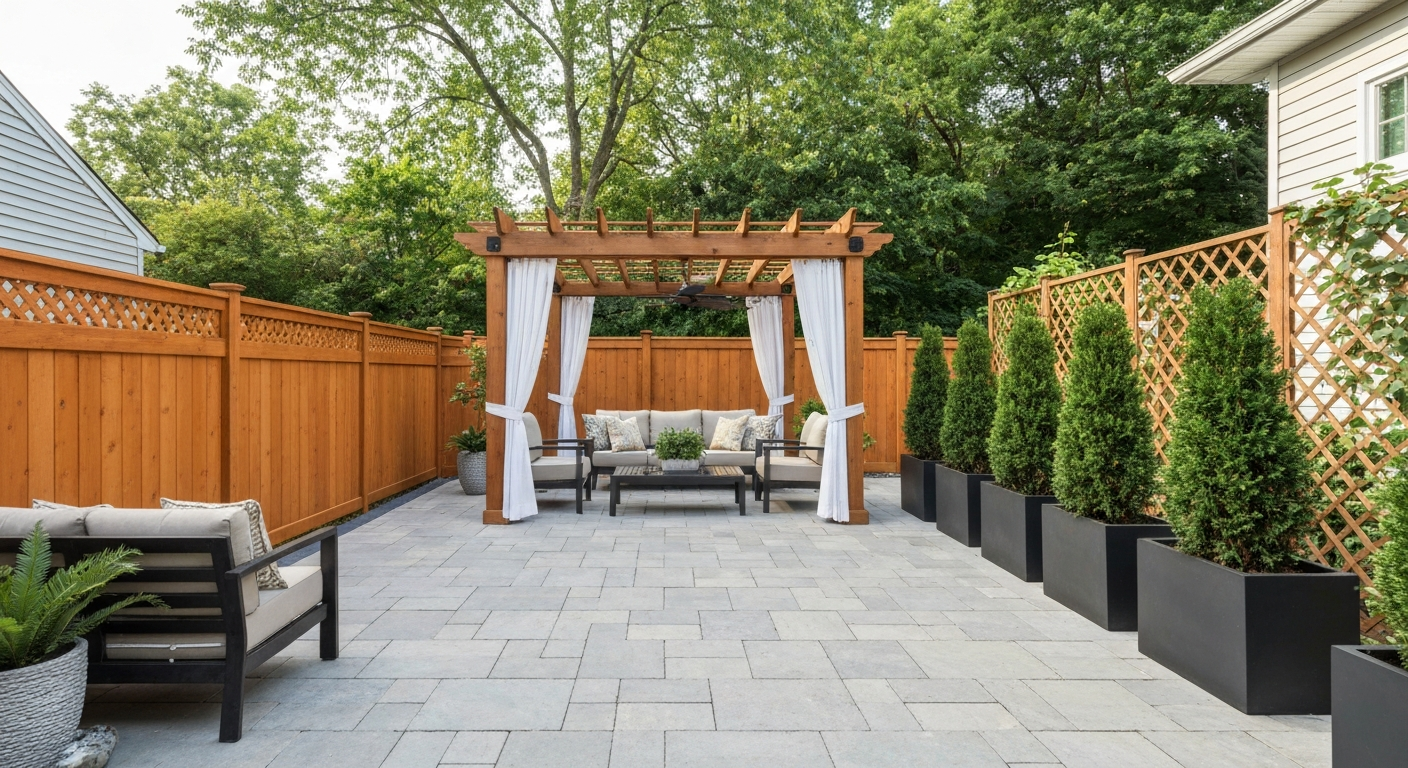
A pergola on its own doesn't provide privacy, but it becomes a very effective privacy structure once you add curtains, shade cloth, retractable screens, or solid panels to the sides. If you're also dealing with overhead visibility (from a neighbor's second story, for example), a solid or louvered roof adds a lot. This is one of the most popular patio privacy approaches for homeowners because it combines shade, aesthetic appeal, and privacy in one structure.
The structural and permit side of pergolas is where many homeowners get caught off guard. If the pergola is freestanding with no attachment to the house, permit requirements vary widely by jurisdiction, but are often triggered if the structure exceeds a certain square footage or height. Attached pergolas (tied into the house ledger board) almost universally require permits, and in many cities like Los Angeles, they trigger full plan-check review. From a structural standpoint, covered or partially covered patio structures must be engineered for local wind loads per ASCE 7. This matters: a partially covered pergola behaves like a sail in high wind, and the forces on anchors and footings can be enormous. Freestanding shade sails present a similar issue: at 90 mph wind, a modest 344-square-foot sail can generate roughly 10,000 pounds of total force across its corners. Anchors need to be engineered to match those loads, not just screwed into siding.
Cost for pergolas ranges widely. A basic freestanding kit pergola (wood or aluminum, no roofing) runs $800 to $3,000 in materials and is a reasonable DIY project for someone comfortable with post-setting and basic carpentry. Adding a solid or polycarbonate roof, motorized screens, and decorative curtains can push the total to $5,000 to $10,000 or more, often requiring professional installation. For the privacy elements specifically: outdoor curtain panels for a pergola run $40 to $150 per panel depending on fabric weight and size; shade cloth or solar screen roll-ups add another $200 to $500 per side. Outdoor curtains give a soft, adjustable privacy screen but need to be tied back or taken in during storms.
Privacy walls and panels: masonry, timber, glass, and gabion
Privacy walls are the most substantial and permanent option, and they're worth considering when you want something that genuinely feels like an architectural feature rather than a screen. They also require the most planning, budget, and often professional help.
Masonry walls (block, brick, stucco)
A concrete block or brick privacy wall gives you the best sound attenuation, durability, and visual solidity of any option. It also almost always requires a permit, proper footing design, and professional construction. Installed costs run $50 to $120 per linear foot depending on height, material, and finish. For a 20-foot wall on one side of a patio, that's $1,000 to $2,400 just for that section. Masonry walls are permanent and increase home value, but they're not reversible and they take weeks to build. Not a solution for renters or anyone who might move in a few years.
Timber panel walls
Timber privacy panels, often built from cedar, redwood, or tropical hardwood boards in a horizontal or vertical pattern, can look more architectural than a standard fence while providing full privacy. They typically attach to steel posts set in concrete footings. Installed costs run $30 to $70 per linear foot. Like all wood, they require periodic maintenance. Cedar and redwood are the best choices for natural rot resistance and appearance.
Glass panels
Tempered or laminated glass privacy panels are used most often on elevated decks and balconies where you want to preserve a view while blocking wind or adding a guard element. They don't provide visual privacy unless you use frosted, etched, or film-treated glass. Clear glass panels give zero visual privacy. For actual privacy use, frosted glass is effective but expensive: $60 to $150 per square foot installed, plus engineering and permit fees. This is almost always a professional job. For elevated balconies and decks, note that IBC requires guards on elevated walking surfaces at a minimum of 42 inches in most residential occupancies, so glass panels used as guards must meet specific structural load requirements for concentrated outward forces.
Gabion systems
Gabion walls (wire mesh baskets filled with rock, gravel, or recycled glass) have moved from civil engineering into residential landscaping and patio design. They're interesting because they can be built modularly, have a distinctive industrial-natural look, provide moderate to good privacy depending on height, and are relatively DIY-accessible compared to masonry. Installed costs run $40 to $100 per linear foot. Weight is the key constraint: a filled gabion basket is very heavy, so they're ground-level only and need a proper base. Permit requirements depend on height and locality.
Trellises and living green screens
A trellis with climbing plants is one of the most attractive long-term privacy solutions for a ground-level patio. The tradeoff is time: you're looking at 1 to 3 growing seasons before most climbers provide real coverage. But once established, a well-chosen vine on a sturdy trellis creates dense, beautiful privacy that also benefits local wildlife and reduces heat on the patio surface beneath it.
Trellis structures and support systems
A trellis needs to be strong enough to support the mature weight of whatever you're growing. A mature wisteria or climbing hydrangea can be genuinely heavy, and a flimsy plastic lattice stapled to a fence won't hold it. Galvanized steel cable trellis systems, powder-coated metal grids, and cedar or redwood lattice panels attached to steel posts are all solid options. Trellis kits run $50 to $400 depending on size and material. For a full DIY trellis panel with planted vines, expect to spend $200 to $600 per section and plan to wait for coverage.
Good climbers for privacy
Plant choice matters enormously for privacy. Fast-growing climbers get you coverage sooner but need more maintenance and some can become invasive problems. Here are practical options with realistic notes on each:
- Clematis: fast-growing (up to 10 ft/year), flowers well, mostly non-invasive, dies back in winter in most climates so winter privacy is minimal. Best for temperate zones.
- Star jasmine (Trachelospermum jasminoides): evergreen in zones 8–10, dense coverage, fragrant flowers, moderate growth. Excellent for year-round privacy in warm climates.
- Climbing hydrangea (Hydrangea anomala petiolaris): slow first two years then vigorous, stunning flowers, works in shade. Worth the wait for a permanent solution.
- Hops (Humulus lupulus): extremely fast (20+ ft in one season), dies back in winter, deciduous. Good for quick summer privacy, not a year-round screen.
- English ivy: dense and evergreen but highly invasive in many U.S. regions. Many states list it as a noxious weed. Avoid unless contained.
- Bamboo (as a screen, not a climber): fast, tall, and very effective for privacy, but running bamboo spreads aggressively and can invade neighbor's property and damage foundations. If using bamboo, only use clumping varieties and install a rhizome barrier.
Tall planters and container hedges
Tall planters filled with columnar shrubs (arborvitae, boxwood, holly, bamboo in clumping varieties) are a flexible privacy solution that works well for both ground-level patios and, with caution, elevated balconies. On the ground, this is low-risk and highly moveable. On a balcony, weight is the critical variable. A 25-gallon planter with saturated soil can weigh 100 to 250 pounds. Multiply that by five planters and you're potentially adding 500 to 1,250 pounds to a structure that may be rated for 40 to 60 pounds per square foot. IBC Chapter 16 (Structural Design) specifies required design live loads for floors, roofs, and similar surfaces; many residential balcony designs use uniform live loads on the order of 40–60 psf per those code provisions The 2018 International Building Code (Chapter 16) sets required design live loads for floors and balconies, and residential balconies are commonly designed for uniform live loads in the roughly 40–60 psf range depending on occupancy and local adoption of the code.. Always calculate the saturated weight of containers and spread them to distribute load. For anything approaching the balcony's design capacity, consult a structural engineer. Use lightweight potting mix instead of heavy garden soil, and consider fiberglass or fabric grow bags rather than heavy ceramic or concrete pots.
Property-specific recommendations
The best privacy solution is different depending on your situation. Here's a quick summary by property type to save you from reading sections that don't apply.
| Property Type | Best Options | Watch Out For |
|---|---|---|
| Detached home with full yard | Wood/vinyl/composite fence, masonry wall, trellis with climbers, pergola with screens | Permit requirements, fence height limits, HOA approval if applicable |
| Townhouse | Fence (check HOA), trellis, retractable screens, pergola curtains | HOA ARC approval required for most visible exterior changes; shared property lines |
| Condo (owned) | Freestanding screens, container planters, retractable screens, curtains on balcony | HOA restrictions, balcony weight limits, structural load, fire code on balconies |
| Apartment/rental | Freestanding screens, bamboo roll screens, container planters with lightweight soil | Lease language prohibiting alterations; need written landlord approval; fire codes; weight limits |
| Elevated deck | Lattice panels, retractable screens, glass panels (frosted), pergola | IBC guard height minimums (42 in. most occupancies), structural engineering for attached covers, wind loads |
HOA, permits, and neighbor considerations
This section is worth reading even if it feels like paperwork, because it's the area where homeowners most commonly waste money. The general rule is: anything attached to your house or permanently installed in the ground likely needs a permit. Anything visible from a common area or a neighbor's property in an HOA community likely needs ARC approval. Submit your application with full drawings, material samples, and dimensions. Most ARC processes take 10 to 30 business days, and if you start work without approval, you may be required to remove what you've built at your own cost. Keep all written correspondence.
Neighbor relationships matter too, especially for fence placement. Confirm your property line before any post goes in. In most jurisdictions, a fence must be set on your property. Encroaching even a few inches onto a neighbor's property can create legal issues down the road. For any fence over a shared property line (sometimes called a boundary fence), written agreement with your neighbor is strongly advisable.
A few design and layout tips once you've chosen your solution
Privacy structures work better when you think about them as part of the overall patio layout rather than as afterthoughts. Placing seating closer to your privacy screen (rather than in the middle of the patio) makes the space feel more enclosed and intimate without needing to screen every inch of perimeter. Layering solutions, a fence on one side, a trellis on another, and tall planters in a corner, often gives better results than trying to do everything with one material. String lights and solar lanterns inside a screened-in area shift the mood in the evening and make the space feel intentional. For ideas on styling yards that don't have a patio, see our guide on how to decorate a backyard without patio. If noise is as much of an issue as visibility, a masonry wall or dense planting provides more sound attenuation than a fabric screen, though nothing short of a solid wall meaningfully reduces conversation-level sound.
FAQ
What are the main privacy solutions I can use on a patio, balcony or deck?
Options run from temporary to permanent: freestanding screens and retractable screens; fences and privacy panels (wood, composite, metal); pergolas or roofs with curtains/shades; trellises and living green screens (vines, espaliers); tall planters and hedges; bamboo rolls or reed screens; glass or gabion walls; shade sails; and landscape berms. Choice depends on permanence, budget, wind/exposure, and property rules.
Which solutions work best for renters or condo/apartment balconies with HOA or landlord restrictions?
Use non‑permanent, low‑impact options: tension or freestanding screens, railing‑mounted privacy fabric that uses clamps (no drilling), tall lightweight planters with drain containment, reed/bamboo rolls attached with cable ties, and outward‑facing curtains hung from removable hardware. Always check lease/HOA rules and avoid attachments that alter railing/guards or exceed weight/drainage limits.
How do I factor cost and permanence into my decision?
Rough tiers: low ($—) temporary fabric screens, bamboo rolls, shade sails, small planters; medium ($$) freestanding wood/composite screens, pergola kits, larger planters/trellises; high ($$$) built fences, attached patio covers, glass/gabion walls, engineered pergolas. Temporary choices are cheapest and flexible; permanent builds cost more, may require permits and offer higher durability and resale value.
What structural and weight constraints should I consider for balconies and decks?
Most residential decks/balconies are designed for live loads ~40–60 psf. Saturated soil and big planters can add significant point/area loads (a 25‑gal planter may weigh 100–250 lb wet). Spread loads across many containers, use lightweight potting mixes, or consult a structural engineer before adding heavy planters, pergolas anchored to the deck, or hardscape.
Do pergolas, shade sails or attached covers require permits or engineered design?
Often yes. Attached patio covers/pergolas usually trigger permits and may need engineered attachments to resist wind uplift and lateral loads per ASCE 7 and local code. Freestanding structures can also require footing sizing and anchor engineering in high‑wind areas. Check your local building department before installation.
What HOA, landlord and permit issues should I check before starting work?
HOAs commonly require written ARC/ACC approval for visible exterior changes—submit drawings, materials, colors and timeline. Landlords/leases frequently prohibit structural alterations without written consent and may require restoration. Municipalities typically require permits for attached covers, decks above a threshold height, and fences over local height limits. Get approvals in writing.
How to Decorate a Backyard Without Patio: 8 Smart Options
Transform a yard without a patio: layouts, surface options, privacy, lighting, costs, renter-friendly tips.