The fastest way to make a patio private is to figure out exactly where unwanted sightlines are coming from, then block just those angles with a fence panel, privacy screen, tall planters, or outdoor curtains. You do not need to enclose the entire patio. Most people over-engineer this: they want to block one neighbor's second-story window or one stretch of sidewalk, and a single 8-foot section of slatted fence or a row of tall grasses in planters gets the job done for a few hundred dollars. If you have a more exposed situation, a full perimeter solution with a combination of materials works best. Either way, start with sightlines before you spend a dollar.
How to Make a Patio Private: Step-by-Step Options

Miles Hart
15 May 2026
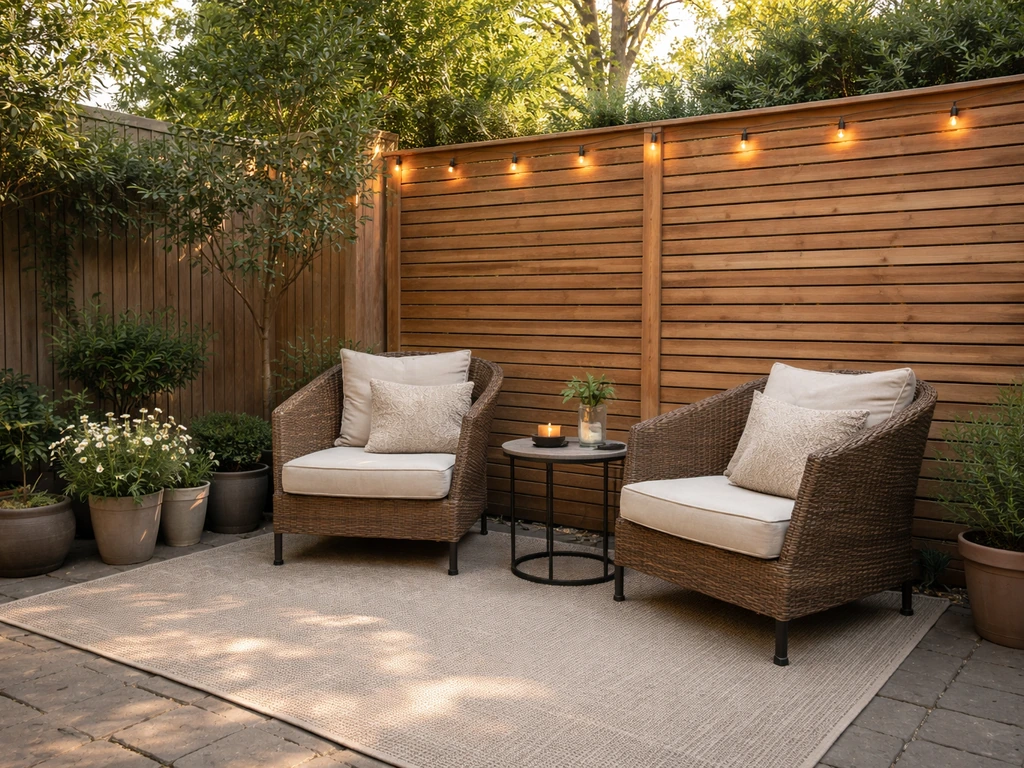
Figure Out What You're Actually Blocking
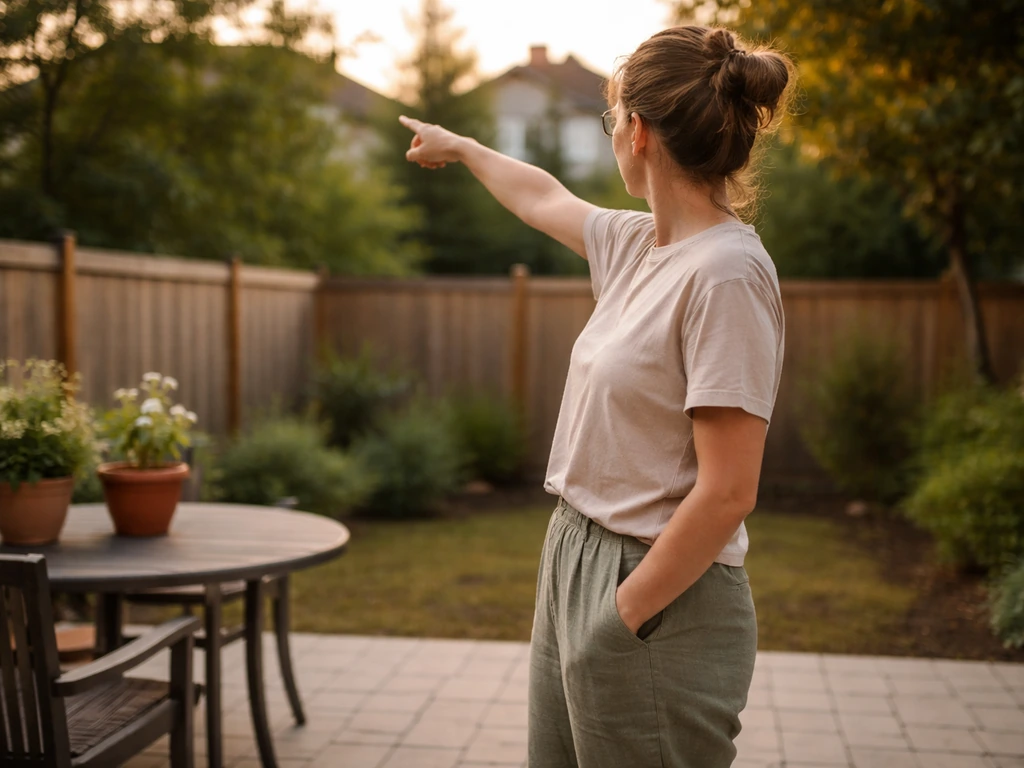
Stand on your patio at the time of day you use it most, and look around. Where are the views coming from? This sounds obvious, but most people skip it and end up buying curtains for the wrong side. Common problem spots are: a neighbor's yard or elevated deck, a second-story window (yours or a neighbor's), a sidewalk or street, an alley, or your own indoor rooms looking out. Write down the direction and height of each sightline. A neighbor's ground-level yard needs a 6-foot fence. A second-story window needs something taller, or a horizontal overhead element like a pergola canopy. A street view often just needs a tall planter run or a lattice panel on one side.
Also decide how much privacy you actually need. There is a big difference between 'I want to feel less exposed' (semi-privacy, 40-50% blockage with slatted panels or loose curtains) and 'I want nobody to see anything' (solid fence or dense hedge). Semi-privacy solutions allow airflow and feel less claustrophobic, which matters a lot on a small patio. Full blockage gives you real seclusion but can trap heat and make a tight space feel smaller. Knowing your threshold before you shop saves a lot of money and regret.
The Best Privacy Options and When to Use Each
There is no single best solution. What works depends on whether you own the property, how permanent you want to go, your budget, and the specific sightline problem. Here is a breakdown of the main options.
Wood and Vinyl Privacy Fences
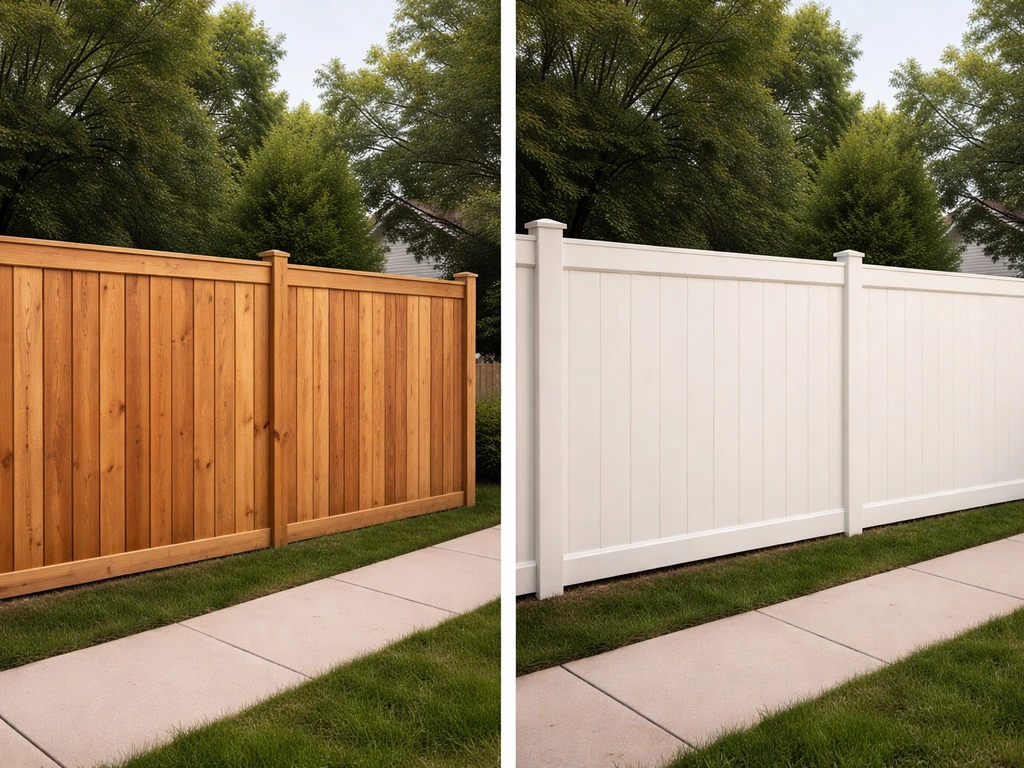
A solid wood or vinyl privacy fence is the most effective permanent barrier for ground-level sightlines. A 6-foot wood fence runs roughly $25 to $50 per linear foot installed, depending on wood species and your region. Vinyl comes in at $25 to $45 per linear foot installed. If you are doing it yourself, materials alone for wood drop to around $15 to $35 per linear foot. These are real installed numbers from 2026 contractor pricing, not optimistic estimates. For a 40-foot patio perimeter, expect to spend $1,000 to $2,000 DIY or $1,500 to $4,000 hired out. The trade-off is that solid fences block airflow, require permits in many jurisdictions, and are a permanent change to the property.
Slatted Panels and Privacy Screens
Slatted cedar or composite panels (horizontal or vertical boards with small gaps) give you 70 to 90 percent visual coverage while still letting some air through. If you are still wondering what to use, start with slatted panels or outdoor curtains for flexible, patio-friendly privacy. This is one of the most popular options right now because it looks modern, does not feel as closed-in as a solid fence, and performs better in wind because the gaps reduce load on the posts. Pre-built panel systems from home improvement stores can be installed in a weekend with basic tools. A freestanding panel system with its own weighted bases works on a patio where you cannot dig posts into concrete or need a non-permanent setup.
Outdoor Curtains
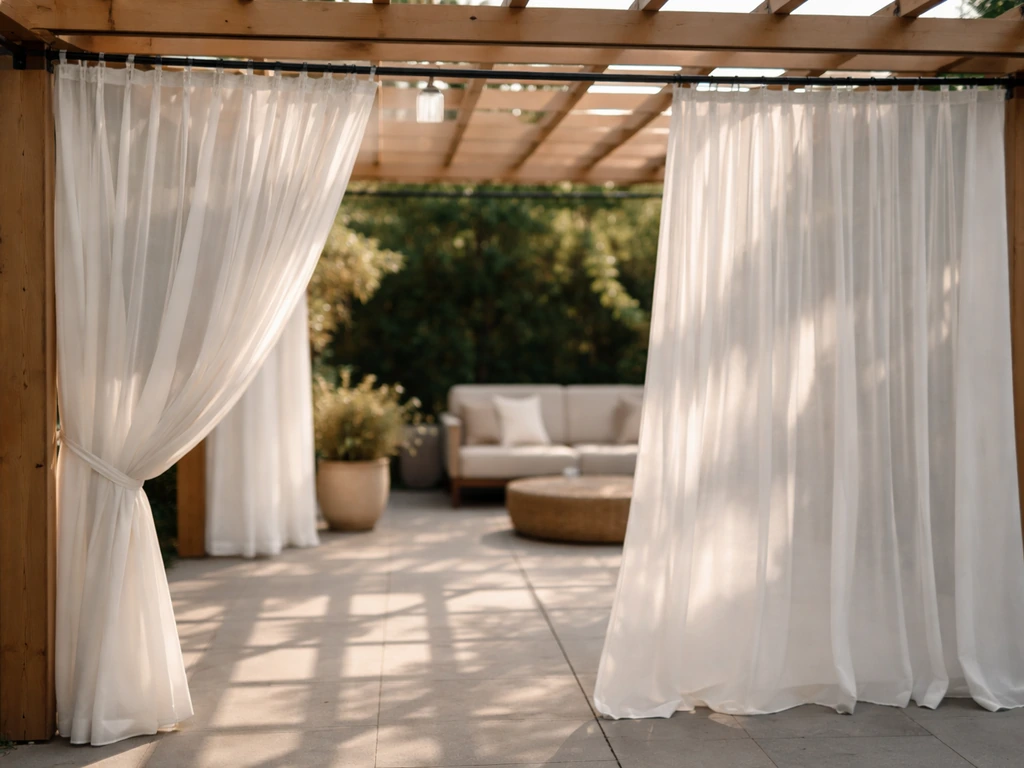
Outdoor curtains on a pergola or curtain rod system are the most flexible and affordable option. You can tie them back when you want airflow and close them for privacy. Quality outdoor curtain fabric matters a lot here. Look for solution-dyed acrylic like Sunbrella, which resists UV degradation (up to 98% UV resistance), mold, mildew, fading, and does not rot. Budget curtain panels are available at most home improvement stores for $30 to $80 per panel. The catch: curtains need a structure to hang from, they move in wind, and in a very exposed or windy location they can be frustrating. They work best on covered patios or under a pergola.
Retractable Screens
Motorized retractable patio screens are the premium option. They can block sun, wind, rain, and sightlines, and they disappear when you do not need them. The downside is cost: professionally installed motorized systems typically run $4,500 to $15,000 depending on size and system type. Some systems include wind sensors that retract the screen automatically before wind damage occurs. These make the most sense for larger patios or covered outdoor rooms where you want year-round usability, not as a budget privacy fix.
Trellises, Tall Planters, and Living Screens
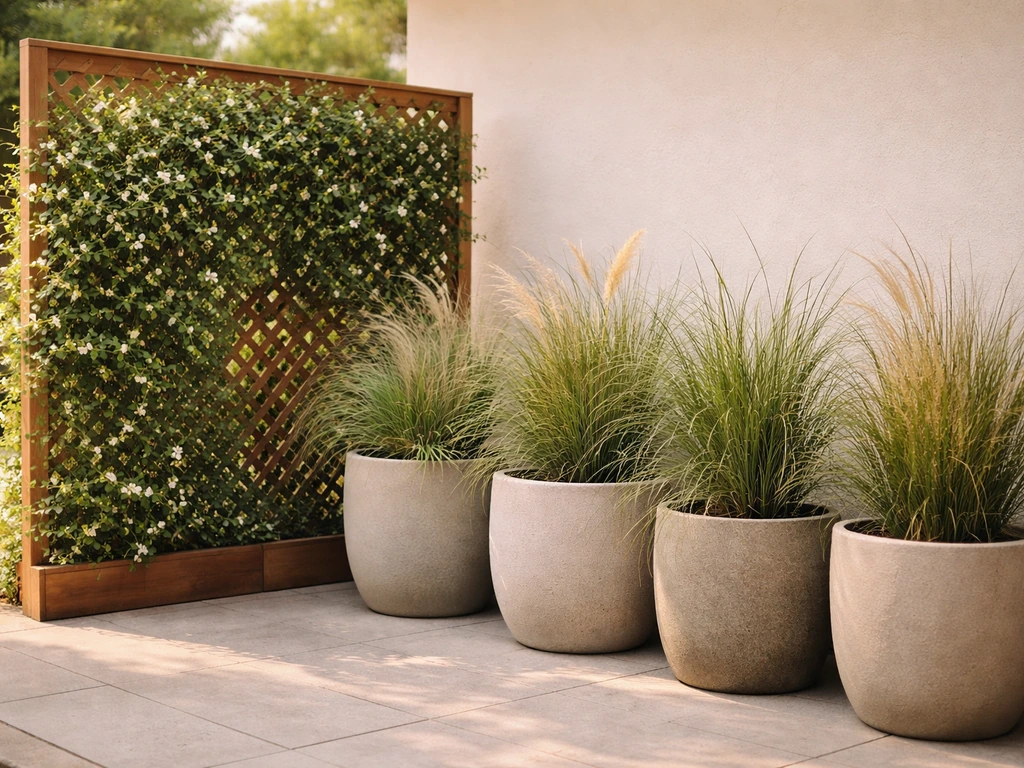
A trellis with climbing plants (like jasmine, clematis, or fast-growing vines) or a row of tall ornamental grasses or columnar evergreens in large planters can create a living privacy wall. This approach is renter-friendly, adds greenery, and feels natural. The trade-off is time: plants need a full season or two to fill in. For faster coverage, pair a trellis with a fast-growing annual vine and fill gaps with tall potted bamboo or arborvitae in the meantime. Wall-mounted planter systems work well for small patios where floor space is tight.
| Option | Approx. Cost | Privacy Level | Permanence | Best For |
|---|---|---|---|---|
| Solid wood fence | $25–$50/linear ft installed | High (95–100%) | Permanent | Ground-level sightlines, owned properties |
| Slatted panel/screen | $20–$60/linear ft installed | High (70–90%) | Semi-permanent | Airflow + privacy balance, modern look |
| Outdoor curtains | $30–$80/panel | Medium (50–80%) | Flexible/removable | Covered patios, renters, tight budgets |
| Retractable screens | $4,500–$15,000 | High (adjustable) | Semi-permanent | Large covered patios, full enclosure goals |
| Tall planters/trellis | $200–$1,000+ depending on plants | Low–Medium (grows in) | Removable | Renters, natural aesthetic, supplement to other methods |
DIY vs. Hiring a Pro: What It Really Takes
The honest DIY threshold is this: if you are hanging curtains, assembling a freestanding screen, or setting up planters, you can absolutely do it yourself in a day with basic tools. If you are digging post holes, setting concrete footings, and building a fence on a property line, the job requires more skill, the right tools (a post-hole digger or auger), and an understanding of your local permit requirements. Most homeowners who are comfortable with weekend projects can build a fence panel section. A full perimeter fence on uneven ground is where hiring a pro starts to make sense, especially if permits are involved.
Labor typically accounts for 50 to 60 percent of a fence installation cost. If you supply your own materials and do the work, you can cut the total in half. But factor in tool rental (an auger runs $75 to $150 per day), concrete, and the time to pull a permit if required. A mid-size patio privacy fence (40 to 60 linear feet) is a reasonable weekend project for someone with moderate DIY experience. Anything involving electrical (lighting integration) or structural footings in hardscape should probably involve a licensed contractor.
Privacy Solutions for Small or Very Open Patios
Small patios and open patios (those with no existing structure, fencing, or landscaping around them) need a different approach than a standard backyard patio. If you do not have a patio already, you can still create privacy with freestanding screens, tall planters, and directional coverage strategies how to decorate a backyard without patio. The challenge on a small patio is that a full perimeter fence makes the space feel like a box. The challenge on an open patio is that you need to create structure from scratch, which costs more.
For small patios, directional privacy works better than perimeter privacy. Identify the one or two sightlines that bother you most and block those specifically. A single 6-foot slatted panel on one side, combined with a planter run on another, can give you the feeling of enclosure without closing in the space. Furniture arrangement also helps: angling seating away from the problem sightline changes how exposed you feel without adding any structure. Overhead coverage (a simple pergola with a canopy or shade sail) also changes the psychology of an open space because it creates a defined room boundary.
If your patio is very open (a slab in the middle of a yard with no surrounding structure), the most cost-effective approach is a combination of freestanding panels on the problem sides and planters for softer coverage. You can also look at whether an L-shaped or U-shaped furniture layout with a privacy screen as the back wall creates a functional outdoor room without enclosing the whole slab. Apartment and condo patios have their own specific constraints around landlord permission, weight limits, and floor material. If you need more privacy, choose options that work within condo constraints like landlord approval, building weight limits, and your floor layout Apartment and condo patios. For apartment patios, freestanding privacy screens and planter walls are often the easiest way to stay private without permanent changes apartment patio privacy screens. Those situations are worth thinking through separately.
Wind, Weather, Lighting, and Airflow
A privacy structure is exposed to wind 24 hours a day, so this is not something to gloss over. Solid fences and panels act as wind sails: they catch the full force of wind and transfer it to posts and footings. In high-wind areas, a 6-foot solid fence needs properly engineered post depth and spacing, typically posts set 2 to 3 feet deep in concrete. Slatted panels with gaps reduce wind load meaningfully compared to solid barriers because wind passes through the gaps. Semi-privacy designs are not just aesthetically lighter, they are structurally smarter in windy environments.
Wind load ratings for fences are governed by engineering standards (ASCE 7), and in some jurisdictions fences over 6 feet tall may require an engineering review before a permit is issued. If you live in a coastal, high-elevation, or storm-prone area, ask your local building department about wind requirements before you buy materials. A fence that blows over in the first major storm is more expensive than doing it right the first time.
Airflow and privacy pull in opposite directions, so find your balance. Solid fences stop wind from entering the patio (which can be good or bad depending on your climate). If you are in a hot climate where you need airflow, slatted panels, loose curtains, or living screens let air move through while still breaking sightlines. If you are in a cold or rainy climate, a more solid barrier or retractable screen system gives you windbreak and weather protection while maintaining the option to open up.
Lighting integration is worth planning from the start rather than adding as an afterthought. Post cap lights on fence posts, string lights along a top rail, or low-voltage landscape lighting in planters all work well and can be installed before the fence goes up. Running conduit along a fence post during installation costs almost nothing extra. Adding lighting after a fence is complete is more work and less tidy. Solar options avoid any wiring at all and work well for moderate lighting needs.
HOA Rules, Permits, and Property Line Reality
This is the part most people skip until after they have already bought materials. Do not do that. Check these things first.
Most cities allow a 6-foot privacy fence in rear and interior side yards without a permit, but height limits drop significantly for front yards, often to 3 or 4 feet, and some cities require front-yard fences in the 3.5 to 6-foot range to be at least 60 percent transparent. Corner lots are almost always subject to sight-distance triangle rules, which prevent solid structures near the intersection from blocking driver visibility. Provo City Code also blank" rel="noopener noreferrer">limits sight-obscuring solid walls, fences, hedges, or screening in the required front-yard perimeter to a maximum of 3 feet, and it includes corner-lot clear-vision triangle restrictions. These rules vary significantly by city: Fremont, CA allows up to 7 feet without a permit; Cicero, IL caps patio privacy fences at 5 feet; blank" rel="noopener noreferrer">Orlando, FL sets 4 feet for front yards and 6 feet for rear and side yards. You need to look up your specific municipality, not rely on a general rule.
Permits are often not required for fences under 6 feet in residential rear yards, but the fence still has to comply with zoning code (setback, height, placement). 'No permit required' does not mean 'no rules apply.' If a neighbor complains, the city can require you to modify or remove a non-compliant fence even if you never pulled a permit. Check before you build.
HOA rules add another layer. Many HOAs restrict fence materials, colors, heights, and styles, and require approval before installation. Some prohibit fences entirely in certain yard areas. Get written approval from your HOA before doing any work. If you are renting or own a condo, your landlord or condo association likely has its own rules on top of city code. Non-permanent solutions (freestanding screens, planters, curtains) are usually safer territory for renters and condo owners.
On property lines: in most residential zones you can place a fence on the property line itself, but confirm the actual line with a survey before you build. Fences built even a few inches over the line can become legal issues. If your neighbor shares the fence line, they may have input on what goes there, and in some states they share the cost by default.
A Step-by-Step Plan to Actually Get This Done
- Stand on your patio and identify each specific sightline that bothers you. Note the direction, height, and distance. Take photos. This is your privacy problem list.
- Decide on your permanence level: are you a homeowner willing to install something fixed, or do you need a removable/renter-friendly solution? This filters out half the options immediately.
- Check your local zoning code for fence height limits by yard zone (front, side, rear), permit thresholds, and setback requirements. Look up your city or county specifically. Check HOA rules if applicable.
- Measure the length of each section you need to cover and note any obstacles (gates, utility boxes, trees, hardscape edges). Bring these measurements when you shop or get quotes.
- Choose your primary solution for the main sightline problem. Match the solution to the sightline: a low fence or planters for a ground-level neighbor view, curtains or a trellis panel for a covered patio, a slatted panel for a side-yard sightline, and an overhead element for an upper-story window view.
- Get at least two quotes if hiring a pro, or price out materials and tool rental for DIY. Compare the total cost including any permit fees (typically $50 to $150 for a fence permit).
- Pull permits if required. Submit HOA request if applicable and wait for written approval before ordering materials.
- Install in the right order: posts and structural elements first, infill panels second, hardware and lighting third, plants and soft elements last. Do not hang curtains before the pergola is square.
- Test it: sit in your usual patio spot and see if the problem sightlines are actually blocked. Adjust panel angles, add a planter where a gap remains, or extend a curtain panel before you call it done.
- Maintain annually: tighten hardware, re-seal wood fence boards every 1 to 2 years, clean outdoor fabric with mild soap and water, trim living screens, and check post footings for heave after a first winter.
The single most common mistake is skipping step one and buying based on what looks good online, then realizing the product solves the wrong problem. A beautiful set of curtains does nothing for a neighbor's ground-level sightline on an uncovered patio where there is nothing to hang them from. A 6-foot fence does nothing for a second-story window. Match the tool to the actual problem, check the rules, measure carefully, and install in the right order. That is the whole process.
FAQ
How tall should a privacy solution be for a patio?
Start by measuring the worst sightline, not the average view. Sit at your main seating height, note the sightline height, then add a buffer (about 6 to 12 inches) for how heads move and for gaps at the bottom of panels. If you are using screens or slatted systems, also plan for wind and shrinkage so you do not end up with visible gaps later.
Can I make only one side of my patio private instead of installing a full fence?
Yes, but only if the fence is allowed in your yard and height category. For privacy, you often get the best results by blocking one or two sides rather than building a full perimeter, because adding length can trigger more permit and placement complexity. Confirm the property line location, because a “looks centered” placement can still land you over the line.
What privacy options work best for apartment or condo patios with restrictions?
Condo and apartment patios usually have stricter limits on weight, drilling, and permanent attachments. Before buying anything, check whether you can anchor into the floor or only use freestanding bases, and whether tall planter systems require a specific load rating. If you cannot anchor, plan for weighted, modular screens that can be moved during maintenance or storms.
What should I do if my HOA or landlord does not allow a fence?
If you cannot get permission to install a solid fence, focus on non-permanent, reversible solutions that still target sightlines. Examples include freestanding slatted panels on weighted bases, curtain systems mounted to an allowed structure like a pergola, and planter walls placed parallel to the view corridor so they visually block without fixed construction.
What is the best way to keep privacy screens stable on a patio surface that I cannot drill into?
If you have no posts in concrete or you cannot dig, freestanding is safer, but you must plan for stability. Choose systems with base weights suited to your patio surface, use level ground so panels do not rack, and keep screens away from where heavy wind can lift the base. For uncovered patios, prioritize slatted designs because they catch less wind.
What materials are most durable for patio privacy in rainy or windy climates?
Use moisture and wind durability as your decision filter. For curtains, solution-dyed acrylic tends to hold up better outdoors than thin budget fabrics, and you should plan for how you will store or close them during storms. For living walls, pick species that match your sunlight hours and growth speed so you do not end up waiting an entire season for meaningful coverage.
Should I plan patio privacy and lighting at the same time, or is it okay to add lighting later?
Yes, but do it only after you confirm the structure and placement. If you add lighting later, you may have to drill into a finished fence, run messy cables, or deal with patchwork. Plan low-voltage routes and post cap or rail lights during the privacy project so wiring stays straight and hidden.
How do wind and wind-loading affect how safe and effective a 6-foot privacy fence will be?
When a fence is exposed to full wind, the install details matter as much as the height. Proper spacing and deep post footings prevent wobble, and slatted barriers reduce wind pressure compared with solid panels. If your area is storm-prone or coastal, ask your building department whether engineering review is required above certain heights.
How can I arrange furniture to make a patio feel private without building more panels or fences?
If you cannot change the neighbor’s or street-facing view, you can still get privacy by controlling your line of sight to the “problem angle.” Common fixes are an L-shaped arrangement with the privacy wall behind seating, or a U-shape that creates a defined outdoor room. Pair that with directional furniture placement so you are not always facing the exposed side.
How do I balance privacy with keeping the patio feeling open and comfortable?
Treat sightlines as bidirectional, because your privacy goal often affects what you see too. If you block too much height with a solid barrier, you may lose skyline views and natural light, and you may feel “boxed in,” especially on small patios. A good approach is to start semi-private with slats or curtains, then upgrade only for the specific sightline that still bothers you.
What are the biggest property-line mistakes to avoid when installing patio privacy?
If you are close to a property line, confirm the exact boundary with a survey or reliable boundary markers before building. Even small overbuilds can create disputes, and neighbors can require changes. Also consider that shared-fence situations sometimes involve shared cost and shared design decisions, which can affect timelines.
Next Article
Grass Is Higher Than Patio: Causes, Fixes & Deck vs Patio
Grass higher than patio? Causes, slope checks, repair options, lower lawn, raise patio, or build a deck, with costs & DIY