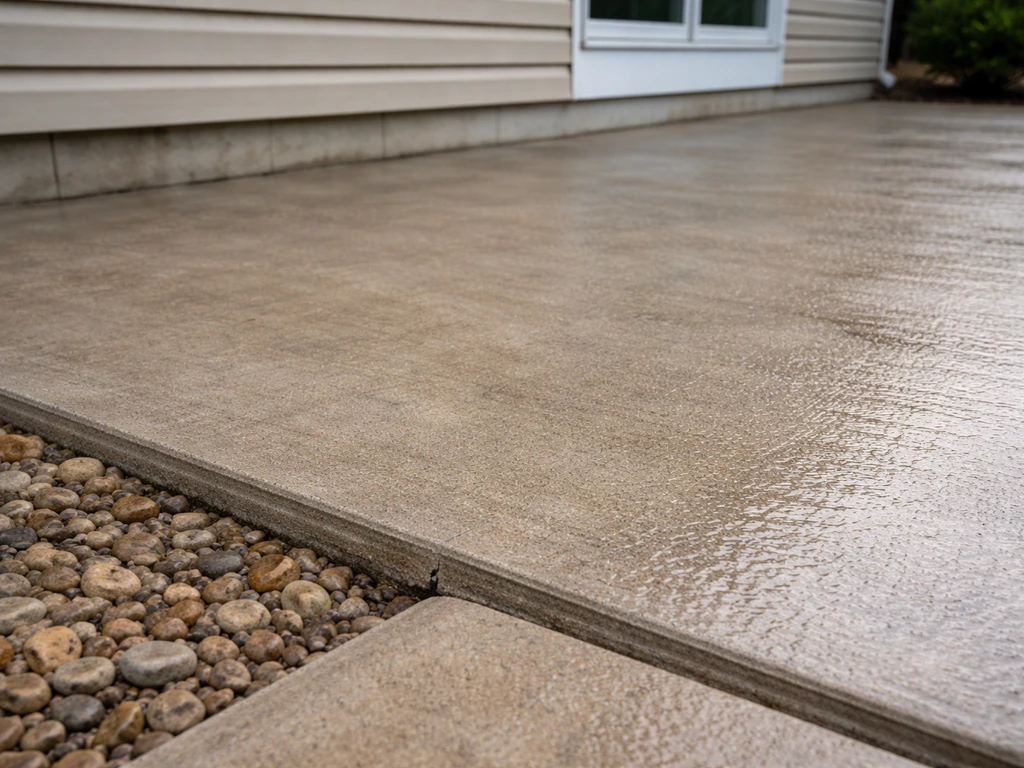
For most covered patios, vinyl and aluminum panel systems are the go-to ceiling materials because they handle moisture, UV, and temperature swings better than almost anything else at a reasonable price. Wood gives you the warmest look but demands the most upkeep outdoors. If you are also planning the patio setup, you may wonder how high a patio table should be for comfortable seating warmest look. Composite sits in the middle. The right pick depends on your climate, how enclosed your patio is, and how much maintenance you're willing to do every few years.
Patio Ceilings What Materials Best Options for Outdoors

Miles Hart
22 Jun 2026
What 'patio ceiling' actually means before you start shopping
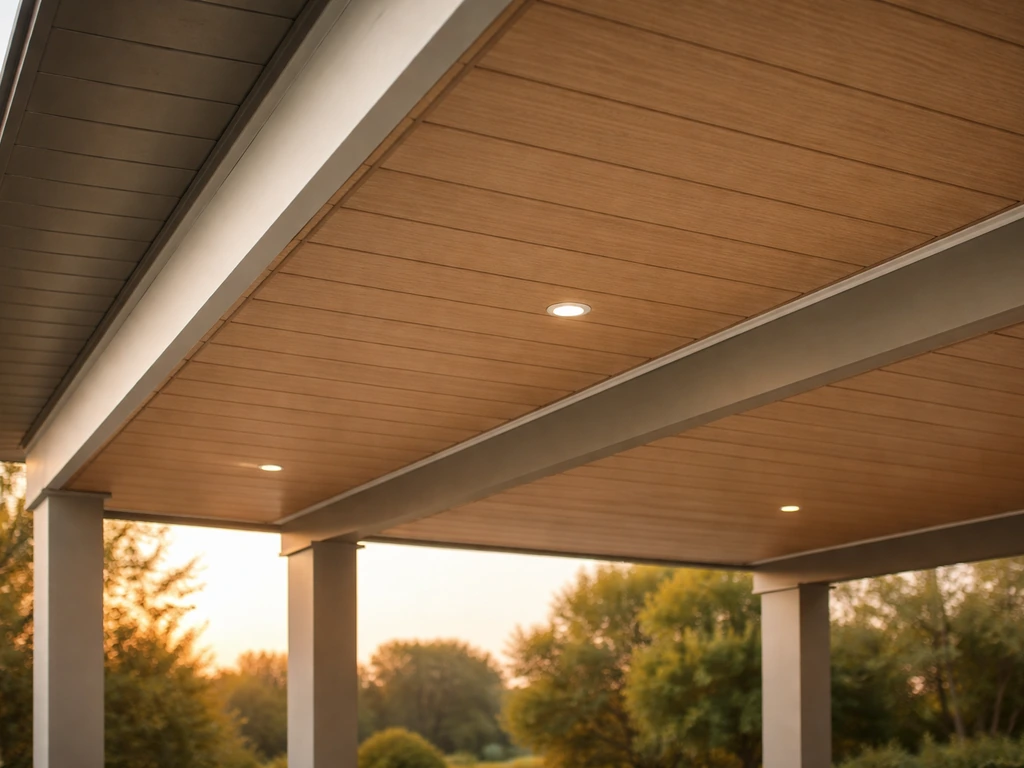
People use 'patio ceiling' to mean a few different things, and the material choices shift depending on which one you have. The most common version is a soffit-style ceiling: the flat horizontal surface nailed or clipped to the underside of a roof overhang or porch rafter system. That's the one this guide focuses on most. A soffit covers the gap between the exterior wall and the fascia board, protects the rafter tails from weather, and in most roof systems also handles intake ventilation.
But 'patio ceiling' can also mean the underside of a fully enclosed patio room (essentially an interior-style ceiling in an outdoor-adjacent space), the visible underside of an open pergola with no roofing above it, or a shade fabric stretched across an open structure. Each of these has different structural demands. An open pergola doesn't really have a ceiling at all unless you add one. A fabric canopy works more like a shade system than a building material. And an enclosed patio room can support drywall or tongue-and-groove wood indoors, but anything exposed to humidity or rain needs to be exterior-rated. Knowing which category you're in narrows your material list immediately.
The main patio ceiling materials compared
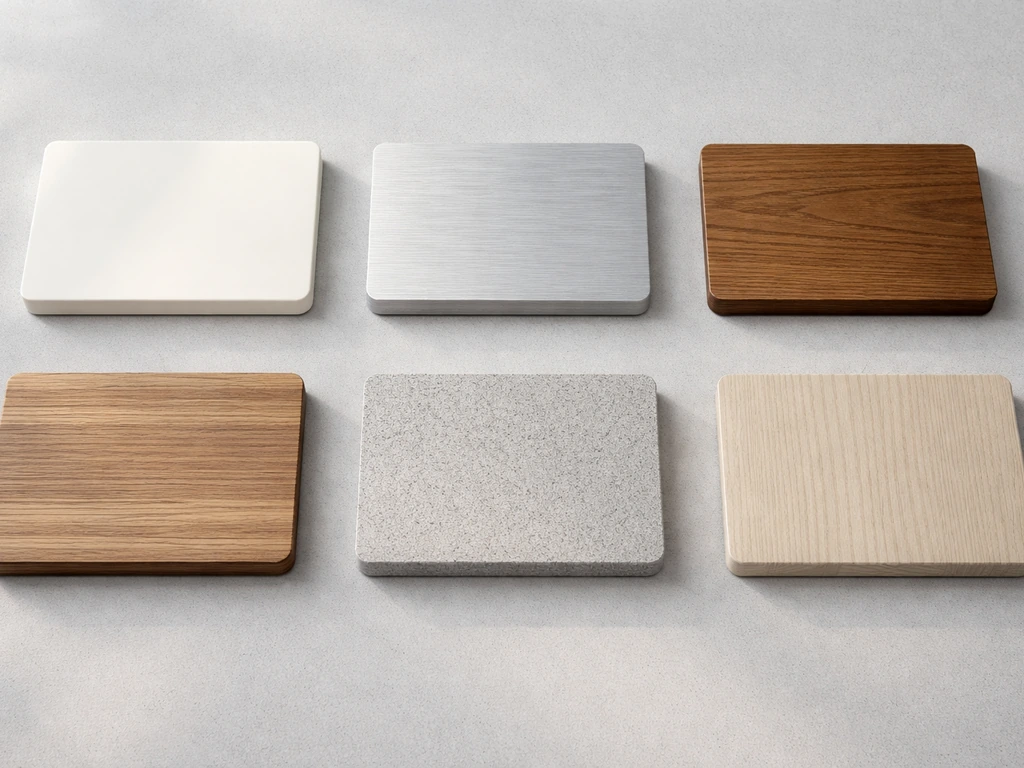
Here's a quick side-by-side before diving into each material in detail. Costs below are installed ranges based on 2026 data.
| Material | Installed Cost (per linear ft) | Moisture Resistance | Maintenance Level | Best For |
|---|---|---|---|---|
| Vinyl | $6.50–$14 | Excellent | Very low | Humid climates, budget builds |
| Aluminum | $7–$20+ | Excellent | Low | Coastal, high-wind, premium looks |
| Wood (painted/stained) | $6–$10 | Poor to moderate | High | Dry climates, traditional aesthetics |
| Engineered wood / SmartSide | $8–$14 | Good (when sealed) | Moderate | Wood look with more durability |
| Fiber cement (Hardie) | $10–$18 | Very good | Low to moderate | Fire-prone or high-humidity regions |
| Composite / PVC trim board | $10–$18 | Very good | Low | Enclosed or semi-enclosed patios |
| Fabric / shade panels | $5–$20 (per sq ft) | Poor (temporary) | Moderate | Open pergolas, seasonal shade |
Vinyl
Vinyl soffit and porch ceiling panels are the most widely installed material for covered patio ceilings in the US, and for good reason. They don't rot, they won't corrode, they're light enough to work with on a ladder alone, and they click together without needing paint or stain. Brands like Norandex offer ColorHold lifetime fade protection and limited lifetime transferable warranties on their vinyl systems. The main drawback is that vinyl can look a bit plasticky up close, and in extreme cold it can become brittle and crack. In very hot climates, cheap vinyl panels can warp if there's no ventilation allowing heat to escape above the panel. The solution is to use vented panels (which have small slotted openings) whenever the space above the ceiling connects to an attic or enclosed rafter bay.
Aluminum
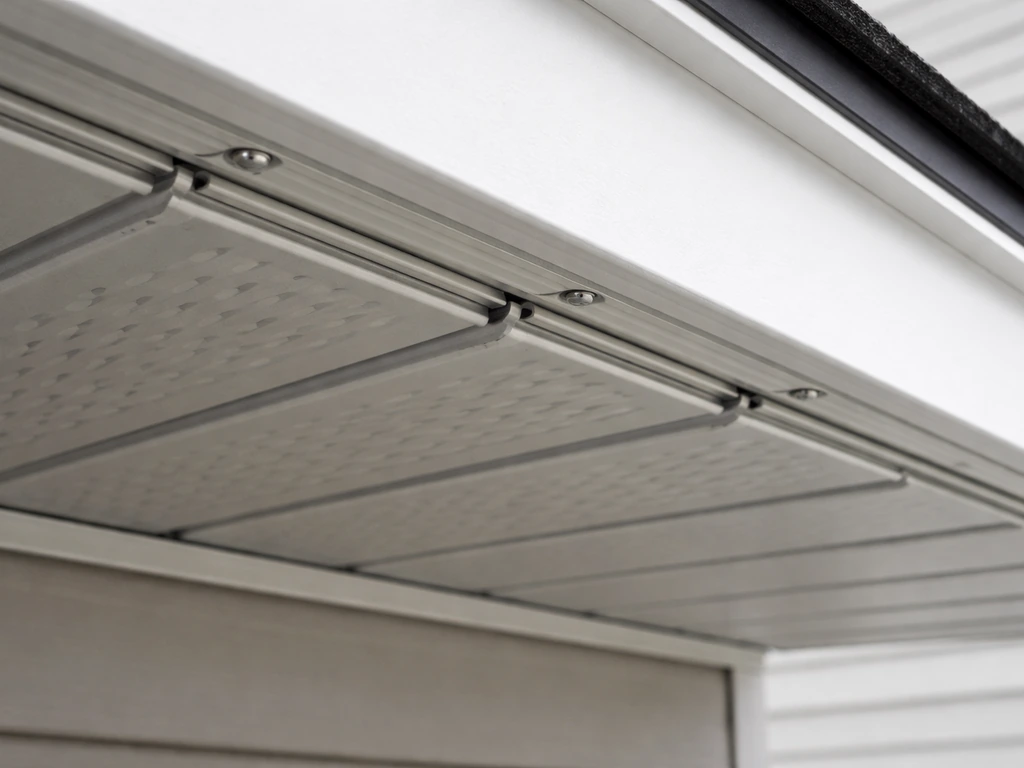
Aluminum soffit panels are the premium version of the same concept. Systems like ATAS Wind-Lok use an interlocking 'hook, pull, and fasten' profile that's very resistant to wind uplift, which matters on open patios where the ceiling edge is exposed. Aluminum doesn't warp, doesn't rot, and handles coastal salt air better than wood or vinyl. Vented aluminum panels reduce condensation by allowing airflow through lanced openings in the panel face. Vedrex and similar suppliers offer panel lengths up to 19 feet, which means fewer seams on longer patio spans. The tradeoff: aluminum dents if you hit it hard (think a falling branch), and it costs more per linear foot than vinyl. Painting aluminum is possible but not usually necessary since most systems come pre-finished.
Wood
Wood is the most beautiful option and also the most demanding. Tongue-and-groove cedar, redwood, or pressure-treated pine ceiling boards give a patio a warm, finished feel that vinyl and aluminum simply can't match. But wood outdoors needs to be sealed, painted, or stained every two to three years depending on exposure. In humid climates without good airflow, unpainted or poorly sealed wood will grow mildew and eventually rot. If you go with wood, use a species with natural rot resistance (cedar and redwood are the classic choices) or use pressure-treated lumber rated for ground contact or above-ground exposure. Always paint or seal cut ends, and use hot-dip galvanized or stainless fasteners so you don't get rust streaks down your ceiling boards.
Engineered wood (LP SmartSide)
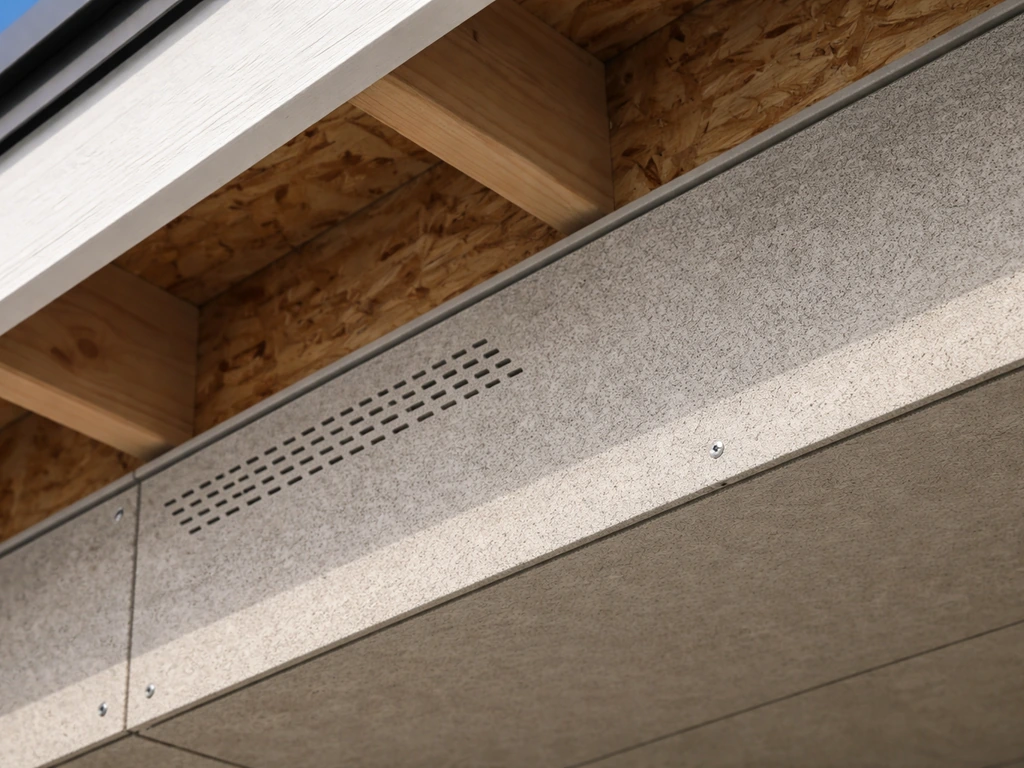
LP SmartSide soffit panels are made from wood strands bonded with resin and treated to resist fungal decay and insects. They're covered by a prorated 50-year limited warranty when installed per spec. LP's installation guide requires hot-dip galvanized nails and specifies using 100% acrylic exterior paint (not stain or vinyl-based paint) for the finish coat. They look more like real wood than vinyl does, take paint well, and hold up better than plain wood in moderate-humidity climates. They're not immune to moisture if water gets behind the panels and sits there, so proper flashing and ventilation still matter.
Fiber cement (James Hardie)
HardieSoffit panels from James Hardie are made from a cement-sand-fiber composite that's non-combustible, highly moisture resistant, and dimensionally stable. The vented version provides 5 square inches of net free ventilation area per lineal foot, which is a useful spec when you need to meet code ventilation requirements. Fiber cement doesn't rot, doesn't burn, and doesn't get eaten by insects. It does need to be painted, and it's heavier and harder to cut than vinyl or aluminum. It's a good pick for wildfire-risk areas or anywhere you need a Class A fire rating on the exterior.
Composite and PVC trim board
Solid PVC or composite boards (like Azek) are popular for enclosed or semi-enclosed patio ceilings because they machine just like wood but won't absorb moisture. Azek's soffit system has specific installation sequencing that requires positioning vented panel edges before fastening to the subfascia, so you do need to follow manufacturer instructions carefully. These materials are heavier than vinyl panels, cost more, and are typically used as trim and ceiling boards in higher-end patio builds rather than large panel soffit runs. They take paint easily and are very low maintenance once installed.
Fabric and shade panels
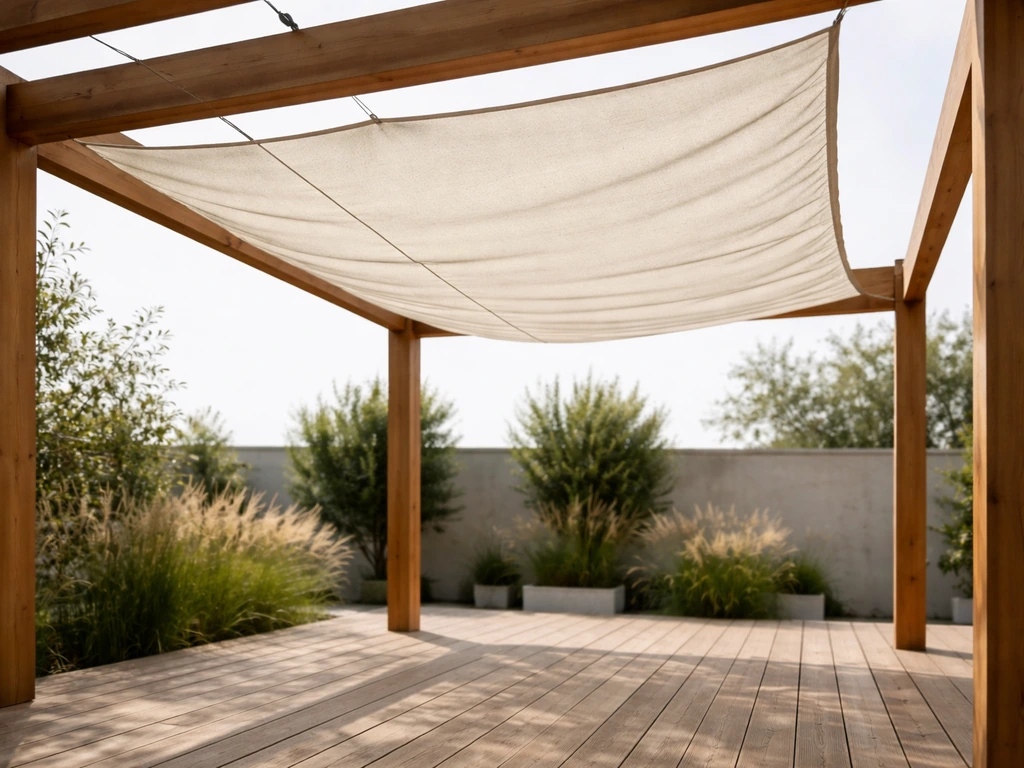
Fabric systems (shade cloth, retractable awnings, or tensioned outdoor canvas) work well over open pergolas where you want light control and partial weather protection without building a full roof. They're not a true ceiling material in the structural sense and won't hold up to heavy rain the way a solid panel will. They're best treated as a seasonal or supplemental option rather than a permanent ceiling finish. For pergolas and open-structure patios, fabric is often the only realistic ceiling option unless you're adding actual roofing above.
Moisture, rot, and mold: matching the material to your climate
The EPA's moisture-control guidance is clear: manage moisture movement at the design stage, not after the fact. For patio ceilings, that means two things: choose a material that doesn't absorb water, and detail the installation so water can't pool or get trapped behind the panels. In humid climates (the Southeast, Pacific Northwest, Gulf Coast), vinyl and aluminum are the safest bets because neither material feeds mold. Wood in these climates without consistent paint maintenance is asking for trouble, especially on north-facing patio ceilings that don't get enough sun to dry out.
In dry climates like the Southwest, wood performs much better because the air doesn't stay wet long enough to cause mold or rot. A cedar tongue-and-groove ceiling in Phoenix or Albuquerque is a reasonable choice with minimal maintenance. In coastal areas, salt air accelerates corrosion on fasteners and can pit aluminum if the alloy isn't rated for coastal exposure, so always check that your aluminum panels and fasteners are marine-grade or have a coastal-rated finish. The APA's guidance distinguishes between open and closed soffit conditions: for open soffits (exposed to weather from below), you need Exposure 1 or Exterior-rated panels, not standard interior-grade sheet goods.
Keeping the ceiling cool: insulation, radiant barriers, and ventilation
A patio ceiling that traps heat between the panel and the roof deck turns the whole patio into a radiator. The DOE recommends radiant barrier foil installed between rafters (draping the foil rather than laying it flat reduces dust accumulation on the reflective face). For a covered patio ceiling, you can add a foil-faced radiant barrier above your ceiling panels before closing up the cavity, and it makes a noticeable difference on hot afternoons. This works best when there's an air gap between the radiant barrier and the underside of the roof deck so heat can actually escape.
Ventilation is the other piece. IRC R806.1 requires net free ventilating area of at least 1/300 of the attic floor area, and that math applies when your patio ceiling cavity connects to the main attic. Building Science Corporation explains this as a connected ventilation path: air needs to enter at the soffit, travel up through the rafter bays, and exit at the ridge. If your patio roof doesn't have a ridge vent, or if the soffit panels are all solid (not vented), you get a dead air pocket that holds heat and humidity. That moisture can condense on the wood framing above your ceiling and cause mold even when the ceiling panel itself is vinyl or aluminum. Use vented soffit panels wherever the cavity connects to the roof system, and make sure the airflow path is actually open from soffit to ridge.
For fully enclosed patio rooms, insulated ceiling panels are worth considering. Structural insulated panels (SIPs) or foam-backed metal panels give you both a finished ceiling and an R-value in one layer, which matters if the patio room is conditioned or semi-conditioned. The pitch of the patio roof also affects ventilation and drainage; a low-slope ceiling cavity is harder to vent properly than a steeper one. The proper pitch matters because it affects how well the ceiling cavity can drain and ventilate The pitch of the patio roof also affects ventilation and drainage.
Durability, maintenance, and design tradeoffs
Every material has a maintenance rhythm you're signing up for, and it's worth thinking about honestly before buying.
- Vinyl: Wash with a garden hose or mild soap solution every year or two. No painting, no staining. Check for cracked panels after hard winters. Solid panels can yellow over time in intense UV, so look for panels with UV stabilizers.
- Aluminum: Wipe down annually. Inspect panel edges for denting or paint peeling. Pre-painted aluminum usually holds color well for 15-plus years if you chose a quality product. Avoid steel fasteners that will rust against the aluminum and cause staining.
- Wood: Sand and repaint or restain every 2-3 years outdoors. Check for mildew with a bleach solution and scrub before refinishing. Replace any boards showing rot or checking at the ends.
- Engineered wood (LP SmartSide): Repaint every 5-7 years with 100% acrylic exterior paint. Inspect caulked joints annually. Do not let mulch or debris pile against the panels.
- Fiber cement (HardieSoffit): Repaint every 5-10 years depending on UV exposure. Clean with a pressure washer on a low setting. Heavy but very durable; panels rarely need replacing.
- Composite/PVC: Essentially maintenance-free except for occasional cleaning. Accepts paint if you want a color change. Does not warp or rot. More expensive upfront but lowest long-term maintenance cost.
For expansion and contraction, vinyl is the most sensitive. It expands significantly in summer heat, so panels need to be installed with the correct gap at ends and seams. Installers who skip this step end up with buckling panels within a year. Aluminum expands less than vinyl. Wood expands and contracts across the grain, which is why tongue-and-groove profiles are designed with the interlocking fit to accommodate movement. Fiber cement is the most dimensionally stable of the group.
What it will actually cost
Installed soffit and porch ceiling costs in 2026 typically run from $4 to $22 per linear foot depending on material, labor market, and complexity. Angi puts the average installed vinyl soffit at $10.20 per linear foot with a typical range of $6.50 to $14. Aluminum runs slightly higher at $7 to $20-plus per linear foot for premium systems. Wood and vinyl at the low end overlap around $6 to $10 per linear foot installed. Fiber cement and composite tend to land in the $10 to $18 range.
What drives the price beyond material: the total square footage of the ceiling, whether the existing structure needs repair (rot in fascia boards or rafter tails adds labor and material cost fast), ceiling height and access difficulty, whether you need vented panels with proper ventilation detailing, and the local labor market. Soffit work on a simple 12-foot patio overhang is straightforward. The same job on a complex hip roof with multiple corners and returns takes much longer. Always get the quote broken down by linear feet of material and hours of labor so you can cross-check against published ranges.
Continuous vented aluminum or vinyl soffit material itself (just the panels, not installed) runs roughly $0.50 to $2.00 per linear foot for the material. Labor typically accounts for the majority of the total cost, especially if the installer has to remove old material, repair framing, or work at significant height.
DIY or hire a pro?
Vinyl and aluminum panel installation is one of the more DIY-accessible exterior jobs out there if you're comfortable on a ladder and own basic tools. The panels are light, the fastening systems are designed for straightforward installation (most click or overlap), and the cutting can be done with aviation snips or a circular saw with a fine-tooth blade. That said, there are a few spots where DIY goes wrong.
- Skipping expansion gaps on vinyl panels. Panels need clearance at every end and seam. Tight installation looks neat but buckles in summer.
- Blocking ventilation. A common DIY mistake is replacing vented soffit panels with solid ones (or vice versa) without thinking through whether the attic needs soffit intake. If you're removing vented material, make sure you're not closing off the only intake path for your attic ventilation. This is exactly the kind of question that trips up people who discover the issue only after mold appears in the attic.
- Wrong fasteners. Wood screws into aluminum or vinyl panels without pre-drilling or correct head size can split panels or cause dimpling. Use manufacturer-specified fasteners.
- Not checking for rot first. If the fascia or rafter tails are soft, putting new panels over them just hides the problem. Probe with a screwdriver before installing anything.
- Skipping flashing at the wall. The back edge of a porch ceiling needs to be flashed or caulked against the wall properly so water doesn't sneak behind the panels and into the framing.
Hire a pro for fiber cement (it's heavy and the dust requires respiratory protection with proper cutting tools), for any ceiling area that requires scaffolding rather than a standard ladder, or any time you discover rot or structural damage in the framing. CostHelper notes that DIY is feasible for comfortable homeowners on simple soffits, but complex rooflines and structural repairs are worth the professional labor cost.
Matching the ceiling material to your patio setup
The right material isn't the same for every patio. Here's how to think about it based on your specific setup.
Open covered patio (overhang or lean-to roof, no walls)
This is the most common scenario. Vinyl or aluminum panel systems are purpose-built for this application and are the most practical choice. Use vented panels if the cavity connects to the attic. Make sure the pitch of the roof is enough to drain water away from the house; a low-pitch patio roof with a dead-flat ceiling can trap water at the fascia. The ceiling material here is essentially soffit material and should be treated as such, including using APA Exposure 1 or Exterior-rated structural panels if you're using sheet goods rather than a panel system.
Semi-enclosed patio (screened porch or three-season room)
With walls on most sides but no full weatherproofing, you're still dealing with humidity, insects, and indirect rain. Vinyl, aluminum, or composite panels all work well here. Wood is manageable if you're committed to maintenance. The ceiling in a screened porch is less exposed than a fully open soffit but still sees far more moisture than an interior ceiling, so avoid anything not rated for exterior or semi-exterior use.
Fully enclosed patio room
If the patio has been fully enclosed with proper walls, weatherstripping, and HVAC, the ceiling material options open up considerably. You can use tongue-and-groove wood for a warm look, install drywall with a moisture-resistant paper, or use composite panels for a finished appearance. Insulated panels make more sense here because the space is conditioned. Ventilation requirements shift too: you're no longer ventilating an attic through the ceiling, but you do need to ensure the enclosed space has adequate air exchange to prevent humidity buildup.
Open pergola (no roof deck above)
Strictly speaking, a pergola doesn't have a ceiling unless you create one. Fabric shade panels or tensioned shade cloth are the practical options here since the structure isn't designed to carry solid panel loads or shed rain. If you want a real ceiling on a pergola, you're looking at a structural upgrade: adding roofing above the rafters, then installing ceiling panels below. That's a significant project and worth understanding before you buy pergola ceiling panels expecting them to solve a shade or rain problem on their own.
Before you buy: what to measure and what to ask
Get the linear footage of all ceiling runs (length times number of runs, including returns at corners). Patio railing height should be planned using local code rules, safety requirements, and the specific height of your deck or platform how high should a patio railing be. Measure the width of the overhang or porch ceiling bay so you know what panel width or length you need. Check whether your roof system has a ridge vent and whether the soffit currently has vented panels. If it does, you need to maintain that ventilation path. Note whether the existing framing is solid or shows any soft spots.
When you talk to installers, ask specifically: Are the existing rafter tails and fascia solid? Will you use manufacturer-specified fasteners? How are you handling expansion gaps on vinyl? Does this installation need a permit in my municipality? (Some jurisdictions require permits for exterior structural work even on simple soffit replacements.) Ask them to quote vented and solid panel options separately so you understand the cost difference. And if your patio roof pitch is very low, ask how they're handling water drainage at the eave so you don't end up with pooling behind the fascia.
FAQ
Are exterior-rated sheet goods (plywood or boards) acceptable for patio ceiling soffits instead of vinyl or aluminum panels?
Sometimes, but only if they’re labeled for exterior or at least Exposure 1 and installed as part of a soffit detail that allows drying and ventilation. For many patio ceilings, manufacturers prefer purpose-built soffit systems because they include the right venting characteristics and fastener spacing, plus they resist moisture cycling better than generic boards.
What’s the best material choice if my patio ceiling cavity connects to an attic?
Use vented soffit panels that keep the air path continuous (soffit intake to rafter bay airflow to ridge or exhaust). Even if you choose non-absorbing materials like vinyl or aluminum, trapping humidity in the cavity can still lead to mold on framing above, so the venting design matters as much as the panel material.
Can I mix materials, like vinyl panels with a wood trim border or a wood ceiling section?
Yes, but treat the wood as the maintenance variable. A common setup is vinyl or aluminum for the main field with exterior-rated wood trim, but you must seal all cut ends, use corrosion-resistant fasteners, and ensure the wood is not positioned where water can pool behind it or wick moisture from the panel edge.
How do I choose between vented and solid soffit panels?
Choose vented panels when the space above needs airflow, such as when the ceiling cavity connects to an attic or enclosed rafter bay. Choose solid panels only if your ventilation strategy is handled elsewhere in the roof system and you have a clear reason to avoid openings. If you’re not sure, ask the installer to point out the inlet path and how air exits at the ridge.
What’s the most common reason patio ceiling panels fail prematurely?
Most failures come from missed installation details rather than the material itself, especially expansion gaps and ventilation. Vinyl is the prime example, installers must leave correct gaps at panel ends and seams to prevent buckling in summer heat, and both vinyl and aluminum still require a working moisture-control ventilation path.
If I live in a coastal or salt-air area, what should I change about material selection?
Confirm the aluminum and fasteners are coastal rated, ideally marine-grade, because salt can accelerate corrosion and pitting. Also consider using stainless or hot-dip galvanized hardware for any wood components or trim, and expect more frequent inspections at edges, corners, and where debris can hold moisture.
Is wood still a good option in humid regions like the Pacific Northwest or Gulf Coast?
It can be, but it’s the highest-maintenance path. If wood is your choice, plan for consistent sealing or painting schedules, prioritize cedar or redwood or properly rated treated lumber, and do not rely on a coating you’re not willing to renew. Any lack of airflow can also cause mildew even if the wood seems “ok” initially.
How should I think about fire safety requirements for patio ceilings?
In wildfire-prone areas or when you want non-combustible materials, fiber cement is often a strong option because it’s not combustible and resists insect damage. Confirm local codes for exterior soffits and whether a non-combustible ceiling assembly is required for your specific patio roof and occupancy setup.
Can I install a radiant barrier foil above a patio ceiling with any material?
Usually yes, but it must be installed to preserve an air gap and avoid blocking airflow paths. The foil is placed above the ceiling panels, and you want it draped or positioned so the reflective surface stays effective without creating dust-holding contact that reduces performance over time.
What should I ask about warranties when selecting vinyl or engineered wood products?
Ask whether the warranty is conditional on using manufacturer-specified fasteners, required paint systems, and correct installation details like venting and spacing. Some transferable warranties still require proof of installation compliance, so get the product model number and installation specifications in writing before work starts.
Is it okay to DIY patio ceiling panels, and which materials should I avoid doing myself?
Vinyl and aluminum are typically the easiest for DIY if the area is reachable with safe ladder access and the job is a simple soffit run. Avoid DIY for fiber cement because it’s heavy and cutting creates hazardous dust, and consider hiring out for any job requiring scaffolding, working over complex rooflines, or repairing rotted framing first.
How do I calculate the correct amount of ceiling material before getting quotes?
Measure total linear footage for each run (length times number of bays), include returns at corners, and confirm whether you need additional trim pieces for fascia and edging. Many quotes come down to linear footage plus waste factors, so ask for a clear cut list or a material takeoff method to prevent surprises.
Do I need a permit for replacing patio ceiling panels?
Often it depends on your municipality and whether the work affects structure, like fascia boards, rafter tails, or framing repairs. Even “just soffit replacement” can trigger a permit in some jurisdictions, so ask the contractor to confirm permit requirements in writing and clarify what they will handle.
What’s the best material for a screened porch versus a fully open soffit?
A screened porch usually has less direct rain exposure, but it still sees elevated humidity and insect activity. Vinyl, aluminum, and properly rated composite panels usually perform well without the frequent re-coating schedule wood needs, while wood can work if you’re committed to maintenance and the installation includes good drying airflow.
Next Article
What Is the Proper Pitch for a Patio? Measurements
Proper patio pitch guide with slope targets, how to measure fall per foot, and steps to prevent pooling and trip hazards