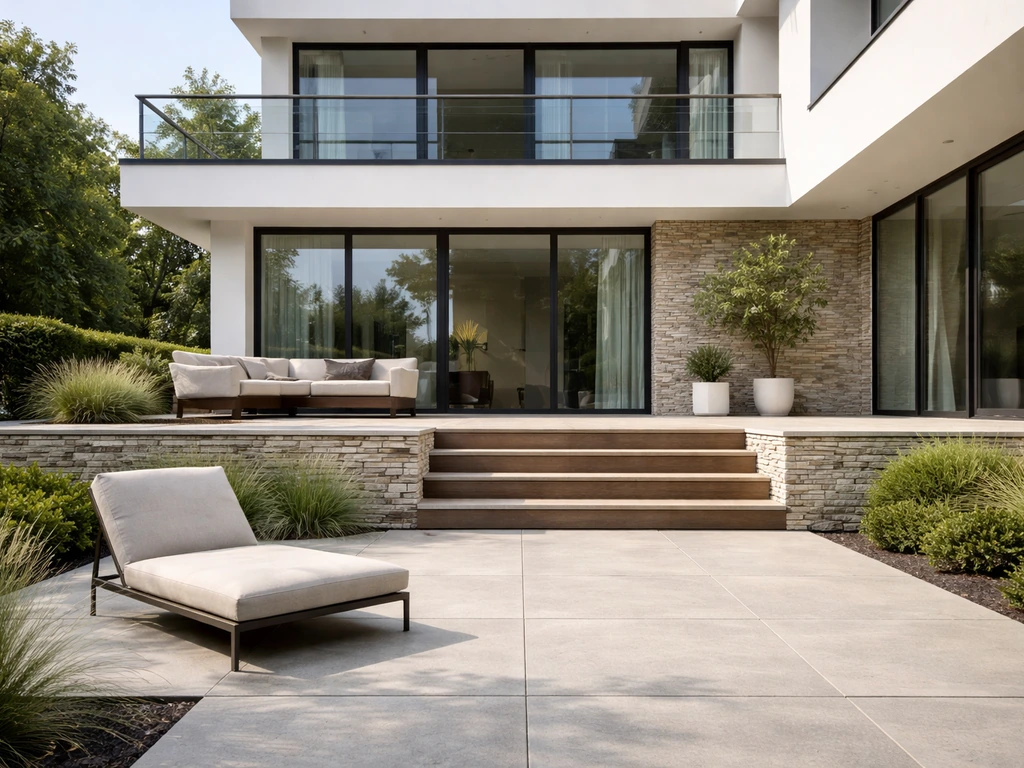
blank" rel="noopener noreferrer">A porch is a covered, roofed extension attached to your house, usually at an entry point. A patio is a ground-level outdoor surface, most often concrete or pavers, that sits on the ground beside your home. A deck is an elevated, framed platform, typically wood or composite, that projects from your house and is supported by posts and footings. A balcony is a raised platform attached to a building with a railing, which is quite different from a deck, patio, or terrace. Those three sentences cover about 90% of the confusion. The rest is about which one fits your yard, your budget, and how you actually want to use the space.
Difference Between Porch, Patio, and Deck: What to Choose

Miles Hart
13 May 2026
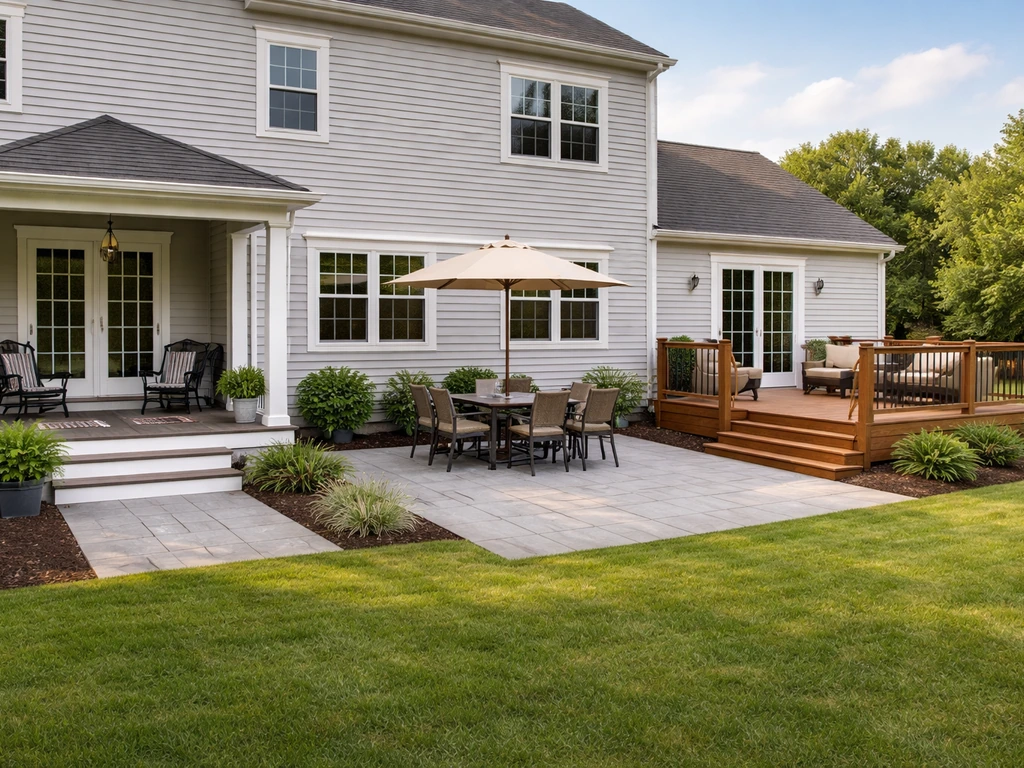
Plain-English definitions: porch, patio, and deck
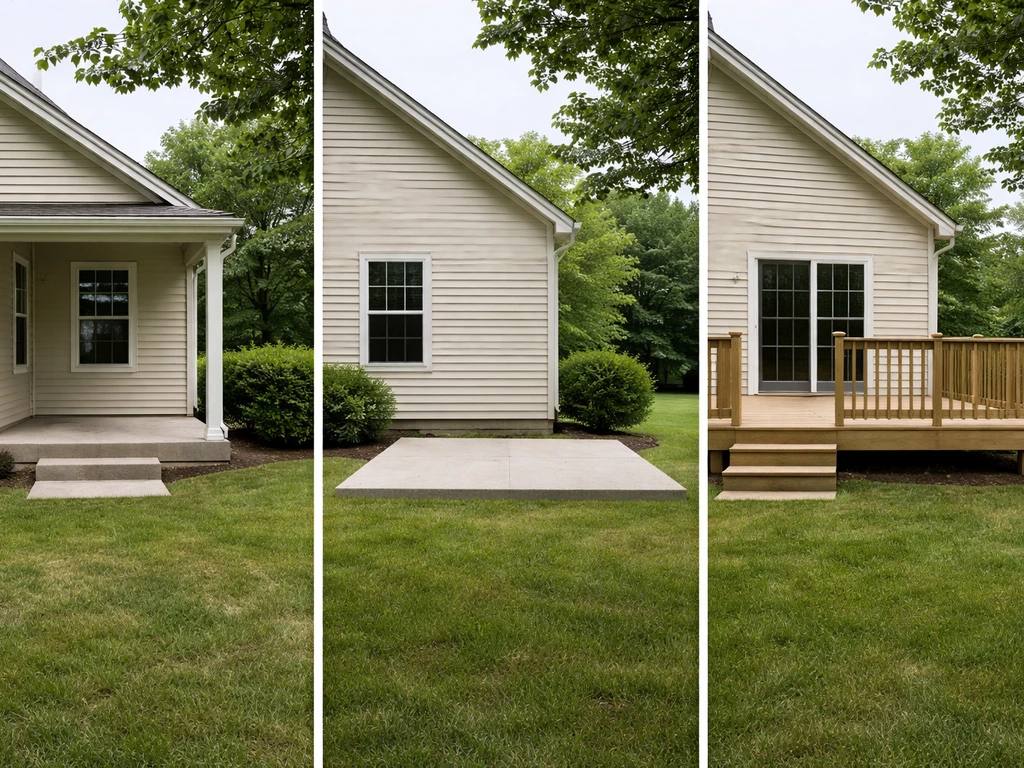
A porch is architecturally part of your house. It has a roof over it, it's attached to the building, and it usually wraps around an entry door. Many local zoning codes actually treat a porch as part of the principal structure for permitting purposes, not as a separate accessory. A covered front porch with columns is the classic image. Some porches have partial walls or screens; others are fully open at the sides. The defining feature is the roof.
A patio is the simplest of the three. It's a ground-level outdoor surface, built flush with the surrounding grade, made from materials like poured concrete, pavers, or natural stone. There are no posts, no structural frame, no footings. You're essentially hardscaping the ground. A patio can sit right against your house or be detached in the backyard. It doesn't require a roof or cover to be called a patio, though you can add a pergola or awning over one.
A deck is a raised, framed outdoor platform. It's typically made from pressure-treated lumber or composite decking boards, sitting on joists that are supported by posts anchored to concrete piers. It can be low to the ground or significantly elevated depending on your home's first-floor height. Because it's a structural build, it almost always needs a permit. If you picture a house on a sloped lot with a wood platform extending off the back door, that's a deck.
Placement and how each one attaches to your house
Placement is where these three structures really separate from each other. A porch is almost always at the front or rear of the house, directly connected to a doorway, and built as part of the home's footprint. Angi notes that in common US usage, homeowners often use terms like “front porch” for covered entrance extensions, “patio” for ground-level sitting areas, and “deck” for raised platforms that project from the home A porch is almost always at the front or rear of the house, directly connected to a doorway. It reads as part of the architecture. A deck is almost always attached to the house via a ledger board bolted to the rim joist, which means it projects outward from the back or side of your home. Some decks are freestanding, but the overwhelming majority are ledger-attached. A patio is the most flexible in placement. It can be attached right against your foundation or placed anywhere in your yard with no structural connection to the house at all.
That flexibility matters more than people realize. If your yard slopes away from the house, a patio placed at the door level would require a lot of grading or end up elevated, which is where a deck makes more practical sense. If you're trying to decide balcony vs patio for a usable outdoor area, placement and grade changes like these are exactly what to evaluate deck makes more practical sense. If you want something right at your back door without elevation change, a patio or a ground-level deck are your options. A patio or a deck can also help you compare deck vs patio vs porch for your specific layout, budget, and comfort needs. That’s where the patio vs porch decision often comes down to whether you want roof cover and built-in weather protection a patio or a ground-level deck. If you want a covered entry experience at the front of the house, a porch is the right category.
Height, flooring, and materials
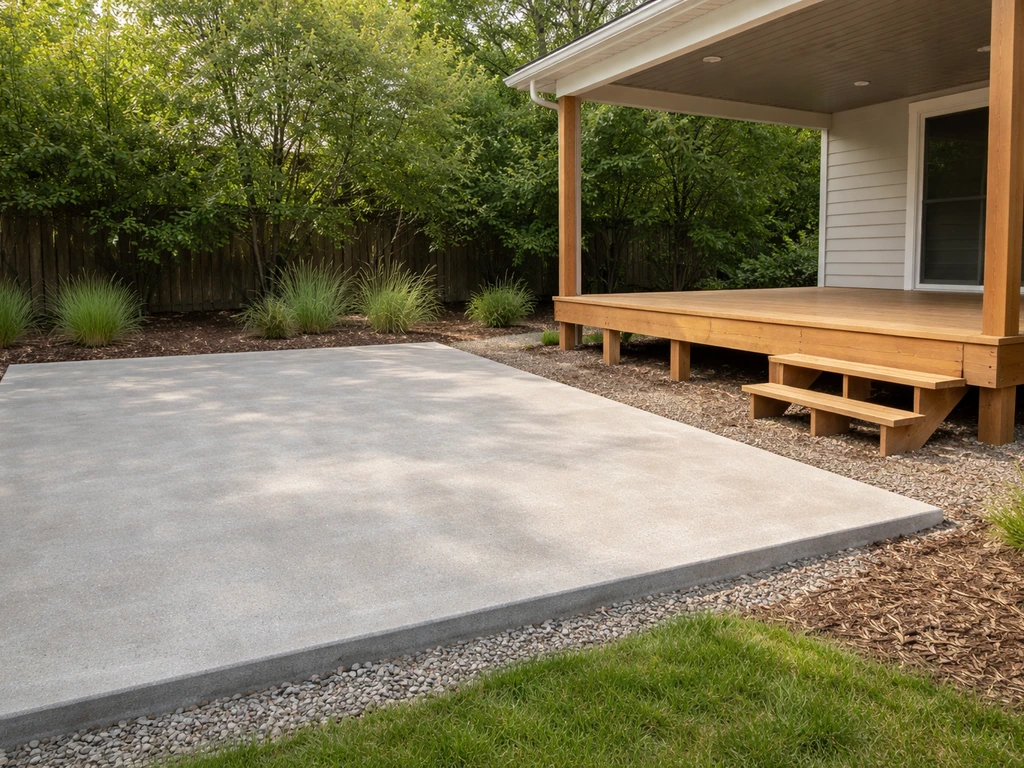
On-grade: patios
Patios are built at grade, meaning they sit on or very close to the ground. Common materials are poured concrete (the most affordable), concrete pavers (more visual variety), natural stone like flagstone or bluestone, and brick. Poured concrete runs roughly $5 to $15 per square foot installed. Paver patios run higher, around $10 to $17 per square foot, depending on the paver type and the amount of base prep needed. The surface sits directly on a compacted gravel base, so there's no framing, no posts, and no structural engineering required.
Elevated: decks
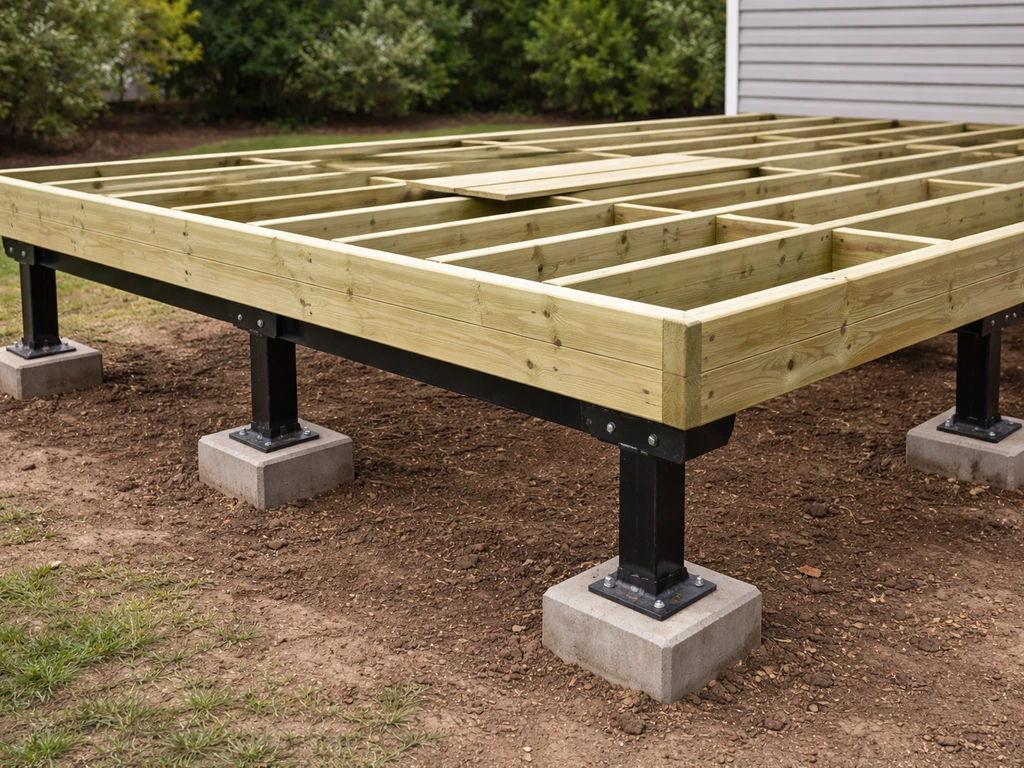
Decks are raised. How high depends on where your door is relative to grade. A typical attached deck uses pressure-treated joists sitting on posts that are anchored to concrete piers below the frost line. The surface is decking boards, either pressure-treated pine, cedar, redwood, or composite (PVC/wood fiber blends). Composite has gotten very popular because it doesn't need staining and holds up better in wet climates. Installed costs for a wood deck run about $25 to $50 per square foot, while composite builds often come in at the higher end or beyond. Total project costs for a standard-sized deck typically land between $8,000 and $20,000. One safety note tied to height: once an open-sided deck surface is 30 inches or more above grade, building code (IRC R312) requires guards at a minimum height of 36 inches. That adds cost but also adds safety and gives the deck a more finished look.
Attached and covered: porches
A porch can be at grade level or slightly elevated with a step or two. The floor is often wood, composite, or concrete, but the defining construction element is the roof structure above it: rafters, columns or posts, and usually a ceiling. Some porches have a concrete slab floor; some have framed wood floors like a deck. Porch costs are harder to generalize because they vary so widely by size, roofline complexity, and whether the roof ties into the existing home's structure. Budget $20,000 to $75,000 or more for a full screened or covered porch addition, though small entry porches can be less.
Cover, weather protection, and comfort
This is a real-world use difference. A porch wins on weather protection because the roof is built-in. You can sit on a porch in light rain, in direct sun, or on a chilly fall afternoon and stay comfortable. A screened porch adds bug protection too. That covered, sheltered quality is the main reason people love porches and why they're often treated as an extension of interior living space.
Decks and patios are open by default. You can add a pergola, retractable awning, shade sail, or even a full roof structure over a patio or deck, but that's an additional cost and design consideration. Without added cover, both are weather-dependent spaces. A composite or treated wood deck in full sun gets very hot in summer, which matters if you're in the South or Southwest. A concrete patio has the same problem, though pavers absorb slightly less heat. On the flip side, open decks and patios feel more spacious and have better sightlines to your yard, which is part of their appeal for entertaining or watching kids play.
Cost comparison and maintenance
| Structure | Typical Installed Cost (per sq ft) | Typical Project Range | Main Maintenance Tasks |
|---|---|---|---|
| Poured concrete patio | $5 – $15 | $3,000 – $10,000 | Sealing every few years, crack repair |
| Paver patio | $10 – $17 | $5,000 – $15,000 | Re-sanding joints (polymeric sand), cleaning, occasional re-leveling |
| Wood deck (pressure-treated) | $25 – $50 | $8,000 – $20,000+ | Clean at least twice/year, stain or seal every 2-3 years, board replacement over time |
| Composite deck | $30 – $60+ | $10,000 – $25,000+ | Periodic cleaning, no staining needed |
| Covered porch addition | Varies widely | $20,000 – $75,000+ | Roof maintenance, paint/stain on wood, screen replacement if screened |
Maintenance is a real ongoing cost that rarely gets enough attention before the build. Pressure-treated wood decks need cleaning at least twice a year and need to be re-stained or sealed every two to three years to prevent cracking, warping, and discoloration. Composite decks reduce that burden significantly, which is why the upfront cost premium often makes sense over a 15 to 20-year ownership window. Paver patios need periodic re-sanding of joints with polymeric sand to control weeds and prevent ant tunneling. Polymeric sand is effective for roughly five years before it needs to be refreshed. Concrete patios are low maintenance until they crack, which they eventually will, especially in freeze-thaw climates. Porch maintenance mirrors whatever materials were used for the floor and frame, plus roof upkeep.
Home value impact and resale
Decks consistently rank well in resale return data. Zonda's Cost vs. Value reporting has shown wood deck additions returning around 95% of project cost at resale in strong markets, which is unusually high for a home improvement project. TimberTech cites a national average of about 44% ROI in added property value, which is more conservative but still meaningful. The variance comes down to market, deck quality, and condition at the time of sale. A rotting, outdated deck can actually hurt your sale, so the maintenance piece directly affects value.
Patio additions tend to add value in a more modest, indirect way. Buyers perceive a clean, well-done paver patio positively, but it rarely moves the needle as dramatically as a deck or porch addition because the construction cost and visible impact are lower. A covered porch, particularly a screened porch in markets like the Southeast, can be a strong selling feature because it adds functional living space with a year-round usability argument. NAR's Outdoor Features Remodeling Impact report consistently shows outdoor living additions generating positive buyer appeal, with covered and screened porches ranking especially well in humid climates.
The honest caveat: the value impact depends on your neighborhood. In a market where most comparable homes have a deck, adding one gets you to parity, not necessarily ahead. In a market where screened porches are common and expected, skipping one can actually hurt your resale position. Pull comps for your area before making a decision based purely on ROI.
How to choose: matching structure to your goals
Start with your yard layout and door height. If your back door is significantly above grade because the house sits on a slope or has a crawl space or basement, a deck is likely your most practical option. A patio at that location would require either substantial fill or stairs down to it. If your yard is mostly flat and your door is at or near grade, a patio is often the better value and the simpler build.
Think about how you'll actually use the space. If you want a front entry experience with shade and curb appeal, a porch is the right answer. If you want a backyard dining and entertaining space with a grill, a deck or patio both work well. If you want a bug-free, rain-tolerant hangout space that feels like an outdoor room, invest in a screened or covered porch. If you primarily want a spot for a patio table and some chairs close to the house without a big budget, a concrete or paver patio is hard to beat. If you're stuck between a terrace and a patio, the key difference is mainly height and how it's built against the ground terrace vs patio.
Accessibility is also worth thinking through early. Patios are the most accessible option by nature because they're flush with grade. Decks require stairs unless they're built at door level, which can be a factor for aging-in-place planning or households with young children. A low-profile deck (less than 30 inches above grade) avoids the railing requirement, which saves cost and simplifies the build.
- Sloped yard or elevated door: deck is almost always the right call
- Flat yard, tight budget: poured concrete or paver patio gives the best cost-per-usable-square-foot
- Want weather and bug protection: screened or covered porch is worth the higher investment
- Front of house, curb appeal focus: porch is the architecturally correct choice
- Backyard entertaining, kids, or grill station: deck or patio both work; choose based on elevation and budget
- Aging in place or accessibility priority: on-grade patio removes stairs from the equation
Permits, HOAs, safety basics, and next steps
Permits are not optional for decks and porches. Almost every municipality requires a building permit for a deck or porch addition because they involve structural work, ledger connections, and footings. Some jurisdictions define a deck as any wood platform larger than 5 by 5 feet attached to the house. Even if your jurisdiction has a size exemption, skipping the permit creates real problems at resale when buyers' inspectors start asking questions. Small patios under a certain square footage often don't require permits, but check your local code before assuming.
HOA rules add another layer. Many HOAs restrict deck and patio materials, colors, height, and placement. Some prohibit any structure visible from the street without architectural review approval. Pull your HOA covenants before you finalize any design. Getting a variance after construction is expensive and sometimes impossible.
On the safety side: if any deck surface is 30 inches or more above grade, you need a guard rail system at least 36 inches tall per the IRC. That's not negotiable in a permitted project. Make sure any deck ledger connection is properly flashed and bolted, not just nailed, which is one of the most common deck failure points inspectors flag.
For DIY vs. contractor: a simple ground-level paver patio is a realistic DIY project for a motivated homeowner with a long weekend and proper base prep knowledge. A concrete patio is better left to pros because finishing concrete is time-sensitive and unforgiving. A deck with ledger attachment, footings, and railings is technically DIY-possible but typically requires a permit and inspection, which means the work has to meet code. If you're not confident in framing and footings, the structural liability of getting it wrong makes contractor work worthwhile. A covered porch is almost always a contractor project given the roofline and structural tie-in to the existing house.
Your practical next steps: walk your yard and measure the space you're actually working with. Check your first-floor door height relative to grade. Pull up your municipality's permit threshold for decks and patios (most cities publish this on their building department websites). Check your HOA docs if applicable. Then get two or three quotes from licensed contractors so you have real numbers for your specific site before committing to a structure type. If you're still deciding between two structures, the cost-per-square-foot data above is a useful starting point, but local labor rates vary enough that you want actual bids before budgeting.
FAQ
If I put a roof over a patio, does it become a deck?
Yes, a patio can be covered and still be a patio, but the cover can change the permitting and design requirements. If you add posts and a roof structure, some jurisdictions will treat the added frame as a separate structural element (similar to a small pavilion), not just an accessory awning.
Can a covered deck be treated as a porch for planning or permitting?
Not usually. A porch is defined by its roofed construction tied to the building’s entry experience (front or back) and typically a structural connection to the house for the roof. A deck is an elevated framed platform, even if you cover it, the underlying platform and framing approach are what keep it in the deck category.
If my deck is not attached to the house, do I still need a permit?
It depends on local wording, but many permits trigger based on deck height, attachments, and size. A “freestanding” deck can still require a permit if it’s elevated or has guardrails, and it may still need footings and inspections even without a ledger connection.
Do I avoid guardrails by keeping a deck below 30 inches?
Often, yes. If the raised structure exceeds the local height threshold or creates guardrail needs, a railing system is required. Also, even if you avoid a higher railing requirement by staying low, you still need a safe surface and properly braced posts and framing to meet structural codes.
Is a patio always better for drainage and water management than a deck?
A patio at grade is generally easier to access, but it still needs a proper base and drainage plan. If the ground slopes toward the house, water can flow where you do not want it, increasing foundation and wall moisture issues.
What structural differences matter most when it looks like a “deck porch” hybrid?
Decks can be built to look similar to porches, but the safety and structural details differ. A porch roof typically adds lateral load paths and ties into the house, while a deck focuses on joists, ledger/beam support, and guardrails if elevated.
What mistakes cause problems with stairs and handrails on decks and porches?
Be careful with stairs. Even on a low deck or porch, the riser and tread dimensions and handrail requirements can be strict, and uneven steps are a major inspection fail point. If accessibility is a goal, you may need an alternate grade strategy rather than just adding stairs.
What HOA rules are most likely to affect decks versus patios?
HOAs sometimes treat decks and patios differently than they treat changes to landscaping or hardscape. Common restrictions include material type (wood vs composite), color, visible height, and whether a roof, pergola, or screen is considered a permanent structure requiring approval.
Why do some paver patios need repairs much sooner than others?
For patios, joint sand choices matter because they affect weed growth and movement over time. If you use the wrong sand type, or skip proper base compaction, pavers can shift and you end up doing maintenance sooner than expected.
What patio projects are still likely to require a permit even if it’s “small”?
Many municipalities exempt small patios from permits, but not always. Changes like adding a significant retaining wall, elevating portions above grade, installing a hard connection to utilities, or building a roof structure can re-trigger permit requirements.
How do I decide whether resale value favors a deck or a porch in my area?
Resale impact can flip based on how your neighborhood “normalizes” outdoor living. If buyers already expect screened porches, adding an uncovered patio may underperform versus a covered option, while in other areas a clean deck may be the safer bet.
What site measurements should I take before choosing deck vs patio?
Your site condition often decides the answer before aesthetics do. If the door sits significantly above grade, a patio may require fill and stairs, increasing cost and complexity, while a deck can match the door level with fewer grade changes.
Next Article
Terrace vs Balcony vs Patio: Plus Veranda and Porch Guide
Terrace vs balcony vs patio plus veranda and porch: differences, uses, privacy, costs, and how to choose smartly.