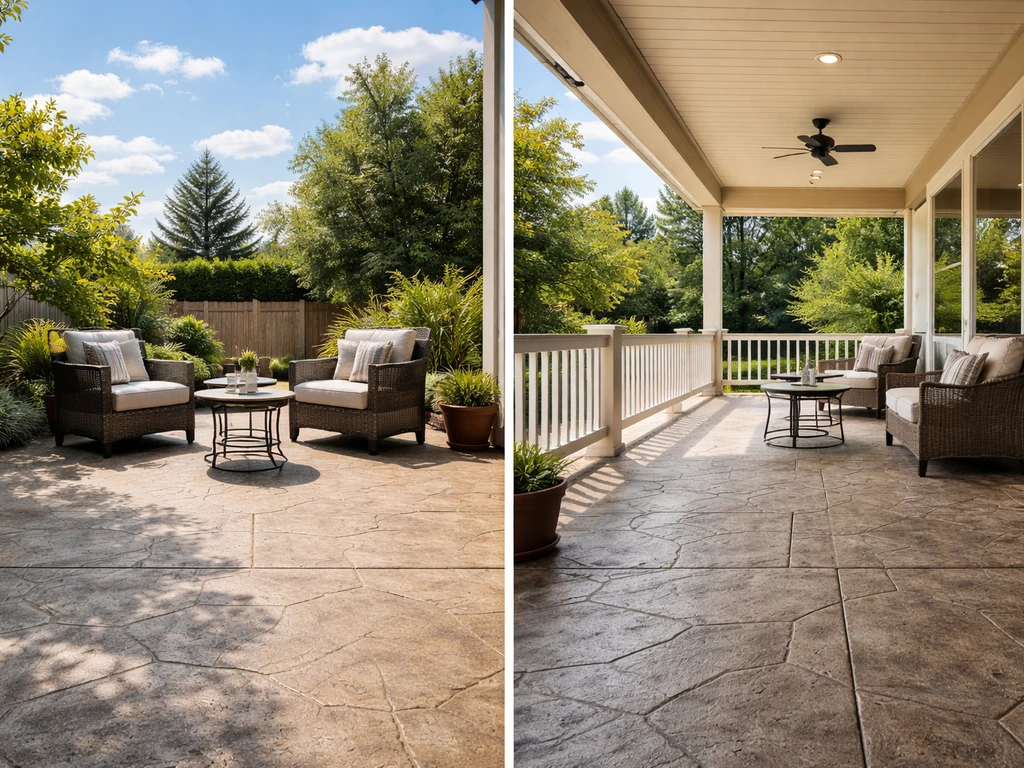
A patio is a ground-level paved area directly outside your home, usually in the backyard, built for sitting and outdoor living. A terrace is an elevated or architecturally raised outdoor platform, either attached to an upper floor, built up from a slope, or sitting on a flat roof. In everyday conversation the two words get used interchangeably, but when you're planning a renovation or talking to a contractor, the distinction matters because the construction method, drainage requirements, permit process, and cost are genuinely different.
Terrace vs Patio Difference: Key Uses, Costs, Materials

Miles Hart
28 Apr 2026
What people actually mean by "terrace" vs "patio"
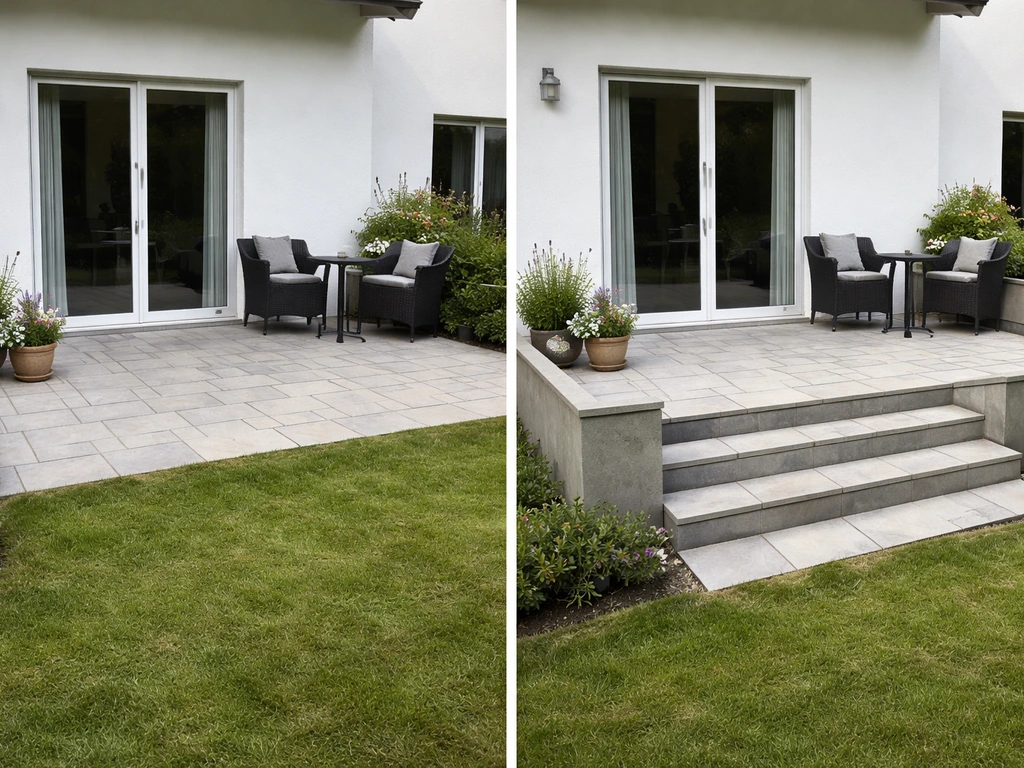
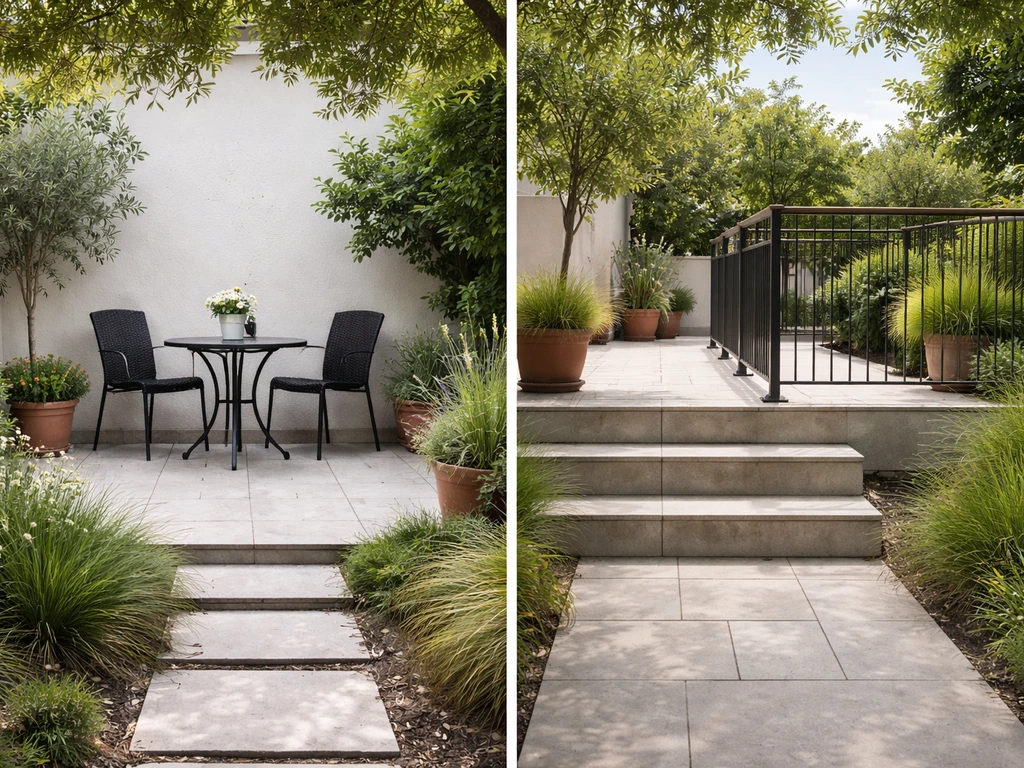
When most homeowners say patio, they mean a flat, paved surface sitting right at yard level behind the house. Oxford's definition nails it: a flat hard area outside, and usually behind, a house where people can sit. Think concrete slab, a grid of pavers, or a flagstone surface laid directly on a compacted gravel base. It adjoins the structure but lives at grade, blending into the yard.
Terrace carries a more architectural meaning. Wikipedia describes it as an external, raised, open, flat area near a building, and that word "raised" is the key. A terrace might be a platform built up from a sloped yard so it sits level despite the grade change underneath. It might be an outdoor area accessed directly from an upper floor, like stepping out of a second-story bedroom onto a platform. Or it might be a roof terrace, a usable outdoor deck on top of a flat roof. All of these imply structure and elevation rather than simple ground paving.
That said, in real life the words overlap constantly. Dictionary.com notes that patio is sometimes used interchangeably with terrace, verandah, or courtyard depending on region. If you're in the UK or Australia, "terrace" often just means the paved area behind the house, identical to what Americans call a patio. For the purposes of this guide, the useful distinction is construction-based: is it sitting on the ground, or is it raised and structurally supported?
Where each one sits on your property
A patio is almost always at grade, meaning the surface is level with, or just slightly above, the surrounding soil. You step out of a back door directly onto it with little or no step down. The space is typically in the backyard, though front-yard patios exist too. Because it sits directly on the ground, the main structural challenge is managing frost heave, proper compaction, and drainage slope. There's no significant vertical drop to worry about.
A terrace, by contrast, involves elevation. The most common residential scenarios are: a raised platform built up from a sloped backyard (so the surface is level but the ground drops away beneath it), an outdoor space connected to an upper story of the house, or a rooftop terrace sitting on top of a flat-roofed structure. Each of these adds structural complexity. A raised terrace on a slope needs retaining walls or pier footings. An upper-floor terrace needs load-bearing framing, waterproofing below the surface, and a railing system. A rooftop terrace involves the most complexity of all, including waterproofing membranes, drainage scuppers, and structural load calculations.
If your yard is flat and you want a usable outdoor area right off the back door, you're almost certainly building a patio. If your yard slopes significantly, you're accessing an upper level, or you have a flat roof you want to use, you're in terrace territory.
Materials and how they're built
Common patio materials
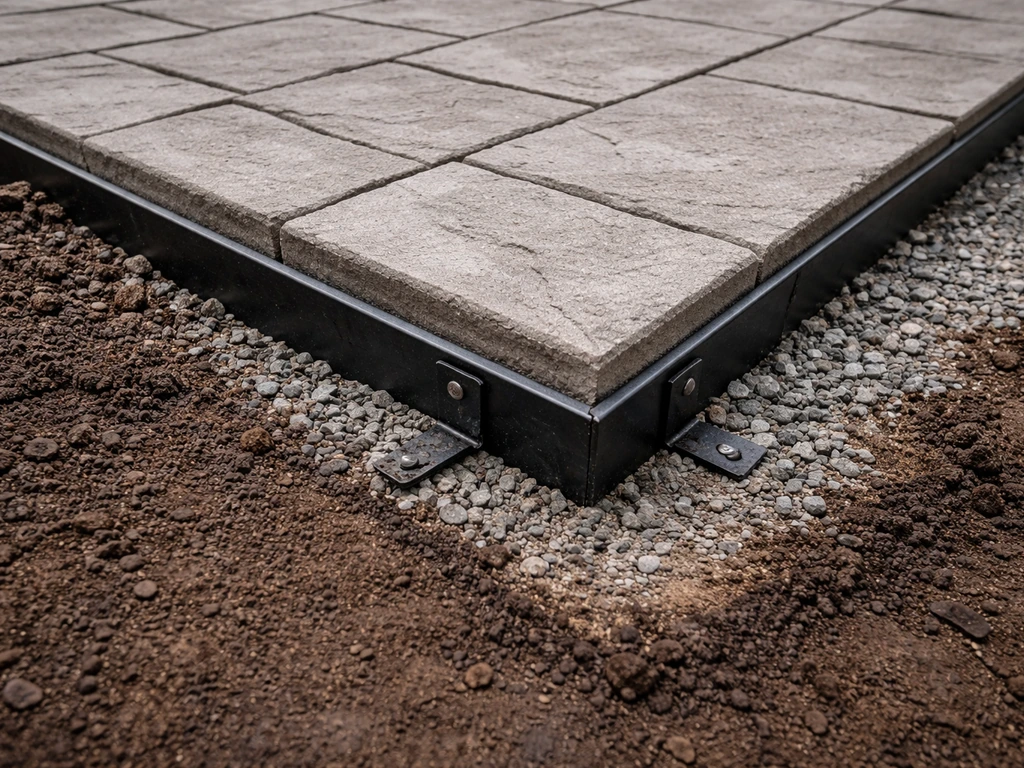
Because a patio sits on the ground, it benefits from materials that handle direct contact with soil, moisture, and temperature swings. The most popular options are concrete (poured slab or stamped), concrete pavers, natural stone like bluestone or flagstone, and brick. Each is laid over a compacted gravel base with a sand setting bed. Installation depth matters: in freeze-thaw climates, that gravel base typically needs to be 4 to 6 inches deep to prevent heaving. A standard concrete paver patio is a realistic DIY project for a handy homeowner on flat ground.
Common terrace materials
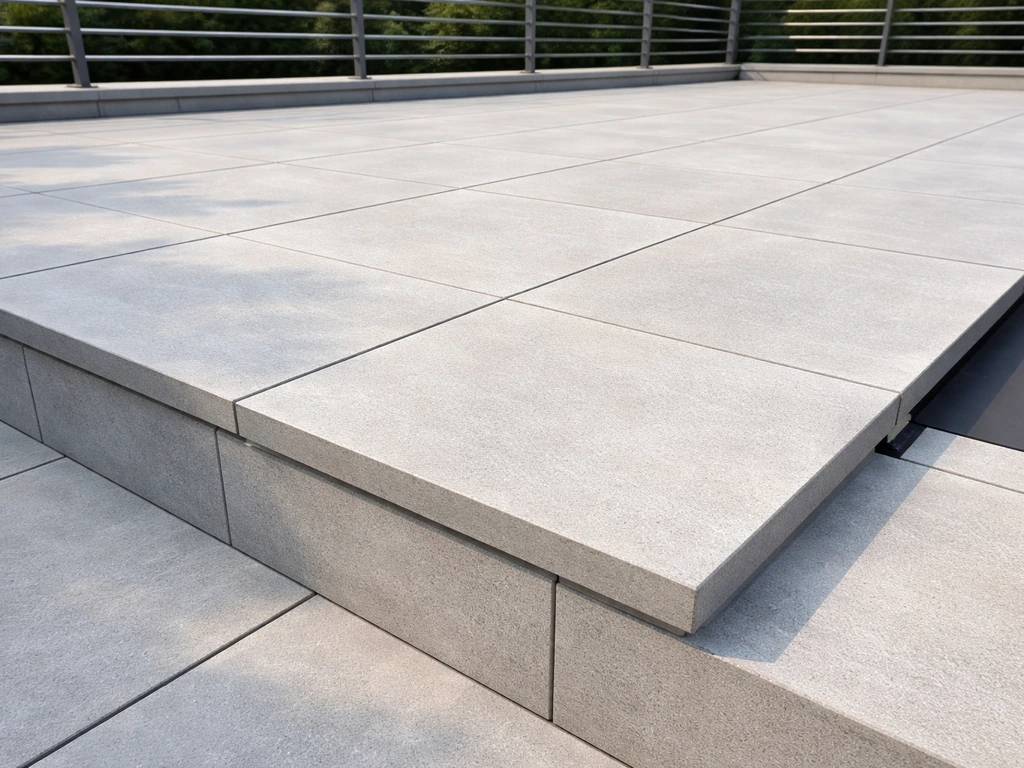
Terraces use a wider range of materials because they're often elevated and need to handle both structural load and water drainage away from the building. Porcelain pavers on pedestals are popular for rooftop and upper-level terraces because pedestals allow water to drain beneath the surface while keeping the deck level. Composite or hardwood decking is common for upper-floor terraces, attached to a framed structure like a deck. Natural stone and large-format porcelain can also work on raised terraces built on sloped ground, though they need proper mortar or pedestal installation rather than a sand set. On a rooftop terrace, the finish material is almost always secondary to the waterproofing membrane underneath it.
| Feature | Patio | Terrace |
|---|---|---|
| Elevation | Ground level | Raised, upper floor, or rooftop |
| Typical materials | Pavers, concrete, flagstone, brick | Porcelain on pedestals, composite decking, stone on framing |
| Structural base | Compacted gravel and sand | Framing, footings, retaining walls, or roofing membrane |
| DIY-friendly? | Yes, on flat ground | Rarely, especially at upper levels |
| Permits typically required? | Sometimes (varies by size/municipality) | Usually yes, especially above grade |
| Drainage approach | Surface slope away from house | Pedestal drainage, scuppers, waterproofing membrane |
| Average cost range | $8–$25 per sq ft installed | $20–$75+ per sq ft installed |
How each space gets used
A patio at ground level naturally flows with the yard. It's the right choice for families who want outdoor dining, a grill setup, or a fire pit area that connects directly to the lawn. Because it's at grade, it's easy to move furniture in and out, kids and pets can run between the patio and yard seamlessly, and it feels casual. Traffic flow is intuitive: you walk out the back door and you're there. For entertaining a crowd, a wide patio is typically the easiest layout to work with.
A terrace, especially a raised or upper-level one, changes the experience considerably. Being elevated gives you a vantage point over the yard, which is great for privacy from neighbors and for views. An upper-floor terrace off a master bedroom or living room creates a distinct retreat feel that a ground patio doesn't replicate. Rooftop terraces in urban settings are often the only viable outdoor option and can function as full outdoor rooms with planters, dining areas, and even small water features. The trade-off is accessibility: furniture needs to be moved differently, large gatherings are harder to manage at height, and there's usually no direct connection to the lawn.
Privacy is worth calling out specifically. A ground-level patio in a suburban backyard can feel exposed to neighbors unless you add fencing or screening. A raised terrace that sits even a few feet above grade can get you above fence lines and give you a sense of separation without needing additional screening. Upper-level terraces are naturally more private from the street. If privacy is a primary goal, elevation works in your favor.
Drainage, maintenance, and weather resistance
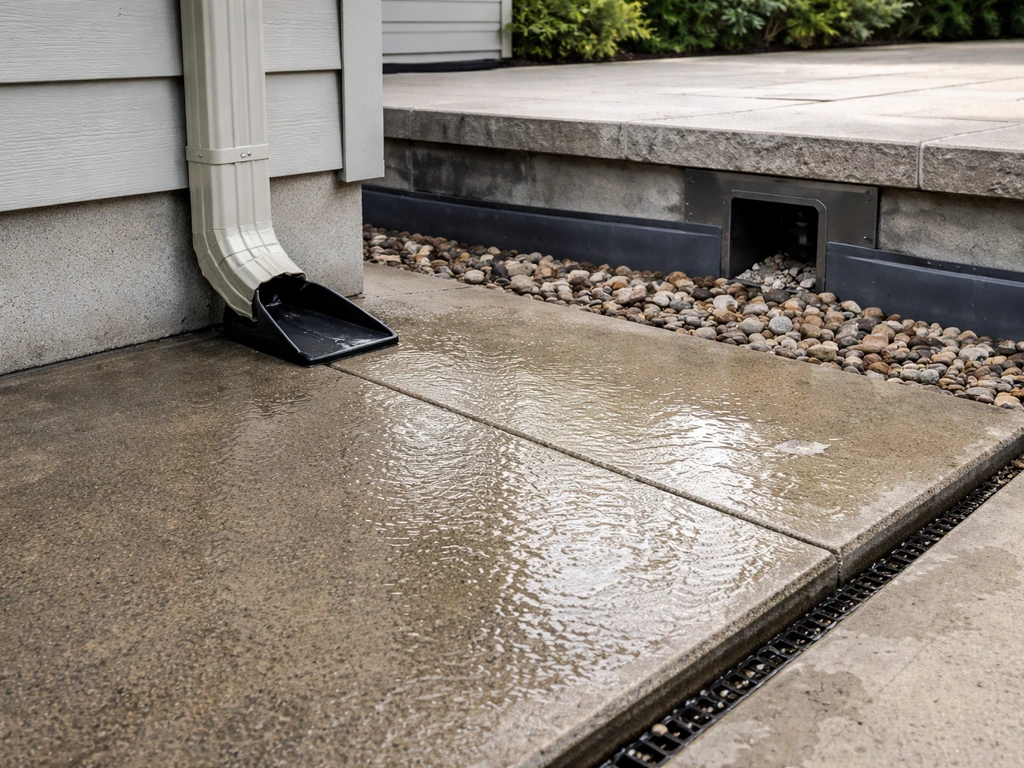
Drainage is probably the most important practical difference between these two structures. A patio just needs a 1-to-2 percent slope (about 1/4 inch per foot) away from the house to keep water from pooling against the foundation. You manage this at the time of installation by grading the base correctly. Maintenance after that is relatively simple: re-sanding joints if pavers shift, resealing stone or stamped concrete every few years, and occasional power washing.
A raised or upper-level terrace introduces much more complex drainage requirements. Water needs to get off the surface and away from the structure below it, not just away from the house foundation. On a rooftop terrace, this means a properly installed waterproofing membrane (typically modified bitumen, TPO, or EPDM), drainage scuppers or internal drains, and a pedestal or framed system that keeps the finish surface above standing water. If any of that fails, you're looking at water infiltration into the structure below, which is an expensive problem. Annual inspection of membrane seams, drains, and flashing is non-negotiable on any rooftop or elevated terrace.
For raised terraces built on a slope with retaining walls and a concrete or paver surface, maintenance looks more like patio maintenance, but you also need to inspect the retaining wall structure periodically for any movement or drainage issues behind the wall. Weep holes in a retaining wall are intended to relieve blank" rel="noopener noreferrer">hydrostatic pressure from groundwater behind the wall, which reduces the risk of water buildup. Weep holes in the retaining wall are critical to prevent hydrostatic pressure from building up.
Weather resistance depends largely on materials rather than patio-vs-terrace classification. Concrete pavers and natural stone hold up well in freeze-thaw climates at grade. Porcelain pavers on pedestals are extremely weather-resistant and a smart choice for upper-level terraces. Composite decking handles moisture and UV well. Untreated softwood is the weakest option regardless of where you use it.
What each one costs and what you get back
Patio costs
A professionally installed concrete paver patio typically runs $12 to $20 per square foot, depending on region, paver style, and site prep required. Stamped concrete is comparable, around $10 to $18 per square foot. Natural stone like bluestone or flagstone pushes $18 to $30 per square foot installed. A DIY paver patio on flat ground can bring material costs down to roughly $5 to $10 per square foot if you're doing your own labor, which makes it one of the more accessible DIY outdoor projects. A typical 300 to 400 square foot patio runs $4,000 to $8,000 installed by a contractor.
Terrace costs
A raised ground-level terrace on a moderately sloped yard adds retaining wall costs on top of the paving costs. Concrete block retaining walls run $20 to $30 per square foot of wall face; natural stone walls can reach $40 to $60 per square foot. Budget at least 20 to 40 percent more than a flat patio for the same surface area when grading and walls are involved.
An upper-level terrace with framing, decking, railings, and stairs typically costs $25 to $50 per square foot, similar to a deck addition. A rooftop terrace is the most expensive option: between $50 and $100 or more per square foot when you factor in waterproofing, drainage, structural engineering, and permits, with complex urban projects running higher.
Return on investment
A well-built patio consistently returns 60 to 80 percent of its cost at resale according to remodeling cost surveys, making it one of the better outdoor investments on a pure ROI basis. Terraces are harder to generalize: a beautifully executed raised terrace in a sloped yard can add significant appeal, while a rooftop terrace in a suburban market may not return much because buyers in that market don't expect it. Rooftop terraces add more value in dense urban markets where outdoor space is scarce. In all cases, condition and quality of workmanship matter more than which structure type you chose.
How to decide which one is right for your property
Most homeowners don't actually choose between a terrace and a patio abstractly. The property itself usually makes the decision for you. Use the checklist below to figure out where you land.
- Is your yard flat or nearly flat behind the house? If yes, a standard ground-level patio is almost certainly the right move. Measure the usable area, check local setback requirements (typically 5 to 10 feet from the property line), and get a few paver quotes.
- Does your yard slope significantly? If the grade drops more than a foot or two across your planned outdoor area, you're looking at either a raised terrace with retaining walls or a split-level approach. Get the grade measured before you plan layout or materials.
- Are you accessing from an upper floor? If the main access point is from a second-story room or above, you need a structurally supported terrace, not a patio. This requires permits and likely a contractor.
- Do you have a flat roof you want to use? Rooftop terraces are a specialty project. Get a structural engineer to assess load capacity and a roofing contractor to evaluate the existing membrane before any planning.
- What's your budget ceiling? If you're under $10,000, you're in patio territory. Terraces with walls, framing, or roofing work almost always push past that threshold.
- What's your primary use case? Backyard dining and entertaining at grade points to a patio. Views, privacy, or accessing an upper outdoor space points to a terrace.
- Have you checked local permit requirements? Most municipalities require a permit for any paved area over a certain size (often 200 square feet) and for any raised structure. Call your local building department before designing anything.
Three common scenarios
Small flat backyard update: You have a modest, flat suburban backyard and want a place for a table, four chairs, and a grill. This is a straightforward 200 to 300 square foot patio project. Concrete pavers are durable and DIY-friendly. Budget $3,000 to $6,000 for a contractor install, or half that for materials if you're doing it yourself.
Sloped backyard entertaining area: Your yard drops 4 feet over 20 feet, and you want a flat outdoor dining space. You need a raised terrace with a short retaining wall, probably 2 to 3 feet high. Budget $8,000 to $15,000 for a contractor-built paver terrace with a concrete block or natural stone retaining wall, depending on size and wall material.
Upper-level or rooftop outdoor space: You want to use the flat roof over a garage addition or access an outdoor area from a second-floor bedroom. This requires a structural assessment, proper waterproofing if it's a rooftop, framing and railings for safety, and permits. Budget $15,000 and up, with rooftop projects in complex situations running $30,000 or more. This is contractor-only territory.
What to measure before you build or call anyone
- Dimensions of the planned space (length x width), keeping in mind setbacks from property lines and the house foundation
- Grade change across the space: use a line level and tape measure to find how many inches of drop occur over the length of the planned area
- Distance from the house door threshold to grade (this tells you whether a step up or down is needed)
- Location of underground utilities (call 811 in the US before any digging)
- Local permit thresholds: check your municipality's rules for paved areas, raised structures, and railing requirements
If you're still figuring out where your project fits in the broader landscape of outdoor spaces, it helps to know how these terms relate to other structures. A balcony is often confused with a terrace since both can be at upper levels, but a balcony is typically smaller and cantilevered from the building rather than sitting on its own structure.
If you're comparing terrace vs balcony vs patio, the key is whether the space is self-supporting on the ground or elevated on the building, and how it connects to your outdoor layout. A balcony is also different from a patio or terrace in size, support, and how it connects to the rest of your outdoor space. A porch implies a covered front entry structure, which is a different project category altogether.
A porch is typically a covered entry attached to the front of the house, so it differs from a patio vs porch layout where the outdoor space is usually in the yard. A porch, by contrast, is usually a covered entry space out front, which is why people often compare deck vs patio vs porch when planning outdoor flow. Knowing which structure you're actually building shapes every decision that follows, from materials to permits to contractor selection.
FAQ
Do I need a permit for a patio or terrace, especially if it changes grading or adds stairs/railings?
Often you do, particularly if you alter drainage, add retaining walls, extend coverage near the foundation, or build stairs/handrails. A ground-level patio can sometimes fall under simpler rules, but raised terraces (especially rooftop) are more likely to trigger structural and waterproofing review.
If my terrace is built on a slope, can I just slope the pavers to drain without a retaining wall?
Usually not if you need a level walking surface. A common mistake is trying to “work with the soil” so the finish stays flat while the yard drops, without proper structural support. When the grade change is meaningful, retaining walls or piers are often required to keep the platform stable.
What’s the biggest warning sign of drainage problems on patios versus terraces?
On a patio, look for water pooling after rain or water staining near the foundation, which usually indicates incorrect slope or base compaction. On a terrace, look for dampness below the deck, bubbling or discoloration of waterproofing, or slow draining at low points, since failures can lead to infiltration into the structure below.
Can I use patio materials like concrete pavers on a rooftop or upper-level terrace?
Yes in many cases, but the installation method must change. Rooftop and upper-level installations usually need a pedestal or framed drainage system (not a standard sand-set over a simple base), so water can escape and the waterproofing layer is protected.
Are pedestals only for porcelain, or can I use them with natural stone on elevated terraces?
Pedestals can support multiple rigid finishes, including large-format stone, but the stone still needs a compatible system. The key is ensuring the pedestal layout matches the stone dimensions and weight, and that the assembly maintains drainage gaps while meeting railing and height requirements.
What should I check before hiring a contractor for a terrace to avoid hidden waterproofing costs?
Ask specifically what waterproofing system will be used, how it is detailed at penetrations (doors, drains, rail posts), and whether scuppers or internal drains are included. Also confirm who provides structural load calculations for the proposed terrace footprint, especially on rooftop designs.
Is a raised patio just a taller patio, or does it change my responsibilities?
It changes them. Even if the surface is near grade, any added elevation can shift drainage planning from “away from the foundation” to managing water away from the entire supporting structure. Expect more attention to base layers, expansion, and splash protection where water drops from the platform.
How do expansion joints work differently on patios compared with terraces?
Patios need joints to manage movement from freeze-thaw and thermal expansion, especially between paver fields or where they meet walls. Terraces require additional detailing at structural transitions (rail posts, parapets, and where the finish meets waterproofing) so movement does not break the waterproofing or trapping of water doesn’t occur.
What is the practical difference in cleaning and maintenance between patio pavers and terrace decks?
Paver patios typically require joint re-sanding (if pavers shift) and periodic sealing for some finishes. Decked or roof-adjacent terraces often need more frequent checks of drainage paths and membrane condition, since clogs or debris can cause standing water and faster deterioration.
Which choice is safer for pets and kids, terrace or patio?
A ground-level patio is usually simpler for everyday movement and reduces fall risk from height. If you choose a terrace, you’ll likely need code-compliant railings, safer access steps, and a layout that avoids steep transitions, especially for small children and active pets.
How do I decide between calling it a terrace or a deck during planning and quotes?
Use the design reality, not the label. If it is self-supporting with footings, waterproofing, and a finished surface like a platform, it may be a terrace. If it is primarily a framed, raised surface with decking boards and standard deck hardware, it is typically treated as a deck, and that affects the engineering, railing, and permit expectations.
Will a rooftop terrace require special furniture or anchoring for wind and security?
Yes. Rooftop locations typically experience higher wind exposure, and you may need lighter furniture or anchoring so items don’t become projectiles. Also plan for storage and safe cleaning access, since you cannot rely on hosing down the surface in the same way without checking drainage and waterproofing details.
Next Article
Patio vs Porch: Differences, Costs, and Which to Build
Patio vs porch comparison: definitions, location, coverage, costs, home value impact, and planning steps to choose safel