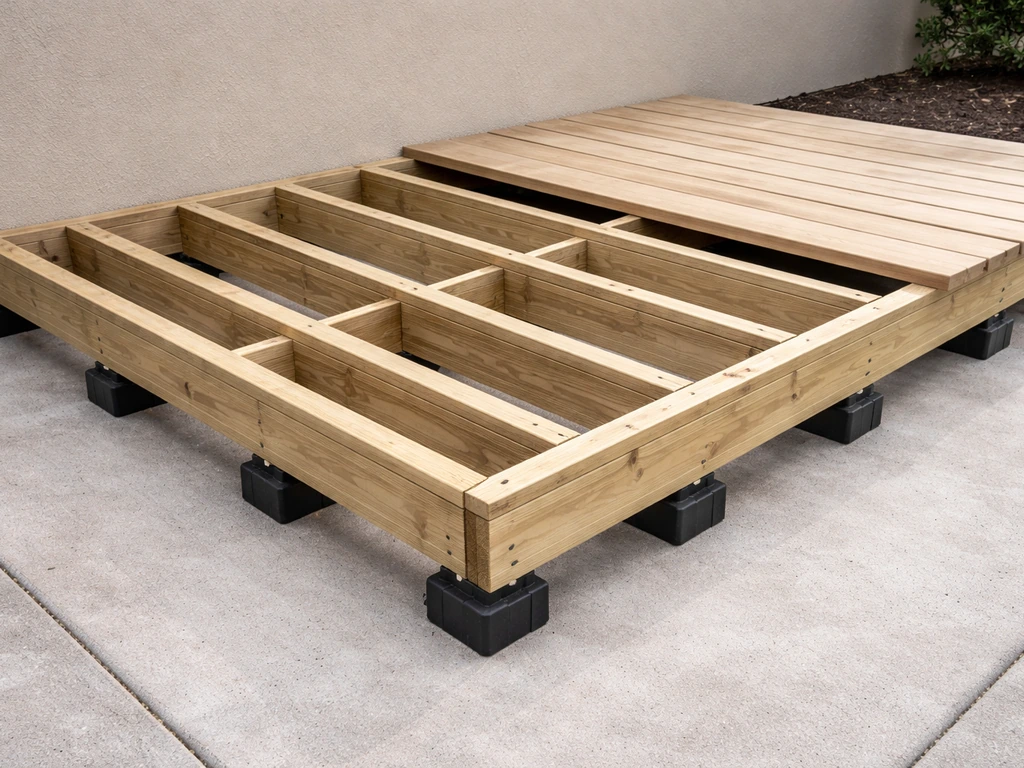
A platform deck is a low, freestanding wood or composite structure that sits close to the ground and isn't bolted to your house. A patio is a ground-level hardscape surface, usually concrete, pavers, or stone. A patio with a deck on top is essentially a two-level outdoor system, so you plan both the ground hardscape and the elevated deck structure together. Both give you outdoor living space, but they're built completely differently, cost different amounts, require different prep work, and hold up differently over time. Which one is right for you mostly comes down to your yard's slope, your soil, your climate, how you want to use the space, and how much you're willing to spend upfront versus on maintenance.
Platform Deck vs Patio: Costs, Build, Maintenance, and Fit

Miles Hart
2 Jul 2026
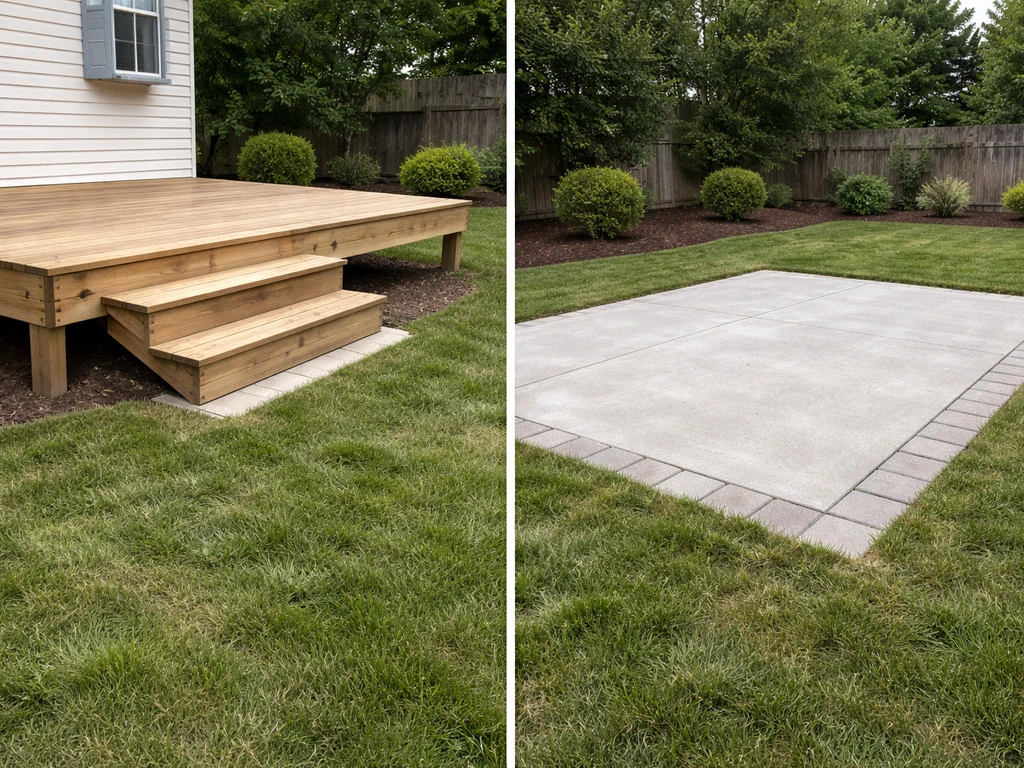
What a platform deck actually is (and what kind of patio you're comparing it to)
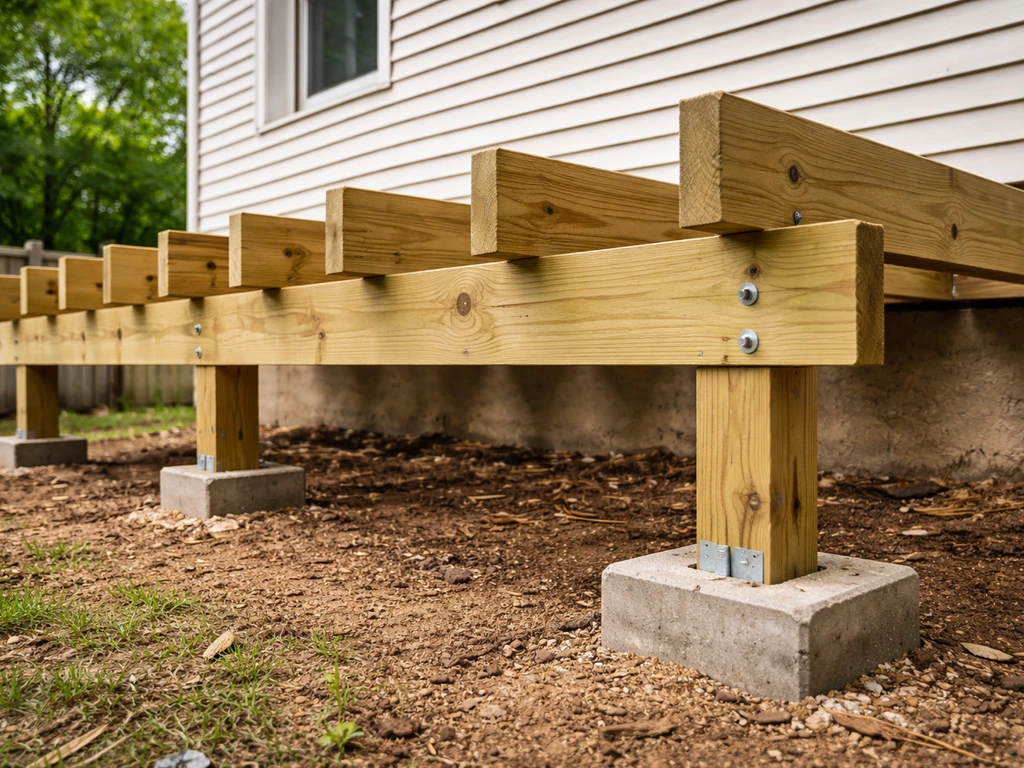
The term 'platform deck' gets used loosely, but it has a fairly specific meaning. HGTV and most building professionals use it to describe a deck that sits next to or near the house but is not structurally attached to it. Instead of a ledger board bolted to the house's rim joist, a platform deck is freestanding: it has its own perimeter beam and posts that carry all the load. That independence is the defining feature. Some people also call these 'island decks' when they sit in the middle of the yard with no house connection at all. Either way, the deck sits close to grade, typically 12 to 30 inches above ground, and often needs only a couple of steps or none at all.
Why go freestanding? JLC Online covers the design rationale well: sometimes the house wall has flashing issues, a finished basement, or windows that make attaching a ledger board impractical or risky for moisture. JLC Online explains that blank" rel="noopener noreferrer">this is especially useful when flashing problems or moisture risks make a ledger board connection impractical. A freestanding frame solves that cleanly. Trex's framing guidance also shows how a platform-style build can incorporate step boxes and level transitions without needing to tie into the house structure at all.
Patios, on the other hand, are surface treatments laid on or in the ground. The main types you're likely comparing are: a poured concrete slab (most common, most affordable per square foot), concrete or clay pavers (modular, replaceable, very popular for DIY), natural stone like flagstone or bluestone (more expensive, great aesthetic), and brick (traditional, labor-intensive). What they all share is that they sit at or just above grade and don't have a structural frame underneath them. The ground itself is doing the structural work.
The differences that actually affect how you use the space
Height, steps, and access
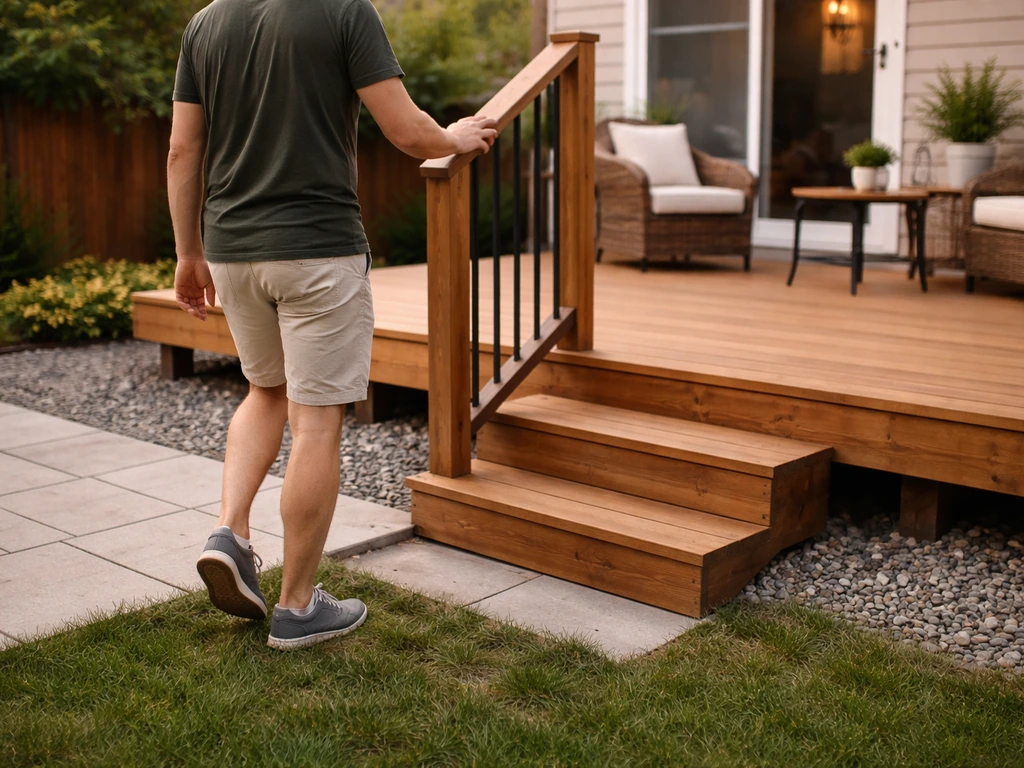
A platform deck, even at its lowest, still sits a few inches above grade on joists, so you'll usually have at least one step. For accessibility, this can matter. A patio laid on a properly graded base can be nearly flush with a back door threshold, which makes it far more accessible for people with mobility limitations, strollers, or pets that struggle with steps. If you're trying to decide between a backyard patio vs deck, pay close attention to how accessible and level the surface will feel at the door. If your back door has a standard threshold height and the yard is level, a patio almost always transitions more smoothly.
Surface feel and comfort underfoot
Composite or pressure-treated decking has some give to it and stays cooler than concrete in direct sun, depending on color and material. Dark composite and hardwood decking can get very hot in summer, but most modern composites are engineered with cooler surface temperatures in mind. Concrete and dark pavers in full sun can become uncomfortably hot in climates like the Southwest or Southeast. Natural stone and lighter-colored pavers handle heat somewhat better. In wet conditions, a properly installed deck drains between the boards and dries quickly. A patio needs adequate slope (typically 1/8 to 1/4 inch per foot away from the house) to avoid pooling. If you're planning a patio cover with deck on top, the same idea applies because even overhead structures need proper runoff to keep surfaces and framing dry patio needs adequate slope.
Layout flexibility and attachment to the house
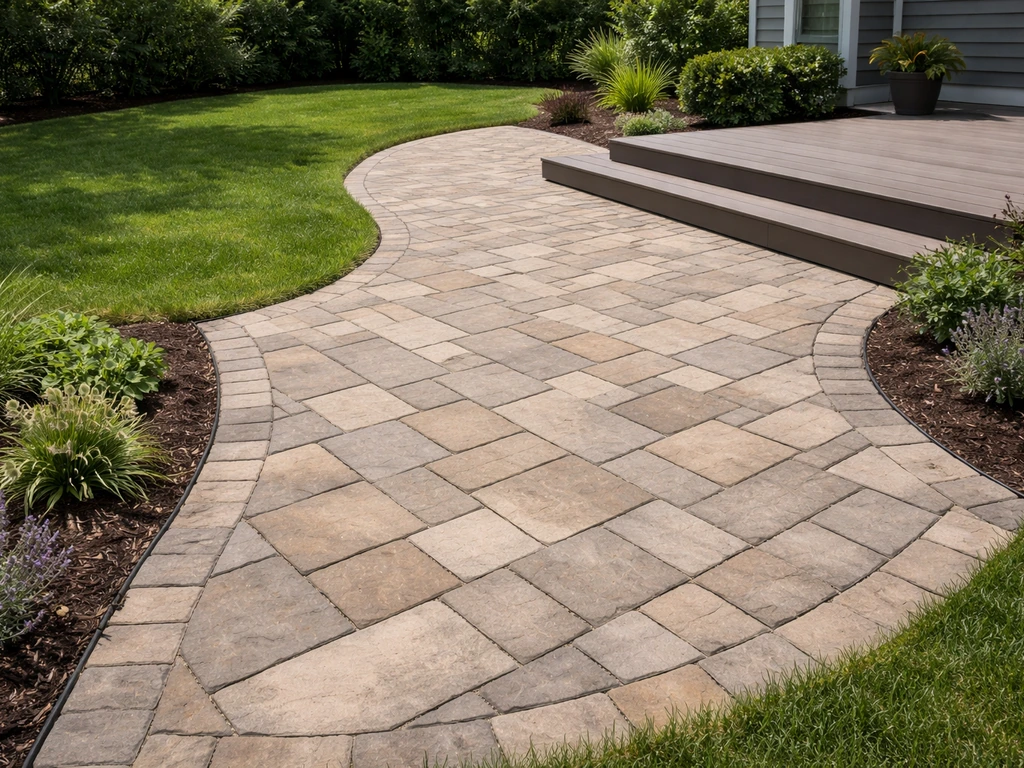
A patio can be shaped to fit nearly any footprint, including curves and irregular edges, especially with pavers or flagstone. A platform deck is built on a rectangular or geometric grid because framing requires right angles. If you want a curved edge on a deck, it's possible with decking overhang cuts but adds cost and complexity. For detached layouts away from the house, both options work fine. For covering with a pergola or roof structure, a platform deck often gives you better anchor points since you're working with a wood frame, but a concrete patio can also support freestanding pergola posts with appropriate footings.
Privacy and visual impact
Neither option inherently provides privacy on its own. Both can be enhanced with pergolas, privacy screens, or plantings. One visual difference worth noting: a platform deck adds visual height and a sense of separation from the yard, which some homeowners like and others don't. A patio reads as part of the ground, which can integrate more naturally with landscaping. For covered deck vs covered patio situations, the structural base (deck vs slab) can influence what kind of overhead structure makes the most sense. If you're deciding on overhead coverage, understanding the difference between a covered deck and a covered patio helps you pick the right support structure and layout covered deck vs covered patio.
Cost breakdown: what you'll actually spend
Cost depends heavily on size, material choice, local labor rates, and site conditions. Here are realistic current ranges for a typical 200 to 400 square foot project:
| Option | DIY Material Cost (per sq ft) | Pro-Installed Total (per sq ft) | Permit Typical Cost | Lifespan |
|---|---|---|---|---|
| Platform deck (pressure-treated) | $8–$15 | $25–$45 | $100–$500 | 15–25 years with maintenance |
| Platform deck (composite) | $15–$30 | $40–$65 | $100–$500 | 25–35 years, low maintenance |
| Poured concrete patio | $4–$8 | $8–$18 | $0–$200 (often not required) | 25–50 years |
| Paver patio (concrete pavers) | $6–$12 | $15–$30 | $0–$200 | 25–50 years |
| Natural stone patio | $15–$30 | $30–$60 | $0–$200 | 30–50+ years |
A few cost drivers to know about. For decks: composite decking costs two to three times what pressure-treated lumber costs upfront, but saves substantially on staining, sealing, and board replacement over time. Footings drive up deck cost fast. If your frost line is 36 inches deep (common in the Midwest and Northeast), you're digging and pouring concrete well below grade for every post. Hardware, connectors, and hidden fasteners add up surprisingly quickly, often $500 to $1,500 on a mid-size deck. For patios: the base prep is where patio cost hides. A proper paver patio needs 4 to 6 inches of compacted gravel base plus 1 inch of bedding sand. Skipping this is why patios sink and shift. Labor for hand-set stone or irregular flagstone is slow and expensive. Concrete slabs are faster to pour but crack without proper expansion joints, rebar, or wire mesh reinforcement.
Permitting is worth flagging specifically. TimberTech notes that freestanding low-to-the-ground platform decks may have simplified permit requirements in some jurisdictions, since they don't connect to the house structure. Many municipalities exempt decks under 30 inches from grade and under a certain square footage from full permit requirements, though this varies significantly. Concrete patios often don't require permits at all unless they're large or very close to property lines. Always check with your local building department before assuming either way.
How each holds up over time in real weather
Decks: rot, warping, and maintenance cycles
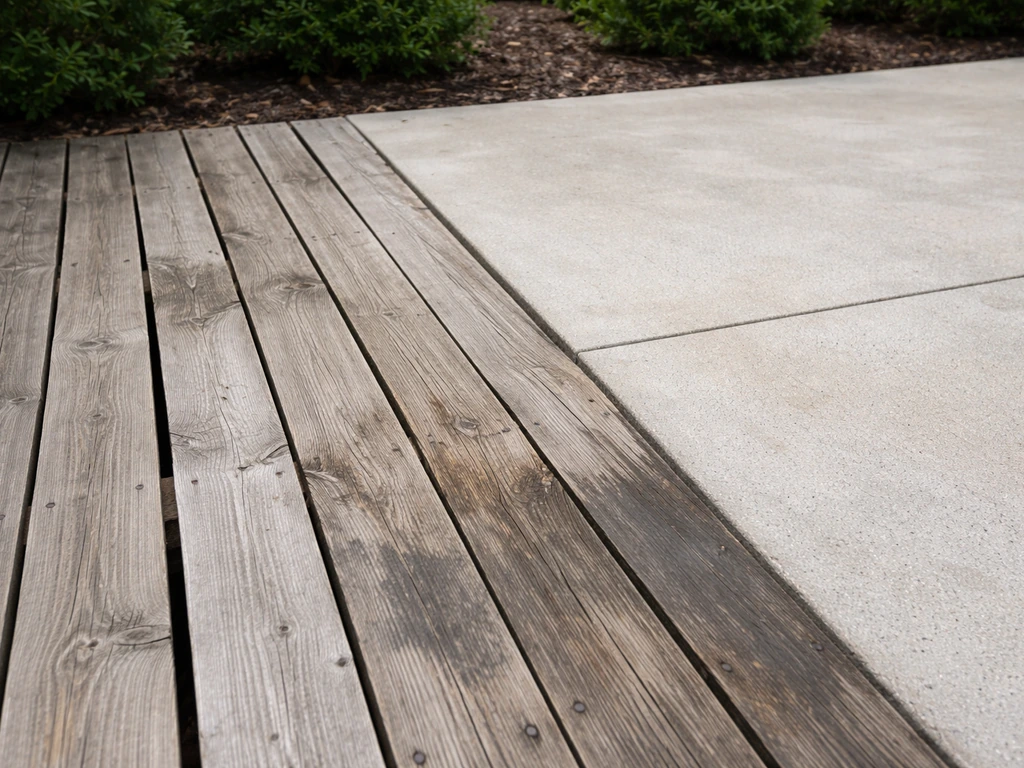
Pressure-treated lumber is the baseline for deck framing everywhere in the US, and it holds up well when properly installed with good drainage and airflow. The risk zone is anywhere moisture gets trapped: post bases sitting in water, boards with standing water between them, joists without adequate ventilation below. Southern Yellow Pine treated to UC4B or UC4C standards handles ground contact, but deck boards that stay wet for extended periods will check, cup, and eventually rot at the ends. A pressure-treated deck needs cleaning and re-sealing or staining every 2 to 3 years, or the surface becomes gray and rough. Composite decking eliminates most of that: you wash it off with a hose and some soap, and you're done. The trade-off is upfront cost and the fact that composite boards can fade or stain from organic debris if not cleaned regularly.
Patios: cracking, settling, and freeze-thaw cycles
Concrete slabs are vulnerable to cracking, especially in climates with significant freeze-thaw cycles. Water seeps into small surface cracks, freezes, expands, and widens the crack. A slab poured without proper control joints every 8 to 10 feet will almost certainly crack within a few years. That doesn't always mean failure, but it does mean an aging concrete patio often looks rough. Pavers handle freeze-thaw much better because each unit can shift slightly without the whole surface cracking. If a paver settles or heaves, you pull that unit, re-level the base, and reset it. For climates in Zones 4 through 6 or colder (think Minnesota, Wisconsin, upstate New York), pavers are almost always the smarter long-term hardscape choice over poured concrete for this reason. Natural stone behaves similarly to pavers in that individual pieces can be reset, though irregular flagstone set in mortar is more like a slab and more prone to mortar joint cracking.
Ground prep, drainage, and leveling: the part most people underestimate
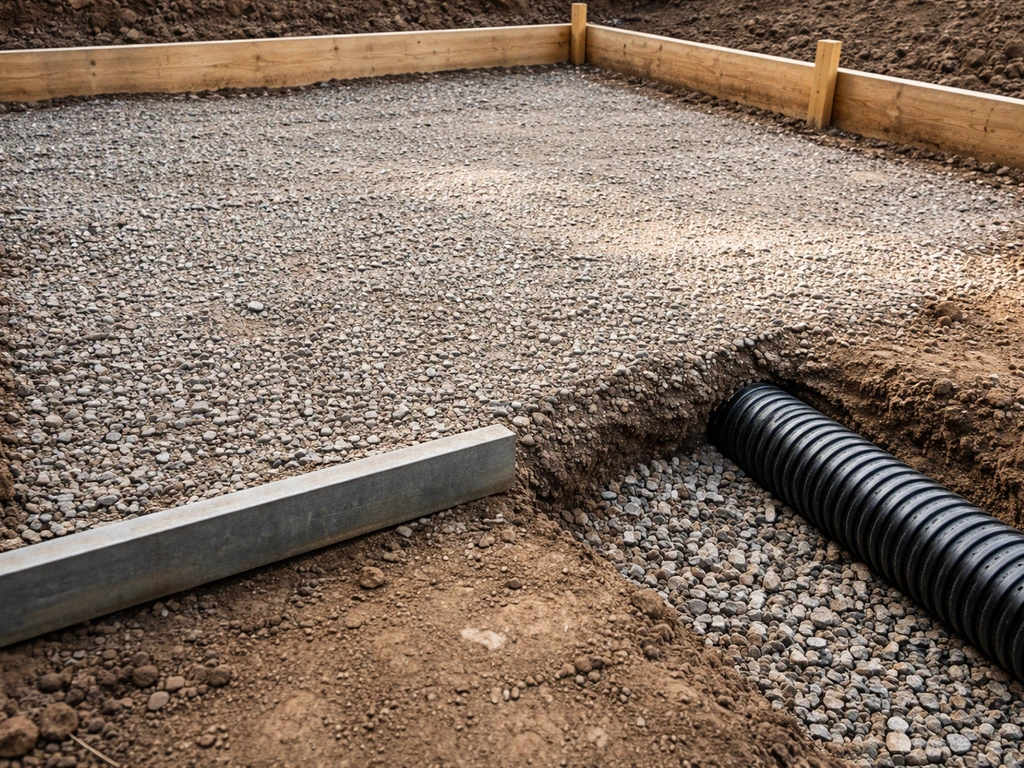
This is honestly where a lot of DIY projects fail, for both decks and patios. People focus on the surface and rush the prep work.
For a platform deck, the critical prep is footing placement. Post footings need to go below the frost line (check your local frost depth, which ranges from near zero in Florida to 60 inches in northern Minnesota). Footings that sit above frost depth will heave in winter and destroy the deck's level over time. On sloped ground, a platform deck can be leveled easily by cutting posts to different heights, which is one of the reasons decks handle slopes better than patios. You don't need to excavate and regrade a slope to build a platform deck on it; you just adjust post heights.
For a patio, you're doing more earthwork. A typical paver installation requires removing 6 to 8 inches of existing soil, compacting a gravel base in 2-inch lifts, and finishing with screeded bedding sand. If your soil is clay-heavy (common in much of the Midwest and Southeast), you need even more attention to drainage because clay holds water and causes movement. A sloped yard requires either cutting into the slope and building a retaining edge, or regrading, both of which add cost and labor. Concrete slabs need a compacted sub-base too, plus forming, rebar or wire mesh, and proper cure time (28 days to full strength, though walkable in 24 to 48 hours). Bottom line: if your yard is significantly sloped, a platform deck is almost always less prep work and less money than a patio.
Drainage is non-negotiable for both. A deck handles rain naturally if there's airflow under it and the grade below slopes away. A patio must slope away from the house at a minimum 1.5 percent grade (about 3/16 inch per foot). If your patio is right below an upper deck, focus on slope, sealed seams, and fast drainage so water doesn't pool under the overhang patio below upper deck how to keep dry. Improper drainage on a patio sends water toward your foundation, and improper drainage under a deck causes rot and frost heave. Neither gets a pass on this.
Home value and resale: what the numbers actually show
Both patios and decks add home value, but not dollar-for-dollar. Remodeling Magazine's Cost vs. Value data consistently shows wood decks returning around 50 to 70 percent of project cost at resale, with composite decks often in the 60 to 70 percent range. Patio additions vary more based on material and finish quality, with concrete patios at the lower end of return (around 50 percent) and well-designed paver or stone patios potentially returning more when they're clearly high-quality and well-maintained.
A few things affect value more than the specific choice between deck and patio. Size matters: an 800 square foot beautifully finished paver patio returns more than a 150 square foot pressure-treated deck. Condition matters enormously: a weathered, gray, cracked deck or a sunken, weedy patio can actually hurt your sale price. Integration with the home's design matters: a patio or deck that looks like it was planned from the beginning, with proper transitions from the house and complementary materials, adds more value than something that looks bolted on.
For the ROI conversation, the outdoor living space category as a whole (decks, patios, porches) tends to have strong buyer appeal, especially post-2020 when outdoor entertaining became a bigger priority for buyers. If you're specifically comparing ROI for a patio vs deck, focus on resale return, ongoing maintenance costs, and how much of the space buyers actually value ROI patio vs deck. If resale is a primary driver, a well-built paver patio in good condition or a composite deck that needs no immediate work will both show well. A pressure-treated deck that needs $2,000 in refinishing will not.
How to choose: a practical decision checklist
Run through these questions before you commit to either option:
- What's your yard's slope? If more than 6 inches of drop across your intended footprint, a platform deck is usually easier and cheaper than regrading for a patio.
- What's your climate? Freeze-thaw zones (roughly USDA Zone 6 and colder) favor pavers over poured concrete for patios, and push you to detail decks carefully for drainage.
- What's your budget? Under $3,000 for a small area, a DIY paver patio almost always beats a DIY deck. Above $10,000 with professional labor, a composite deck competes well on cost per square foot.
- Do you need accessibility? Ground-level patio transition beats a deck with steps for mobility considerations.
- How long are you staying in the home? Less than 3 years, a simple paver patio or pressure-treated deck with minimal investment makes more sense than a high-end composite build.
- Will you cover it? If you want a roof or pergola, check whether your house wall can accept a ledger (which shifts you toward an attached deck) or whether freestanding posts are easier (works with both).
- Do you have heavy foot traffic, pets, or kids? Pavers and composite decking both hold up well. Pressure-treated decking with splinters and uneven boards is harder on bare feet.
- Are there HOA restrictions? Some HOAs prohibit raised wood structures or require specific materials. Check before designing.
- Is this a rental or short-term situation? A paver patio is easier to remove or leave behind without looking like a failed project.
Scenario recommendations
- Small backyard, level ground, tight budget: Paver patio. Less framing, fewer materials, strong DIY feasibility, and it won't need staining.
- Sloped yard, want to entertain, moderate budget: Platform deck. Handles the slope without major regrading and gives you a level surface for furniture and gatherings.
- Accessibility is a priority: Patio, ideally concrete or pavers, installed flush with the door threshold.
- Cold climate (Zones 4-6) where freeze-thaw is real: Paver patio over poured concrete, or composite deck with properly buried footings. Avoid poured concrete slab unless the base prep is done right.
- Want to add a covered structure: Either works, but a platform deck gives you a wood frame to anchor pergola posts, which is slightly cleaner structurally.
- Pets and high foot traffic: Both hold up well; composite deck or pavers are both forgiving. Avoid pressure-treated decking with rough surfaces if dogs are sliding around on it.
- Selling in under 2 years: Keep it simple and clean. A well-maintained paver patio or a freshly refinished deck both show well. Don't over-invest.
DIY vs. hiring a pro: honest expectations
What you can reasonably DIY
A paver patio is the most DIY-friendly outdoor project in this category. The tools are basic (plate compactor, hand tamper, rubber mallet, level, string lines), the materials are widely available at big-box stores, and there's no structural engineering involved. A 200 square foot paver patio is a realistic two-weekend project for someone in decent shape who is comfortable following a process carefully. The biggest DIY mistake is rushing the base prep: if the gravel base isn't properly compacted, you'll have sunken pavers within a year or two.
A platform deck is a step up in complexity but still very doable for an intermediate DIYer. You need to be comfortable with a post hole digger or rented auger, a circular saw, a drill, and basic framing layout. The framing principles are straightforward, and resources from manufacturers like TimberTech, Trex, and Decks.com provide detailed framing guides. The trickiest parts are getting footings at the right depth and spacing, and keeping the frame square and level. Budget a full weekend for layout and footings, another weekend for framing, and a third for decking. That's a realistic three to four weekend timeline for a 200 to 300 square foot platform deck.
When to hire a pro
Hire a professional when: the project is over 400 square feet and complexity adds up fast; your yard has drainage problems that need engineered solutions; your frost depth is deep and footing work is extensive; you want a concrete slab (pouring and finishing concrete well is a real skill); you're in a jurisdiction with strict permit inspection requirements; or you want a composite deck with hidden fasteners and a polished finish that will hold up for 30 years. The cost difference between a solid DIY job and a professional one is real, often 40 to 60 percent of total project cost, but a poorly built deck or patio that sinks, rots, or fails inspection costs more to fix than it would have to build right the first time.
Next steps before you start
- Measure your intended footprint and sketch it out on paper with your house, doors, and any obstacles noted.
- Call your local building department and ask specifically: does a freestanding platform deck under X square feet and under 30 inches from grade require a permit? Does a patio slab require a permit? Get the answer in writing or via email.
- Check your HOA rules if applicable, especially for material types, heights, and setbacks from property lines.
- Get at least two contractor quotes if you're going pro, and ask each to specify materials, footing depth, and what's included in cleanup.
- Price out materials at your local supplier and a big-box store. Lumber prices in particular have been volatile, so check current local pricing before relying on any estimate you find online.
- If you're in a freeze-thaw climate, look up your local frost depth via your county extension office or the American Society of Civil Engineers frost line map.
- Decide on your priority: lowest upfront cost, lowest long-term maintenance, best accessibility, or best resale appeal. Your answer to that question will point you clearly toward either a platform deck or one of the patio options.
FAQ
Can a patio under a deck be built to stay dry and not damage the deck or house?
Yes, but it changes the way you should build and waterproof the transition. If the patio is directly below a deck structure, you still need a drainage path away from the house, and you should also plan flashing or sealed seams where the overhead structure overhangs the patio edge so water does not track onto siding or collect under the deck lip.
Do platform decks always avoid permits because they are freestanding?
Not necessarily. Even if the deck is low, local rules can still require a permit depending on height, total area, and how the structure is classified. Freestanding decks often have fewer hurdles than attached decks, but you should confirm whether any “exempt” thresholds apply to your specific footprint and setbacks.
What is the most common reason decks and patios fail early, is it the surface materials or the ground prep?
For patios, the substrate matters as much as the surface. Use compacted base in controlled lifts and pay attention to drainage layers if you have clay soils. For decks, drainage is more about airflow under the frame and keeping post bases from sitting in standing water, so you should verify post base hardware and ensure grading directs water away from the footing locations.
If my yard is sloped, which option is usually less expensive and less complex, platform deck or patio?
A platform deck typically tolerates slope better because you adjust post heights and keep the deck frame level, but you still must get footings below your local frost line. A patio on a slope often needs regrading or a retaining edge, which means more earthwork and more opportunities for drainage mistakes that can lead to uneven settling.
Which choice tends to be lower maintenance over 10 to 15 years, a platform deck or a paver patio?
If you want low-maintenance and cooler-feeling surfaces, composite decks and paver patios are often the easier choices. Composite reduces staining and sealing cycles, while pavers reduce the “one crack fails the whole surface” problem you see with slabs. Just note that composite still benefits from regular cleaning to prevent organic staining.
If parts of the surface get damaged in freeze-thaw weather, which is easier to repair later, patio or deck?
In general, yes. Pavers are easier to repair because you can lift individual units, re-level the base, and reset them after settlement or heaving. With concrete slabs, a new repair often means patching and may require more surface leveling to keep the look consistent.
Which option gives a smoother transition from a back door, especially if the threshold height is fixed?
Usually, but it depends on the exact threshold and door swing. If your back door threshold is high or the yard grade makes the patio surface sit below that threshold, a deck can sometimes match the door better by adjusting deck height and steps. Either way, plan the transition early so the finished walking surface is comfortable and safe.
How do I tell whether a “platform deck” proposal is actually freestanding and built correctly?
It can be misleading because “platform deck” usually implies independent posts and beams, not a simple deck sitting on blocks. If someone proposes placing deck lumber directly on surface-level pads without properly designed footings and connections, that is where problems start (movement, unevenness, rot risk).
Can both options handle a curved or irregular yard shape, or is one much harder?
If you want a curved footprint, patios with pavers or flagstone are typically simpler because pavers can be edged to curves and flagstone can follow irregular shapes. Curved decks are possible, but the framing grid and ledger-free post layout can raise material waste and cost, and you may need more complex cutting and blocking.
What site conditions most often flip the cost comparison, making a patio cheaper than a deck or vice versa?
Deck and patio costs can invert depending on your site. Patios can become expensive if you need retaining walls, significant regrading, or labor-intensive stone/irregular paver layouts. Decks can become expensive if frost depth is deep and you need a lot of post excavation and concrete, or if you require many step-ups to match the yard elevation.
If I’m adding a pergola or roof over the space, do I need different foundation thinking for a platform deck vs patio?
Yes, and the key is planning drainage and attachment points before you buy materials. For example, a pergola on a deck often anchors to the deck’s structural frame with correctly sized footings if posts are freestanding, while a pergola over a patio usually relies on dedicated post foundations that do not depend on the paver surface alone.
Which option makes it easier to create privacy, platform deck or patio?
A privacy screen or planting can be added to either, but decks often start at a higher visual plane because of their elevation, which can help you see over lower plantings. Patios can integrate better with low hedges or built-in wall planters since the surface reads as part of the landscape. Choose based on whether you want screening by height or by visual blending.
Are there special considerations for running wiring or adding lighting for a platform deck versus a patio?
You can, but you should be strict about keeping the drainage layers intact. If you install outdoor lights, speakers, or in-ground outlets, plan for low-voltage wiring routing that avoids trapping water near post bases or in deck framing. For patios, avoid punching holes into finished paver areas without designing a way to keep sand and base layers stable around the penetration.
If I want to DIY, what is the most common skill-risk difference between building a platform deck and installing a paver patio?
A fast DIY path is most realistic with a paver patio because it does not require structural engineering, and the tools are more basic. A platform deck is still DIY-friendly for capable builders, but footing layout and keeping the frame square are where mistakes become expensive. If you rush the base under a patio, you typically see sinking quickly, while deck errors around footings can cause persistent wobble and uneven stairs.
Next Article
Decking on Top of Patio: DIY Guide, Costs, and Options
DIY guide to decking on top of a patio: options, costs, moisture-proofing, clearance, and step-by-step planning.