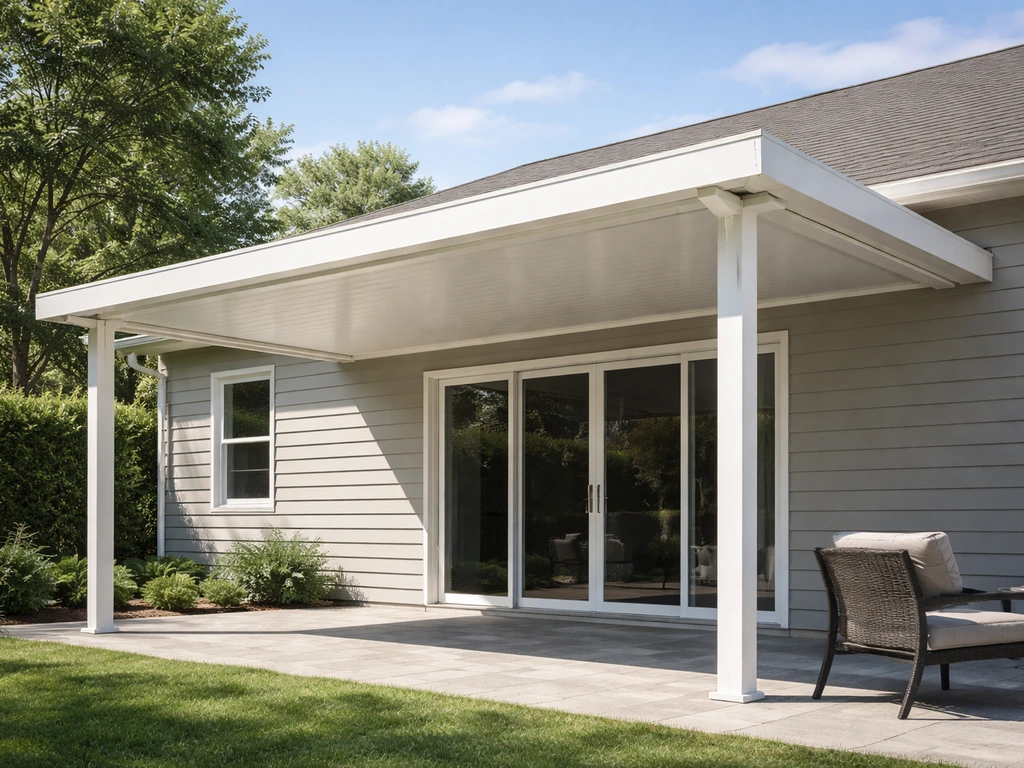
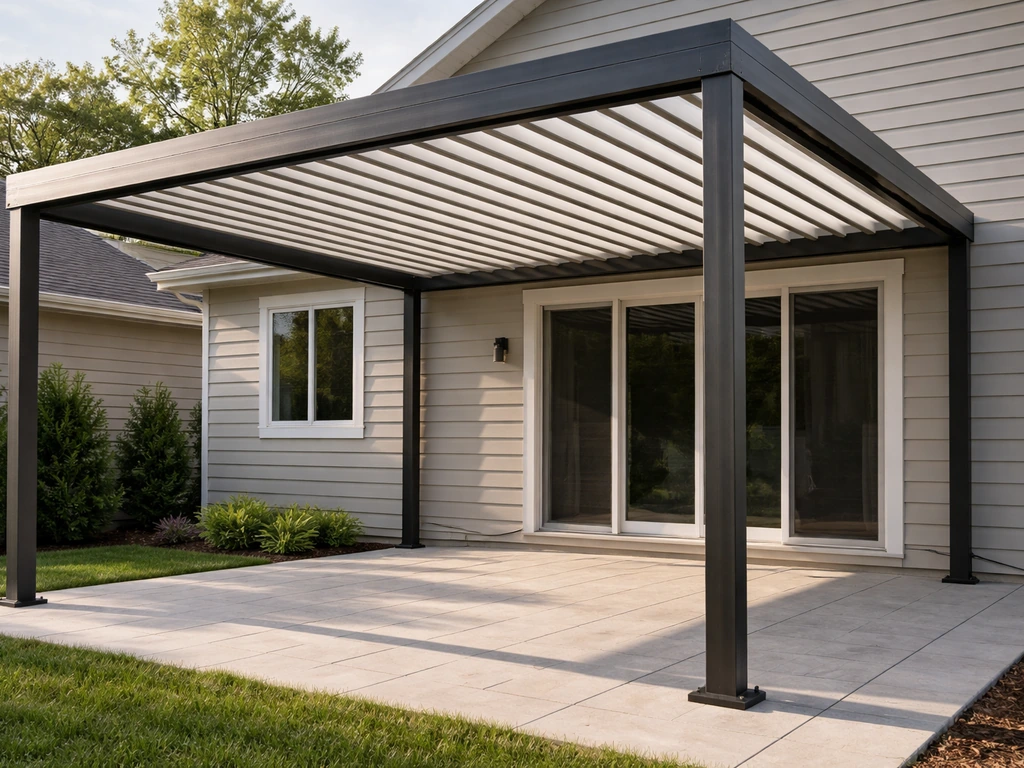
A professionally installed louvered patio cover typically costs between $6,500 and $20,000 for most residential projects in 2026, with the sweet spot for a mid-size 12x16 or 14x20 setup landing around $8,000 to $14,000. Smaller manual systems can come in under $6,500, while large motorized aluminum louvered roofs on complex sites can push well past $20,000. Angi reports that professionally installed patio covers average about $8,500 nationwide, with most homeowners paying roughly $4,500 to $12,000, and typical costs of about $20 to $50 per square foot (2026 data) blank" rel="noopener noreferrer">professionally installed patio cover costs average about $8,500 nationwide. What you actually pay depends heavily on five things: the square footage you're covering, whether the louvers are motorized or manual, the material (almost always aluminum at this level), the brand and system quality, and what your site requires in prep work and add-ons.
How Much Does a Louvered Patio Cover Cost Installed?

What most homeowners actually pay by size
The per-square-foot installed cost for louvered patio covers runs roughly $45 to $110 for manual adjustable systems, and $55 to $130 or more for motorized versions. If you want a quick ballpark for patio covers cost, focus on per-square-foot pricing for manual versus motorized louvered systems. That's a wider range than standard patio covers because louvered roof systems are more mechanically complex than a flat insulated panel or a basic wood pergola. Here's how that shakes out at common project sizes:
| Cover Size (ft) | Approx. Sq Ft | Manual Louvered (installed) | Motorized Louvered (installed) |
|---|---|---|---|
| 10x10 | 100 | $4,500 – $8,000 | $5,500 – $10,000 |
| 12x16 | 192 | $8,600 – $16,000 | $10,500 – $19,000 |
| 14x20 | 280 | $12,600 – $20,000 | $15,000 – $25,000+ |
| 16x24 | 384 | $17,000 – $28,000+ | $20,000 – $35,000+ |
These ranges line up with data from HomeGuide, which puts manual adjustable louvered pergola installs at $6,500 to $15,800 and cites $45 to $110 per square foot as the typical installed rate. The wider ranges for larger sizes reflect real variability in site complexity, local labor rates, and system brand. Budget toward the lower end if you're in a lower cost-of-living area with a clean, level, already-framed patio. Budget toward the upper end for coastal markets, complicated rooflines, and premium brands.
What actually drives the price up or down
Size and layout
Square footage is the biggest single cost driver, but layout matters too. A simple freestanding square structure is cheaper to frame and install than an L-shaped cover attached to two walls of a house. Anything that requires custom cuts, non-standard post spacing, or integration with an existing roofline adds labor hours and sometimes materials costs.
Motorized vs manual louvers
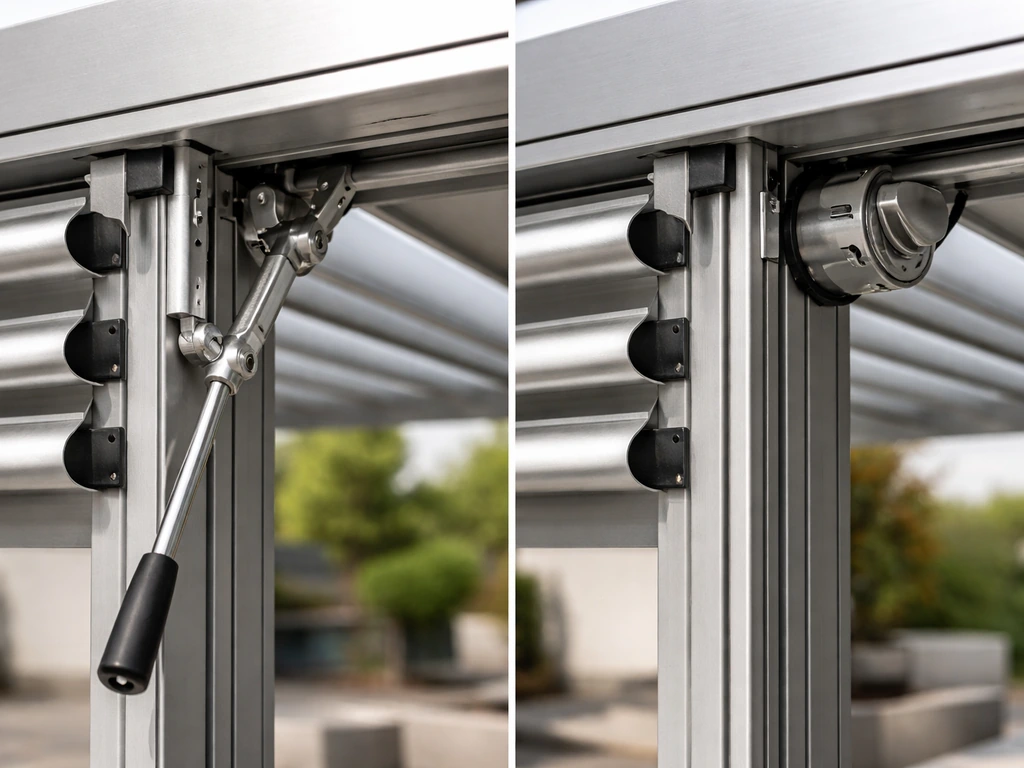
Motorization is one of the clearest price jumps in this category. According to GreenAwning, motorized louvered pergolas run 20 to 40 percent more than manual models. On a $12,000 manual install, that's an added $2,400 to $4,800 just for the motorization. You're paying for the motor units, control wiring, a rain sensor (often standard on quality systems), and remote or app-based controls. If smart home integration (Alexa, Google Home, or a home automation hub) is part of the package, expect another $300 to $800 on top of that.
Materials and system quality
Virtually all premium louvered patio covers are aluminum, which is why you'll rarely see a meaningful wood vs aluminum comparison at this product level. Aluminum louvered systems are powder-coated, corrosion-resistant, and engineered to open, close, and tilt repeatedly without warping. Cheaper systems use thinner extrusions and lower-grade hardware, which shows up in how the louvers feel and how long the mechanism lasts. Brand-name systems from companies like Louvretech, Azenco, or similar manufacturers cost more upfront but carry better warranties (often 10 to 15 years on structure, 2 to 5 years on motor components). Generic or off-brand kits assembled by local contractors can save 20 to 30 percent but may have limited parts availability later.
Roof type: louvered vs fixed vs insulated
A louvered patio cover costs more than a solid aluminum panel cover or an insulated patio cover of the same size. A basic solid aluminum cover installs for roughly $20 to $50 per square foot, while an insulated patio cover (with foam core panels) runs in a similar range with some premium for the insulation value. Louvered systems sit above both because of the moving parts, tighter tolerances in manufacturing, and more complex installation. If adjustable light and ventilation aren't a priority for you, it's worth comparing those options before committing to a louvered system.
Installed cost vs doing some of it yourself
Full professional installation is the norm for louvered patio covers, and for good reason. The aluminum extrusion systems are engineered to very tight tolerances, and even small errors in post placement or leveling can cause louvers to bind or not seal properly. That said, there are real ways to manage costs.
Labor typically accounts for 30 to 50 percent of total installed cost. If you're getting a $14,000 quote, roughly $4,200 to $7,000 of that is labor. Some homeowners reduce cost by doing site prep themselves: clearing the area, pouring a concrete pad, or setting posts in concrete before the cover installer arrives. Confirm with your installer exactly what condition the site needs to be in before they show up. Showing up unprepared adds delay charges.
True DIY assembly of a louvered kit is possible with some systems that sell direct-to-consumer, and a confident builder can save $3,000 to $6,000 on a mid-size project. The risk is voiding the warranty if assembly doesn't meet the manufacturer's specs, and getting electrical work done improperly if the system is motorized. Permits are still required in most jurisdictions regardless of who installs it, and inspectors don't care whether you or a contractor did the work.
Permits typically run $150 to $600 depending on your municipality, and some areas require a structural engineering review for attached covers that tie into the house. Budget for permits from the start, not as an afterthought.
Aluminum vs wood, and fixed vs motorized: a direct comparison
| Feature | Aluminum Louvered | Wood Pergola with Fixed Slats |
|---|---|---|
| Installed cost (per sq ft) | $45 – $130+ | $25 – $65 |
| Weather resistance | Excellent (powder-coated) | Moderate (needs sealing/staining) |
| Adjustability | Yes (manual or motorized) | No |
| Maintenance | Very low | Moderate to high |
| Lifespan | 20 – 30+ years | 10 – 20 years (with upkeep) |
| Rain protection | Full (when closed) | Partial at best |
| Aesthetics | Modern/contemporary | Warm/traditional |
| DIY friendliness | Moderate (kit systems) | High |
If you want genuine weather protection and the ability to go from full sun to full shade at the push of a button, aluminum louvered covers are the clear winner. If budget is tight and you want an open-air feel with some dappled shade, a wood pergola with fixed slats costs significantly less and is easier to build yourself. The louvered system earns its premium when you'll actually use the adjustability, which is most people who entertain outdoors in climates with both intense sun and periodic rain.
On motorized vs manual: motorized systems are genuinely more convenient, especially for large covers where reaching a manual crank is awkward, or if rain sensors that automatically close the louvers during storms matter to you. But manual systems work well for most homeowners and save real money. If you're on the fence, go manual and see if you miss the automation after a season.
Add-on costs you need to budget for
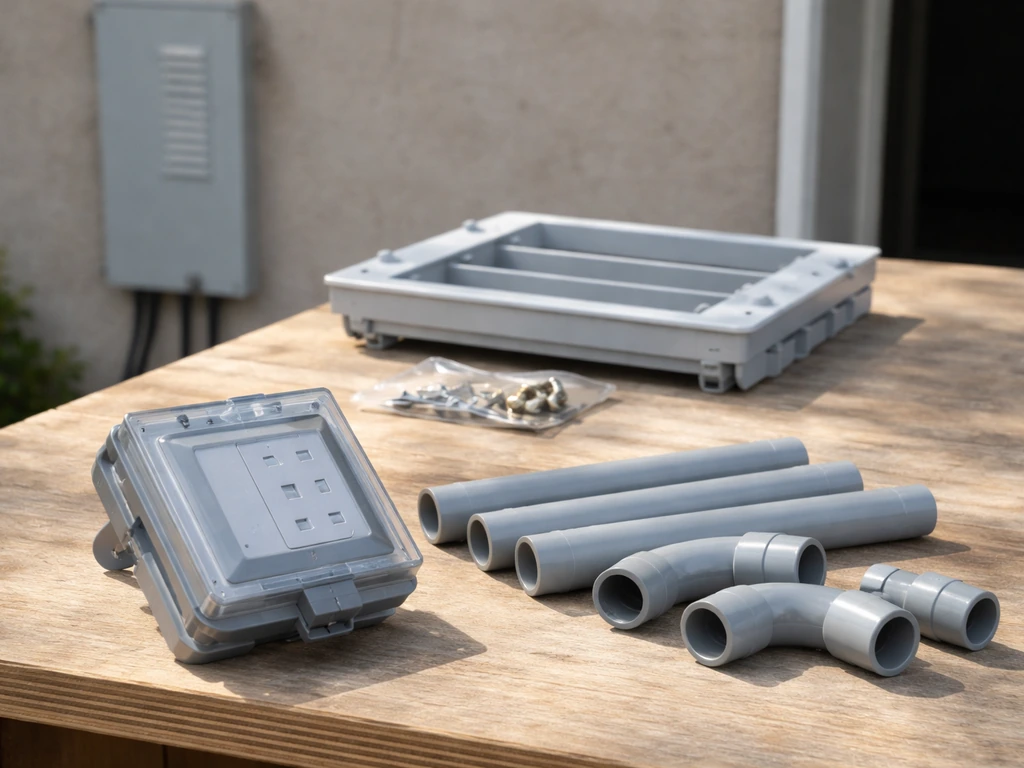
The base quote for a louvered cover often doesn't include everything you'll actually need. Here are the line items that commonly get added:
- Electrical rough-in and outlet installation: $200 to $800 for a dedicated outdoor circuit if your panel is close; up to $1,500+ if trenching is needed. Required for motorized systems.
- Integrated gutters and drainage: Many louvered systems include built-in gutters in the frame, but connecting those to a downspout and routing water away from your foundation adds $150 to $500.
- Concrete pad or footing work: If you don't have an existing patio slab, add $5 to $10 per square foot for a 4-inch concrete pad, or $300 to $600 per post for individual footings.
- Screen panels or privacy walls: Retractable or fixed screen sides run $800 to $2,500 per panel depending on size and mechanism.
- Lighting: Integrated LED strip lighting kits add $400 to $1,200; ceiling fan mounting rough-in adds another $150 to $400.
- Permits and inspections: Budget $150 to $600 depending on your city or county.
- Wind and snow load upgrades: If you're in a high-wind or snow-load zone, heavier post bases and additional bracing may be required by code, adding $300 to $1,000.
A realistic all-in budget for a motorized louvered cover with electrical, integrated drainage, and a permit on an existing concrete slab should be 15 to 25 percent higher than the base system quote. Plan for that buffer before you start getting quotes.
How to get accurate quotes fast
Contractors can't quote louvered covers accurately without specific information. Walking out to look at your yard and giving a ballpark doesn't cut it for these systems. When you contact installers, have the following ready:
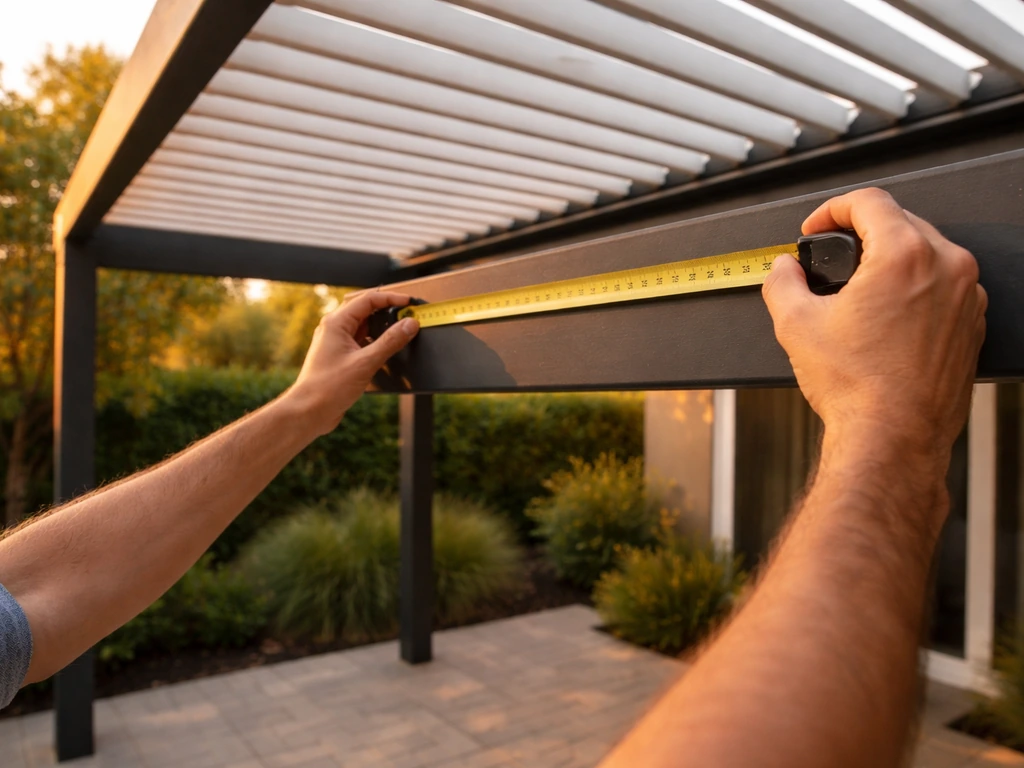
- Exact dimensions: length, width, and desired height at the post and at the attachment point (if it's attached to the house).
- Whether the cover will be freestanding or attached to the house wall or roofline.
- Current site conditions: existing concrete slab (yes/no), ground material, and whether the area is level.
- Your preference for motorized or manual louvers.
- Whether you want integrated gutters, side screens, or lighting included in the quote.
- Your local permit jurisdiction so the contractor can tell you what the approval process looks like.
- Photos of the space from multiple angles, including the wall the cover will attach to if applicable.
When you get quotes, ask each contractor these specific questions: What aluminum gauge and wall thickness are the extrusions? What is the warranty on the structure vs the motor components? Is the price based on a specific brand system or a generic fabrication? What's not included in this number? Getting three quotes with the same specs lets you compare apples to apples rather than comparing a stripped-down quote to a fully loaded one.
Is a louvered patio cover worth the cost?
On durability and maintenance: a quality aluminum louvered cover needs almost nothing year to year. Wipe down the louvers once or twice a season, clear debris from the built-in gutters, and lubricate the pivot points every year or two. That's it. Compared to wood structures that need staining or sealing every few years and eventual board replacement, the lifetime cost of aluminum louvered covers is often lower even though the upfront price is higher.
On home value: a well-installed covered outdoor living space consistently adds usable square footage and buyer appeal. Covered patios and outdoor living structures typically recoup 50 to 80 percent of their cost in home value at resale, depending on the market and how well the structure fits the home's style. In warmer climates where outdoor living is year-round, that recoup rate tends to be higher. Louvered covers in particular signal quality to buyers because they're recognizably premium products, not just a basic pergola.
On comfort: the ability to dial between full shade and full sun, and to close the louvers completely during light rain and keep using your patio, is genuinely useful. If you've ever had to abandon a backyard gathering because of a 20-minute afternoon shower, a closed louvered cover eliminates that problem. That practical value is the core reason people pay more for louvered systems over solid covers or open pergolas, and for most homeowners who entertain regularly, it's worth it.
FAQ
What costs are commonly missing from the initial louvered patio cover quote?
Most homeowners underestimate two line items: electrical hookups for motorized systems (including a dedicated circuit or low-voltage controls if specified) and drainage components. If your proposal only quotes the roof frame and louvers, ask whether guttering, downspouts, and conductor routing are included, since these can add noticeable cost depending on how far runoff has to be carried away from the foundation.
Will my labor cost be lower if I already have an existing patio slab or posts?
Yes, but only when certain conditions apply. If your patio is already framed for posts, level, and has a clear path for the installer to anchor and route wiring, labor may be closer to the low end. If the site needs new concrete work, post footings, demolition of an old cover, or rework of roofline tie-ins, the labor portion often climbs toward the higher end because more hours and materials are required.
Why can motorized quotes be much higher than expected even for the same square footage?
Motorization usually adds about 20 to 40 percent versus manual for comparable systems, but the real price jump depends on whether wiring is straightforward. If you need long cable runs, trenching, a new weatherproof disconnect, or integration with a rain sensor and smart controls, the premium can be larger than the simple percentage. Ask installers to list included controls, sensing, and control method (remote, wall switch, app, or home automation hub).
Does an L-shaped louvered patio cover cost more than a square one of the same size?
Not necessarily. Even if the base area is the same, attachment method and layout change the total cost. An attached L-shaped cover that ties into two walls typically takes more framing time and may require additional flashing, waterproofing detailing, and extra structural considerations compared with a simple freestanding rectangle.
When do permits or structural engineering add cost to a louvered patio cover project?
Permits and any engineering review can meaningfully shift the budget, especially for attached covers. If the cover bolts into or near existing structural members of the home, some municipalities require a structural engineer stamp or upgraded anchorage details. Ask your installer whether the permit package includes drawings and engineering, and confirm who supplies that documentation.
How should I compare warranties between different louvered patio cover installers?
Yes, warranty quality is one of the biggest hidden differentiators. When comparing bids, confirm the warranty split between structure and motor components, and ask about exclusions like storm damage, corrosion from coastal air, and coverage for labor if parts need replacement. A lower bid that uses thinner extrusions or lower-grade hardware can reduce upfront cost but shorten the effective service life.
Will smart home features (app, voice control, automation) be included in my motorized cost?
If smart integration is important, budget based on what is included rather than expecting it to be automatic. Some systems include app control but do not include voice assistants, home automation bridges, or rain-sensor logic beyond basic closing. Ask whether smart features are a factory package, an add-on, or dependent on third-party equipment.
Do louvered patio covers automatically include drainage, or is it an add-on?
Often, yes, especially if you want true weather protection. Many base packages do not include fully integrated drainage and the finishing details that prevent splashback. Ask whether the quote includes built-in guttering, downspout location(s), slope/grade design for runoff, and matching trim so water is guided away from footings and exterior walls.
What site issues most commonly increase the installed price of a louvered patio cover?
Your site condition can swing the project price. If the installer needs to level the area, re-pour footings, modify existing concrete, or adjust post spacing due to obstacles or underground utilities, that can increase cost and timeline. Provide photos and measurements in advance, and ask the contractor to confirm exactly what prep work is required before installation starts.
Is it worth DIY-ing a louvered patio cover to save on cost, and what are the risks?
If you choose a DIY route, the biggest financial risk is warranty voiding and rework. Also, motorized systems involve electrical requirements that must comply with code, and inspectors typically require the proper permitting regardless of who installs. If you plan to save money, ask the manufacturer whether you can assemble the kit yourself, and what documentation an inspector or installer might require.
How can I tell whether two bids are apples-to-apples for louvered patio covers?
A quote that looks low might be using a less durable system, not just cheaper labor. Ask for aluminum extrusion gauge, hardware details, and whether the quote is based on a specific named brand system. Comparing these specs helps you avoid paying the same total labor rate but ending up with a lower-tier mechanism.
If I care about rain protection, what should I verify before choosing a louvered system?
If you want maximum coverage, ask about louvered close behavior in light rain and how sealing performs when fully closed. Some systems are optimized for ventilation and partial sun control, while higher-tier mechanisms focus on better closure and tighter tolerances. If weather use is a priority, prioritize closure quality and drainage integration over simply choosing motorization.
How Much Do Patio Covers Cost in 2026? Pricing Guide
2026 patio cover cost ranges plus DIY vs contractor pricing, add-ons, and a step-by-step budget estimator.