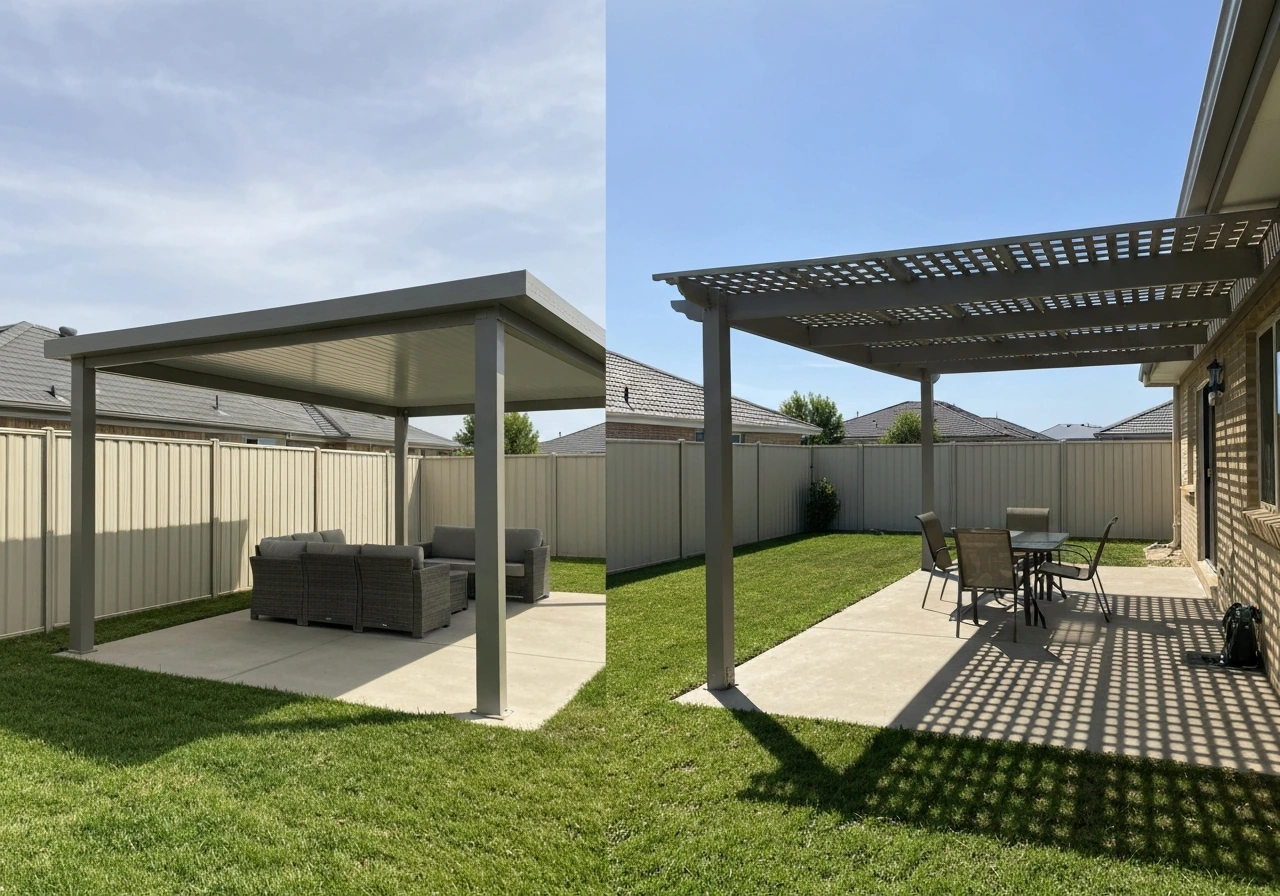
A pergola is an open-framework shade structure with posts, beams, and a partially open or latticed roof, it filters sunlight but does not keep rain off. A patio cover is a more fully roofed structure built over an outdoor space that provides real overhead protection from sun and rain. A patio, on its own, is just the ground surface (usually a concrete slab, pavers, or gravel) with nothing overhead at all. So when people ask about the difference between a pergola and a patio cover, the core distinction is this: how much protection do you actually get overhead?
Difference Between Pergola and Patio Cover vs Patio: What’s Best?

Miles Hart
13 Jun 2026
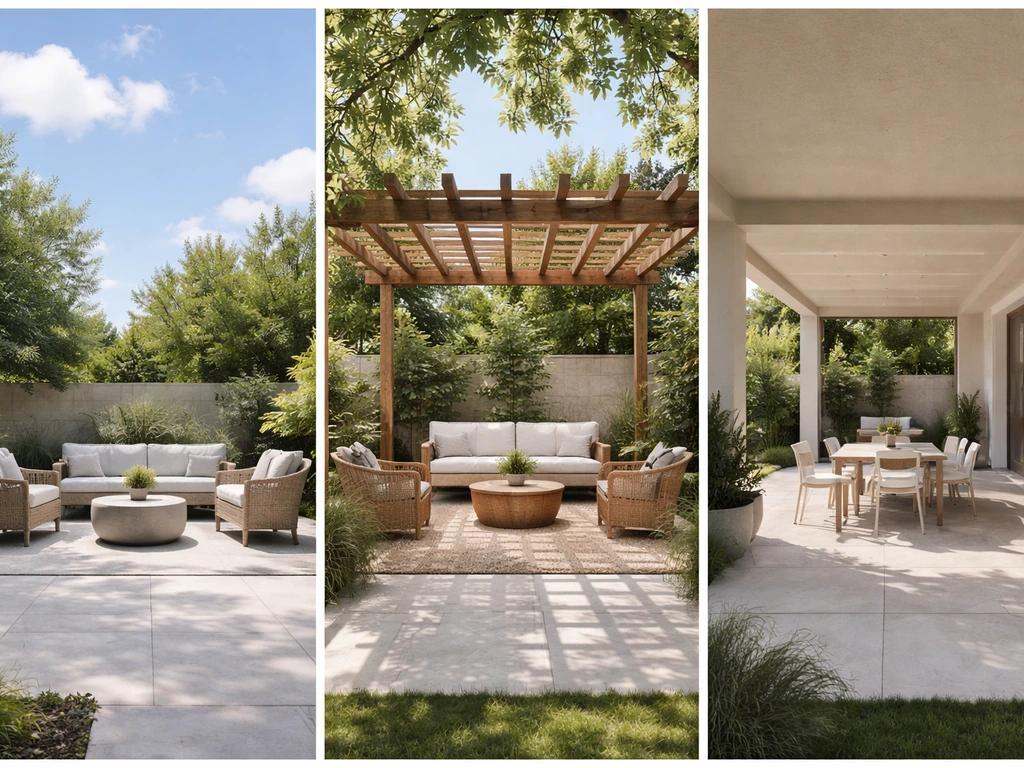
What each one actually is (quick definitions)
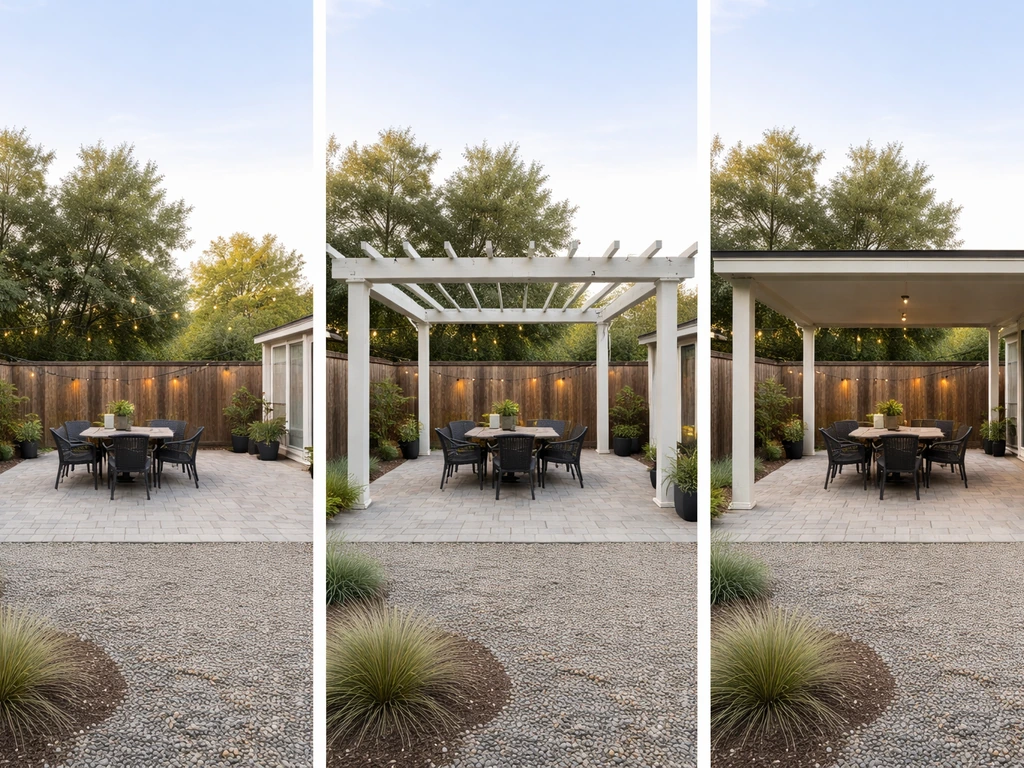
These three terms get used interchangeably online, which creates a lot of confusion when you're trying to plan a real project. Here's how to keep them straight.
A patio is the ground-level outdoor surface itself. It's the slab, the pavers, the gravel area outside your back door. It has no overhead structure unless you add one. Plenty of people grill and entertain on a bare patio, but you're fully exposed to sun, rain, and the elements.
A pergola is a freestanding or attached outdoor structure made of vertical posts supporting horizontal beams and an open or latticed roof. Per architectural references, it's specifically defined as parallel colonnades supporting an open roof of beams, crossing rafters, or trelliswork, the openness is intentional. Pergolas create a defined outdoor space and reduce direct sun, but rain passes right through a traditional design. Climbing plants like wisteria or jasmine are often trained along pergola rafters to add more shade and privacy over time.
A patio cover is a roofed structure built over a patio or outdoor area. Under building codes like the International Building Code Appendix I and the International Residential Code Appendix H, a patio cover is specifically defined as a one-story, roofed structure (typically not more than 12 feet in height above grade) designed to handle minimum vertical live loads of 10 psf plus applicable snow loads.
IRC Appendix H (and the related code framework it belongs to) defines patio covers as one-story, roofed structures, typically not more than 12 feet above grade, with code minimum live-load requirements such as 10 psf plus applicable snow loads one-story, roofed structure typically not more than 12 feet above grade. The key word is roofed, a patio cover provides real overhead protection.
It may be solid, translucent, or partially open depending on design, but it's built to shed water.
How they look and how they protect you
Visually, these structures feel very different when you're standing under them. A pergola has an airy, garden-like feel. You can see the sky through the rafters, there's good airflow, and light filters through in patterns. It softens harsh afternoon sun without making the space feel enclosed. That openness is a design feature, pergolas are meant to blur the line between inside and outside.
A patio cover feels more like an extension of your house. Depending on the roof style, it can look almost like a room without walls. Solid patio covers with metal, composite, or wood roofing feel substantially more sheltered. Lattice-panel patio covers sit somewhere in between, more coverage than a pergola, but still allowing some light and air through. Either way, a patio cover keeps you dry when it rains, which a pergola simply does not.
An uncovered patio offers zero shade or rain protection but maximum airflow, open sky views, and a sense of space. If you live somewhere with mild weather and mostly want a surface for furniture, it may be all you need. But if summer heat or afternoon rain showers are regular problems, you'll quickly want something overhead.
| Feature | Uncovered Patio | Pergola | Patio Cover |
|---|---|---|---|
| Rain protection | None | None (open roof) | Yes (roofed) |
| Sun/shade | Full sun | Partial/filtered shade | Full shade (solid) or partial (lattice) |
| Airflow | Excellent | Excellent | Good to moderate |
| Sky visibility | Full | Yes (through rafters) | None to partial |
| Enclosed feel | Open | Open, garden-like | More sheltered/room-like |
| Privacy overhead | None | Partial with plants/slats | Good to full |
Materials, roof styles, and design features
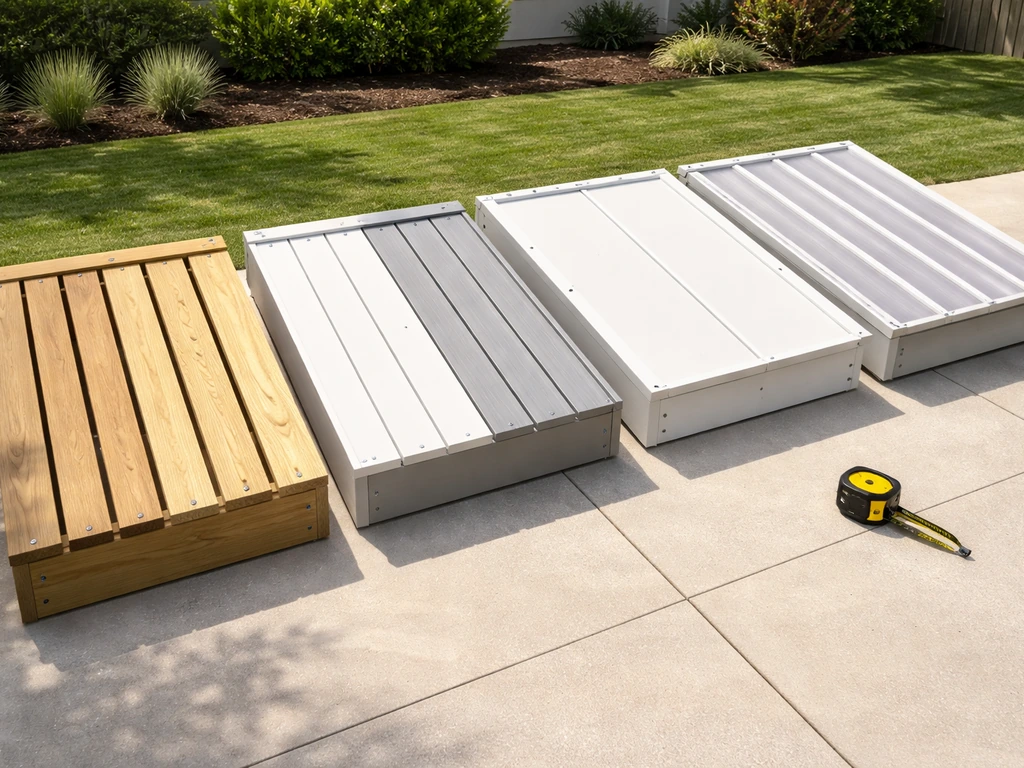
Pergolas are most commonly built from pressure-treated wood, cedar, or redwood for a natural look. Vinyl and aluminum pergola kits have become very popular because they're low-maintenance and weather-resistant. Higher-end pergolas use steel or powder-coated aluminum frames with adjustable louvered roofs, these motorized louver systems let you open or close the slats to control shade and light. Pergola roofs are defined by their openness: spaced rafters, lattice panels, shade cloth stretched between beams, or climbing plant coverage. None of these shed rain effectively.
Patio covers use a much wider range of roofing materials because the goal is actual weather protection. Common options include metal roofing panels (aluminum or steel), polycarbonate or clear corrugated panels (which let in light while blocking rain), solid wood or composite decking boards used as a shade roof, and full shingle or tile roofing that matches the house. Structurally, patio covers have posts and beams like a pergola, but the roof framing is denser and designed to carry a real load, the 10 psf minimum live load requirement in building codes exists specifically because roofed structures need to handle rain pooling, snow accumulation, and debris.
Design-wise, attached patio covers often tie into the existing roofline of the house with a ledger board, giving a seamless architectural look. Freestanding patio covers are more like small pavilions. Pergolas follow a similar attached vs. freestanding split, but their visual identity relies on the open-top design, cover that fully and it becomes a patio cover, not a pergola. This is actually a real decision point: many homeowners start with a pergola and later add a solid or semi-solid roof, which effectively converts it into a patio cover.
Louvered pergolas: the hybrid option
Motorized louvered pergolas have grown significantly in popularity because they offer a middle ground. When the louvers are open, you get the traditional pergola feel with airflow and sky views. Close them and they shed rain reasonably well (though not as completely as a solid roof). Brands like StruXure, Renson, and Brustor make systems in this category. They're the most expensive pergola option, often $15,000 to $50,000 installed, but they're genuinely functional in rain and are built to code in most jurisdictions when properly permitted.
Cost, timelines, and DIY vs. hiring a contractor
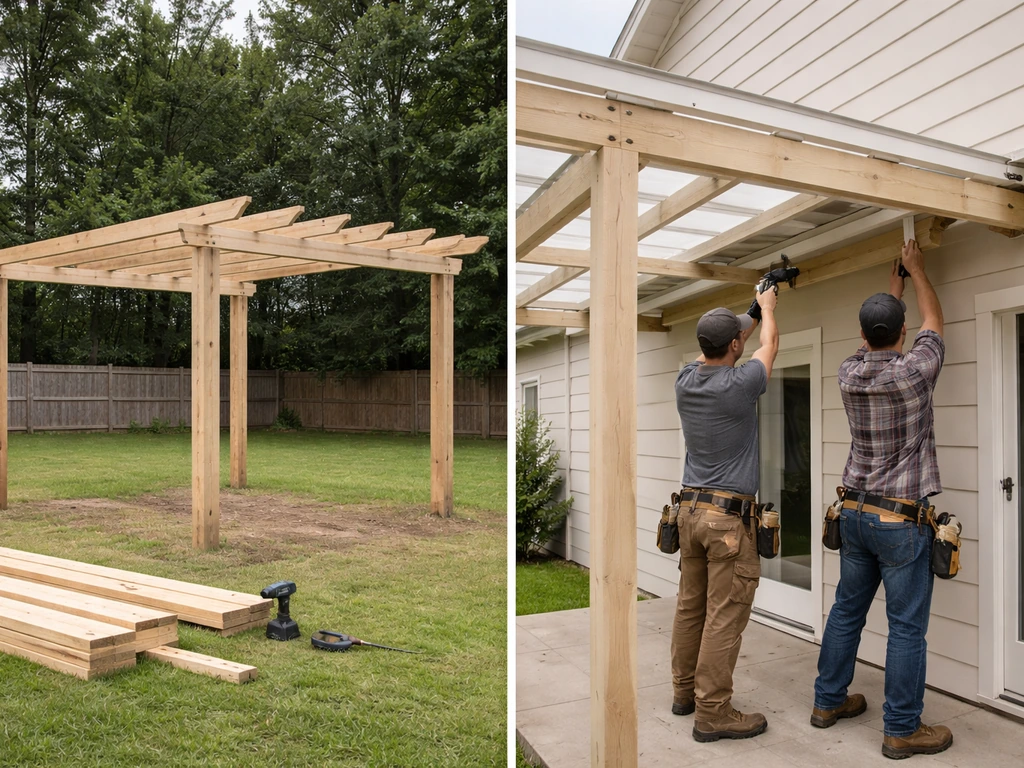
Cost varies a lot depending on size, materials, and whether you're attaching to the house or going freestanding. Here are realistic ranges based on current market conditions as of mid-2026.
| Structure Type | DIY Material Cost | Professionally Installed | Typical Timeline |
|---|---|---|---|
| Basic wood pergola (kit) | $1,500–$4,000 | $4,000–$9,000 | 1–3 days installed |
| Mid-range vinyl/aluminum pergola | $3,000–$7,000 | $7,000–$15,000 | 2–4 days installed |
| Louvered motorized pergola | Not typically DIY | $15,000–$50,000+ | 3–7 days installed |
| Basic attached patio cover (aluminum/metal roof) | $2,000–$5,000 | $5,000–$15,000 | 2–5 days installed |
| Mid-range solid patio cover (wood frame, shingles) | $4,000–$9,000 | $10,000–$25,000 | 1–2 weeks |
| Premium attached patio cover (tied into roofline) | Contractor required | $20,000–$50,000+ | 2–4 weeks |
For DIY feasibility: a basic wood pergola from a kit is probably the most accessible project on this list. Most kits come with pre-cut and pre-drilled components, and a confident DIYer with basic carpentry skills can install one over a weekend with a helper. Attached pergolas require lag-bolting into the house structure, which adds complexity but is still manageable. Freestanding pergolas need proper concrete footings for the posts, typically 12-inch diameter holes dug below the frost line in cold climates, which adds both labor and local code requirements.
Patio covers are harder to DIY, especially attached ones that tie into the existing roofline. You're working with structural loads, roof flashing, and potentially modifying the house's drainage. Freestanding aluminum patio cover kits (the kind sold at big-box stores) are more DIY-friendly, but even those need proper footings and often require a permit. Anything that attaches to the house or involves a solid roof should realistically involve a contractor, especially if you want it to hold up to code and not create warranty or insurance issues.
Permitting is a real factor here. Many jurisdictions treat pergolas as exempt structures if they're under a certain size (often 200 square feet) and not attached to the house. Patio covers almost always require a building permit because they're roofed structures subject to load calculations. The IRC Appendix H and IBC Appendix I specifically carve out patio covers as a distinct permit category with relaxed requirements compared to full room additions, but you still need to pull the permit. Check with your local building department before starting any project. Skipping permits creates problems at resale.
How to choose based on what you actually need
The right answer comes down to how you want to use the space and what climate challenges you're dealing with. Here are the most useful questions to ask yourself before committing.
- Does it rain a lot during your outdoor season? If summer afternoon thunderstorms are common, a pergola will frustrate you. A patio cover keeps your furniture and guests dry.
- Is sun reduction your main goal? A pergola with shade cloth or a louvered system handles this well. A solid patio cover handles it completely but blocks all sky views.
- Do you want an airy, garden-like feel or a more enclosed, room-like space? Pergolas feel open. Solid patio covers feel like outdoor rooms.
- How important is airflow? Pergolas win here. A solid patio cover with ceiling fans can compensate, but it's never quite as breezy as an open structure.
- Do you want to grow climbing plants? That's a classic pergola use — wisteria, roses, and hops all thrive on pergola frames. Less relevant for a patio cover.
- Are you planning to enclose the space later with screens or curtains? Both pergolas and patio covers can be fitted with outdoor curtains or screen panels, but a solid-roofed patio cover gives you a more solid base if full enclosure is eventually the goal.
- What's your budget? A basic pergola kit is the lowest-cost entry point. A fully attached patio cover tied into the home's roofline is the highest.
If you live in a region with hot, sunny summers and mild rain, a pergola (especially with adjustable louvers or shade cloth) is a genuinely great option and often the more attractive one. If you live somewhere with significant summer rain, high humidity, or frequent afternoon storms, think the Southeast, Pacific Northwest, or anywhere with monsoon seasons, a patio cover is usually the smarter practical choice. The aesthetic trade-off is real, but staying dry matters more when it actually rains.
It's also worth noting that a pergola can literally be built on top of an existing patio slab, and a patio cover can be added later too. You don't have to decide everything at once. Starting with a quality patio slab gives you the option to add either structure down the road when your budget or plans are clearer.
Home value, maintenance, and long-term thinking
Both pergolas and patio covers add value to a home, though the amount varies by region and market. Outdoor living improvements are consistently ranked among the better-performing home renovations for resale. A well-built attached patio cover that matches the home's architecture tends to add the most perceived value because it reads like square footage to buyers, it feels like a functional room. A pergola adds curb appeal and lifestyle value but is easier for buyers to mentally remove if they don't want it.
Maintenance depends heavily on material choice. Wood pergolas and patio covers need regular staining or sealing, typically every 2 to 3 years for exposed wood, and should be inspected annually for rot, especially at post bases where moisture collects. Cedar and redwood are more rot-resistant than pressure-treated pine but cost more upfront. Vinyl and aluminum structures are largely maintenance-free: occasional cleaning with soap and water is about all they need. Metal roofing on patio covers is similarly low-maintenance but should be checked for loose fasteners after high winds.
One honest trade-off to name: solid patio covers can create drainage issues if they're not properly sloped and flashed where they meet the house. A 1/4-inch-per-foot slope minimum is the standard recommendation to prevent standing water. Poor installation is the most common reason patio covers develop leaks or cause water damage to the adjacent wall. This is a big part of why attached patio covers genuinely benefit from professional installation, flashing and water management are easy to get wrong and expensive to fix.
Pergolas, by contrast, don't have drainage issues because rain passes through them. But post footings can heave in freeze-thaw climates if they're not set below the frost line, which can cause posts to shift and the whole structure to rack over time. Getting the footings right at the start saves a lot of headaches later.
Practical next steps: measuring, planning, and talking to contractors
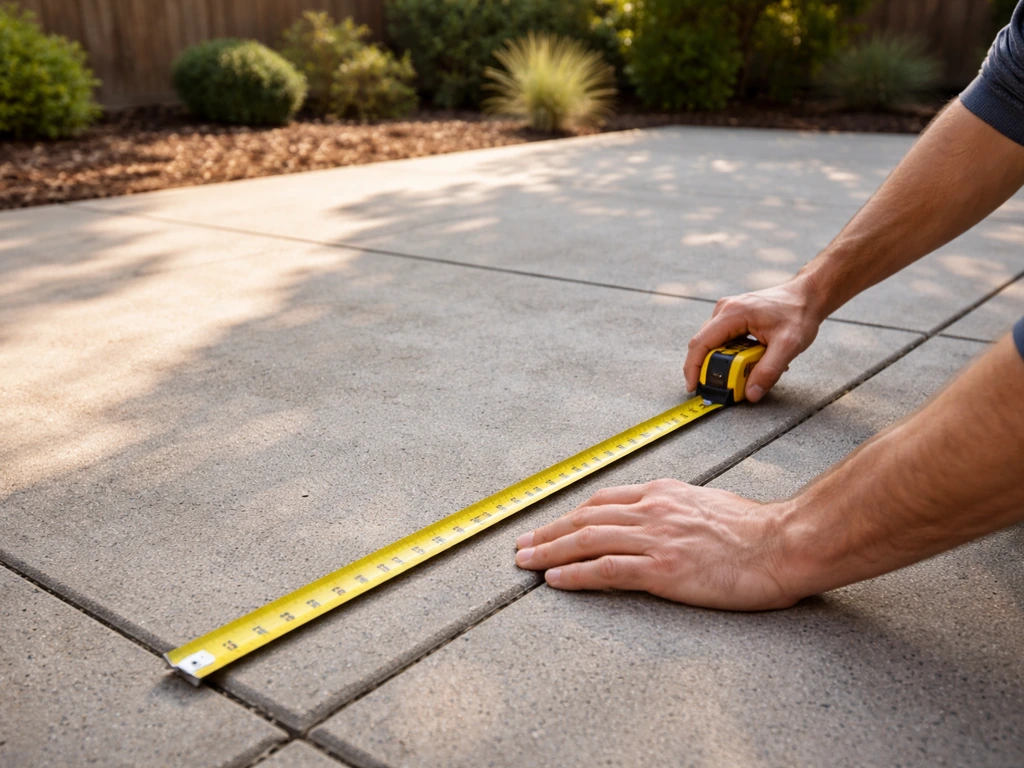
Before you call a single contractor or order a kit, spend an afternoon outside. Watch where the sun hits your patio in the morning versus late afternoon. A pergola on top of patio can be a practical upgrade when you want partial shade without fully closing off the space your patio. Note where you'd actually sit, where guests would gather, and what direction the prevailing wind and rain typically come from. These observations will tell you more than a catalog ever will.
Measure your usable patio space carefully. A common mistake is undersizing the structure, a 10x10 pergola feels cramped with a table, chairs, and a grill. For entertaining, 12x16 or larger gives you meaningful space. Measure the height of your roofline or eaves if you're planning an attached structure, because the attachment point and pitch of the cover depend on that starting height.
- Sketch your patio to scale on graph paper, noting doors, windows, hose bibs, electrical outlets, and any existing landscaping near the perimeter.
- Check your local municipality's permit requirements for both pergolas and patio covers before you choose a design — size limits, setback requirements from property lines, and height restrictions vary significantly by city and county.
- Get at least three contractor quotes and ask each one to specify: what materials they're using, whether they handle the permit, how they'll anchor posts or attach to the ledger, and what their drainage/flashing plan is for attached covers.
- Ask whether the contractor carries general liability and workers' comp insurance. This matters more for attached structures where damage to the house is a real risk.
- If you're doing DIY, download the permit application from your local building department before buying materials — it will tell you what drawings and load calculations you need to submit.
- Factor in electrical if you want ceiling fans, outdoor lighting, or a future outdoor TV — it's far cheaper to rough in conduit during construction than to add it afterward.
- Budget a 15 to 20 percent contingency on any contractor project. Concrete footings, ledger board conditions, and unexpected rot or damage at the attachment point are common sources of cost surprises.
The choice between a pergola and a patio cover really does come down to your local climate, how you use outdoor space, and your budget, not which one looks better in photos. If you're still deciding, a quick look at the cost of pergola vs patio cover in your area can help you pick the option that fits your budget. A pergola in a rainy climate will sit unused half the summer. A solid patio cover in a dry, sunny climate might feel darker and more closed-in than you wanted. Get honest about those trade-offs upfront, and whichever direction you go, you'll end up with an outdoor space you actually use.
FAQ
Can a pergola be modified later to function like a patio cover if I want more rain protection?
Yes, but the roof system determines the outcome. If you add solid or near-solid panels (or close the rafters substantially), the structure effectively becomes a patio cover and may need a new permit or updated load design. Changing from open rafters to a denser roof also increases snow load and can require stronger beams, so check with a structural pro before enclosing.
Will a pergola keep furniture dry during light rain or sprinklers?
Usually not reliably. Traditional pergolas let rain pass through rafters, so wind-driven showers and runoff can still wet cushions and tabletops. If your main goal is keeping outdoor furnishings dry, look for a louvered system that can close, or consider side shade panels (or a patio cover) to reduce spray.
Are patio covers always solid roofs, or can they still block rain with an open design?
Some patio covers are partially open, but they must still shed water based on their roof geometry and materials. Translucent polycarbonate and similar systems often block rain well, but they can leak if fasteners are incorrect or if the roof lacks the required slope. The key factor is proper water management (slope, flashing, and sealing), not just how “open” it looks.
How do I decide between a freestanding patio cover and an attached one?
Freestanding designs are easier to place and avoid house flashing details, but they still need engineered footings. Attached covers typically feel more seamless and can better define a “room,” especially if you use a ledger board and tie into house drainage. If your main concern is water handling against the wall, expect that an attached option depends heavily on correct flashing installation.
What’s the difference between code requirements for a pergola versus a patio cover?
Pergolas are often treated more like shade structures, while patio covers are treated as roofed structures with live-load requirements because precipitation and debris can accumulate. If you’re close to permit thresholds, or if your design adds enclosed roofing elements, the jurisdiction may reclassify the structure. Always confirm classification with your local building department before building.
Do I need gutters or drainage planning for a patio cover?
Not in every case, but you should plan where water goes. For attached covers, roof runoff must be managed with flashing and either integrated gutters or controlled discharge away from the foundation and wall. If water spills at the same spot repeatedly, it can damage siding, cause staining, or contribute to landscaping erosion even if the cover is “leak-free.”
What is the most common reason patio covers start leaking?
Poor flashing and inadequate sealing where the cover meets the house (for attached designs), or incorrect slope and panel fastening (for panel systems). Many leaks are not from the roof surface itself, they come from joints and transitions. After high winds, periodically check for loose fasteners and inspect seams where water is expected to flow.
How much clearance should I leave if the patio cover is near doors or windows?
Plan for practical headroom and operable door clearance, not just roof height. Measure the swing path of doors, check where eaves or beams will fall when you’re standing and seating, and ensure plants, umbrellas, or lighting fixtures do not interfere with roof edges. If your cover is attached, confirm that the attachment point does not interfere with existing siding trim or window trim.
Which option is better for privacy and wind protection?
A patio cover usually offers more wind reduction when paired with side screening, because the roof blocks overhead wind-driven spray and glare. Pergolas can be improved with lattice, curtains, or climbing plants, but they remain more exposed on rainy, gusty days. If privacy is critical during storms, consider adding side panels with a defined drainage plan to avoid channeling water back into the wall.
Is there a quick way to estimate footprint size for comfort before choosing pergola vs patio cover?
Yes. Start with the furniture layout you intend to use, then add a circulation margin around it. For example, many dining setups need adequate walking space between chairs and the edge of the structure, and grills typically require extra clearance near the seating. Undersizing is common, and once installed it is hard to “fix” without expanding the frame.
Next Article
Patio Cover vs Pergola: Costs, Coverage, Pros and Cons
Compare patio covers and pergolas for cost, weather protection, airflow, design, permits, and which to choose by your ne