Yes, you can finance a patio. Most homeowners use a personal loan, home equity product, or contractor financing to cover costs ranging from a few thousand dollars for a basic gravel or concrete slab to $30,000 or more for a large stamped concrete or natural stone project with a hot tub pad and electrical work. The right loan type depends mainly on how much equity you have, your credit score, and whether you want the lowest interest rate or the fastest approval.
Can You Finance a Patio? Costs, Options, Loads & Permits

Miles Hart
19 Jul 2026
Patios vs Decks: Why Your Project Type Affects Financing
A patio is built at ground level, usually on a concrete slab, pavers, or compacted gravel. A deck is an elevated wood or composite structure attached to the house. This distinction matters for financing because lenders treat them differently when assessing project value, required permits, and whether the improvement qualifies for home-equity-based lending. Decks typically require structural engineering, footings, and permits regardless of size, which pushes project costs and complexity higher and often makes home equity financing more attractive. Patios are frequently simpler to permit and build, which opens the door to personal loans and contractor financing for smaller scopes.
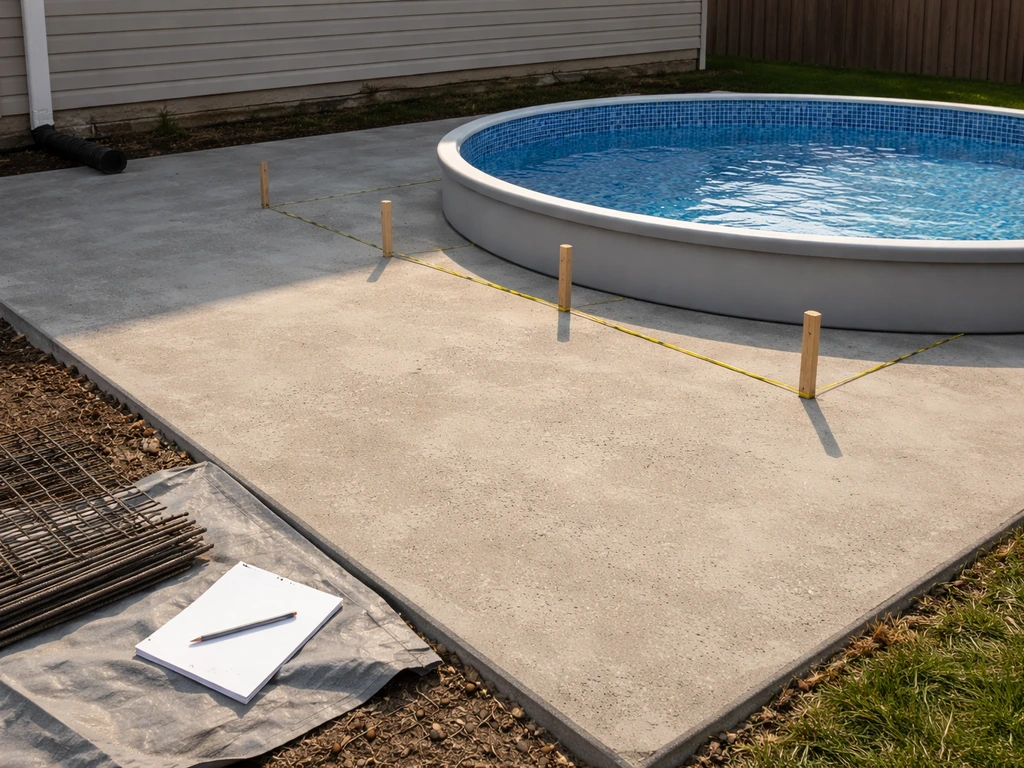
Financing also differs when you add heavy equipment to an existing patio. Installing a hot tub, above-ground pool, storage shed, or trampoline on a patio slab can require load assessments, reinforcement, and additional permits, all of which add cost that you may want to roll into your financing plan from the start. If you are planning any of those additions, get the structural and permit picture clear before you choose a loan amount.
Realistic Patio Costs by Surface Type
The surface material you choose is the single biggest driver of installed cost. Here are realistic national ranges for materials plus labor. A 200 sq ft patio is a common residential size, so the math is straightforward to scale.
| Patio Type | Installed Cost per Sq Ft | 200 Sq Ft Estimate | Notes |
|---|---|---|---|
| Gravel / Crushed Stone | Under $10 | $1,500–$2,000 | Lowest cost, permeable, needs edging; not ideal for heavy loads |
| Poured Concrete Slab (basic) | $6–$20 | $1,200–$4,000 | Workhorse option; 4-inch slab standard, upgradeable to 6-inch |
| Stamped Concrete | $12–$25+ | $2,400–$5,000+ | Higher labor cost; pattern, dye, sealer all add cost |
| Concrete Pavers | $8–$30+ | $1,600–$6,000+ | Wide range by paver type and pattern complexity |
| Natural Stone / Flagstone | $10–$35+ | $2,000–$7,000+ | Material cost varies most by region; labor-intensive dry or wet set |
| Permeable Pavers | $15–$40+ | $3,000–$8,000+ | Engineered base and drainage add significant cost |
These numbers are materials plus standard labor but do not include site prep. Grading, drainage, demolition of an existing slab, tree or root removal, and installing a proper compacted aggregate base (typically 4 to 8 inches of crushed stone) can each add $2 to $6 per square foot or hundreds to several thousand dollars in flat fees. Always ask contractors to break out site prep as a separate line item so you can compare bids accurately.
Add-On and Reinforcement Costs: Hot Tubs, Pools, Sheds, and Trampolines
If your plan is not just a patio surface but a patio that supports heavy equipment, the reinforcement and installation costs can rival the base patio itself. Plan for these add-ons before you finalize your loan amount.
Hot Tubs
A filled residential hot tub weighs between 3,000 and 6,000-plus pounds depending on the model. HotSpring Highlife models, for example, list filled weights from around 3,125 to 5,810 lbs with surface pressures of roughly 115 to 125 lbs per square foot. A standard 4-inch residential concrete slab can handle around 40 psf distributed load under residential building codes, so many spa installations require either a thickened slab, an isolated reinforced pad poured to the manufacturer's specs, or helical piers beneath the pad if soils are poor. Isolated footing or slab thickening for a hot tub pad can run from a few hundred dollars for a small patch repair to $1,500 to $3,000 or more for a properly engineered reinforced pad. Cost to Pour Concrete Slab, Jack Cooper (concrete slab installed cost guide) notes that full slab replacement is commonly quoted around $6–$15+/sq ft for a basic 4‑inch slab and that slab thickening or isolated footings will raise costs, so obtain contractor and structural‑engineer pricing for site‑specific scope blank" rel="noopener noreferrer">Cost to Pour Concrete Slab — Jack Cooper (concrete slab installed cost guide). Dedicated 220V electrical (a GFCI-protected buried circuit) runs roughly $800 to $1,600 depending on distance to your panel. Smaller plug-and-play spas (110V) need only a standard 120V GFCI outlet, which is much cheaper. The question of whether your patio can structurally support a hot tub is worth reading about in detail before you commit to any equipment purchase. If you’re wondering "will my patio support a hot tub", see our detailed guide for determining slab capacity and reinforcement needs.
Above-Ground and Inflatable Pools
Water weighs 8.34 lbs per gallon (about 62.4 lbs per cubic foot), so even a modest 1,000-gallon above-ground pool holds over 8,300 lbs of water alone. Base prep options range from sand or a foam pad ($25 to $500 for materials) for seasonal or inflatable setups to a concrete pad ($400 to $1,000 or more) for a permanent installation. SitePrep's guide 'Above‑Ground Pool Bases, SitePrep (base options and cost comparison)' lists common base options (mason sand, compacted gravel, foam pad, or concrete pad) and similar material cost ranges ($25–$500 for sand or retail pads; $400–$1,000+ for concrete pads) blank" rel="noopener noreferrer">Above‑Ground Pool Bases — SitePrep (base options and cost comparison). Municipal permit fees for above-ground pools commonly run $100 to $500. Whether a standard concrete patio can support a pool depends on the pool footprint and its load distribution, which is a real structural question worth checking. If you’re wondering can you put inflatable pool on patio, check load distribution and base-prep guidance to decide whether reinforcement or a dedicated pad is needed. For detailed guidance on whether a pool can go on your patio, including load, footing, and pad options, see our guide: can I put a pool on my patio.
Sheds
A gravel pad under a storage shed costs roughly $200 to $800. A small concrete slab typically runs $1,000 to $3,500 depending on size and region. Many jurisdictions exempt sheds under 120 sq ft from permits, but larger sheds or any electrified shed will require a permit and a code-approved foundation. If you plan to anchor a shed to an existing patio slab, confirm the slab thickness is adequate and that anchoring does not conflict with your permit requirements. For specific guidance on whether you can put a shed on a patio, see Can you put a shed on a patio.
Trampolines
Trampolines are lighter than pools or hot tubs, but the dynamic (bouncing) load is a different concern than static weight. A concrete patio surface itself is rarely the structural issue; the concern is anchoring the frame safely, dealing with HOA restrictions, and maintaining clearance. Trampolines typically do not require patio reinforcement on a sound slab, but HOA rules often prohibit them or require screening. If you’re wondering "can you put a trampoline on a patio", the short answer is usually yes on a sound slab, but confirm anchoring, local permits, and HOA rules before installation.
Add-On Cost Summary
| Add-On | Typical Reinforcement / Prep Cost | Electrical / Permit Add-On | Key Structural Concern |
|---|---|---|---|
| Hot tub (220V) | $500–$3,000+ for pad/footing | $800–$1,600 electrical | Concentrated load 115–125 psf; may exceed slab capacity |
| Above-ground pool (permanent) | $400–$1,000+ concrete pad | $100–$500 permit | Water weight 8.34 lbs/gal; total load can be enormous |
| Inflatable pool (seasonal) | $25–$500 base material | $100–$300 permit (varies) | Usually lighter; surface level and drainage matter most |
| Storage shed | $200–$3,500 depending on foundation type | $0–$500+ permit (size-dependent) | Anchoring to existing slab; larger or electrified sheds require permits |
| Trampoline | Minimal to none | None typically | HOA restrictions; dynamic load; anchoring safety |
Contractor Install vs DIY: What It Means for Cost and Financing
Labor typically accounts for 40 to 60 percent of a patio project's total cost. A 200 sq ft paver patio might cost $4,000 to $6,000 professionally installed but only $1,500 to $2,500 in materials if you do it yourself. That gap matters for financing in two ways. First, DIY projects need a smaller loan, which makes personal loans or even a credit card feasible where a home equity product would have been overkill. Second, some lenders, especially for home equity products, want the work done by a licensed contractor, or they require an after-completion appraisal to verify value was added. If you plan to DIY, confirm that your lender allows self-performed work before you apply.
There is also a permit and insurance angle. A contractor-built patio is more likely to be permitted and inspected, which matters when you sell the house. An unpermitted structure can complicate a sale, flag during a home inspection, or cause problems with your homeowner's insurance if a claim is ever related to the structure. If you DIY, pull the permit yourself. Most jurisdictions allow homeowners to permit their own work.
Financing Options Compared
There is no single best financing option for a patio. The right choice depends on your equity position, credit profile, project size, and how quickly you need to start. Here is a side-by-side breakdown of every common option.
| Option | Typical Loan Size | Typical Terms | Approximate Rate Range (2026) | Pros | Cons | Best For |
|---|---|---|---|---|---|---|
| Home Equity Loan | $10,000–$150,000+ | 5–20 years, fixed | 6%–9% | Fixed payments, lower rates, interest may be tax-deductible if used for home improvement | Closing costs $500–$2,000+; requires 15–20% equity; slower approval (2–6 weeks) | Large projects ($15,000+) with a clear total budget |
| HELOC | $10,000–$300,000 | 10-yr draw / 20-yr repay, variable | 7%–10% variable | Draw only what you need; reuse the credit line; interest-only during draw period | Variable rate risk; requires discipline; harder to qualify post-2023 tightening | Projects with uncertain scope or phased work |
| Cash-Out Refinance | $50,000+ | 15–30 years | 6.5%–8%+ | One loan replaces mortgage; potentially large amount | Resets mortgage term and rate; closing costs 2–5% of loan; only worthwhile if rates dropped from your current mortgage | Homeowners who would benefit from refinancing anyway |
| Personal Loan (unsecured) | $2,000–$50,000 | 2–7 years, fixed | 8%–20%+ | Fast approval (1–5 days); no home equity required; no collateral risk | Higher interest rate; shorter term means higher payment; credit-score sensitive | Smaller projects ($5,000–$20,000) or renters and new homeowners with little equity |
| Credit Card (0% intro APR) | $1,000–$25,000 (varies by card) | 12–21 months 0% then 20%+ | 0% intro, then 19%–29% | Zero interest if paid off in promo period; instant access | High rate after promo ends; risky if you can't pay it off; credit utilization impact | DIY projects or small material purchases you can pay off quickly |
| Contractor Financing | $2,000–$75,000 | 1–10 years, fixed or deferred | 0%–18%+ (varies widely) | Convenient, bundled with project; sometimes 0% promo offers | Often higher rates after promo; limited to that contractor; read terms carefully | Turnkey installs when convenience matters and you compare total cost |
| Title I / FHA Home Improvement Loan | $2,500–$25,000 (Title I) | Up to 20 years | Fixed, lender-set (often 6%–10%) | No equity required; backed by FHA; available to lower-equity homeowners | Requires FHA-approved lender; must be primary residence; paperwork-heavy | Homeowners with limited equity who want a government-backed option |
| State/Local Programs (PACE, green, energy) | Varies widely by program | 5–25 years, fixed | Varies; some subsidized | May fund permeable or energy-efficient improvements; repaid via property tax bill (PACE) | PACE liens are senior to your mortgage; not available in all states | Eligible improvements in participating states only |
A quick rule of thumb: if you have 20 percent or more equity in your home and the project costs $15,000 or more, a home equity loan or HELOC almost always beats a personal loan on total interest paid. If your project is under $10,000 or you need money fast, a personal loan or a well-managed credit card promotion can be more practical. Contractor financing is worth considering only after you compare the total cost of the loan, not just the monthly payment.
How to Prepare Your Financing Application
The documentation and timeline vary by loan type, but the groundwork is similar across all of them. Getting organized before you apply saves time and avoids back-and-forth with lenders.
Documents You Will Need
- Two years of W-2s or tax returns (home equity and personal loan lenders require this; some online lenders accept one year)
- Recent pay stubs (last 30 days) or proof of self-employment income
- Recent mortgage statement showing current balance and property address
- Homeowner's insurance declarations page
- A contractor quote or project estimate (required by most home equity lenders; some want two or three competing bids)
- Current property tax bill or appraisal (home equity lenders may order their own; have yours as a reference)
- Photo ID and Social Security number
- Bank statements from the last 2 to 3 months
Step-by-Step Application Process
- Get at least two to three contractor bids or a detailed materials list if DIYing, so you have a realistic project cost before you apply. Lenders want a number, not a guess.
- Check your credit score at no cost through your bank or a free service. Home equity products typically want a 680 or higher; some HELOC lenders want 700+. Personal loan lenders are more flexible, but rates climb fast below 660.
- Calculate your loan-to-value (LTV) ratio: take your current mortgage balance, divide by your home's estimated value, and subtract from 100. Most home equity lenders want you to stay below 80 to 85 percent combined LTV after the new loan.
- Pre-qualify with two or three lenders. For personal loans and HELOCs, many lenders offer soft-pull pre-qualification that does not affect your credit score.
- Submit a full application with all documents once you choose a lender. For a personal loan, approval can come in one to five business days. For a home equity loan or HELOC, expect two to six weeks, including a home appraisal (ordered by the lender, typically costing $300 to $600).
- For home equity products: the lender will order an appraisal, verify title, and issue a loan commitment. Federal law requires a three-business-day right of rescission after closing on a home equity loan or HELOC before funds are released.
- Coordinate the loan closing timeline with your contractor's start date. Do not sign a contract with a start date before your funds are confirmed.
Lender Checkpoints by Loan Type
| Loan Type | Minimum Credit Score (typical) | Equity Needed | Appraisal Required | Typical Time to Funding |
|---|---|---|---|---|
| Home Equity Loan | 680+ | 15–20% equity | Yes (lender orders) | 3–6 weeks |
| HELOC | 700+ | 15–20% equity | Yes (lender orders) | 3–6 weeks |
| Cash-Out Refinance | 620–680+ | 20%+ equity post-refi | Yes (full appraisal) | 4–8 weeks |
| Personal Loan (unsecured) | 580–660+ (rate-dependent) | None | No | 1–5 business days |
| Credit Card (0% promo) | Good to excellent (690+) | None | No | Instant to 2 weeks |
| Contractor Financing | 550+ (varies by lender) | None | No | Same day to 1 week |
| FHA Title I | No set minimum (lender discretion) | None required | Sometimes | 2–4 weeks |
When You Need a Professional: Engineers, Contractors, and Electricians
Most basic patio projects, a ground-level concrete slab or paver surface with no heavy add-ons, do not require a structural engineer. But there are clear situations where skipping professional review creates real risk and can void your insurance or your permit.
Signs You Need a Structural Engineer
- You plan to place a hot tub on an existing slab and do not know the slab thickness, reinforcement, or soil conditions beneath it. A filled spa can exert 115 to 125 psf, well above the 40 psf residential live load minimum in the IRC.
- Your patio slab shows existing cracking, heaving, or settling. This may indicate poor soil compaction, drainage problems, or a substandard original pour.
- You are installing a permanent above-ground pool on a concrete surface. The water weight alone (8.34 lbs/gal) means even a modest 5,000-gallon pool adds 41,700 lbs across its footprint.
- Your site has significant slope, expansive clay soils, or is near a retaining wall, and you plan to pour a new slab or place heavy equipment.
- You want to attach a new patio cover, pergola, or room addition to an existing structure, which may require a load analysis of the attachment points.
- A permit application in your jurisdiction requires stamped engineering drawings, which many do for structures above a certain size or for anything with concentrated heavy loads.
Signs You Need a Licensed Electrician
- Any hot tub requiring a dedicated 220V/240V GFCI-protected circuit (virtually all hard-wired spas). Wiring done without a permit is dangerous, illegal, and will not pass inspection.
- An outdoor lighting circuit, exterior outlet, or any buried conduit run to a shed or equipment pad.
- Bonding requirements for pool or spa installations (required by the National Electrical Code).
- Panel upgrades if your current service is at capacity.
Typical Professional Fees to Budget
| Professional | Typical Fee Range | What You Get |
|---|---|---|
| Structural Engineer (consultation + letter) | $300–$700 | Load assessment, slab evaluation, written opinion or stamped drawing for permit |
| Structural Engineer (full design drawings) | $800–$2,500+ | Engineered drawings, footing/reinforcement specs, suitable for permit submittal |
| Geotechnical Report (soil boring) | $500–$2,000+ | Soil bearing capacity, compaction data; required for engineered foundations on poor soils |
| Licensed Electrician (hot tub 220V circuit) | $800–$1,600 | Dedicated circuit, buried conduit, GFCI protection, permit, and inspection |
| General Contractor (structural slab work) | Varies; often priced per project | Slab thickening, isolated footings, or full slab replacement — get itemized bid |
| Helical Pier Installation (per pier) | $1,500–$3,000+ per pier installed | Deep foundation support where soils are inadequate; requires engineering spec |
| Building Permit (patio, varies by jurisdiction) | $50–$500+ | Legal authorization to build; required for most permanent structures and add-ons |
The engineering fees are not wasted money. If a structural engineer finds your existing slab is fine for a hot tub, you have written documentation and peace of mind. If they find it is not adequate, you know before you spend $6,000 on a spa that will crack your slab in two winters. Either way, the consultation pays for itself.
Permits, HOA Rules, Insurance, and Resale Impact
Most jurisdictions require a permit for a patio that exceeds a certain size (commonly 200 sq ft or any poured concrete work), any structure attached to the house, and any electrical work. Above-ground pool permits commonly cost $100 to $500. Shed permits are often waived for structures under 120 sq ft but required for anything larger or electrified. Failing to permit work creates headaches at resale: buyers' inspectors look for permits, and unpermitted improvements can either need to be retroactively permitted, removed, or disclosed as a defect.
HOA rules add another layer. Many HOAs restrict patio materials, colors, fencing around pools or hot tubs, shed placement and appearance, and visible above-ground structures including trampolines. Get HOA approval in writing before you order materials or sign a contractor agreement.
On the insurance side, a new patio typically does not change your homeowner's premium much on its own, but adding a pool, hot tub, or trampoline usually triggers a liability exposure review. Insurers may require fencing, locking covers, safety netting, or other features, or they may raise your premium. Call your insurer before installation, not after.
Resale impact is real but modest. A well-built patio in a market where outdoor living is valued (warmer climates, suburban areas with outdoor-focused buyers) can return 50 to 80 percent of its cost at resale, though this varies significantly by region and buyer demographics. A patio that is cracked, unpermitted, or supporting a failing hot tub pad is a liability, not an asset. Build it right the first time and document the permits.
Decision Checklist: Finance a New Patio or Reinforce an Existing One?
Before you pick a loan product, work through these questions. They will tell you how much to borrow and which financing path makes sense.
- Define the full scope: new slab, resurface only, or reinforce for heavy equipment? Each scenario has a different cost range and borrowing need.
- Get contractor bids for the complete project, including site prep and any add-ons (pad for hot tub, electrical, drainage). Do not underestimate.
- Check your equity position: current mortgage balance divided by estimated home value. If you are below 80% LTV, home equity products are likely available to you.
- Pull your credit score. Above 700 opens most options at competitive rates. Below 660, personal loans will cost more; still viable but price accordingly.
- Confirm HOA approval for any add-ons (pools, sheds, trampolines, hot tubs) before committing to a design.
- Contact your local building department to understand permit requirements and whether any professional engineering drawings are needed.
- Call your homeowner's insurer to understand any premium or coverage changes triggered by the project.
- If placing a hot tub, large pool, or any heavy equipment on an existing slab, consult a structural engineer before finalizing the project budget.
- Choose your financing option based on project total, your equity, and your credit profile. Match the loan term to the permanence of the improvement.
- Coordinate loan closing and contractor start dates. Build a two-week buffer. Delays happen.
FAQ
Short answer: can homeowners finance a patio (or reinforce an existing patio) and add-ons like hot tubs, above-ground/inflatable pools, sheds, and trampolines?
Yes. Homeowners can finance a new patio, reinforcement work, and related add-ons. Financing options include home‑secured products (home equity loan, HELOC, cash‑out refinance), unsecured loans (personal loans, credit cards), contractor or dealer financing, and sometimes government or local program loans/grants. Choice depends on project size, credit, home equity, and urgency.
What are realistic installed cost ranges by patio type (materials + labor, U.S. national guidance)?
Typical installed cost ranges (national averages, vary by region and site conditions): - Gravel/crushed stone: under $5–$10 per sq ft. - Basic poured concrete slab (4" standard): $6–$20 per sq ft. - Stamped concrete: $10–$30+ per sq ft. - Concrete pavers: $8–$30+ per sq ft. - Natural stone/flagstone: $10–$35+ per sq ft. - Permeable paver systems: often higher than standard pavers due to extra base/drainage (varies widely). Site prep (grading, tree/root removal, drainage, compacted base) typically adds hundreds to several thousand dollars depending on scope.
What are realistic costs to reinforce or upgrade an existing patio for heavier loads?
Reinforcement/upgrade cost ballpark (site‑specific): - Small slab repairs/patching: $200–$2,000. - Slab thickening or partial replacement: an incremental $6–$15+/sq ft for a new 4" slab (varies). - Localized reinforced concrete footing/pad under heavy equipment (hot tubs): $1,000–$5,000+ (depends on size/depth). - Helical/screw piers or micropiles (where soils require deep support): typically low‑thousands per pier; total project often several thousand to tens of thousands depending on number/depth. Always get contractor and structural‑engineer pricing for exact scope.
Cost ranges for common add-ons (national guidance)?
Add-on installed cost ranges (wide variation): - Portable/plug‑and‑play hot tubs: equipment $2,000–$8,000+; basic pad + electrical hookup $500–$3,000 (depends on electrical work). - Hard‑wired/large hot tubs or semi‑inset installations: $5,000–$25,000+ (excavation, pad, plumbing/electrical). - Above‑ground pools (structure only): equipment varies; base prep (sand/compacted base) $25–$1,000+; concrete pad $400–$1,000+. - Inflatable seasonal pools: $0–$500 for equipment; site prep minimal or retail pad $25–$200. - Sheds: gravel pad $200–$800; small concrete slab $1,000–$3,500 depending on size. - Trampolines: equipment $200–$2,000; pad prep/site leveling usually minimal unless creating a sunken install or reinforced pad.
How do I compare financing options (home equity loan, HELOC, cash‑out refinance, personal loans, credit cards, contractor financing)? What are pros and cons and typical loan sizes/terms?
Overview: - Home equity loan (fixed): Pros — lower rates than unsecured loans, fixed payment, good for one‑time lump sums. Cons — uses home as collateral; closing costs; typical terms 5–30 years; loan sizes usually up to available equity (commonly $10k–$200k+ depending on equity). - HELOC (revolving): Pros — flexible draw, interest only minimums early, lower rates than unsecured. Cons — variable rate, can re‑use funds, uses home as collateral. Typical draw amounts depend on equity; terms often 5–10 year draw + 10–20 year repayment. - Cash‑out refinance: Pros — can replace first mortgage and convert equity into cash, possibly lower mortgage rate overall. Cons — refinancing costs, resets mortgage term; good if you need a large sum. - Personal loan (unsecured): Pros — no home collateral, quick funding, fixed term (2–7 years). Cons — higher interest rates than home‑secured loans, lower maximums ($2k–$100k depending on lender and credit). - Credit cards: Pros — convenient for small purchases, rewards. Cons — high interest, not suitable for large projects unless promotional 0% APR offers available and paid quickly. - Contractor/ dealer financing: Pros — sometimes 0% promotional offers, easy at point of sale. Cons — deferred interest traps, high post‑promo rates; check credit terms and read the contract. - Government/local programs/ Title/municipal loans: Pros — low‑interest or forgivable loans/grants exist in some areas for energy or safety improvements. Cons — availability limited and usually project/eligibility specific. Choose based on loan size needed, interest-rate tolerance, timeline, and willingness to use your home as collateral.
Typical qualification cues lenders use (credit, equity, income)?
Common lender qualification cues: - Home‑secured products: sufficient home equity (LTV limits vary; many lenders allow up to 80–90% combined LTV), decent credit score (often 620+; better rates for 700+), stable income and acceptable debt‑to‑income ratio. - Personal loans/credit cards: credit score and income more important than home value; lower scores mean higher rates or lower maximums. - Contractor financing: usually soft credit checks and promotional offers require good credit for best terms. Prepare pay stubs, tax returns, mortgage statement, and proof of homeownership for secure products.
Next Article
Can I Put a Pool on My Patio? Feasibility Guide
Learn when a patio slab can support pool weight, loads, drainage, access, permits, and safer alternatives to patio insta