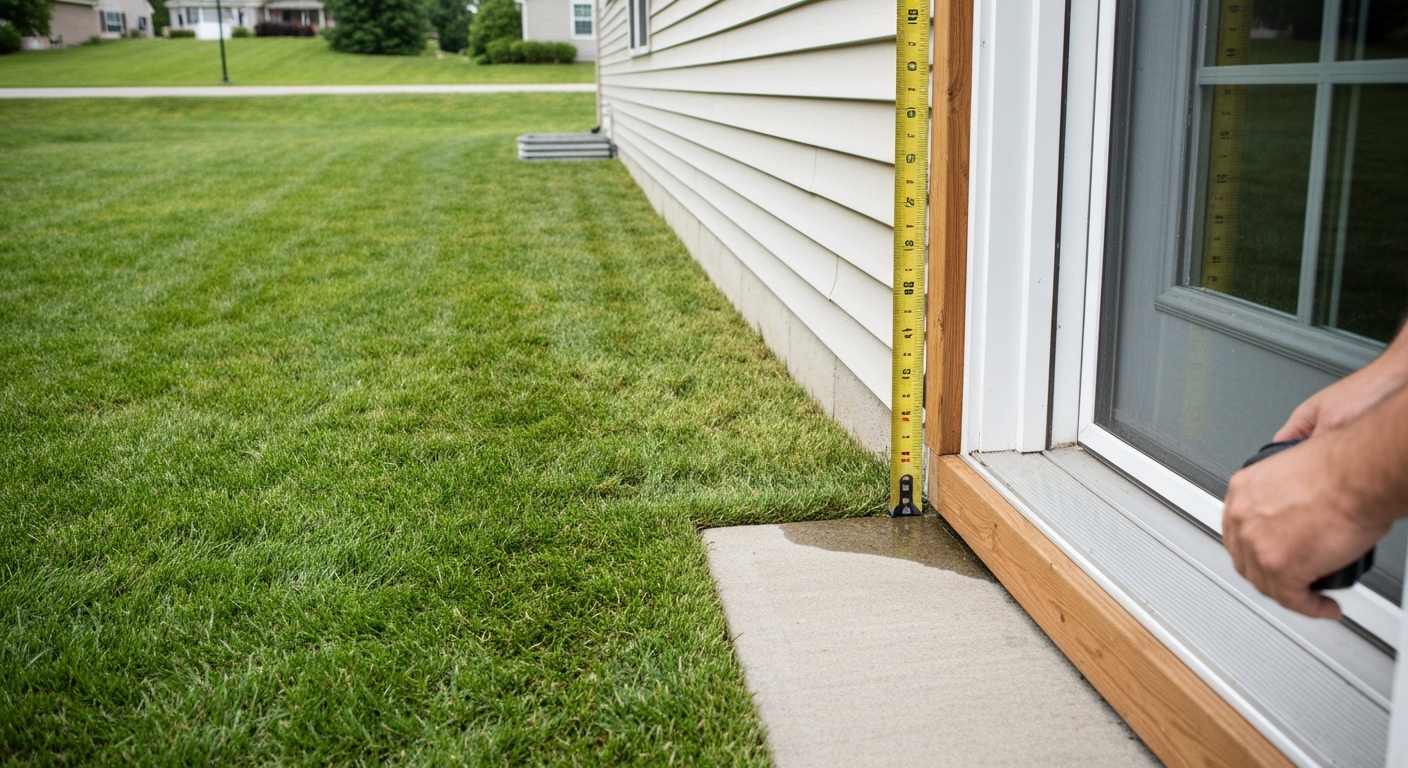
Yes, you can put a pool on your patio, but whether it's safe depends almost entirely on what your patio is made of, how thick and solid the slab is, and what type of pool you're planning to use. A small inflatable or soft-sided pool on a well-poured concrete slab is usually fine. A large above-ground steel-walled pool filled with water is a different conversation entirely, and placing anything that holds thousands of gallons on a patio deck or porch without a structural engineer's sign-off is genuinely dangerous. The good news: there's almost always a viable path forward once you know what you're working with.
Can I Put a Pool on My Patio? Feasibility Guide

Miles Hart
11 Jul 2026
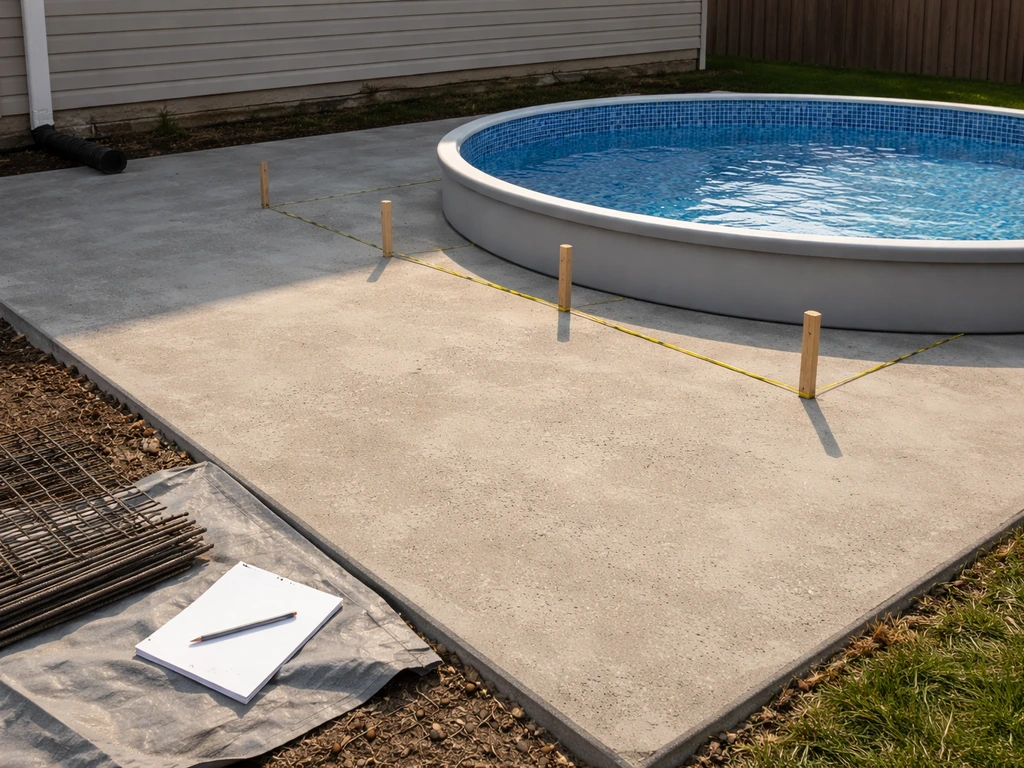
What 'putting a pool on your patio' actually means
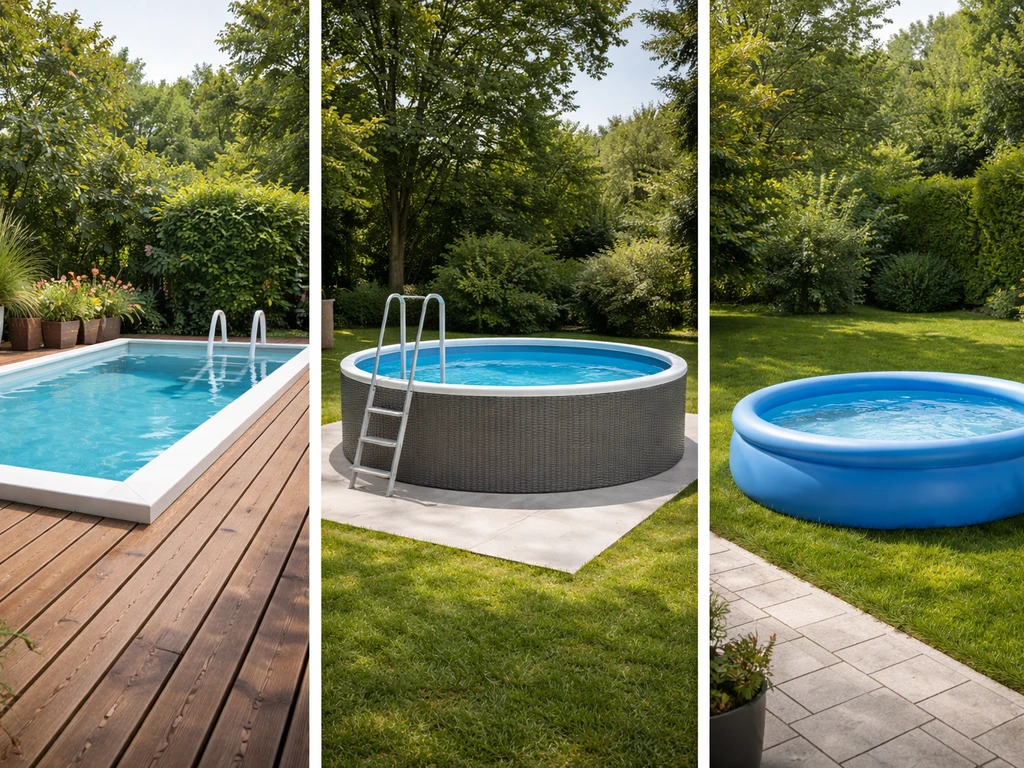
When homeowners ask this question, they usually mean one of three things, and the answer is different for each. First, they want to place a freestanding pool directly on an existing concrete or paver patio surface. Second, they're thinking about building a new deck or framing system over or adjacent to the patio that the pool will sit on. Third, they want a pool that integrates with the patio, where the pool partially sinks into or abuts the slab. Each of these has different structural, permitting, and cost implications, so it's worth getting clear on which scenario you're actually in before you spend any time or money.
For most homeowners on this site, the realistic scenario is either placing a portable or above-ground pool on an existing concrete patio slab, or upgrading to a new deck structure that can properly support a heavier pool. This article focuses on the first path but covers the deck route when the slab isn't up to the job.
Can your patio actually handle the weight?
Water is heavy. One gallon weighs about 8.34 pounds, and a modest 12-foot round above-ground pool holds roughly 3,000 to 3,500 gallons when filled. That's over 25,000 pounds of water alone, plus the pool structure, equipment, and the people in it. Spread across the pool's footprint, that works out to roughly 100 to 120 pounds per square foot (psf). To put that in perspective, a standard residential patio slab is typically designed for 40 to 50 psf of live load. Some thicker slabs poured for specific purposes can handle more, but you can't assume yours is one of them.
NYC Buildings guidance puts it plainly: never place a pool on a deck or porch unless it has been structurally engineered to support the additional load. The same logic applies to patios. If you’re wondering whether you can put a shed on a patio, the same concerns about weight load and site conditions apply The same logic applies to patios.. Even a slab that looks solid on the surface can have voids underneath, inadequate thickness, or rebar that wasn't placed correctly. These aren't visible problems until something fails.
What to check on your slab
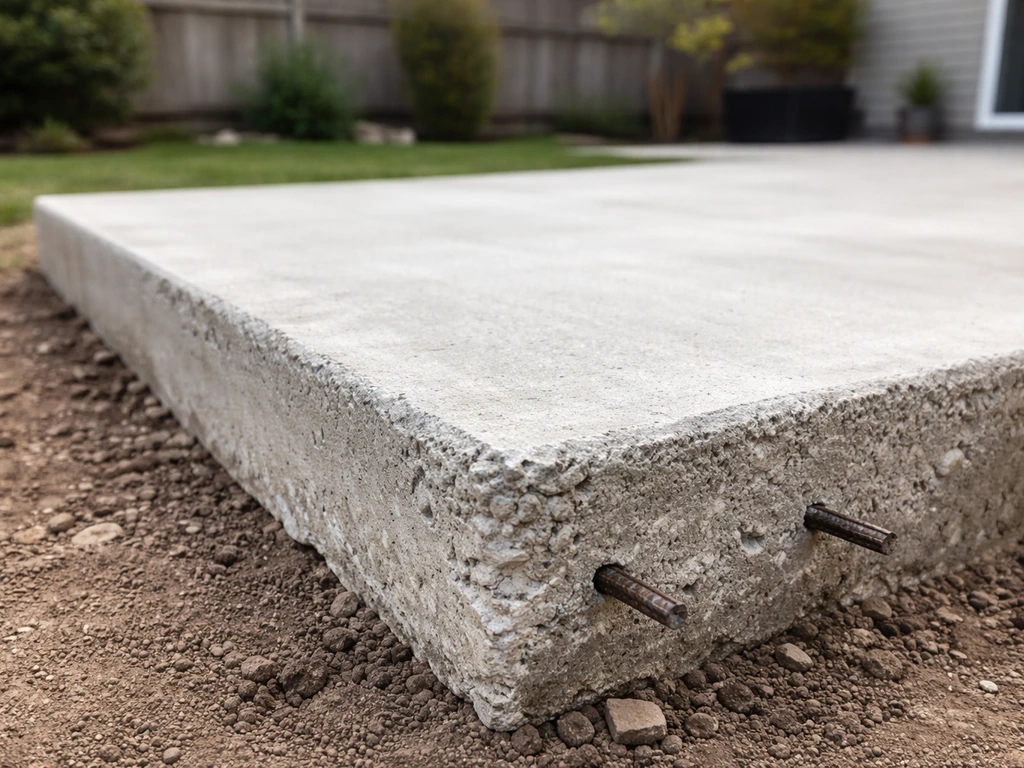
- Thickness: A standard residential patio slab is 4 inches thick. For any pool larger than a small soft-sided model, you ideally want 6 inches or more, with proper rebar reinforcement.
- Age and condition: Concrete older than 20 to 25 years may have carbonated, lost tensile strength, or developed internal cracking not visible from the surface.
- Visible cracks: Hairline cracks from settling are common and often harmless, but wide cracks (wider than 1/4 inch) or cracks with vertical displacement are red flags for structural compromise.
- Slope and levelness: Pools require a level surface. Most patios are sloped slightly for drainage (typically 1/8 to 1/4 inch per foot), which can cause issues with pool structure and water distribution.
- Subgrade condition: The soil under the slab matters as much as the slab itself. Poorly compacted fill, clay-heavy soil, or areas near tree roots can cause uneven settling under heavy loads.
- Paver patios: Interlocking pavers are not suitable for large above-ground pools. They shift, and the point loads from pool legs or frames will cause uneven sinking over time.
If you have a solid, reinforced concrete slab that's 6 inches or thicker, relatively level, and in good condition, it may be able to support a smaller above-ground pool, but you should still get a structural assessment for anything over about 1,500 gallons. If your slab is 4 inches thick and shows any signs of cracking or settling, limit yourself to small portable or inflatable options, or plan to build a proper support structure.
Site conditions that can make it unsafe regardless of the slab
Even a perfect slab isn't the whole story. There are several site-level factors that can make a patio pool installation unsafe or impractical, and it's worth checking these before you go any further.
- Drainage: Pools overflow, splash, and lose water during use. If your patio doesn't drain efficiently away from the house foundation, you're creating a water intrusion risk. Check where runoff goes and whether adding thousands of gallons of water use to that area will overwhelm your drainage.
- Underground utilities: Call 811 (the national 'Call Before You Dig' line) before any pool installation that involves ground anchors, pool legs, or excavation near the patio. Gas lines, water lines, and electrical conduits are commonly routed under patios.
- Overhead electrical lines: The IRC and ANSI/PHTA/ICC-4 standard both reference clearance requirements from overhead lines. A common rule is a minimum 22.5-foot horizontal clearance from pool water to overhead utility lines, though your local code may vary.
- Slopes and soil stability: If your patio is on a slope, or if there's a grade change near the pool area, the soil can shift under load, especially after rain. This is especially risky for larger, heavier pools.
- Access for delivery and installation: Above-ground pools typically come in large sections. Make sure your backyard access is wide enough (usually at least 4 feet, often more) to get the pool components through without disassembly.
- Proximity to the house: Most codes require a minimum setback from the house structure, and pool water splashing against a foundation or exterior wall accelerates damage over time.
Pool types that actually work on patios
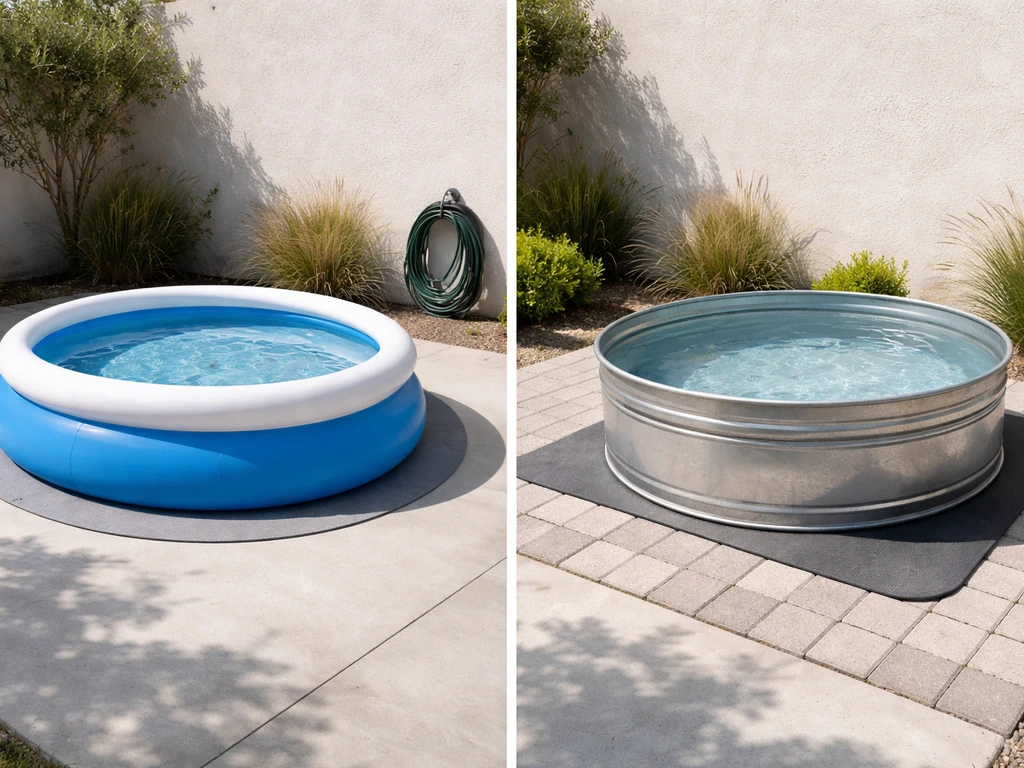
Not every pool is appropriate for a patio placement. Trampolines can also be a safety issue on patios, so make sure the surface and any supports are suitable for the load and intended use can you put a trampoline on a patio. The options that tend to work best are ones with distributed weight loads, smaller overall footprints, or designs specifically built to sit on hard surfaces.
| Pool Type | Typical Weight Load | Works on Concrete Slab? | Works on Pavers? | Rough Cost Range |
|---|---|---|---|---|
| Inflatable/soft-sided (small, under 10 ft) | 20–40 psf | Yes, most slabs | With caution on level surface | $50–$500 |
| Soft-sided frame pool (10–14 ft) | 60–90 psf | Solid 4"+ slab, check condition | Not recommended | $200–$1,200 |
| Steel/resin above-ground (12–18 ft round) | 100–130 psf | 6"+ reinforced slab only | No | $800–$4,000 |
| Patio/deck pool (purpose-built) | Distributed, varies | Requires engineered support | No | $2,000–$8,000+ |
| Stock tank pool (galvanized steel) | 80–110 psf | Solid 4"+ slab, level required | Not recommended | $300–$800 |
Inflatable and small soft-sided pools are the most patio-friendly because their weight is distributed broadly across the pool floor rather than concentrated on legs or frames. Stock tank pools have become popular in recent years as a durable, relatively affordable option: a 10-foot round galvanized stock tank holds about 700 gallons, weighs under 6,000 pounds total, and sits flat on the ground. Larger steel-walled above-ground pools are the trickiest because they concentrate load and require the most structural support from the surface beneath them.
If you're comparing a patio pool setup to a dedicated above-ground pool placed on grade (on the actual ground), the ground-level option is almost always structurally simpler because the soil and compacted base absorb the load rather than a finite slab. The patio placement adds convenience and aesthetics but raises the structural bar considerably. This is also why some homeowners in this situation end up building a new deck designed specifically for pool support rather than relying on an existing patio.
Permits, building codes, and setbacks you need to know
This is where a lot of homeowners get surprised. In most jurisdictions, any permanent or semi-permanent pool, including above-ground pools over a certain size, requires a building permit. The threshold varies but is commonly 24 inches in depth or larger than a certain volume. If you're building or modifying a structure (like a deck) to support a pool, that structure almost always requires a permit as well.
The 2024 International Residential Code (IRC) swimming pool chapter covers electrical bonding and GFCI requirements specifically. All electrically powered pool equipment must be bonded, and GFCI protection is required for pool-related electrical circuits. This isn't optional and isn't something to DIY unless you're a licensed electrician. If your pool has a pump, heater, or lighting, a licensed electrician needs to handle those connections.
Setback requirements are set locally, but common minimums include 10 feet from property lines, 5 to 10 feet from the house, and clearance from easements and utility corridors. Some municipalities also require a fence or barrier around any pool over 24 inches deep, regardless of whether it's above-ground or in-ground. Check with your local building department before purchasing anything.
The ANSI/PHTA/ICC-4 standard provides nationally recognized minimum guidelines for the design, installation, equipment, and operation of above-ground and on-ground residential pools. While it isn't automatically adopted into every local code, many jurisdictions reference it, and following it protects you during permitting and for insurance purposes.
What it costs and whether you should DIY or hire a pro
Costs vary widely depending on the pool type, whether your patio needs reinforcement, and how much electrical and plumbing work is required. Here's a realistic breakdown of what you're looking at.
| Task | DIY Possible? | Typical Cost (Pro) | Notes |
|---|---|---|---|
| Structural assessment of existing slab | No | $300–$700 | Required for pools over ~1,500 gal |
| Slab reinforcement or new concrete pour | No (usually) | $2,000–$8,000+ | Depends on area and thickness needed |
| Small inflatable/soft-sided pool setup | Yes | $0 (DIY) | No permit usually required under 24" |
| Above-ground pool installation (12–18 ft) | Partial | $500–$2,000 labor | Pool kit separate; electrical requires licensed pro |
| Electrical bonding and GFCI install | No | $400–$1,200 | Required by IRC for powered equipment |
| Permit application and fees | Yes (homeowner) | $50–$500 | Varies significantly by municipality |
| New deck build to support pool | No (typically) | $8,000–$25,000+ | Must be engineered for pool loads |
The honest DIY answer: you can handle the research, measurements, permit applications, and assembly of smaller pool kits. The structural, electrical, and any concrete work should go to licensed professionals. Cutting corners on any of these three isn't just a code violation risk, it's a genuine safety hazard when you're dealing with the weight and electrical environment of a pool.
Timeline-wise, a small portable pool can be up and running in a weekend. An above-ground pool on an existing slab, assuming the slab passes inspection, typically takes two to four weeks from permit approval to water in the pool. If you need new concrete work or a deck build, add another four to eight weeks minimum, and longer in busy construction seasons.
It's also worth knowing that a pool, even a portable above-ground one, can affect your homeowner's insurance and home value. Call your insurer before installation to understand liability coverage requirements, especially if you're adding a ladder or access structure.
Your next-steps checklist to decide today
You don't need to hire anyone or spend any money to start narrowing this down. Here's what you can do right now. If you’re wondering can you finance a patio pool project, the key is checking what you’re actually adding, like slab reinforcement, permits, and electrical work.
- Measure your patio: Get the exact dimensions (length, width) and note any slopes, cracks, or uneven sections. Use a 4-foot level to check how much slope you're dealing with.
- Find your slab specs if you can: Check any permits or paperwork from when the patio was built. If you know the thickness and whether rebar was used, you're ahead of the game. No records? A structural engineer can core drill a small sample to check.
- Decide on your pool size and type: Match your patio dimensions to a realistic pool size. Use the weight estimates in this article to get a rough sense of whether your slab is in the right range or clearly undersized.
- Call 811 before doing anything physical: This is free, takes five minutes, and marks underground utilities. Do it before you set up any pool with stakes, anchors, or heavy footprint.
- Contact your local building department: Ask two questions: what size pool triggers a permit requirement in your jurisdiction, and what are the setback rules for pools on residential lots. Most departments will answer these questions over the phone or on their website.
- Get a structural assessment if your pool will hold more than 1,500 gallons: Budget $300 to $700 for a structural engineer to evaluate your slab. This is the single most important step if you're considering anything larger than a backyard splash pool.
- Call your homeowner's insurance: Let them know what you're planning and ask if a pool (even above-ground) requires additional liability coverage or triggers any policy changes.
- Get at least two quotes if any structural or electrical work is needed: Prices vary significantly by region and contractor. Get itemized quotes so you can compare apples to apples.
- Set a realistic budget with a buffer: Add 20 percent to whatever number you land on for permits, unexpected slab issues, and equipment. Pools consistently run over initial estimates when site conditions complicate things.
If you're not sure whether a pool is right for your patio but you're drawn to the idea of a water feature, it's worth comparing this path to a hot tub installation on the same slab, since hot tubs have their own structural demands and are sometimes a better fit for a patio footprint. A professional structural check can confirm whether the slab and its support framing can safely handle a hot tub’s concentrated weight and dynamic loads hot tub installation. Similarly, if your patio is undersized or structurally questionable, some homeowners find it makes more sense to build a new dedicated deck designed from the ground up to handle pool loads rather than retrofit an existing patio that was never meant for that purpose.
FAQ
Can I leave a patio pool up year-round, or does it have to be temporary?
Yes, but only under specific conditions. A patio must have enough structural capacity for the loaded pool, and any pump, filter, heater, or lighting needs proper bonding and GFCI protection. If you plan to leave it up seasonally or treat it like a permanent installation, expect permitting and fence or barrier rules to apply in many areas.
How do I check if my patio slab can handle the pool if I don’t know the thickness or reinforcement?
It depends on the pool footprint and how the load is transferred. If you can’t find a thickness and reinforcement record for the slab, do not rely on appearance. Hire a structural engineer for a load check, and consider a contractor to do a core sample when the slab condition, cracking, or prior repairs are unclear.
Will adding pavers, leveling sand, or a base mat make it safe to put a pool on a weaker patio?
You can sometimes reduce risk by spreading the load, but you can’t “underlay” your way out of inadequate slab capacity. Leveling sand, foam pads, or thin pavers may shift or collapse under thousands of pounds. Any base system should be designed for pool loads, and it must not create drainage issues that undermine the slab or pool.
Can I install the pool pump and plug it in myself to avoid electrical permitting?
Electrical work is the biggest DIY trap. Even if you only run a pump, you typically need GFCI protection and proper bonding of metallic components per local requirements. Use a licensed electrician for the connection, and confirm the cord routing and weatherproofing for deck-adjacent outlets.
What setback distances should I follow when placing a pool on a patio?
Yes, but “near the house” is not automatically compliant. Setbacks and clearance requirements vary, and easements or utility corridors can restrict placement. Also consider service access for filter and plumbing, and make sure you can meet any required barrier placement without blocking doors or walkways.
Will a pool on my patio damage my foundation or drainage system?
Water movement matters. Pools can increase runoff and splash toward the building foundation, which can worsen settlement and cause cracking. Plan for proper drainage, keep splash-out under control, and avoid placing a pool where existing grading directs water to cracks or low spots.
Do I need a fence or safety barrier for an above-ground pool on a patio?
A barrier requirement is common when depth exceeds certain thresholds, but some jurisdictions also treat above-ground pools on hard surfaces similarly. Don’t assume a small patio pool is exempt, especially if it has a ladder, stairs, or an accessible deck-like layout.
What slab conditions are red flags that mean I should not install a pool?
If your slab has visible cracking, uneven settling, or previous patching, treat it as a warning sign. Before buying, document the cracks, measure level, and ask a structural professional whether reinforcement or localized concrete repair is needed. If the slab is actively moving or spalling, stop and reassess.
Do I need to size the patio for a fully filled pool, or can I design for partial fill?
Pool weight changes with water level and even with emptying and refilling. You should design for the maximum filled condition, plus allow for dynamic effects like people moving around, filter vibration, and hose or ladder impacts. If you only size for “partially filled,” you can still exceed the patio’s safe load.
If I build a deck over my patio, does that make the pool easier, or are there still structural risks?
A deck can be engineered for the load, but it still needs proper permits and inspection for the structural framing, footings, and connection details. Retrofitting over an existing patio can be especially tricky because you may not know what was originally designed to carry loads or where utilities run underneath.
How will a patio pool affect my homeowner’s insurance and liability coverage?
Insurance and liability can change quickly, even for “small” setups. Call your insurer before installation and ask whether your policy covers pool-related injuries, water damage from plumbing failures, and ladder or barrier requirements. Get any approval or written guidance in case you need to show it during a claim.
Is it safer to put the pool on the ground instead of the patio if I have limited patio reinforcement?
Often, yes. If the patio is on-grade and you can create a properly compacted base, the ground-level option typically avoids placing peak loads onto a finite slab. If the patio area is only slightly off the ground, a professional can evaluate whether lifting, excavation, or re-grading is safer than retrofitting the slab.
Next Article
Grass Is Higher Than Patio: Causes, Fixes & Deck vs Patio
Grass higher than patio? Causes, slope checks, repair options, lower lawn, raise patio, or build a deck, with costs & DIY