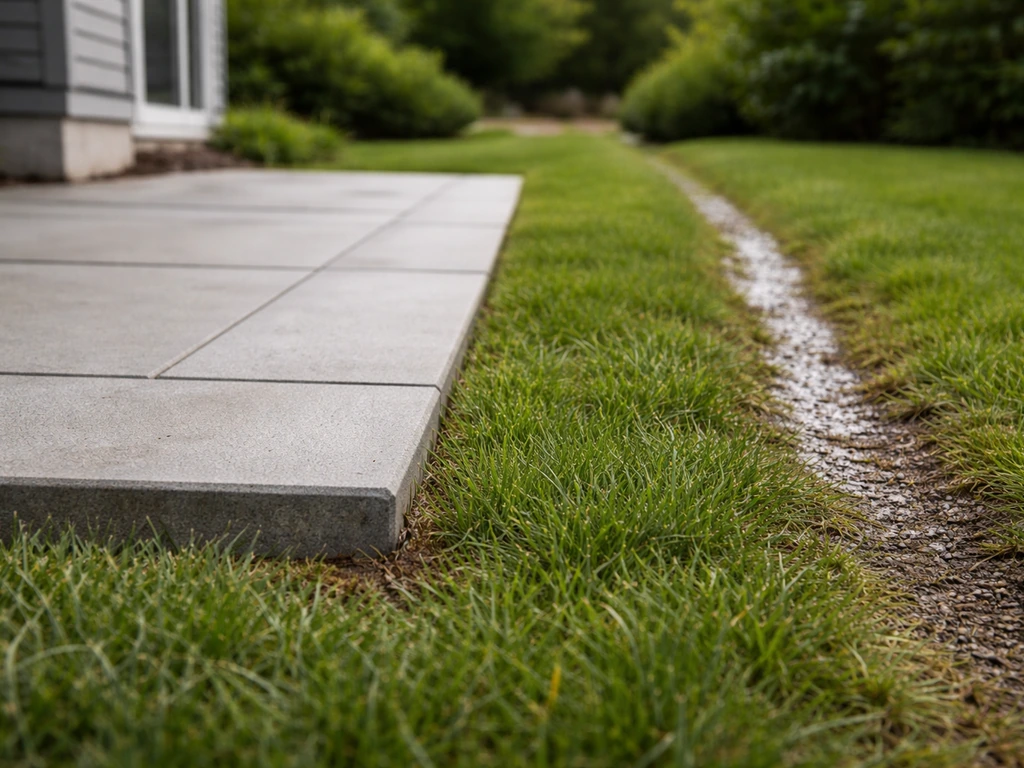
If your lawn sits higher than your patio, water is almost certainly flowing toward the patio instead of away from it. That means pooling, soggy edges, and potentially a slow creep of moisture toward your foundation. The fix depends on how big the elevation difference is and what caused it, but you have two real paths: lower the lawn back to a proper grade, or raise and rework the patio so it sheds water correctly. Either way, you need to measure the problem before you touch anything.
My Lawn Is Higher Than My Patio: Fix Drainage and Grades

Miles Hart
26 Jun 2026
Why your lawn ends up higher than your patio
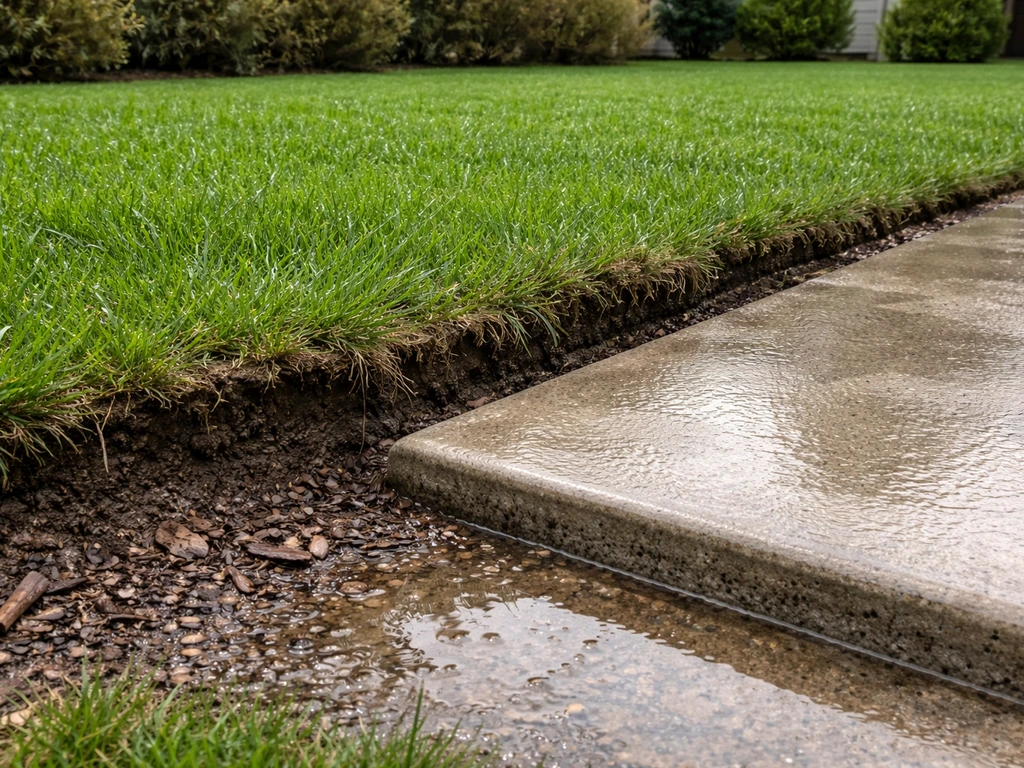
This mismatch happens more often than people realize, and it's almost never one single cause. The most common culprits are soil creep and sod buildup. Every time you topdress, add compost, or lay new sod, you're adding a small amount of height to the lawn. Do that a few times over a decade and you can easily gain an inch or two without noticing. Meanwhile, the patio stays exactly where it was set.
A settled patio base is the flip side of that same problem. If the gravel or compacted sub-base under your patio wasn't deep enough or got saturated and shifted, the whole surface can drop a few inches while the lawn around it stays put. Paver patios are especially prone to this: the border course tends to hold while the interior field pavers sink, creating a bathtub-like depression that collects water and loses joint sand over time.
Incorrect original grading is another big one. If the patio was installed without checking the finished elevation against the surrounding yard, it may have been set too low from day one. Same goes for patios built close to the house where the contractor didn't account for the grade needing to slope away from the foundation. And finally, runoff from a higher part of the yard, an uphill neighbor's property, or misdirected downspouts can deposit silt and organic matter along the lawn edge over time, gradually building it up.
What can go wrong if you ignore it
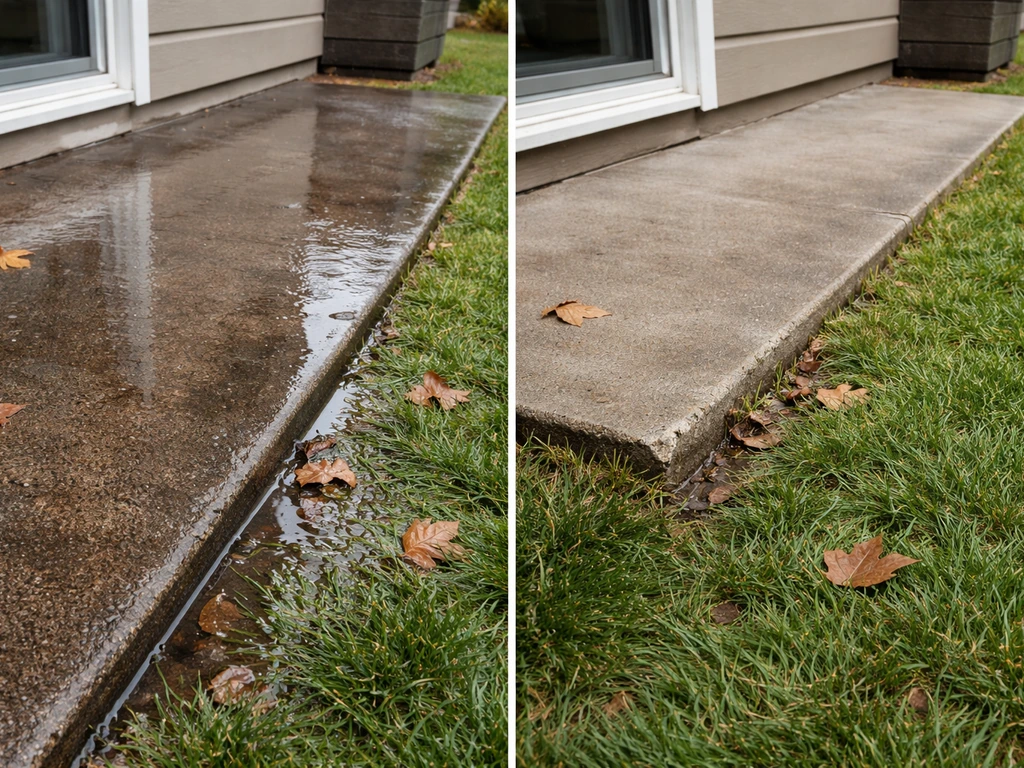
The most immediate risk is water pooling on or around the patio surface. When lawn sits higher than the patio, any rain or irrigation that falls on that lawn has nowhere to go except onto the patio. That pooling accelerates erosion under the patio edges, washes out the bedding sand, and makes the settlement problem worse over time. Freeze-thaw cycles in colder climates amplify this fast.
The bigger concern is what happens near the foundation. The standard residential drainage guideline is a drop of about 1 inch per foot for the first 5 to 10 feet away from the house, or roughly a 5% grade. When the lawn is higher than the patio and the patio sits close to the house, that grade is almost certainly running the wrong direction. A WSU extension lawn guidance publication also emphasizes grading so lawns slope gently away from the house to help ensure runoff drains away from the foundation slope away from the house. You end up directing water toward the foundation instead of away from it, which can mean basement seepage, crawlspace moisture, and long-term structural headaches.
There are also everyday safety issues. A lawn edge that's noticeably higher than the patio creates an irregular transition that's easy to trip over, especially at night or when wet. And if the height difference is significant, the patio edge itself can start to undercut, crumbling or shifting outward as the soil pushes against it.
What to check and measure before doing anything
Grab a 4-foot level and a tape measure before you start planning any fix. Walk the perimeter of the patio and measure the height difference between the lawn edge and the patio surface at several points. Note where it's worst. Then set the level on the patio surface itself and check which direction it slopes: ideally, it should drop away from the house at around 1 to 2 percent (roughly 1/4 inch per foot). If it slopes toward the house or is essentially flat, that's a separate problem you'll need to address alongside the lawn height.
Also check your downspouts. Downspouts should discharge at least 6 to 10 feet from the foundation, ideally to an underground catchment or daylight location that's clearly down-gradient from both the house and the patio. If a downspout is dumping right at the lawn edge next to the patio, that's accelerating everything and needs to be redirected as a first step regardless of what else you do.
Take note of where water actually sits after a rain. Give it 30 minutes after a good downpour and walk the area. Standing water on the patio surface, water pooling along the patio perimeter, or soggy soil right at the edge all tell you where the problem is concentrated. That mapping exercise will save you money by showing you where drainage work actually needs to go.
Quick things you can do right now
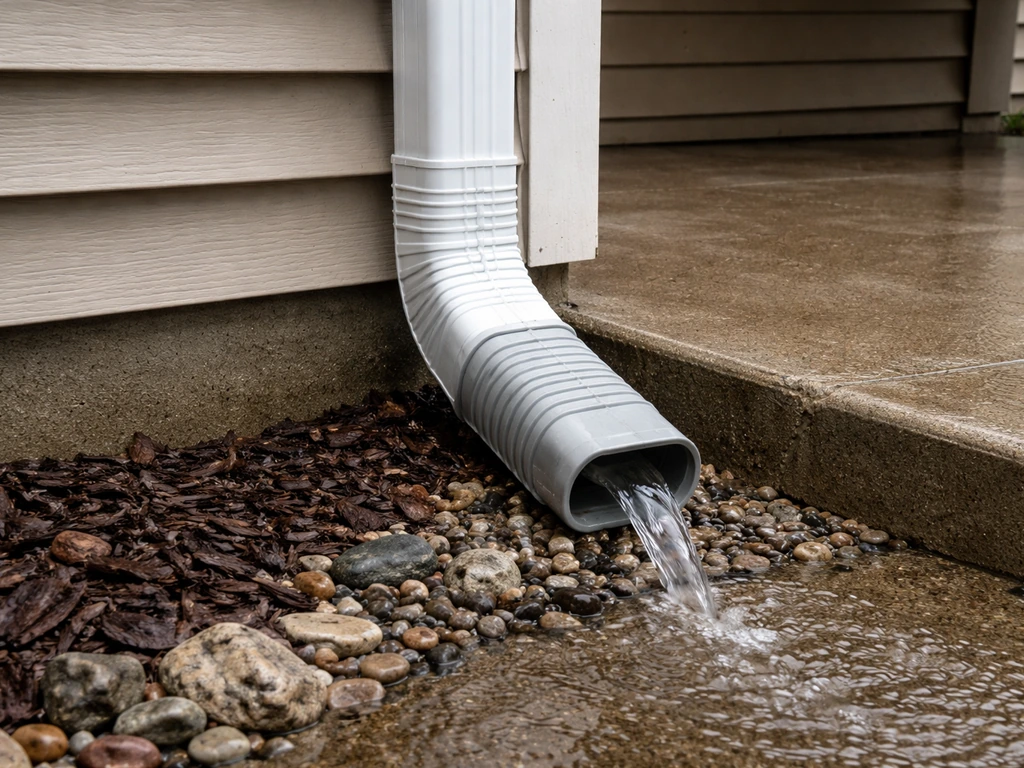
These aren't permanent fixes, but they'll reduce damage while you plan the real solution. First, redirect any downspouts that are discharging near the patio. Add a downspout extension or a flexible elbow to carry that water at least 10 feet away and toward a lower point in the yard. This alone can dramatically reduce how much water is hitting that already-high lawn next to the patio.
Second, if you have a buildup of sod or soil right at the patio edge, you can hand-dig a shallow swale along that edge. Even a 3- to 4-inch-deep channel following the patio perimeter gives runoff a path to escape laterally rather than pooling on the patio. Line it with a layer of pea gravel if you want it to look intentional. This is a temporary drainage relief measure, not a permanent fix, but it buys you time.
Third, pull back any mulch or soil that has built up against the patio edge itself. Organic material pressed against a paver edge or concrete slab edge holds moisture and speeds up both surface deterioration and sub-base saturation. Keeping that edge clear costs nothing and makes a real difference.
Lowering and regrading the lawn
If the lawn is only 1 to 3 inches higher than the patio, regrading the lawn is usually the cleanest long-term solution, especially if the patio itself is in good shape and sitting at roughly the right elevation relative to the house. The goal is to reestablish a consistent slope that carries water away from both the foundation and the patio, ideally hitting that 1% to 2% (roughly 1/4 inch per foot) drop moving away from the house.
How the regrading process works
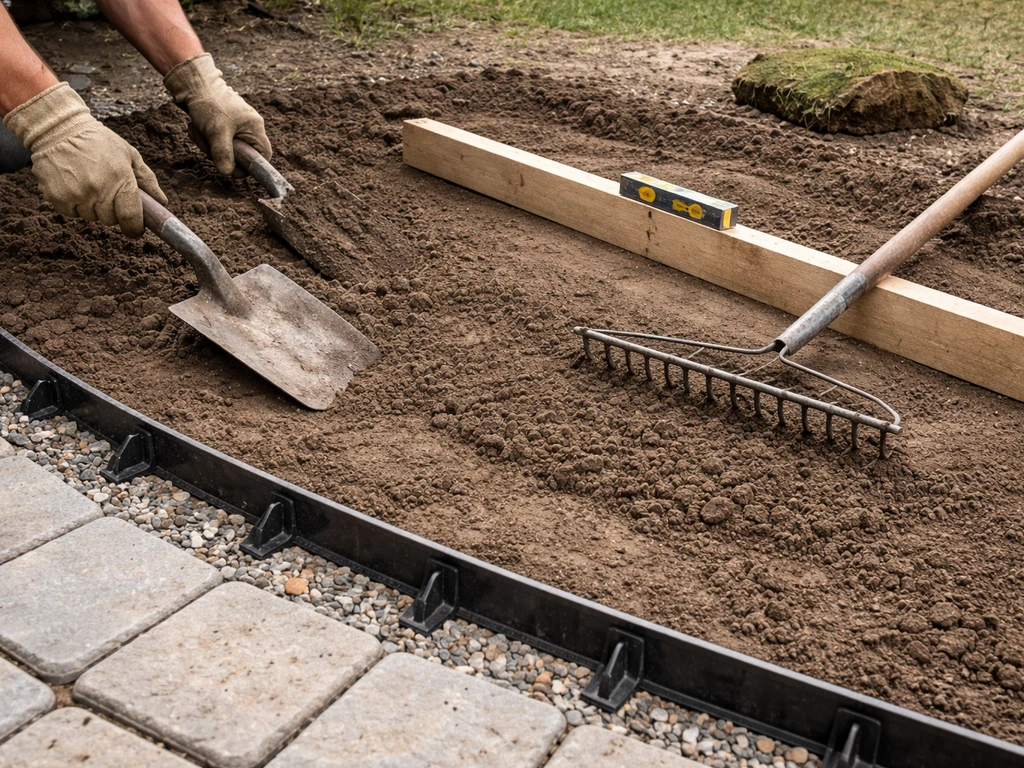
Start by stripping the sod in the area you're working. Set it aside if it's in good shape and you plan to relay it. Then use a flat spade or a rented skid steer (for larger areas) to cut the high spots down and move excess soil away. The excavation needs to extend at least 12 to 18 inches beyond the patio edge so you have a smooth transition and don't undermine the edge restraint on the patio.
Do not dig or grade within 6 inches of the patio's edge restraint or border course. Cutting too close removes the compacted soil that stabilizes those pavers or that slab edge. If you need to work close to the patio, do it by hand with a flat spade and check frequently to make sure the edge isn't shifting.
Once you've cut the grade, check it with your level repeatedly as you go. Aim for a smooth, even slope without low spots that would just create new ponding locations. Compact the regraded soil before putting anything back on top, because loose disturbed soil will settle again and you'll be back to square one. If you're removing significant soil volume (several cubic yards or more), plan for disposal: most landscaping companies will haul it, or you can rent a small trailer.
Putting the lawn back
After regrading, you have a few options for lawn restoration. Relay the original sod if it's healthy: moisten the subgrade first and press the sod tightly into the new grade. Seed the area if the disruption is large and you want to save money. Or use a thin layer of topsoil and reseed for a clean finish. Just make sure you're not adding enough topsoil to undo your work: an inch or less as a seed bed is fine; a 3-inch layer to make it look nice will recreate the original problem within a year or two.
Raising or reworking the patio
Sometimes lowering the lawn isn't the right move. If the patio is badly settled, if the surface is deteriorating anyway, or if regrading would require removing a large volume of soil and disturbing established landscaping, it can make more sense to raise or rebuild the patio instead. This approach also makes sense if the patio was originally installed too low relative to the house grade.
Adding pavers over an existing surface
If the existing patio is concrete and in structurally sound condition, one option is to overlay it with new pavers set in a thin mortar bed or on pedestal supports. This raises the finished surface by 1.5 to 2.5 inches depending on materials, which can close a modest height gap with the surrounding lawn. The tradeoff: you need to make sure the new surface still slopes away from the house and that you're not now blocking any doorway thresholds or weep screed locations on the wall above the patio. Weep holes and weep screeds must stay clear and drain freely to the exterior, so the finished patio surface must stay below those points.
Rebuilding the patio base at a higher elevation
If the patio needs a full rebuild anyway, this is the time to set it at the correct finished elevation. Pull the existing surface, recompact or add to the sub-base, and set the new finished surface so it sits 1 to 2 inches above the adjacent lawn grade with a clear drainage slope (1/4 inch per foot minimum) away from the house. A properly rebuilt paver patio with good edge restraint and a compacted gravel base that extends beyond the finished area will hold its grade for years. This is also the right moment to add a French drain or channel drain along the edge of the patio where it meets the lawn if that transition is a known water collection point.
Improving the edge transition
Even without rebuilding the whole patio, you can address the edge zone specifically. Installing a channel drain or a linear drain along the patio perimeter where it meets the lawn gives collected water a controlled exit path. French drains work well here too: a gravel-filled trench with a perforated pipe placed along the patio edge captures subsurface and surface water and routes it to a lower discharge point. Professionally installed French drains typically run $25 to $90 per linear foot depending on depth, site access, and discharge requirements. Material-only costs if you're doing it yourself are much lower, roughly $1 to $5 per linear foot for pipe, fabric, and gravel, but the digging labor is significant.
Regrading the lawn vs. reworking the patio: a quick comparison
| Approach | Best when | Typical cost range | Disruption level | Long-term performance |
|---|---|---|---|---|
| Regrade the lawn | Lawn is 1–3" too high, patio is in good shape | $500–$2,500 DIY to pro depending on area | Moderate (lawn stripped and rebuilt) | Excellent if slope is correct and compacted |
| Add pavers over existing concrete | Existing slab is solid, gap is under 2" | $10–$18/sq ft for materials plus labor | Low | Good, but watch weep screed clearance and threshold heights |
| Full patio rebuild at new elevation | Patio is settled or deteriorating anyway | $15–$35/sq ft installed depending on material | High (full demolition) | Best long-term if done right |
| Add French drain at patio edge | Water collects along the edge specifically | $25–$90/linear ft installed; $1–$5 DIY materials | Low to moderate | Good for edge drainage; doesn't fix grade |
| Rebuild transition zone only | Gap is at one edge, rest of grade is fine | Varies widely by scope | Low to moderate | Good if underlying grade is already correct |
If I had to give a general recommendation: regrade the lawn first if the patio is in decent shape and the height difference is under 3 inches. It's usually cheaper, preserves the patio investment, and fixes the root cause rather than working around it. Go with a patio rebuild only if the surface is already failing or the sub-base is clearly compromised. If you are deciding between a ground level deck vs patio, use this same height and drainage logic to pick the option that sheds water away from the house.
DIY vs. hiring a pro
Small regrading jobs of a few hundred square feet with a modest height difference of 1 to 2 inches are genuinely DIY-able for someone comfortable with a spade, a wheelbarrow, and a level. You'll spend a weekend, your back will know about it, but the work isn't technically complicated. Rent a plate compactor for around $80 to $150 per day to compact the regraded soil before laying sod back down. That step makes the difference between a fix that holds and one that settles again in six months.
Hire a grading contractor when the affected area is large (more than about 500 square feet), when you need to remove several cubic yards of soil, or when the slope involves anything close to the foundation or a retaining wall. Messing up the grade near a foundation and directing water toward the house is an expensive mistake. Grading contractors typically charge by the hour or by the project; basic residential regrading work often runs $500 to $2,000 for a moderate-sized area, with larger or more complex sites going higher.
For patio rebuilds, drainage system installation, or anything involving excavation within a few feet of the house, a landscape mason or drainage specialist is worth the money. They'll have the equipment to do it cleanly, and they'll know to check for buried utilities before digging. Always call 811 before any excavation, even a shallow French drain trench. Buried utilities are everywhere and a $50 locate call prevents a very bad day.
Do you need a permit?
For lawn regrading that doesn't involve structural changes or significant soil import/export, most jurisdictions don't require a permit. But if you're rebuilding a patio, adding a retaining wall over a certain height (often 30 inches is the trigger), or installing a drainage system that connects to municipal storm infrastructure, check with your local building department first. Some municipalities also have grading ordinances that restrict how much you can change your yard elevation relative to adjacent properties. It takes 10 minutes to call and ask; it can save weeks of headaches later.
Your next steps, in order
- Measure the height difference at multiple points around the patio perimeter and note where it's worst.
- Check the patio slope with a 4-foot level: it should drop away from the house at roughly 1/4 inch per foot minimum.
- Check your downspouts and redirect any that are discharging within 6 feet of the patio or foundation.
- After the next rain, map where water actually pools or collects.
- Decide whether the patio itself is in good enough shape to keep. If yes, plan a lawn regrade. If it's settling or failing, plan a patio rebuild at the correct elevation.
- For lawn regrading: strip the sod, cut the grade, compact, and relay. Keep excavation at least 12 inches clear of patio edge restraint.
- For patios with persistent edge drainage problems, add a French drain or channel drain along the perimeter regardless of which main approach you choose.
- Call 811 before any digging and check local permit requirements before starting any patio or drainage work.
The question of whether the patio should sit higher than the lawn or flush with it is worth thinking through carefully before you commit to a fix. A related consideration is what the correct finished relationship between patio and grass should look like for long-term drainage. Getting that elevation relationship right from the start means you won't be back here solving the same problem in five years.
FAQ
Can I fix a high lawn by just adding topsoil or sand so the lawn “catches up” to the patio?
Yes, but only if the patio surface already slopes away from the house and the downspouts discharge down-gradient. Before raising anything, confirm the existing drainage direction with your level at several points, because if the patio is already flat or sloping toward the home, adding height can trap water and worsen foundation moisture.
How do I know if the problem is only the lawn height, not the patio base?
Check both the lawn surface and the patio surface after a rain, then confirm your target grade. If water stays on the patio even when the lawn edge is diverted, you likely have a patio base or sub-base settlement issue, not just lawn height. In that case, plan for patio drainage work or sub-base repair rather than continuing to regrade the lawn.
Why do my regraded areas keep settling back and still pool water?
Avoid regrading by “blending” without compaction. If you cut the soil and then leave it loose under new sod or seed, it will settle again, recreating ponding. Compact in lifts and recheck the slope repeatedly during the process, especially near the patio edge where water tends to collect first.
What happens if I add too much topsoil after regrading and reseeding?
Yes, even a small overbuild of topsoil can undo the fix. Keep any added seed bed to about an inch or less, because a thicker layer can re-create the original elevation mismatch within a year or two, especially where people walk or where irrigation runs regularly.
Is it okay to dig right next to the paver edge or concrete slab border to smooth the transition?
You should not cut right up against the patio’s edge restraint or border course. The compacted edge material is what stabilizes pavers or slabs, and removing it can lead to edge cracking, shifting, or crumbling later. If grading needs to be close, do it by hand with frequent checks and stop short of removing the stabilizing layer.
Will better fertilizer or different watering schedules fix my lawn-to-patio drainage issue?
Not usually, unless you correct the drainage pathway and keep the slope. Fertilizer can increase plant growth, but it can also drive heavier, more frequent irrigation and higher runoff during storms. If the area is already staying wet, focus on redirecting water and fixing grade before applying extra water or nutrients.
If I dig a shallow swale along the patio edge, where should the water go?
Yes. If you do a swale or trench, ensure it actually leads to a lower, stable discharge point and does not just spread water sideways into another problem zone. Also line or filter the channel (for example, pea gravel at the surface) to prevent the swale from eroding and undercutting the patio edge.
When raising a concrete patio with new pavers, how do I avoid blocking weep holes or drainage openings?
Yes, and it is a common decision point. When you upgrade the patio surface, verify that you are still leaving weep screeds and weep holes unobstructed, the finished patio remains below those openings, and the slope is maintained away from the house. If the patio elevation changes but the drainage direction does not, you can still get pooling.
What are quick signs that the patio itself needs to be rebuilt, even if the lawn looks close in height?
If the height difference is small, you can still be dealing with a base issue, especially if the patio pavers are sinking in the middle or the border holds. Signs include a bathtub-like depression, loss of joint sand, or water collecting at specific patio zones even when the lawn edge seems only slightly high.
How can I map the real flow path in my yard so I don’t fix the wrong area?
Use a simple runoff test. After a rain, observe where water first appears and where it flows, then check whether water crosses the patio edge downward. If the first wet spot is on the patio perimeter or inside the paver field while the lawn edge remains dry, suspect a patio drainage or sub-base problem rather than only lawn grading.
Next Article
Should Patio Be Higher Than Lawn? A Practical Guide
Rule for patio height vs lawn for drainage and safety, including slopes, transitions, and DIY checks.