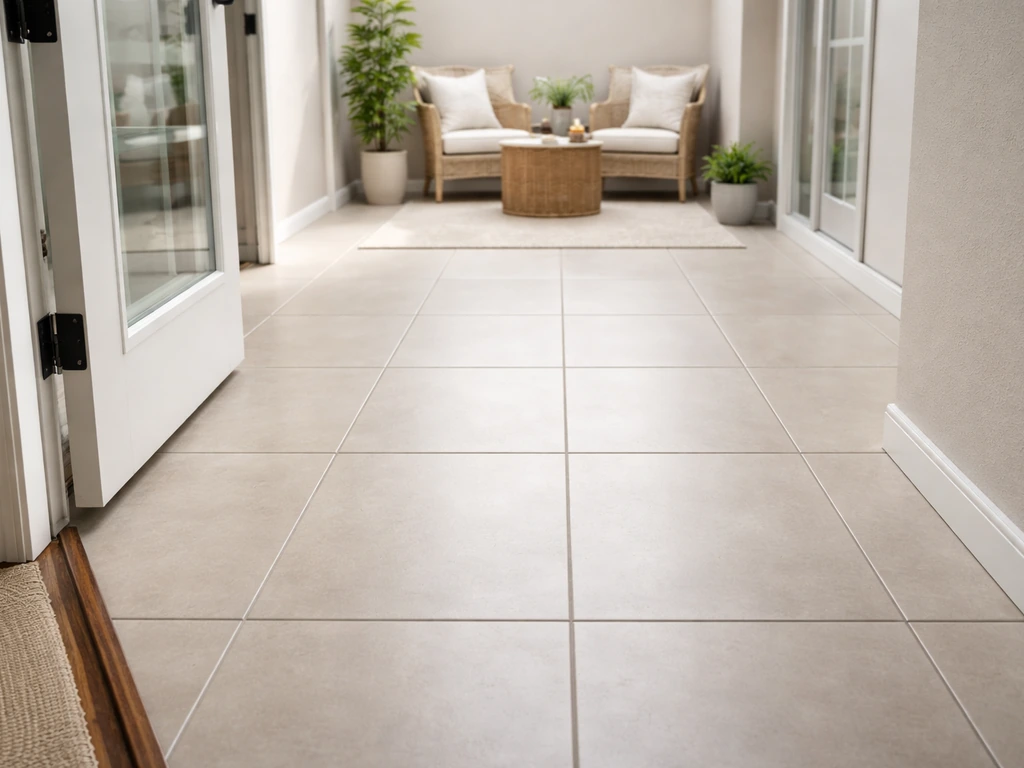
Florida has screened-in patios because the climate makes an unscreened outdoor space nearly unusable for a good chunk of the year. Mosquitoes, no-see-ums, afternoon thunderstorms, and humidity above 70% for months at a time push homeowners toward an enclosure that keeps the bugs and rain out while keeping the breeze and light in. A solid wall blocks that airflow; glass traps heat. A screen is the practical middle ground, which is why you see them on nearly every block in Tampa, Orlando, or Naples.
Why Does Florida Have Screened-In Patios? Climate, Costs & Choices

Miles Hart
24 Jul 2026
Who this guide is for and what you'll learn
This guide is written for Florida homeowners who are planning or evaluating an outdoor renovation and want to understand why screened enclosures dominate here, what the real tradeoffs are, and what it costs to build one properly. If you've recently moved from another state and are puzzled by all the screen rooms, or if you're deciding between a screened patio, a glass sunroom, or just leaving the slab open, this will give you a clear, honest comparison. You'll also find a breakdown of material options, a look at hurricane and building code requirements specific to Florida, permit triggers, maintenance expectations, and a checklist to help you decide whether this type of enclosure actually fits your property and lifestyle.
What a screened-in patio actually is (and what it's called)
The terminology gets confusing fast in Florida, because the same basic structure gets called several different things depending on who's talking and where they live. Here's how the terms break down in practice.
Screened patio vs. screened porch vs. lanai vs. screened room
| Term | What it typically means | Common in Florida? |
|---|---|---|
| Screened patio | A ground-level concrete or paver slab enclosed with screen walls and a roof or screen-over-roof structure | Very common statewide |
| Screened porch | A covered porch (often attached to the house structure) with screen infill panels between posts or columns | Common; often used interchangeably with screened patio |
| Lanai | Florida-specific term, usually refers to a screened or partially screened outdoor room, often behind a pool cage or off a main living area; originally from Hawaiian usage | Extremely common in Southwest and Central Florida |
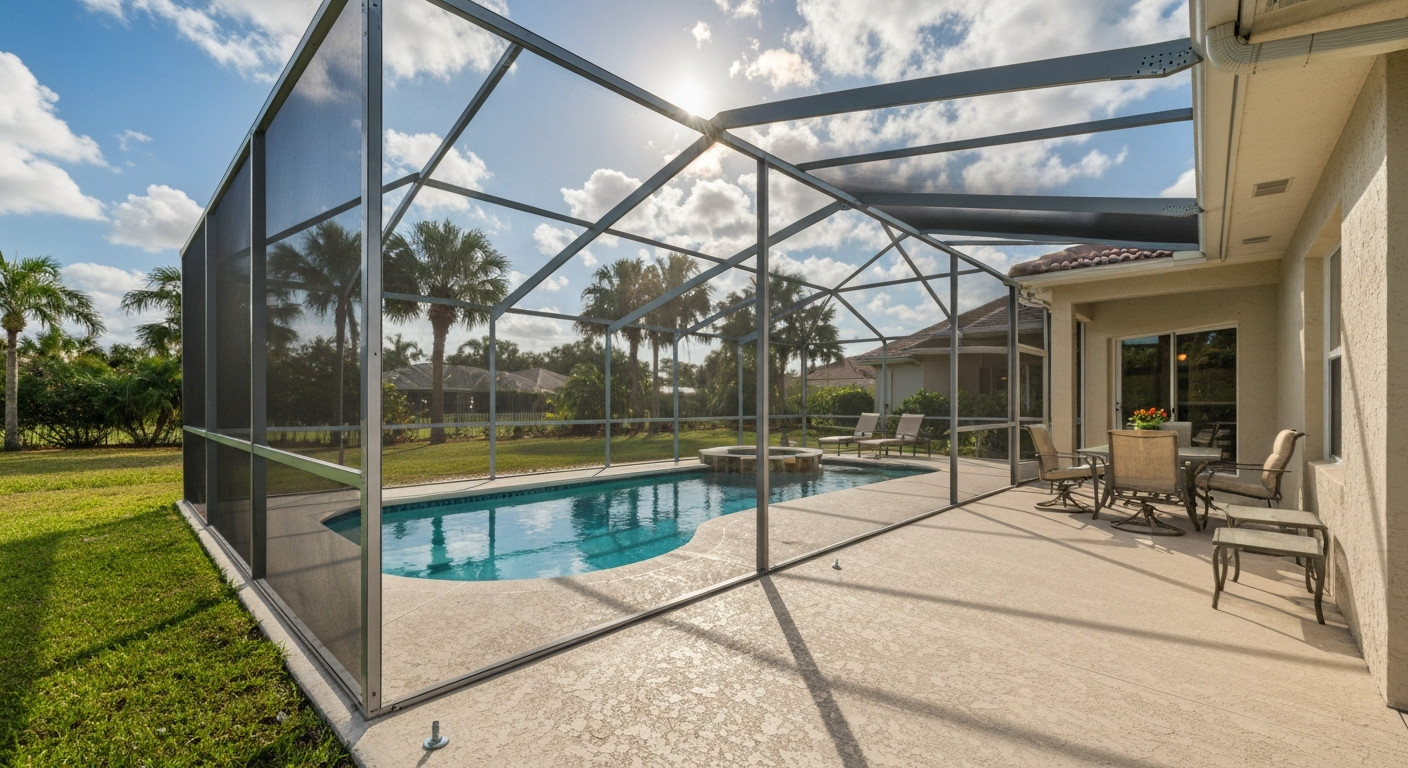
| Pool cage / pool enclosure | A large aluminum-framed screen structure enclosing a pool deck and patio area | Ubiquitous in Florida pool homes |
| Screened room / Florida room | A fully enclosed screen room, sometimes with a solid roof and upgraded flooring, used as a semi-interior living space | Common; may require more permitting |
For practical purposes, a screened-in patio and a screened porch describe very similar structures: screen mesh stretched over a frame, attached to the house, with a roof overhead. The difference is mostly whether the floor is a ground-level slab (patio) or a raised deck platform (porch). A lanai in Florida almost always means the same thing with a pool-adjacent layout. If you're trying to nail down the specific terminology for permits or resale listings, it's worth knowing that what a structure is called can affect how it's classified for property taxes and appraisals.
Why screened-in patios are so common in Florida
The climate makes open patios uncomfortable for months
Florida's 30-year climate normals from NOAA show annual precipitation ranging from roughly 45 inches in some parts of the Panhandle to over 60 inches in South Florida, with a concentrated wet season running May through October. That wet season brings daily afternoon thunderstorms that arrive fast and soak an uncovered patio in minutes. A screened roof keeps the rain off while still allowing airflow, which is critical because sealing the space entirely with glass or walls traps heat in a climate where summer temperatures regularly hit the low-to-mid 90s with a heat index well above 100°F.
Insects are a genuine health and comfort issue
The University of Florida IFAS Extension has documented the seasonal abundance of multiple mosquito species in Florida, including Aedes and Culex mosquitoes, as well as biting midges (no-see-ums) that are so small standard screen mesh barely stops them without a finer weave. Florida's warm, wet climate sustains mosquito breeding nearly year-round in South Florida and from roughly March through November in Central and North Florida. The Florida Department of Health tracks mosquito-borne diseases including dengue, West Nile virus, and historically Zika, and recommends screens as a primary household protection measure. For families with young children or elderly residents, that's not a minor comfort issue. It's a health consideration.
Humidity and mold pressure make ventilation essential
Average annual relative humidity in Florida frequently exceeds 70%, and in summer months it's common to see sustained readings above 85% through much of the day. That level of humidity creates serious mold risk on any surface that stays wet, including concrete, pavers, furniture, and wood framing. A screened enclosure allows airflow that helps surfaces dry out after rain, which reduces mold and mildew growth compared to a fully enclosed glass room. This is one reason glass sunrooms, while they exist in Florida, are far less common than screen rooms: a sealed glass enclosure in Florida's humidity can become a greenhouse that's hot, humid, and difficult to cool without aggressive air conditioning.
Hurricane season and building code shape how enclosures are built
Florida's Atlantic hurricane season runs June 1 through November 30, and the Florida Building Code (FBC) reflects that reality directly. The FBC follows ASCE 7 wind load maps and includes High-Velocity Hurricane Zone (HVHZ) provisions specifically for Miami-Dade and Broward counties, which are among the most hurricane-exposed areas in the continental United States. Any permanent screen enclosure must be engineered to meet local wind load requirements, which affects framing size, anchor bolt specifications, and screen material ratings. This is also part of why screen enclosures are built so consistently across Florida: the standardized building code has pushed the industry toward a recognizable set of aluminum-framed designs that meet those wind requirements while keeping costs manageable.
Lifestyle and resale value reinforce the trend
Because screened patios are so expected in Florida, their absence can actually hurt a home's appeal. Real estate agents in Central and South Florida routinely note that buyers expect some form of screened outdoor space, especially in communities built after the 1980s when screened enclosures became near-standard. A screened lanai or pool cage adds functional square footage to the home's livable outdoor area, improves daily quality of life, and can support a pool setup that would otherwise be largely unusable during mosquito season. For resale purposes, a well-maintained aluminum screen enclosure generally adds value in Florida in a way it simply wouldn't in, say, Ohio or Oregon.
Benefits of a screened-in patio for Florida homeowners
- Insect exclusion: keeps mosquitoes, no-see-ums, wasps, and palmetto bugs out of your outdoor living area without blocking airflow
- Rain shelter: a screened roof keeps afternoon thunderstorms off furniture and people while allowing the space to stay cool and ventilated
- UV protection: most screen mesh blocks 50-90% of UV radiation depending on the weave density, which protects furniture, flooring, and skin
- Extended usability: a screened patio in Florida is genuinely usable 10-12 months of the year for most of the state, compared to 4-6 months for an open patio in northern states
- Pool compatibility: a screened pool cage keeps debris out of the pool and insects away from the deck, reducing maintenance and chemical use
- Resale expectation: in many Florida markets, a screened outdoor space is considered a baseline feature rather than a luxury upgrade
- Lower cost than a glass sunroom: a screened enclosure typically costs significantly less than a fully glazed four-season room and requires less HVAC capacity
- Natural ventilation: screens allow breezes to pass through, which reduces the feeling of heat buildup that a glass-enclosed room creates in a subtropical climate
Drawbacks and limitations to think about honestly
A screened patio is not a perfect solution, and I'd rather be upfront about that than have you build one and feel surprised later. The limitations are real and worth factoring into your decision.
- Storm vulnerability: standard fiberglass screen mesh is not impact-resistant and will tear in high winds or when struck by debris; a major hurricane can destroy a screen enclosure even if the frame survives
- Salt-air corrosion: in coastal zones, aluminum frames, screen splines, and fasteners corrode faster than inland; UF/IFAS extension guidance recommends stainless steel or hot-dip galvanized hardware for coastal Florida applications
- No thermal insulation: a screen keeps insects and light rain out, but it does nothing to retain heat in winter or block radiant heat in summer the way a wall or insulated glass panel would
- Maintenance cycle: screen panels typically need re-screening every 7-15 years depending on UV exposure, pet activity, and storm damage; frame paint or coating can oxidize and need repainting after 10-15 years
- Limited privacy: screen mesh is semi-transparent; neighbors and passersby can see into the space, especially when interior lights are on at night
- No-see-um penetration: standard 18x16 mesh (the most common) does not stop no-see-ums; you need 20x20 or finer mesh ("no-see-um screen") which reduces airflow somewhat
- Permit and HOA requirements: a permanent screen enclosure almost always requires a building permit in Florida, and many HOAs have specific requirements on frame color, enclosure height, or approved materials
- Not a four-season room: a screened patio is comfortable during Florida's mild winters, but it provides no meaningful insulation during an unusually cold snap and cannot be climate-controlled without significant additional investment
How a screened patio compares to other enclosure options
Before committing to a screened patio, it helps to see it clearly against the alternatives. The right choice depends on how you intend to use the space, what your budget is, and how much weather protection you actually need.
| Enclosure type | Average cost (Florida, 200 sq ft) | Insulation/thermal value | Hurricane resistance | Ventilation | Permit complexity | Best for |
|---|---|---|---|---|---|---|
| Open concrete patio (no enclosure) | $1,500–$5,000 | None | N/A (no structure) | Full | Low (slab only) | Minimal budget; low insect pressure areas |
| Screened patio / lanai | $5,000–$20,000+ | Minimal | Low–moderate (frame survives; screen tears) | Excellent | Moderate | Florida primary use case; insect exclusion + ventilation |
| Glass sunroom (3- or 4-season) | $25,000–$75,000+ | Good with insulated glass | High if impact glass used | Limited (mechanical ventilation needed) | High (structural, HVAC, glazing permits) | Year-round climate-controlled space; colder climates |
| Insect screen + roll-down hurricane panels | $8,000–$25,000 | Minimal (screen open) | Good when panels deployed | Excellent (screen mode) | Moderate–High | Florida homeowners wanting storm protection without full glass |
| Full exterior wall enclosure (Florida room) | $15,000–$45,000 | Moderate | Moderate–high | Mechanical only | High | Conversion to conditioned living space; room addition |
If you're comparing a screened patio to a screened porch specifically, the main differences are the base (ground slab vs. raised deck), the framing attachment method, and sometimes the roof structure. For a deeper look at those differences, the screened porch vs. patio comparison covers those tradeoffs in more detail. For a deeper room-by-room and permit-focused breakdown, see our detailed screened porch vs patio comparison. For flooring choices once you've decided on an enclosure, the options for screened and enclosed patios vary quite a bit in cost and durability, which is worth reviewing separately. For guidance on selecting the best flooring for screened in patio options, see our detailed guide on the topic. For a focused comparison of durable, moisture-resistant options and costs, see our guide to the best flooring for enclosed patio.
Screen and framing material options
Screen mesh types
The screen mesh itself is where a lot of homeowners make a decision they later regret, usually by defaulting to the cheapest option without thinking about their specific situation. Here's how the main types compare.
| Screen type | Mesh count | Best use | Relative cost | Durability notes |
|---|---|---|---|---|
| Standard fiberglass (charcoal) | 18x16 | General insect exclusion; most common | Lowest | UV-stabilized; tears under impact; ~7-10 year lifespan in FL sun |
| No-see-um fiberglass | 20x20 | Coastal areas with biting midges | Low–moderate | Reduces airflow ~15-20% compared to 18x16; still affordable |
| Aluminum screen | 18x16 | Higher durability; resists denting better than fiberglass | Moderate | Can crease and kink; corrodes faster in salt-air without coating |
| Pet-resistant screen (vinyl-coated polyester) | 17x20 or similar | Homes with dogs or cats that scratch or push on screens | Higher | Significantly stronger than standard fiberglass; heavier feel |
| Solar/privacy screen | 80-90% shade factor | South- or west-facing exposures; privacy needs | Moderate–high | Reduces UV and glare; reduces airflow; visibility is limited from outside |
| Hurricane/impact screen | Engineered mesh | HVHZ zones; high wind-load areas | Highest | Tested to specific wind speeds; see section below for detail |
Framing material options
The frame that holds the screen is just as important as the mesh, especially in Florida's corrosive coastal environment. Aluminum is by far the most common framing material for Florida screen enclosures, and for good reason: it doesn't rust, it can be powder-coated for UV and salt resistance, and it's light enough to span large openings without heavy structural footings. Standard residential screen enclosures use extruded aluminum in white or bronze, with 2x4 or 2x2 framing profiles depending on wind load requirements.
Wood framing is used in some older or custom screened porches, particularly in North Florida where the aesthetic leans more traditional. Wood gives a warmer look and can be painted or stained, but it requires more maintenance in Florida's humidity and is prone to rot if not properly treated and sealed. Pressure-treated lumber is the minimum for any wood used near ground contact. Vinyl framing exists but is less common for screen enclosures than it is for windows; it can expand and contract significantly in Florida's heat, which can cause screen panels to buckle.
For coastal properties within a few miles of saltwater, UF/IFAS extension guidance is clear: standard steel fasteners will corrode quickly. Use stainless steel screws and anchors, hot-dip galvanized hardware, or aluminum-compatible fasteners throughout. This applies to lag bolts going into the house structure as well as spline roller screws and gutter screws in the screen frame itself.
Hurricane and specialty screens: when they're required or worth it in Florida
Standard screen mesh is not rated for hurricane protection. During a tropical storm or hurricane, the mesh will tear at relatively low wind speeds, and the frame may or may not survive depending on how it was installed and what wind loads it was engineered for. For most of Florida, standard screen enclosures are acceptable as long as the frame is properly permitted and anchored, because the expectation is that the screen will fail in a major storm while the frame and house connection hold.
In Miami-Dade and Broward counties, the High-Velocity Hurricane Zone (HVHZ) program imposes stricter requirements. Screen and shutter products used in these areas must appear on the Miami-Dade County approved product list, and installation must follow specific details. This affects not just screen mesh but every component of the enclosure: the frame extrusions, the anchoring hardware, the roof connection, and the screen panels themselves. If you're building in South Florida and your contractor isn't mentioning HVHZ compliance, that's a problem.
Hurricane screens, sometimes called storm screens or hurricane-rated mesh panels, are a separate product category from standard insect screens. Products from manufacturers like Sentry and others are tested to specific wind loads and provide moderate debris protection while remaining semi-transparent and allowing airflow when not deployed. Some are motorized roll-down systems; others are fixed framed panels. FEMA's mitigation guidance notes that properly anchored hurricane-rated opening protection systems can reduce wind and debris damage to a structure and may qualify for homeowner's insurance credits in Florida. FEMA P‑361 and other FEMA publications provide design criteria and performance targets for resilient enclosures and exterior protective systems used in hurricane-prone areas, useful for comparing enclosure options and mitigation credit eligibility.
For most Central and North Florida homeowners not in the HVHZ, the practical decision comes down to this: do you want a standard screen enclosure that you'll need to re-screen after a major storm, or do you want to invest in a hybrid system with roll-down hurricane panels that deploy before a storm and protect the frame and glass when in use? The hybrid approach costs significantly more upfront (often $8,000-$25,000 for a 200 sq ft space) but can reduce post-storm repair costs and may lower your insurance premium.
Permits, costs, and what to expect in Florida
Do you need a permit for a screen enclosure in Florida?
Almost certainly yes. Florida county building departments consistently list permanent screen enclosures as permit-required structures. The triggers include: attaching the enclosure to the house structure, pouring a new slab or footing, installing a roof over the enclosure, or exceeding a certain square footage (which varies by county). Orange County and Hillsborough County both publish permit checklists that require sealed engineering plans for structural work, anchor and footing details, and product approval documentation for components. Review times range from a few days for straightforward projects to several weeks for complex or large enclosures requiring plan review.
Pulling a permit yourself is allowed in Florida if you are the owner-builder, but a licensed contractor is required to pull permits in most jurisdictions if you are hiring out the work. Unpermitted screen enclosures can create serious problems at sale time, when a buyer's inspector identifies the unpermitted structure and the lender requires it to be permitted retroactively or removed.
What does a screened patio cost in Florida?
Costs vary widely based on size, screen type, framing complexity, whether you need a new slab, and your location within the state. HVHZ-compliant enclosures in Miami-Dade cost more than equivalent structures in Gainesville or Tallahassee. Using cost data from Remodeling Magazine's Cost vs. Remodeling Magazine, Cost vs. Value reports provide historical national and regional cost ranges that contractors and homeowners use to estimate per‑square‑foot and total project budgets for projects like screened porches and sunrooms Remodeling Magazine — Cost vs. Value reports. Value reports, HomeAdvisor/Angi data, and regional contractor pricing, here are realistic ranges for Florida.
| Project type | Size | Typical Florida cost range | Key cost drivers |
|---|---|---|---|
| Basic screen enclosure (aluminum frame, standard fiberglass mesh, existing slab) | 200 sq ft | $5,000–$10,000 | Frame profile, screen type, labor rates |
| Mid-range lanai/pool cage (aluminum frame, no-see-um or solar screen, new slab included) | 300–400 sq ft | $12,000–$22,000 | Slab pour, site prep, engineering fees, permit |
| Large pool cage enclosure | 600–1,000+ sq ft | $18,000–$40,000+ | Size, screen type, HVHZ compliance, coastal hardware |
| Screened patio with roll-down hurricane panels added | 200–300 sq ft | $20,000–$35,000 | Panel motors, HVHZ ratings, structural upgrades |
| Re-screening existing frame (no structural work) | 200 sq ft | $800–$2,500 | Screen type, panel count, labor |
These are ballpark figures. Get at least three quotes from licensed Florida contractors for your specific project, and make sure each quote specifies the screen type, framing system, anchor detail, and whether permit fees are included. Permit fees are often charged separately from contractor quotes and can range from a few hundred dollars to over $1,000 for larger projects.
Maintenance: what a screened patio actually needs long-term
A well-built aluminum screen enclosure in Florida is relatively low maintenance, but it's not zero maintenance. Here's what to expect over time and what to watch for.
- Re-screening: standard fiberglass mesh typically lasts 7-12 years in Florida's UV environment before it becomes brittle and starts to sag or develop holes; coastal or high-sun exposures push that timeline shorter; budget $800-$2,500 for a full re-screen on a typical-sized enclosure
- Frame cleaning: aluminum frames collect mold, mildew, and oxidation over time, especially in humid coastal areas; a once-a-year wash with mild soap and water (or a dilute bleach solution for mold spots) keeps frames looking good and slows corrosion
- Spline inspection: the rubber spline that holds screen mesh in the frame channel dries out and cracks with UV exposure; inspect annually and replace any sections that are cracked or pulling free, which allows mesh to loosen
- Fastener check: in coastal zones, check anchor screws, lag bolts, and connection hardware annually for rust or corrosion; replace any failing fasteners with stainless or galvanized equivalents before they compromise the frame connection
- Roof and gutter maintenance: keep the enclosure roof clear of debris and check for water pooling or sag in screen-over-roof panels after storms
- Post-storm inspection: after any tropical storm or hurricane, walk the perimeter before re-entering; check the frame-to-house connection points, any roof panel condition, and whether the frame has racked or shifted
DIY or hire a pro? A practical breakdown
Re-screening an existing frame is a legitimate DIY project for a handy homeowner. The materials are inexpensive, the tools needed (spline roller, utility knife, replacement mesh, and spline) cost under $50, and the skill level required is moderate. You can replace individual screen panels on a weekend afternoon. There are plenty of good video tutorials, and mistakes are easy to fix by pulling the spline and trying again.
Building a new screen enclosure from scratch is a different situation. The structural attachment to the house, the footing and anchor design, the permit process, and the wind-load engineering all require either a licensed contractor or a homeowner-builder who has enough building knowledge to submit compliant plans and pass inspections. In HVHZ counties, the component approval requirements make DIY permitting extremely difficult. Even outside HVHZ areas, a structural failure in a screen enclosure during a storm can damage your home, injure someone, or create insurance and liability problems that are not worth the savings.
The reasonable DIY boundary for most homeowners is maintenance and re-screening. For new construction, modifications to the frame, or any work involving the roof connection or foundation anchors, hire a licensed Florida contractor and pull a permit.
Is a screened-in patio right for your property? A decision checklist
Use this checklist to think through whether a screened patio is the right investment for your specific situation, or whether a different type of enclosure (or no enclosure at all) makes more sense.
- Do you live in Florida's main insect-pressure zones (Central or South Florida, near water, or in a wooded area)? If yes, insect exclusion is a strong driver for a screened enclosure.
- Do you want year-round outdoor usability? Florida's mild winters make a screened patio genuinely useful in December and January; a glass sunroom adds cost without much benefit unless you want air conditioning in the space.
- Do you have or plan to install a pool? A pool cage is nearly essential for usability and significantly reduces pool maintenance. The combination of pool enclosure and screened lanai is one of the highest-value outdoor investments in Florida real estate.
- Are you in Miami-Dade or Broward County? HVHZ requirements add cost and complexity; budget higher and confirm your contractor is familiar with HVHZ product approvals.
- Are you within a mile of saltwater? Specify coastal-grade hardware, no standard steel fasteners, and consider a powder-coated or marine-grade aluminum frame.
- Do you have pets that scratch or push on screens? Upgrade to pet-resistant or vinyl-coated polyester mesh; the cost difference is modest and the durability improvement is significant.
- Is your primary concern biting midges (no-see-ums)? Standard 18x16 mesh won't stop them; specify 20x20 no-see-um mesh.
- What is your budget? For under $10,000, a basic screen enclosure on an existing slab is realistic. For a new slab, larger footprint, or storm-rated panels, budget $15,000-$35,000 and up.
- Does your HOA have enclosure requirements? Check before designing; some HOAs require specific frame colors, approved contractors, or limit enclosure height and materials.
- Are you planning to sell within 5 years? In most Florida markets, a well-built screened patio or lanai will be viewed positively by buyers; an unpermitted enclosure or a damaged one can be a negotiating liability.
Final thought: screens make sense in Florida specifically
The reason screened-in patios are so dominant in Florida isn't marketing or tradition for its own sake. It's a direct response to a specific set of climate conditions: heavy seasonal rain, high humidity, near-year-round insect pressure from species that carry real diseases, and a hurricane season that requires structural thinking in any outdoor addition. The screen enclosure is the enclosure type that best fits those conditions at a price that most homeowners can afford. That's why you see them everywhere from a $180,000 starter home in Kissimmee to a $2 million waterfront property in Sarasota. The drivers are the same; only the scale changes.
FAQ
What authoritative climate and insect data should be cited to explain why screened‑in patios are common in Florida?
Cite NOAA 30‑year climate normals for precipitation and wet season timing, National Weather Service humidity data for year‑round heat and high relative humidity, and UF/IFAS Extension plus Florida Department of Health materials on mosquitoes and biting midges. These establish the environmental drivers (rain, humidity, insects) that make ventilated, insect‑proof outdoor living spaces desirable.
Which building codes and regulatory documents are essential when explaining permit and design requirements in Florida?
Use the Florida Building Code (FBC) for wind‑load, anchorage, and enclosure requirements (including ASCE 7 references). For South Florida, reference Miami‑Dade HVHZ rules and product approval lists. Include county building‑department permit guidance (sample pages from Miami‑Dade, Orange, Hillsborough) to illustrate common triggers, submittal items, and review times. For mitigation and performance criteria, reference FEMA guidance (including P‑361 where relevant).
What manufacturer and product sources are needed to explain material and installation options?
Reference technical data and spec sheets from established screening and enclosure manufacturers (e.g., Phifer for screening fabrics; vendors of hurricane/impact screens like Sentry/Storm Screens; aluminum framing and glass enclosure manufacturers). Use their published mesh types, open‑area %, UV/salt‑spray ratings, wind‑test results, and installation instructions to compare durability, airflow, view, and debris protection.
What authoritative sources help determine coastal durability and corrosion‑resistant hardware recommendations?
UF/IFAS coastal extension publications on salt‑spray and corrosion are authoritative for recommending stainless, hot‑dip galvanized, or specially coated fasteners and framing in coastal Florida. Manufacturer corrosion ratings and coastal installation notes should be cited as well.
Which resources provide reliable cost ranges and budgeting benchmarks for Florida homeowners?
Use Remodeling Magazine (Cost vs. Value), RSMeans, HomeAdvisor/Angi historical data, and local contractor/permit fee schedules to produce realistic cost ranges. Combine national per‑sqft benchmarks with Florida regional adjustments and sample permit fee schedules from county websites to present low/median/high scenarios (e.g., basic framed screened enclosure, hurricane‑rated screens, glass/enclosed sunroom conversions).
What practical comparisons should the article include for homeowners choosing enclosure types?
Compare framed screen enclosures, hurricane/impact screens, motorized roll‑up screens, framed glass/panel enclosures (sliding or fixed), and full sunroom/insulated additions. For each compare: wind/debris resistance, airflow/thermal performance, insect exclusion, maintenance, view/light, cost range, permitting complexity, and resale implications. Cite FEMA for wind/impact considerations and manufacturers for performance specs.
Next Article
Best Flooring for Enclosed Patio: Top Options, Costs, and Tips
Choose the best enclosed patio flooring with climate, moisture, slip, and cost guidance plus install and DIY tips.