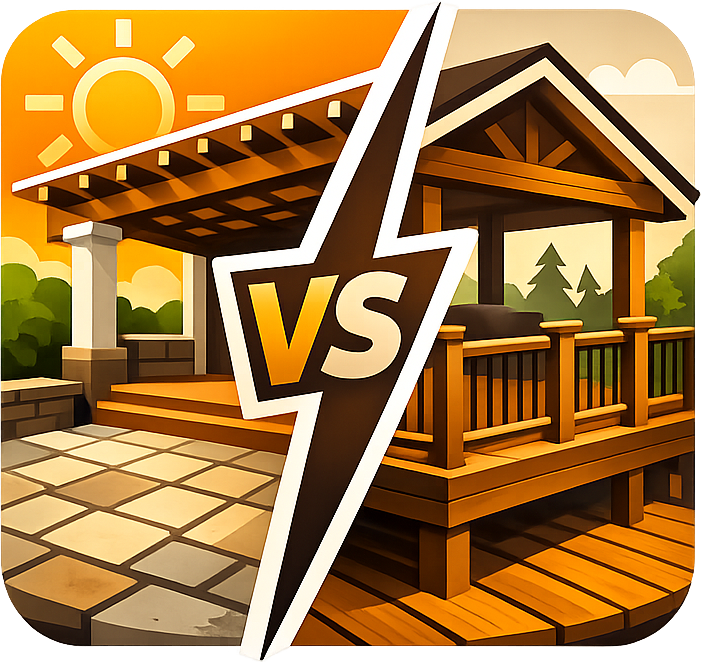
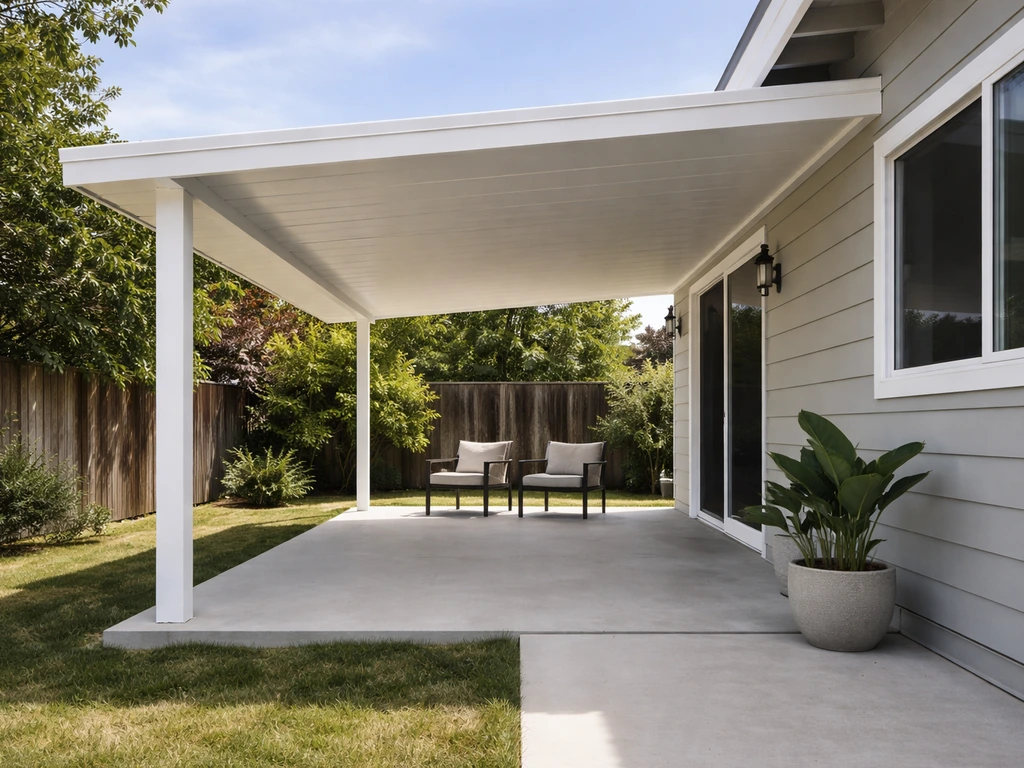
The most common term is a patio cover, and that is also the term building departments, permit offices, and contractors use. You will also hear covered patio, patio roof, and roofed patio used interchangeably in everyday conversation, and they all mean the same thing: a solid or semi-solid overhead structure built over an existing patio to provide shade or rain protection. If you are talking to a contractor or pulling a permit, say patio cover and you will be understood immediately.
What Do You Call a Roof Over a Patio? Covered Options

Miles Hart
29 May 2026
Common names for a roofed patio
Walk into a building department and the paperwork will almost certainly say patio cover. The 2024 International Residential Code (IRC) has an entire appendix, Appendix BF, dedicated to the term, and local jurisdictions from Scottsdale to Wilsonville, Oregon use it the same way. In casual use, homeowners say covered patio or patio roof just as often, and retailers like Lowe's mix in words like canopy and shade structure. Lowes.com also groups options like canopies with gazebos and pergolas, reflecting how retailers organize patio shade products by selection and permanence Lowe's mix in words like canopy and shade structure. None of these are wrong, but if you need to be precise (say, when applying for a permit or describing what you want to a builder), patio cover is the standard term that everyone in the trades will recognize without needing clarification.
You will also run into the phrase shade structure, which some local codes use to describe lighter, open-framed options like pergolas. Douglas County, for instance, distinguishes between patio covers (which need permits) and shade structures like pergolas that are not subject to uniform snow loads and may be permit-exempt. Knowing that distinction matters before you start a project, because the permit path is different depending on which category your structure falls into.
How the name changes by structure style
The name you use often depends on what the roof actually looks like and how the structure connects to the house. A solid roof panel bolted to your home's ledger board is almost always called a patio cover. An open lattice frame with climbing plants is usually called a pergola, even though some people call that a patio cover too. The Landscaping Network actually notes that patio cover and pergola get used interchangeably all the time in real-world conversation, which is part of why the terminology can feel confusing.
| Structure Style | Common Name(s) | Roof Type | Attached or Freestanding |
|---|---|---|---|
| Solid roof panels over patio | Patio cover, covered patio | Solid (aluminum, wood, vinyl) | Usually attached to house |
| Open lattice frame over patio | Pergola, shade structure | Open/lattice, partial shade | Attached or freestanding |
| Fully enclosed roofed structure | Gazebo | Solid, full perimeter roof | Freestanding |
| Fabric or retractable shade | Awning, canopy | Fabric or polycarbonate | Attached to wall |
| Roofed space built as part of the house | Porch | Solid, integrated with home roof | Attached, part of structure |
Attached patio covers connect directly to the house using a ledger board, which requires flashing and proper bolt spacing to prevent water intrusion and meet code. Detached patio covers sit on their own footings in the yard, away from the house wall. The City of Vista's permit guidelines explicitly recognize both configurations, calling out attached and detached as distinct permit categories. So when you describe your project, specifying whether it is attached or detached is just as useful as naming the structure itself.
Patio cover vs pergola, gazebo, porch, and awning
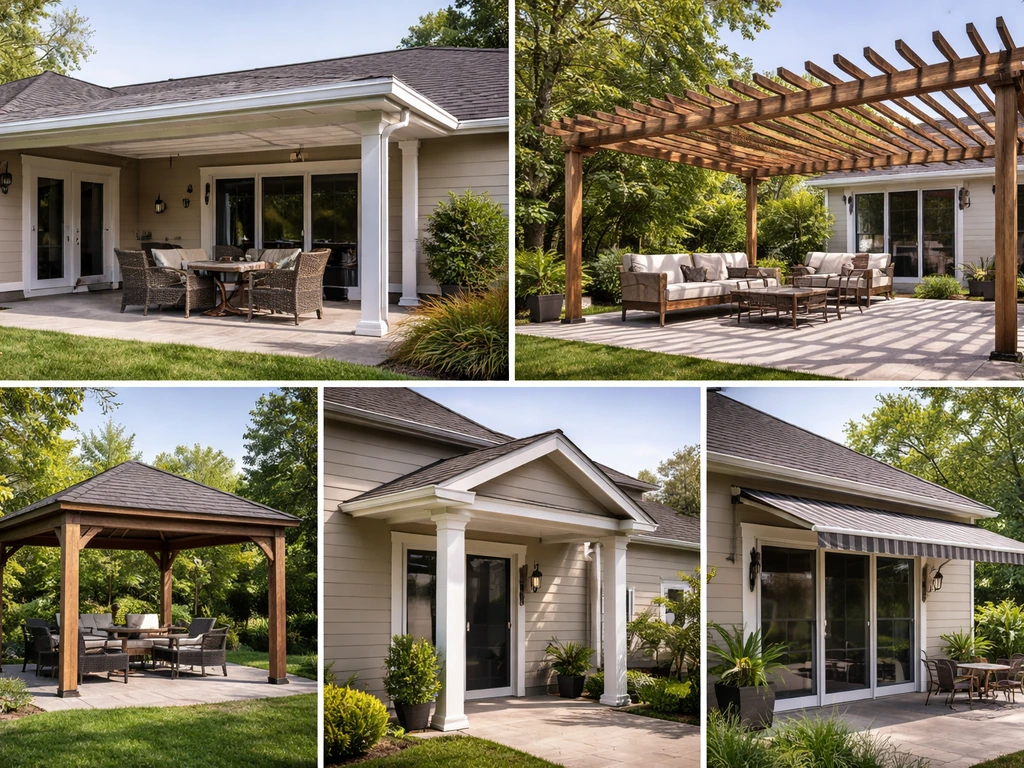
These five terms describe genuinely different things, even though they overlap in casual use. Here is how they actually differ in a way that matters for planning and budgeting.
Patio cover
A patio cover is a solid or insulated roof structure built over your existing patio slab. You can also ask whether you can put solar panels on a patio roof, since the type and strength of the patio-cover frame can affect what’s feasible can you put solar panels on a patio roof. It keeps rain off, provides full shade, and typically attaches to the house. Materials include solid aluminum panels, wood framing with roofing, and vinyl. Installed cost generally runs $20 to $50 per square foot depending on material and complexity. The IRC limits patio covers to recreational or outdoor-living use, meaning you cannot legally convert one into a habitable room, carport, or storage building under that code classification.
Pergola
A pergola uses vertical posts and an open lattice or beam roof. Angi describes it as an outdoor structure with an open lattice roof that defines space and adds architectural interest without full weather protection. You get partial shade and the look of a defined outdoor room, but rain comes through. Some homeowners add polycarbonate panels or shade cloth to a pergola frame to get closer to full coverage, though at that point you are essentially building a patio cover on a pergola frame. Pergolas are often permit-exempt in jurisdictions where open shade structures are treated differently from solid patio covers.
Gazebo
A gazebo is a freestanding structure with a solid roof that extends around the full perimeter. Lowe's frames the key distinction simply: the main difference between a pergola and a gazebo is the roof, since gazebos have a solid roof providing full protection from the elements. Gazebos typically include flooring and sometimes partial walls or screens. They are more of a destination structure in the yard rather than an extension of the home's living space. Because they are freestanding with their own footings, their permit and setback requirements are different from attached patio covers.
Porch
A porch is built as part of the home's structure, usually with a roof that ties directly into the main roofline. Unlike a patio cover, which is added onto an existing slab, a porch is typically part of the original build or a significant structural addition. You may also wonder whether you need a membrane under a patio cover project, since that layer can help with moisture control and long-term performance do i need a membrane under my patio. Covered porches often trigger more complex permitting because they involve changes to the home's roofline and exterior walls. If you already have a concrete slab outside the back door and you want to add a roof over it, that is a patio cover project, not a porch.
Awning
An awning mounts directly to the exterior wall of the house and extends outward over a door, window, or patio. It is fabric, aluminum, or polycarbonate, and it typically projects less far from the wall than a full patio cover. California's residential code (25 CCR §1468) even has specific wind-load design requirements for awnings as a distinct category. Awnings are the most budget-friendly option and often require no permit at all, but they offer limited coverage area and less structural permanence than a patio cover.
Which one is right for your goals and budget
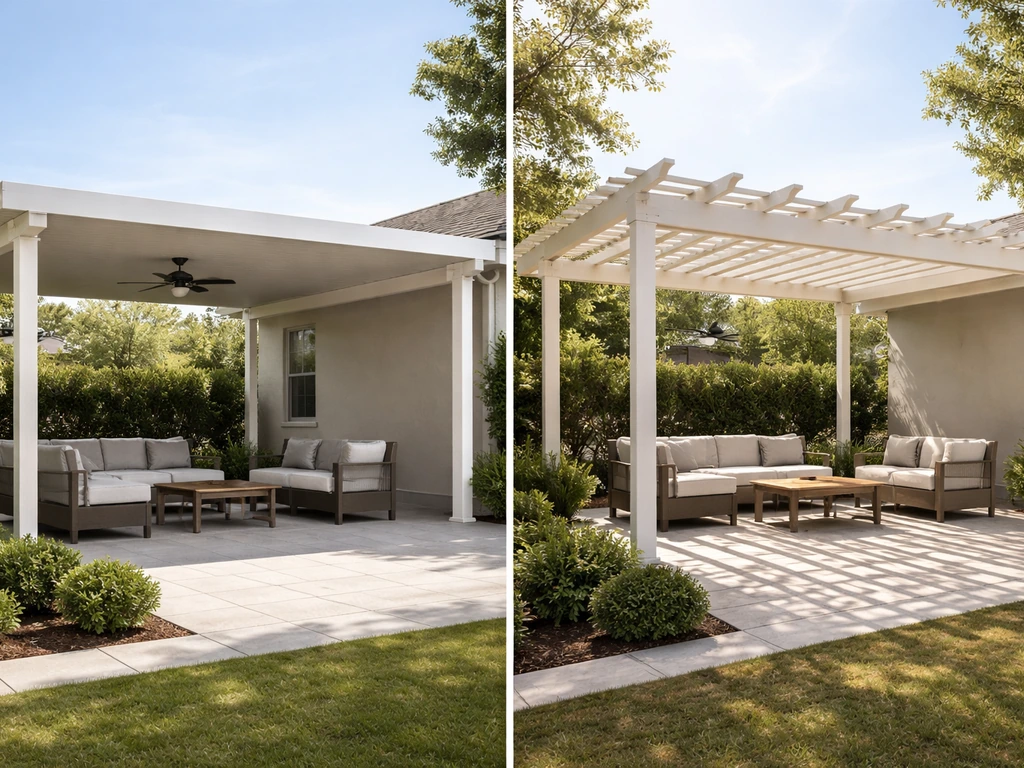
The honest answer is that your choice comes down to three things: how much weather protection you need, how much you want to spend, and what your local code will allow without turning the project into a major permit effort.
- Full rain and sun protection: go with a solid patio cover (aluminum, wood framing with roofing, or vinyl). Budget $20 to $50 per square foot installed, more for insulated aluminum panels or complex rooflines.
- Mostly shade, occasional rain acceptable: a pergola with shade cloth or polycarbonate panels gives you a lighter look at lower cost, and it may be permit-exempt in your jurisdiction.
- A standalone garden destination: a gazebo works well here, but factor in the cost of its own footings, flooring, and the freestanding structure.
- Minimal budget or renting: a retractable awning or canopy is the lowest-cost option and often requires no permit, though it covers less area and has a shorter lifespan.
- Weather-resilient and wildfire-aware: aluminum is non-combustible, which matters in fire-prone areas. The Redwood City Fire Department specifically flags wood and vinyl as combustible materials; aluminum is the safest choice if that is a concern in your region.
Material choice drives cost more than any other factor. Solid aluminum patio covers run about $20 to $50 per square foot installed, according to both Angi and HomeGuide. Wood framing can be cheaper upfront but requires regular upkeep, especially in wet climates. Vinyl is low maintenance but combustible and can warp in very hot regions. If you are comparing a DIY prefab aluminum kit against hiring a contractor to frame a wood cover, the prefab route is cheaper but the wood frame gives you more flexibility in size and pitch.
HOA rules add another layer. Many HOAs restrict material type, color, and roof pitch for anything added to the back of the house. Check those rules before you fall in love with a specific product. Getting an HOA denial after you have already submitted a permit application wastes time and money.
Next steps: measure, plan, and know what to ask
Once you know what type of structure you want, here is how to move forward practically.
- Measure your patio slab. Get the exact dimensions in feet and note which side is against the house and which sides are open. This tells you whether an attached or detached structure makes more sense, and it gives any contractor or prefab supplier the numbers they need upfront.
- Check your local permit requirements. Search your city or county building department website for 'patio cover permit' or 'residential patio cover.' Look for setback rules (Wilsonville's code, for example, requires at least 3 feet from any property line), snow load and wind speed requirements (an Oregon BCD example uses 105 mph wind and 25 psf snow load), and whether your structure type needs a permit at all.
- Decide: attached or detached? Attached covers need ledger board attachment with proper flashing and bolt spacing, which a permit office will want to see in the plans. Detached covers need their own concrete footings and a site plan showing placement relative to property lines.
- Get at least two contractor quotes and one prefab kit quote. Describe the project as a 'solid attached patio cover' or 'freestanding aluminum patio cover' using the specific terminology, and tell them the square footage. Vague descriptions lead to vague quotes.
- Ask contractors specifically about: permit handling (will they pull it or do you?), ledger attachment details and flashing method, footing depth for your climate zone, and material warranty. These are the details that separate a code-compliant project from one that fails inspection.
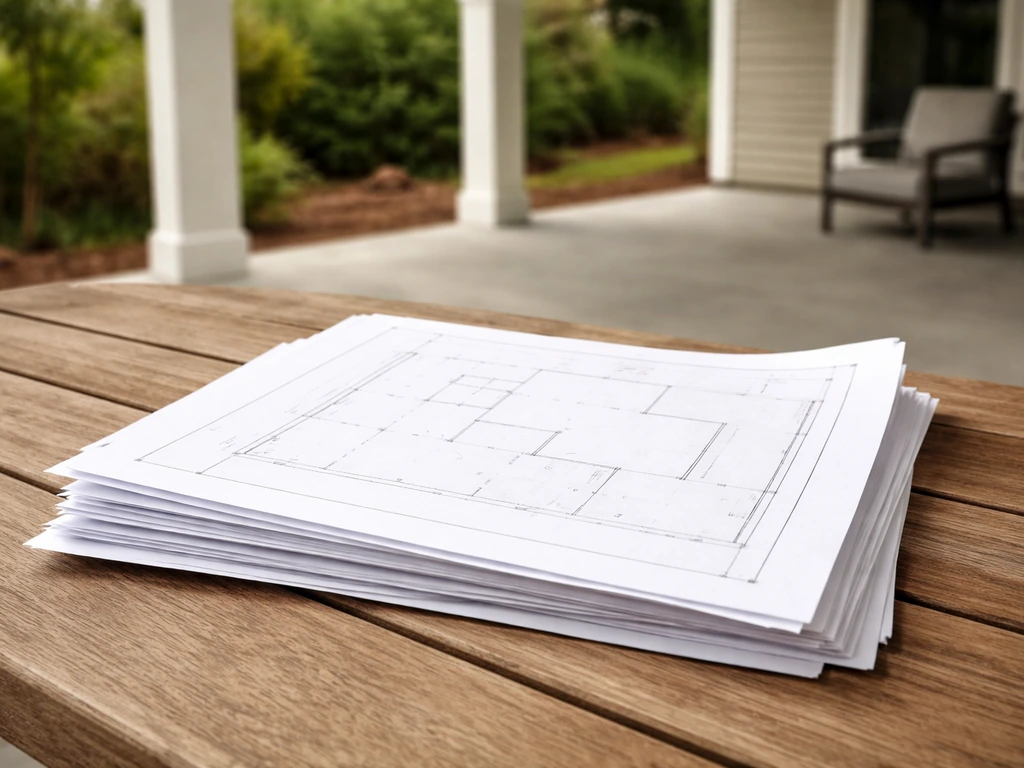
- Look into building plans. Some jurisdictions require stamped engineering plans for attached patio covers over a certain size. Knowing this before you start saves a costly surprise mid-project.
If you are going the DIY route with a prefab system, the same measurement and permit steps apply. For most patio-cover projects, contractors also need to consider whether you should install a membrane under the patio slab or under the flooring system to manage moisture and waterproofing membrane under a patio. Most prefab aluminum patio cover kits come with installation instructions that walk you through ledger attachment and post placement, but the permit requirements are still your responsibility. It is worth knowing whether your jurisdiction requires building plans submitted before installation, since some do even for prefab kits. It helps to confirm whether your city or county requires building plans to be submitted before you can install a patio cover or patio roof.
One practical tip: when you call a contractor or walk into a building department, use the term patio cover along with attached or detached and solid or open. That combination of three descriptors covers everything they need to point you to the right permit form or give you an accurate quote. Saying 'I want a roof over my patio' works fine in conversation, but the more specific language gets you faster and more accurate answers.
FAQ
If I say “roof over my patio,” will the permit office still understand what I want?
Usually yes, but to avoid delays say “patio cover,” then add whether it is “attached” or “detached” and whether the roof is “solid” or “open.” That combination matches how permit forms are typically categorized and prevents staff from routing you to the wrong form.
What do you call a roof that covers an outdoor kitchen or grill area on a patio slab?
Most jurisdictions still call it a patio cover if it is built over the patio area, even if the intent is an outdoor kitchen. If the structure is attached to the house with a ledger, specify attached patio cover in your description.
Is a pergola with clear panels still called a pergola?
In practice, people may still call it a pergola, but permitting often hinges on whether it functions like a solid roof. If panels make it effectively weatherproof, expect it to be treated closer to a patio cover (and possibly requiring permits and stronger snow or wind loading design).
Do I need to call it a patio cover if I am not building on a patio slab?
If it is not covering an existing patio slab, contractors may describe it by what it covers instead (for example, a deck cover, walkway cover, or shade structure). For permit conversations, describe the exact base surface and whether posts or beams are freestanding versus attached to the house.
What’s the right term if my roof attaches to the house but doesn’t sit on the patio slab directly?
Many people still call it an attached patio cover, but the permit office may care about the support details. Tell them the roof is attached, and clarify post or beam locations and the surface it covers (deck, slab, or walkway) so they can classify the structure correctly.
How do I describe coverage if I want partial protection, like an “overhang” across only part of the patio?
Use “awning” only if it is primarily mounted to the wall with an outward projecting canopy over doors or windows. For a broader roofed area spanning across patio space, most will still categorize it as a patio cover, even if coverage is only partial.
Are “shade structure” and “patio cover” always interchangeable?
No. Some jurisdictions use “shade structure” for lighter, more open designs and treat them differently from solid patio covers. If you hear shade structure in your area, ask the permit counter what construction features trigger the patio cover category (openness percentage, roof rigidity, and load requirements).
What if my HOA says I can’t add a “patio cover,” but I’m open to an alternative?
Ask whether the HOA differentiates between pergolas, awnings, and patio covers. If they restrict “roofing” behind the house, an open pergola or a retractable awning may be treated differently, but you should confirm both the terminology and allowable materials before you apply for permits.
When describing DIY plans, should I mention flashing and bolt spacing, or just call it a patio cover?
Mention “attached patio cover” and that it will be ledger-attached, but flashing and bolt spacing are details to include in questions to the installer or in plan reviews. Building departments often want to know you understand the water management at the ledger connection, especially for rain and long-term performance.
How do I avoid getting quoted for the wrong type of structure?
Bring a sketch or photos, then state three specifics: attached vs detached, solid vs open, and the approximate covered dimensions. If the salesperson hears “roof over my patio” only, they may assume full coverage solid panels and price it like a standard patio cover even if you want a pergola-style frame.
Next Article
Grass Is Higher Than Patio: Causes, Fixes & Deck vs Patio
Grass higher than patio? Causes, slope checks, repair options, lower lawn, raise patio, or build a deck, with costs & DIY