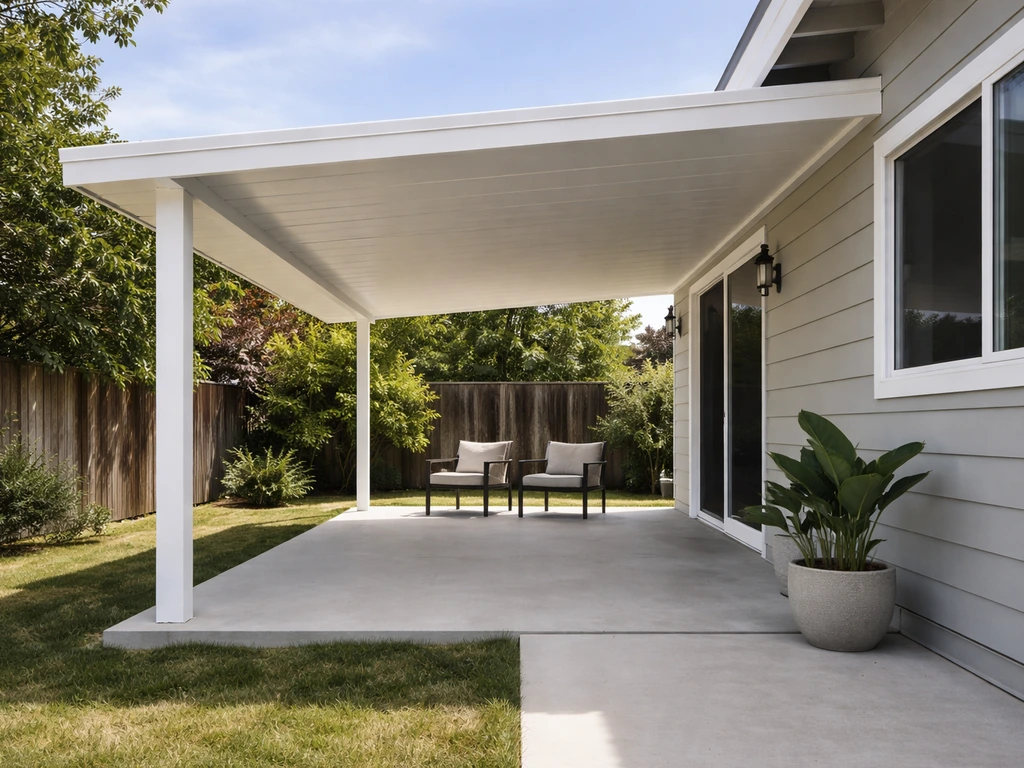
For a paver or natural stone patio on clay or silty soil, yes, you almost certainly want a geotextile separation fabric under the base. For a poured concrete slab, you need a vapor retarder (plastic sheeting, not a fabric) if you plan to cover it with moisture-sensitive flooring or adhesives. For a simple patio on sandy, well-draining soil, a membrane is optional but still a cheap form of insurance. The answer really depends on three things: your patio type, your soil, and your climate. If you are thinking about mounting solar panels, the patio roof or platform needs to be rated for the added weight and wind loads, and drainage or water management should be planned around the mounting system solar panels on a patio roof.
Do I Need a Membrane Under My Patio? A Clear Guide

Miles Hart
28 Jun 2026
What a patio membrane actually does
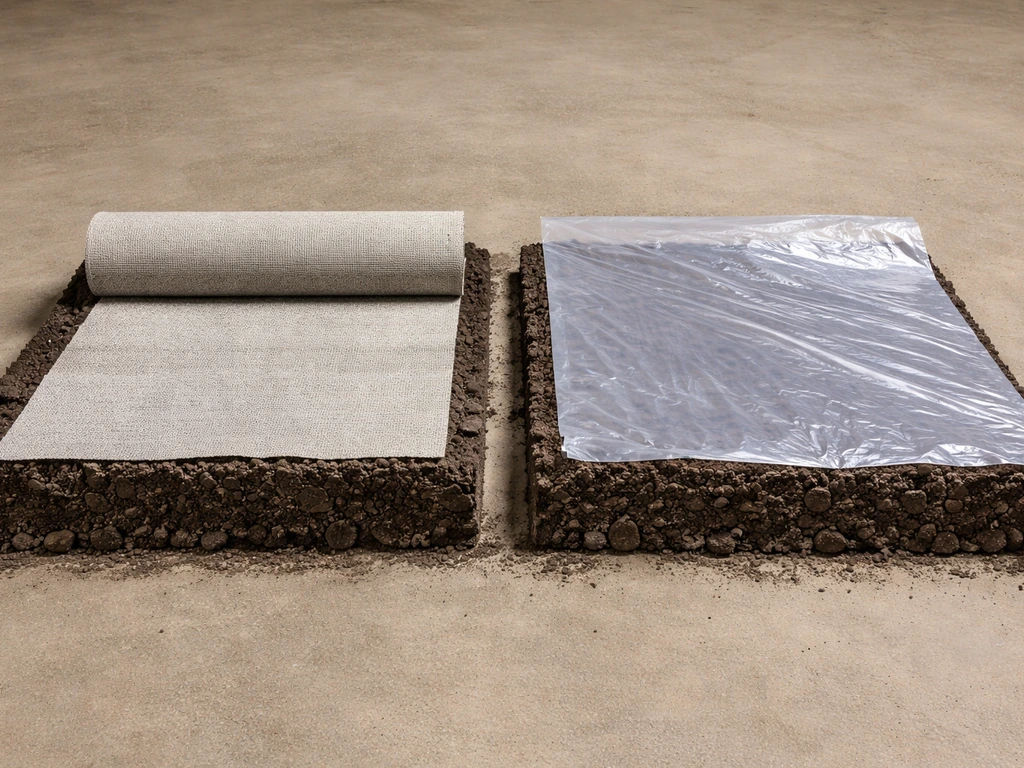
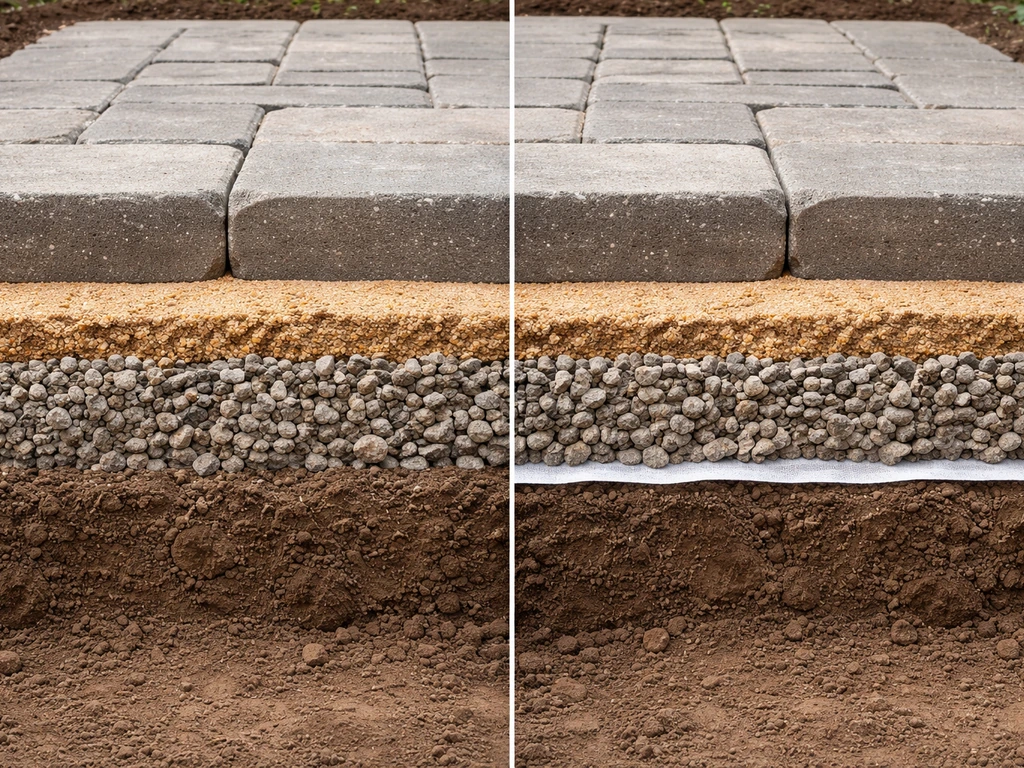
The word 'membrane' gets used loosely, so it helps to know there are two different products people mean. A geotextile fabric (a permeable, woven or non-woven fabric) acts as a separation layer. It sits between the native soil and your compacted aggregate base and stops them from mixing together. Over time, especially under load and when the ground is saturated, fine soil particles migrate upward into your gravel base and contaminate it. Once that happens, your base loses its drainage and structural properties and the patio starts to shift, sink, or crack. The fabric physically blocks that migration while still letting water pass through.
A vapor retarder (typically 6 or 10 mil polyethylene sheeting) is a different animal. It goes under poured concrete slabs and slows moisture vapor moving up from the soil through the slab. This matters most when you are installing tile, hardwood, vinyl, or any adhesive-bonded floor covering on top of the concrete. ACI guidelines specifically recommend a vapor retarder beneath the slab when moisture-sensitive floor coverings are involved, and ASTM E 1643 governs how those retarders should be installed.
Neither product is really a 'waterproofing' membrane in the sense of creating a water-tight seal. The geotextile fabric is permeable by design. The vapor retarder slows moisture vapor but is not a waterproof barrier either. Understanding that distinction helps you pick the right product and set realistic expectations for what it will do.
When you do (and don't) need a membrane by patio type
Not every patio situation calls for a membrane, and a few situations call for a specific type. Here is how it breaks down by build system.
Concrete pavers and natural stone on a compacted base
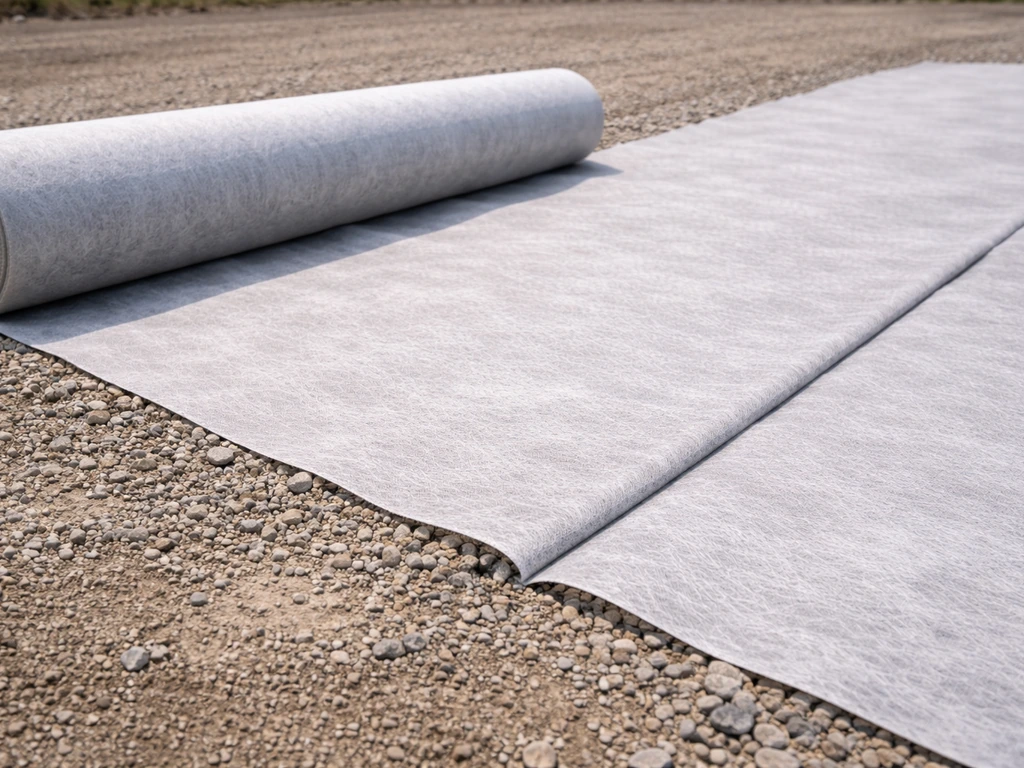
This is where geotextile fabric earns its keep most clearly. The ICPI (Interlocking Concrete Pavement Institute) specifically recommends installing geotextile fabric under pavers in all clay soil applications. That recommendation exists because clay holds water, swells when wet, and is most likely to contaminate your base. On sandy or gravelly soil that drains freely, the risk of contamination is much lower and the fabric becomes optional, though it still provides a useful separation function and weed control benefit.
Poured concrete slabs
For a standard outdoor concrete patio that you will leave bare or seal, a vapor retarder is not strictly required. Where it becomes important is when the slab will eventually receive tile, indoor-style flooring, an epoxy coating, or any adhesive. In those cases, moisture vapor coming up through the slab can cause adhesive failure, tile popping, or coating bubbles. A 6 mil poly sheet under the slab, installed per ASTM E 1643, addresses that. A geotextile separation layer can also be useful under the granular base beneath a concrete slab, especially on clay soil, but many residential concrete slabs are poured without one and perform fine.
Patios laid on an existing slab
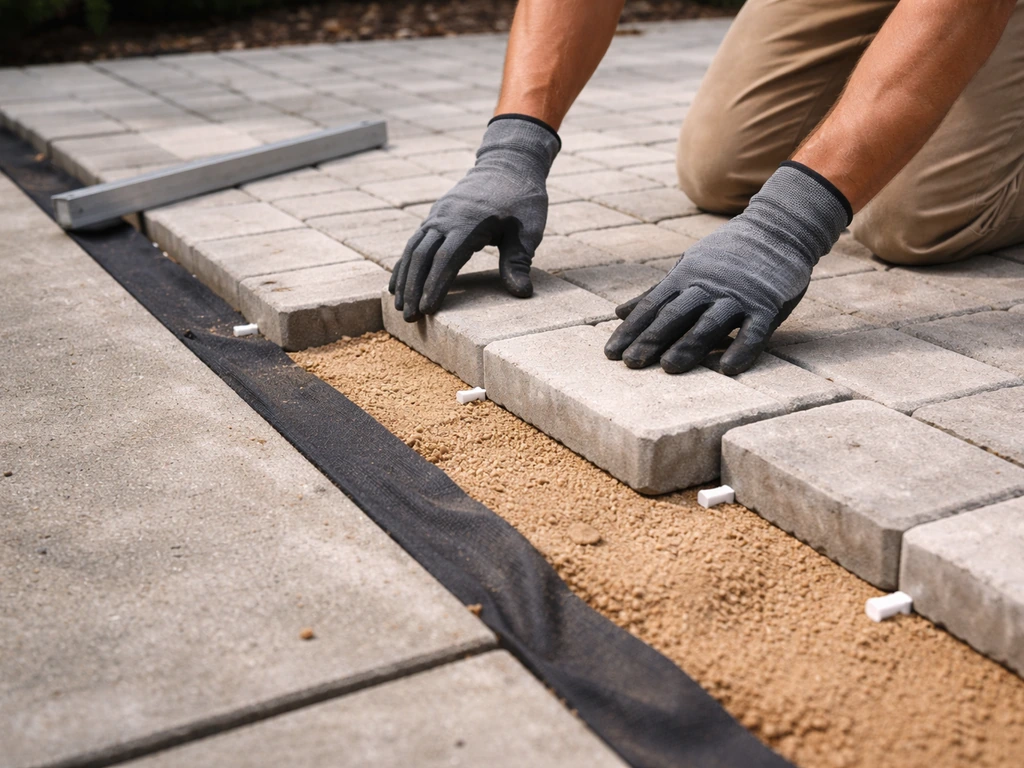
If you are laying pavers or stone over an existing concrete slab (a common approach for patio upgrades), you are not dealing with soil at all. A geotextile fabric is not relevant here. What you may want instead is a thin setting bed or a drainage mat product designed for that kind of pedestal or mortar-set installation.
Brick and flagstone patios
The same logic that applies to concrete pavers applies here. If the patio is laid on a compacted aggregate base over native soil, geotextile fabric under the base is a smart call on clay or silty soils. On well-draining sandy or rocky ground, it is optional.
| Patio Type | Membrane Type Needed | When It's Required | When It's Optional |
|---|---|---|---|
| Concrete pavers / natural stone on base | Geotextile fabric | Clay, silt, or poorly draining soil | Sandy, gravelly, well-draining soil |
| Poured concrete slab (bare or sealed) | None typically | Not required for bare outdoor slabs | N/A |
| Poured concrete slab (with floor covering) | Vapor retarder (6-10 mil poly) | Always when moisture-sensitive coverings used | N/A |
| Pavers/stone over existing concrete slab | None | Not applicable | N/A |
| Brick or flagstone on compacted base | Geotextile fabric | Clay or silty subgrade | Sandy or well-draining subgrade |
How your soil type, moisture, and climate change the answer
Soil type is the single biggest variable. Clay is the most problematic subgrade for patios. It holds water, which means it stays saturated longer after rain. When it is saturated and under load (even just foot traffic), fine clay particles migrate upward into the aggregate base above it. Over a few years that contamination weakens the base, reduces drainage, and eventually causes settling or cracking. The Landscaping Network specifically calls clay subgrades 'the most problematic' for this reason and recommends a geotextile layer or a thicker-than-standard base as compensation. If you can grab a handful of your native soil and it forms a ribbon when you squeeze it, that is clay-heavy soil and fabric is worth the added cost.
Sandy or gravelly soil that drains well is much more forgiving. The particles are larger, they do not migrate the same way, and contamination risk is lower. That does not mean separation fabric is useless here, but it is genuinely optional rather than strongly advised.
Freeze-thaw cycles add another layer of risk. In cold climates, moist soil does not freeze uniformly. Water migrates toward forming ice crystals in a blank" rel="noopener noreferrer">process called ice lensing, where pure ice lenses grow in the soil and create differential heave. If your aggregate base and subgrade are contaminated and mixed together, moisture retention in that layer goes up significantly, which amplifies freeze-thaw damage. A clean separation between base and subgrade, maintained by geotextile fabric, preserves the drainage capacity that helps water drain away before it freezes. If you live in a region with hard winters, this is a strong argument for using fabric even on moderately good soil.
Standing water, proximity to irrigation zones, and high water tables all increase the case for fabric. If you regularly see puddles in the area where the patio will go, or if the soil stays damp well after rain, that is a site that will stress your base harder over time.
The real benefits of adding a membrane
Installing geotextile fabric under a paver base delivers three concrete benefits, and they compound over the life of the patio.
- Base separation and longevity: By preventing soil from migrating into your aggregate base, the fabric keeps the base material performing as intended for years longer. A contaminated base compacts unevenly, loses its drainage function, and contributes to settled or cracked pavers. Without the fabric, a repair eventually means lifting every paver, removing the contaminated base material, and starting over from scratch.
- Weed suppression: Geotextile fabric is not a perfect weed barrier, but it does make weed growth significantly harder by limiting the amount of fine organic-rich soil that can mix into the base layer near the surface. Combined with polymeric sand in the joints, it substantially reduces the weed problem most homeowners deal with in paver patios.
- Freeze-thaw resilience: A clean, well-drained base layer is more resistant to frost heaving. The fabric preserves the drainage pathways that help water escape the base before freezing temperatures arrive. In climates with hard winters, this directly translates to fewer cracked or shifted pavers over time.
The main limitation is that fabric is not a magic fix for poor drainage or an inadequate base. It works in combination with proper grading, adequate base depth, and correct compaction. If your site has serious drainage problems, addressing those (through grading, French drains, or catch basins) matters more than any membrane choice.
Cost and whether to DIY it
Geotextile fabric is inexpensive relative to the total project cost. For a 1,000 square foot patio, adding fabric to the installation typically adds $150 to $500 to the overall project cost, depending on the fabric weight selected and local labor rates. When you consider that the total installed cost of a paver patio runs roughly $10 to $40 per square foot (putting a 1,000 sq ft patio at $10,000 to $40,000), spending an extra $150 to $500 on protection that prevents a complete base redo is a very easy call.
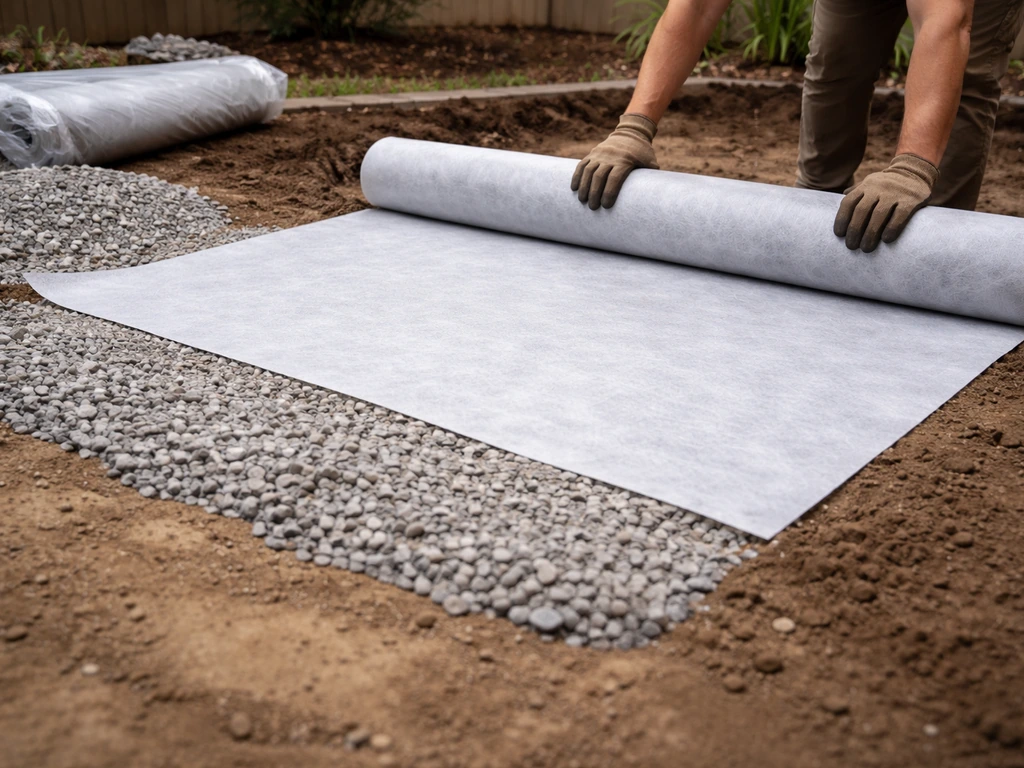
For a DIY installation, geotextile fabric is manageable. You roll it out over the excavated and graded subgrade before placing your base aggregate. In a similar DIY installation sequence, Reddit commenters describe laying geotextile after excavation and grading as part of building stable paver base layers over the excavated and graded subgrade before placing your base aggregate. The key installation requirements are to overlap strips by 6 to 12 inches at seams (more overlap on clay or silty soil), make sure the fabric covers the entire excavated area including up the sides slightly, and avoid driving equipment directly on the fabric before base material is in place. The FHWA guidance for road applications recommends maintaining at least 6 inches of aggregate between the geotextile and any wheel load, which is a practical reminder that the fabric needs cover before you run a plate compactor or wheelbarrow over it.
If a contractor is already doing your patio, adding fabric to the scope is straightforward. Ask specifically whether it is included in the quote, because some contractors skip it on sites where it is not strictly required. On clay soil, push back if they want to leave it out.
For a vapor retarder under a concrete slab, the material itself is cheap (6 mil poly sheeting costs a few cents per square foot). The work is also DIY-friendly. The biggest mistakes are failing to overlap seams adequately (12 inches minimum), leaving tears in the sheet, or placing it incorrectly relative to the concrete pour. ASTM E 1643 spells out the requirements if you want to follow a standard.
What to use instead of (or alongside) a membrane
A membrane is one tool, not the whole solution. Depending on your site, some of these alternatives or complements may matter more.
- Proper base depth and compaction: On clay-heavy soil, increasing base thickness compensates for the higher contamination risk. A standard residential paver base might be 4 inches of compacted aggregate; on clay, going to 6 or even 8 inches reduces the proportional impact of any contamination that does occur. Compaction in lifts (adding and compacting in 3- to 4-inch increments) is non-negotiable for a stable base.
- Grading and site drainage: Getting water away from the patio area before it soaks in is more important than any membrane. The patio surface should slope at least 1 to 2 percent away from the house. If your site collects water, a French drain or catch basin upgrade addresses the source of the problem rather than just its symptom.
- Polymeric sand in joints: For paver patios, polymeric sand is a complement to (not a replacement for) geotextile fabric. Polymeric sand binds in the joints when activated with water, reducing weed growth through joints and limiting joint erosion. It works within defined joint width and depth ranges and needs to be installed correctly, since the most common failure is over-watering during activation, which washes the polymer binders out of the joints.
- Drainage layer or permeable base aggregate: Using a clean, angular crushed stone as the base (not a mixed-gradation stone) preserves drainage pathways naturally. If you are dealing with a high-moisture site, a deliberately designed permeable base can move water away more effectively than relying on a membrane alone.
- Vapor retarder as an add-on to concrete: If you have an existing concrete patio slab and are thinking about laying tile or an adhesive-bonded surface on top, a surface-applied moisture control product (applied to the slab top) can serve a similar function to an under-slab vapor retarder on an existing installation.
Make the call today: a quick checklist
Before you order materials or sign a contractor quote, work through these questions. Building plans are usually not required for simple patios, but a patio roof may trigger permitting or structural plan requirements depending on local rules. They map directly to the decision points covered above.
- What is your patio build type? Pavers or stone on a base: consider geotextile fabric. Poured concrete with floor covering planned: use a vapor retarder. Pavers over an existing slab: skip both, use appropriate setting materials instead.
- What is your native soil type? Grab a handful: if it forms a ribbon or ball easily, it is clay-heavy. If it crumbles and drains, it is sandier. Clay or silty soil: use geotextile fabric. Well-draining sandy or gravelly soil: fabric is optional but worth it for the cost.
- Does your site have drainage issues? If you see standing water after rain, or the ground stays damp for more than a day or two, address grading and drainage first. Fabric helps but it does not solve a drainage problem on its own.
- Do you have hard winters with freeze-thaw cycles? If yes, the case for geotextile fabric under your paver base is stronger regardless of soil type. Preserving base drainage reduces freeze-thaw damage significantly.
- Is there moisture-sensitive flooring going on a concrete slab? If yes, a vapor retarder under the slab is not optional. Follow ASTM E 1643 for placement, overlap 12 inches at seams, and avoid tears.
- Is a contractor doing the work? Ask explicitly whether geotextile fabric is included in the quote. On clay sites, verify the contractor is not skipping it as a cost-cutting measure.
- What is your budget tolerance for future repairs? If the idea of lifting every paver in five years and redoing the base sounds awful, spend the $150 to $500 on fabric now. It is the cheapest insurance available on a patio project.
Once you have worked through those questions, the decision is usually pretty clear. Most homeowners on clay soil should use geotextile fabric. Most poured concrete patios being finished bare outdoors do not need a vapor retarder. And almost everyone benefits from correct grading and a well-compacted base more than from any membrane product. If you are also thinking about adding a roof structure over the patio, that changes some of the drainage and moisture planning as well, since a covered patio handles water differently than an open one.
FAQ
Do I need a membrane if my patio is on sandy soil?
Yes for most paver patios on clay or silty subgrade, because the main job of the fabric is separation (soil migration control), not waterproofing. If you already have a thick, well-draining base and your site drains quickly, you may be able to skip it on sandy soil, but it is still a common low-cost insurance layer.
Can I use geotextile fabric instead of a vapor retarder under a concrete patio?
If you plan to install a moisture-sensitive floor finish over poured concrete, use a vapor retarder under the slab, not geotextile. Geotextile would not meaningfully slow vapor movement upward, so it is not a substitute for the poly sheeting approach.
What if my soil is “somewhat” clay, do I still need fabric?
Treat it as optional only when both drainage and subgrade are favorable. If you routinely see damp soil, puddling, or slow drying after rain, that is a sign the separation layer can prevent base contamination and help your patio last longer, even if your soil is not purely clay.
What are common DIY mistakes when installing geotextile under pavers?
Do not compact directly on exposed fabric with heavy equipment. Keep the fabric covered by aggregate as you go, and avoid puncturing it. Also confirm fabric overlaps are long enough (larger overlaps for tighter clay/silt sites) so seams do not open during base placement.
If I use a membrane, can I ignore drainage and compaction requirements?
You still need to separate the products by function. A membrane will not correct wrong slope, shallow base depth, or poor compaction. If water pools or the base stays saturated, fix grading and drainage first, then add fabric where separation is needed.
Does a covered patio roof change whether I need a membrane?
Yes, but “covered” changes the moisture story. Under a roof you may reduce direct rainfall onto the surface, yet moisture can still come from the soil and from condensation, especially in enclosed areas. If you are adding an adhesive-bonded finish later, that is where vapor retarder planning becomes more important.
I want to lay pavers over an existing concrete patio, do I need a membrane under the pavers?
For pavers on an existing slab, geotextile is usually not relevant because there is no native soil base to separate from aggregate. In that case you need a thin setting bed or a purpose-made drainage or pedestal/mortar-set system designed for installing over concrete.
How much does freeze-thaw matter, and does fabric fully prevent damage?
Freeze-thaw risk is higher when moisture can remain in the base. Fabric helps by preventing soil contamination that reduces drainage capacity, but you must also ensure the drainage path works and the base is properly built. If the patio area receives lots of irrigation or runoff, address that water source too.
If water tables are high or the area stays wet, will a membrane solve it?
Not by itself. Fabric is not a waterproofing layer, it is permeable, so it will not stop groundwater or direct water intrusion. For persistent wet areas or high water tables, you may need perimeter drains, sub-surface drainage, or other water management measures in addition to geotextile.
What should I watch for when installing vapor retarder sheeting under a concrete slab?
Overlap and protection from damage are the two big issues. For vapor retarder poly under slabs, seams and tears need to be controlled and the sheeting must be positioned correctly relative to the pour to perform its job. It is especially critical when you will install tile or other adhesive-bonded finishes.
Next Article
What Do You Call a Roof Over a Patio? Covered Options
Learn what to call a roof over a patio, differences from pergolas porches awnings, and how to choose coverage and cost.