If you searched 'Carbone Riviera deck vs patio,' you were probably comparing a deck and a patio for your yard, and the phrase 'Carbone Riviera' was either a product name you came across or a style reference. Here's the direct answer: for most homeowners, a patio costs significantly less upfront ($6–$50 per square foot installed versus $25–$80 for a composite deck), but a well-built deck typically returns more at resale and handles sloped yards far better. Which one wins for you depends on your yard's grade, your budget, how you plan to use the space, and what you're willing to maintain. This guide walks through all of it.
Carbone Riviera Deck vs Patio: Costs, Durability, Choice

Miles Hart
9 Jun 2026
What 'Carbone' and 'Riviera' actually mean in a deck/patio search
It's worth clearing this up first, because the phrase can point in a few different directions depending on where you encountered it. The most prominent real-world use of 'CARBONE Riviera' right now is a restaurant concept: CARBONE Riviera opened at the Bellagio in Las Vegas on November 7, 2025, and it features an outdoor deck and patio dining experience. If you spotted the phrase in a travel or dining context, that's almost certainly what it referred to, not a building product.
In the decking product world, 'Riviera' does appear as an actual product line name. Deckorators uses 'Riviera' as a color or series name for composite decking boards, and a European composite brand called Duowood markets a 'Riviera' line of HDPE decking planks. Similarly, 'Carbone' shows up on WPC (wood-plastic composite) exterior decking data sheets in some international markets, used as a dark charcoal colorway name. So if you saw 'Carbone Riviera' on a contractor quote or a product listing, it may have been describing a specific composite deck board in a charcoal or dark-toned finish rather than a brand name you'd find at a single U.S. retailer.
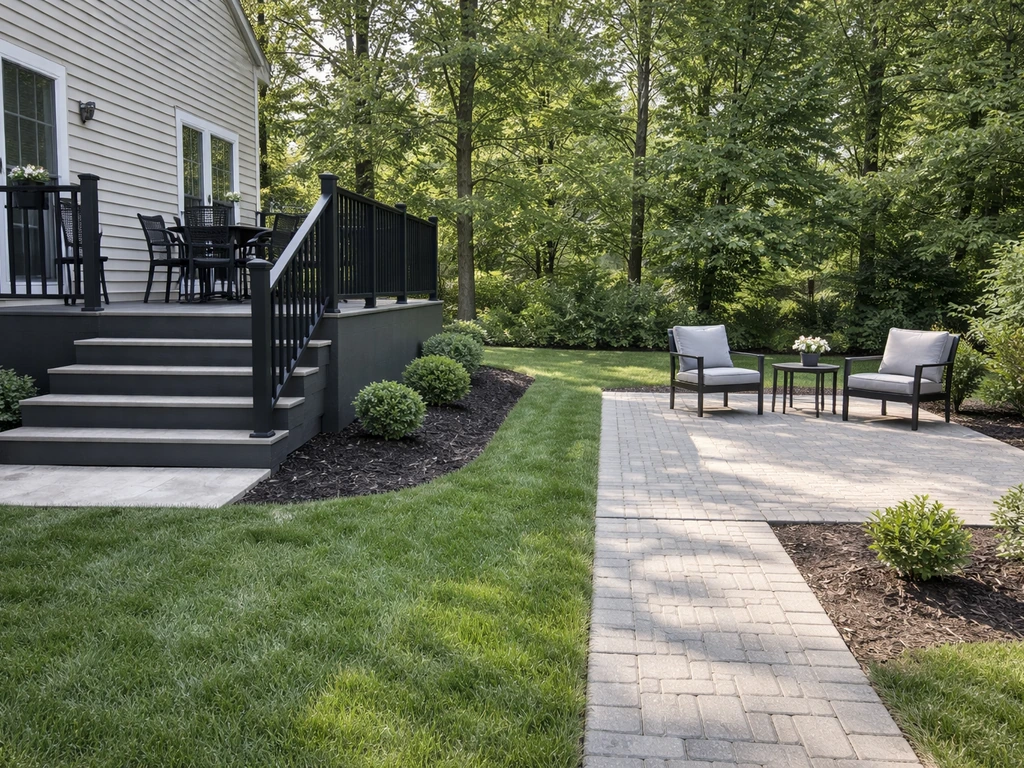
For the purposes of this guide, the most useful interpretation is the practical one: you're deciding between building a deck or a patio, possibly in a contemporary style (dark tones, clean lines, a coastal or resort-inspired look), and you want to know which option makes more sense for your home, yard, and wallet. That's exactly what we'll cover.
Deck vs patio: the real structural differences that affect your yard
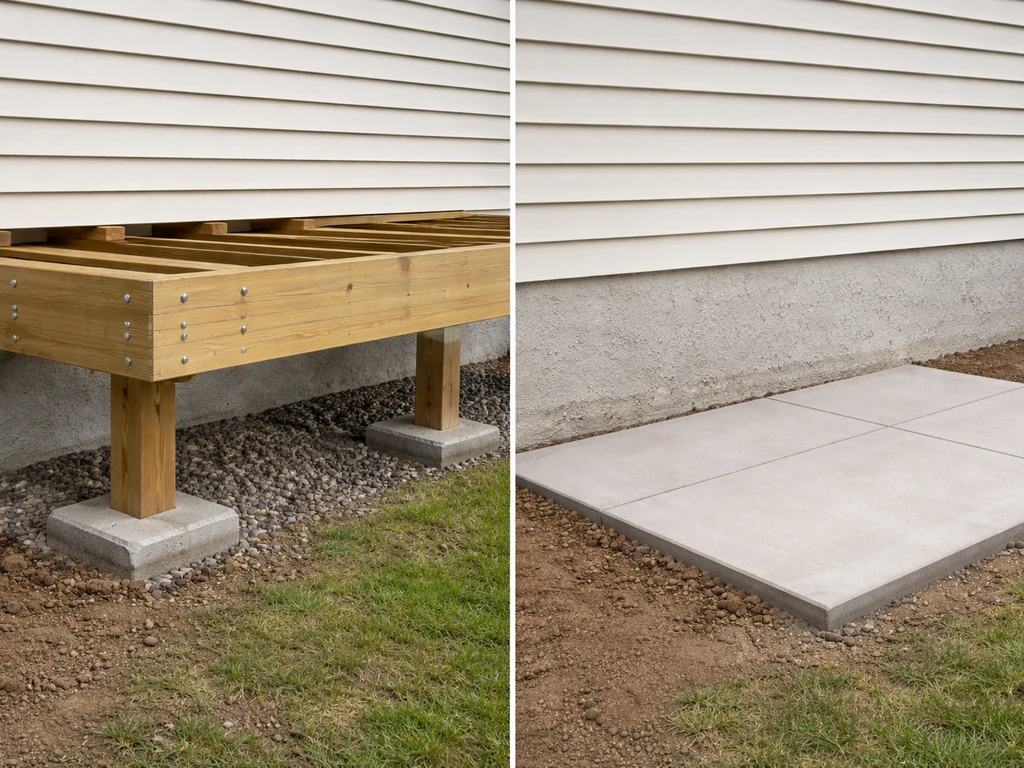
A deck is an elevated or at-grade platform built with a structural frame, typically attached to your house via a ledger board bolted to the rim joist. It sits above grade on posts and footings, which means it handles sloped or uneven ground without a ton of excavation and earthmoving. A patio is essentially a hardscape surface laid at ground level, either poured concrete or individual pavers set on a compacted gravel and sand base. No structural framing, no ledger connection, no guardrails unless you add them as design elements.
That structural difference matters more than most people realize before they start getting bids. A deck requires footings dug below the frost line, a bolted ledger connection to the house (with proper flashing to prevent water intrusion), structural posts, beams, joists, and decking boards. A patio requires proper grading and drainage away from the house, a compacted subbase (typically 4–6 inches of crushed stone), and a setting layer for pavers or a formed slab for poured concrete. Both have failure modes if done wrong, but they fail in completely different ways.
- Sloped yards: decks win easily, since posts and footings adjust to grade without major earthmoving
- Flat yards: patios are simpler and cheaper to install with minimal site prep
- Drainage: decks drain naturally through board gaps; patios must be graded 1/8 to 1/4 inch per foot away from the house
- Connection to house: decks attach structurally via a ledger (requires flashing); patios sit independently from the foundation
- Height and accessibility: patios are ground-level and step-free; decks may require stairs and guardrails depending on elevation
- Heat retention: concrete and pavers absorb and radiate heat in summer; elevated decks catch more breeze and stay cooler underfoot with composite boards
What each one actually costs in 2026
Cost is usually where the conversation gets serious. Here's what the numbers look like in 2026 for professionally installed projects, using real benchmark ranges from current pricing guides. For example, a 2026 paver patio cost calculator estimates installed paver patios at about $12, $30 per square foot about $12–$30 per square foot.
| Option | Installed Cost Per Sq Ft | Example: 300 Sq Ft Project | Key Cost Drivers |
|---|---|---|---|
| Basic concrete patio | $6–$20/sq ft | $1,800–$6,000 | Thickness, site prep, reinforcing, finish |
| Stamped/decorative concrete | $15–$30/sq ft | $4,500–$9,000 | Pattern complexity, coloring, sealing |
| Paver patio | $10–$50/sq ft | $3,000–$15,000 | Paver type, base depth, edging, pattern |
| Composite deck (mid-grade) | $25–$65/sq ft | $7,500–$19,500 | Height, railing, stairs, framing |
| Composite deck (premium) | $35–$80/sq ft | $10,500–$24,000 | Capped composite boards, cable railing, multi-level |
For a 300 square foot deck built with mid-grade composite boards, you're realistically looking at $7,500 to $19,500 installed, depending on height above grade, whether you need stairs, railing type, and site complexity. A basic concrete patio of the same size runs $1,800 to $6,000, while paver patios bridge the gap at $3,000 to $15,000 depending on the paver material and layout. That said, the 2025 Zonda Cost vs Value report puts the national average cost of a composite deck at around $25,096 with roughly 88.5% of that recouped at resale, so don't think of deck cost as pure spending.
The biggest cost surprises on decks are stairs (each step adds material and labor), guardrails (cable and glass railing systems can add $150–$250 per linear foot), and ledger connection repairs if your house rim joist is in poor shape. On patios, the surprise costs are usually subbase work if the soil is soft or poorly drained, and the long-term cost of re-leveling pavers or repairing concrete cracks in freeze-thaw climates.
When a deck makes more sense than a patio
A deck is the stronger choice in several specific situations. If your backyard drops away from the house, a deck keeps you level with your interior floor and avoids the need to haul in fill or cut into a slope. Decks also work better when you want a direct, step-free transition from your back door, especially on split-levels or homes with a higher first floor. For outdoor kitchens and entertaining setups, the raised, open-frame structure of a deck allows you to run utilities underneath and manage water drainage more easily.
- Sloped or uneven backyards where leveling would be expensive
- Homes with a raised first floor or walk-out basement configuration
- Climates with poor drainage where a raised surface stays drier underfoot
- When you want future upgrades like under-deck drainage systems, pergolas, or screened enclosures
- Resale-focused renovations where ROI is a priority (decks typically recover more value than patios)
- When you want the 'resort deck' aesthetic: dark composite boards, cable railing, clean contemporary lines
When a patio makes more sense than a deck
Patios win on budget, simplicity, and ground-level living. If your yard is flat, a concrete or paver patio will almost always cost less to install and is easier for a confident DIYer to tackle. Patios are also the right call when you want a pool surround, a fire pit area, or a low-barrier outdoor dining space without stairs. They're naturally accessible for kids, elderly family members, and anyone who finds steps difficult, and there's no worry about guardrail code requirements.
- Flat yards where no site leveling is needed
- Pool surrounds or spa areas where water drainage at grade is practical
- Tight budgets where a poured concrete slab is the most cost-effective option
- Accessibility needs, since there are no steps or guardrails to navigate
- Casual dining and fire pit spaces that don't need to connect directly to the house structure
- HOA-governed properties where elevated structures may face restrictions
Materials, durability, and what you'll actually have to do to maintain each one
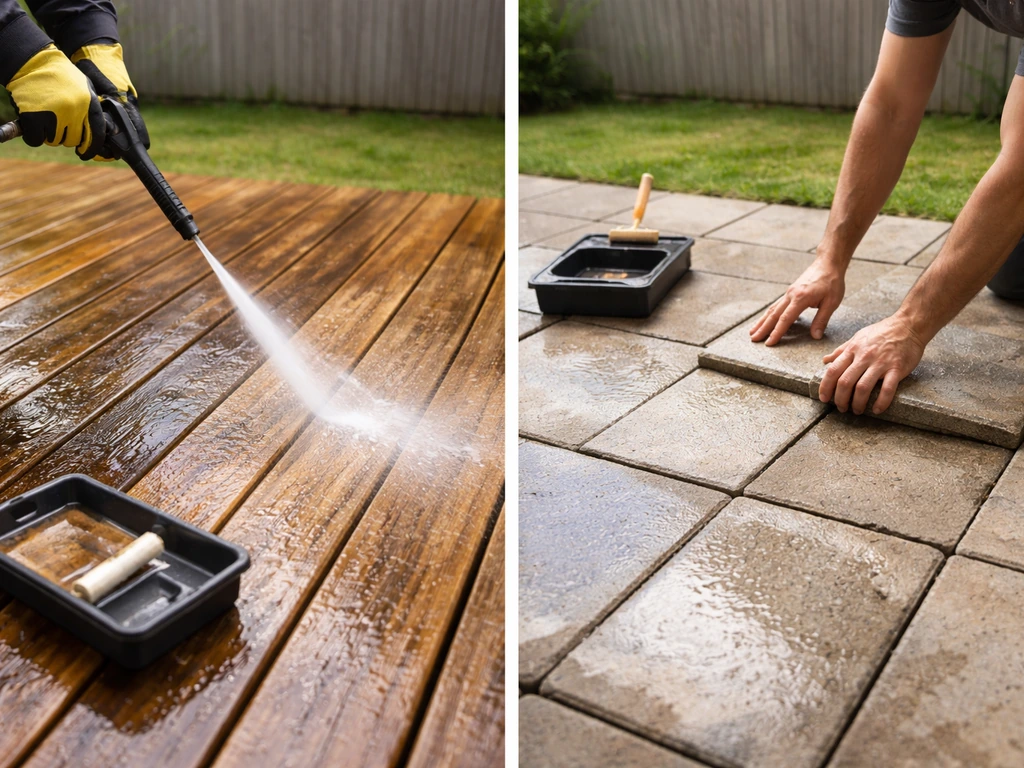
Composite and wood decking
Wood decking (pressure-treated pine, cedar, redwood) costs less upfront but needs cleaning and re-sealing or staining every 2–3 years to prevent checking, graying, and rot. If you skip maintenance cycles, you're looking at board replacement within 10–15 years. Composite decking costs more upfront but dramatically cuts ongoing maintenance. Premium capped composites like TimberTech AZEK carry 50-year fade and stain warranties, with guarantees that color won't shift more than 5 Delta E units over that period. The practical reality is that a capped composite deck needs little more than an annual wash-down with a garden hose or mild soap. It won't rot, splinter, or attract insects the way wood can.
The main maintenance watch point on any deck is the ledger connection and the structural framing, not the surface boards. Water intrusion at the ledger, where the deck attaches to the house, is the leading cause of rot and structural failure. Proper flashing at this connection is non-negotiable, and it should be inspected every few years. If your contractor skips proper ledger flashing, you'll pay for it eventually in rot repairs.
Concrete and paver patios
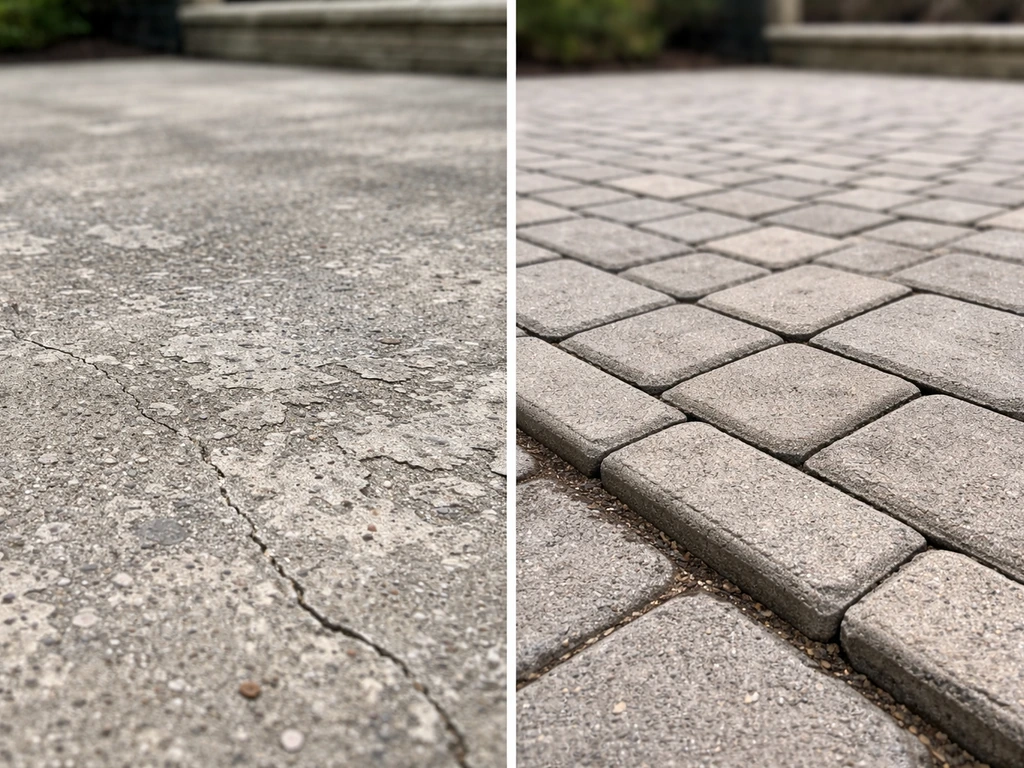
Poured concrete is durable but not invincible. In freeze-thaw climates, water gets into the surface, freezes, and causes spalling or scaling over time. Applying a penetrating sealer every 2–3 years significantly reduces water absorption and extends the surface life. Stamped concrete is particularly vulnerable to surface wear if the sealer is neglected, since the pattern and color are in the top layer. Budget for resealing as part of ownership, not just installation.
Paver patios are more forgiving because individual units can be lifted and reset if they shift, and they handle freeze-thaw movement better than a monolithic slab. The maintenance task that catches most paver owners off guard is joint sand. The polymeric or stabilized joint sand between pavers needs to be replenished over time as it erodes from rain and foot traffic. Without it, weeds take hold, ants mine out the sand from below, and pavers start to rock. Plan for a re-sanding every 3–5 years depending on your climate and traffic.
| Material | Upfront Cost | Maintenance Frequency | Lifespan | Key Weakness |
|---|---|---|---|---|
| Pressure-treated wood deck | Low–Medium | Every 2–3 years (seal/stain) | 15–25 years with care | Rot, splintering, checking |
| Capped composite deck | Medium–High | Annual wash; inspect ledger | 30–50+ years | Higher upfront cost |
| Poured concrete patio | Low | Seal every 2–3 years | 25–40 years | Cracking, spalling in freeze-thaw |
| Stamped concrete patio | Medium | Reseal every 1–2 years | 20–30 years | Surface wear if sealer neglected |
| Concrete paver patio | Medium–High | Re-sand joints every 3–5 years | 30–50+ years | Joint erosion, settling, weed intrusion |
DIY vs hiring a contractor: where to draw the line
A basic paver patio on flat ground is genuinely doable for a capable DIYer with a long weekend, the right base preparation, and the patience to keep everything level. You're renting a plate compactor, laying 4–6 inches of compacted crushed stone, adding a sand setting layer, and placing pavers. The biggest DIY failure point on patios is skimping on the base depth or not sloping the grade away from the house. Patios built on soft or uncompacted bases settle unevenly within a couple of years.
Decks are a different conversation. An attached deck almost always requires a building permit, and in most jurisdictions the permit triggers a footing inspection and a framing inspection before you can close in the structure. The ledger connection to the house is structurally and waterproofing-critical, and it's inspected specifically because it's a common failure point. If you're comfortable reading span tables, installing joist hangers, and doing the ledger flashing correctly, a deck is buildable as a DIY project. But the permit process adds weeks to the timeline even if you do everything right, and mistakes in framing or flashing are expensive to fix after the fact.
For most homeowners, the sweet spot is: DIY a simple ground-level patio if the site is flat and drainage is straightforward; hire a contractor for any elevated deck, any deck attached to the house, or any patio that requires significant grade work or drainage engineering. The IRC (International Residential Code) requires guardrails of at least 36 inches on decks where the surface is 30 inches or more above grade, and stair risers capped at 7 3/4 inches maximum. These aren't hard to comply with, but they have to be done right to pass inspection.
Questions to ask contractors before you sign anything
- Will you pull the permit and handle all inspections, and is that included in your bid price?
- What footing depth are you specifying, and is it below the frost line for my zip code?
- What ledger flashing system are you using, and can I see an example of your completed work?
- What composite board brand and product line is this bid based on, and what warranty does it carry?
- What's the compacted base depth you're specifying for the patio subbase?
- How are you handling drainage at the perimeter and at the house foundation?
- What's your timeline from permit submission to final inspection?
- What does the bid explicitly exclude (staining, sealing, lighting, etc.)?
Measurements and photos to prepare before any contractor meeting
- Measure the width and depth of your planned space in feet (get square footage)
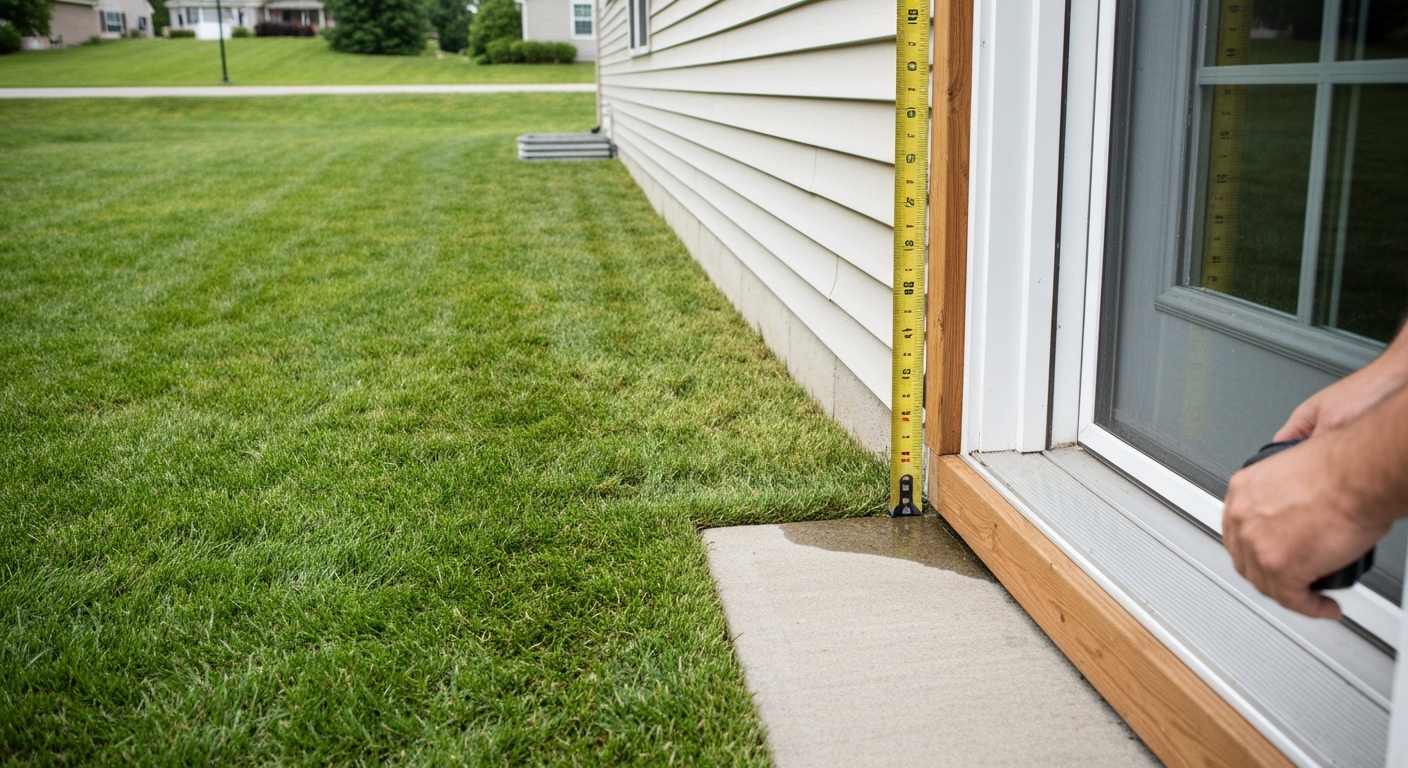
- Measure the height difference from your back door threshold to the yard at the farthest point of the planned space
- Note the distance from the nearest downspout and the direction water currently flows after rain
- Photograph the house rim joist/band board area where a deck ledger would attach
- Photograph the yard from multiple angles including any slope, existing landscaping, or drainage features
- Note any overhead utilities, underground lines (call 811 before any footing work), or easements
Resale value and future upgrades: which one sets you up better
If resale ROI matters to you, the data favors decks. The 2025 Zonda Cost vs Value report puts composite deck ROI at roughly 88.5% of cost recouped at resale, with a national average project cost around $25,096. Concrete and paver patios recover an estimated 69% of cost on average. That's a meaningful gap, and it's consistent with how buyers perceive outdoor living upgrades: an elevated deck with railing reads as a built-in outdoor room, while a basic concrete slab reads as functional but replaceable.
That said, a well-designed paver patio with a pergola, lighting, and outdoor kitchen can absolutely close the gap in markets where buyers prioritize low-maintenance, ground-level living. The resale calculus also changes if your neighborhood skews toward older buyers or families with young children, where step-free access is a genuine plus.
Future upgrades are easier and more varied on a deck. An elevated deck can accept a pergola or shade structure on top, a screened enclosure around it, an under-deck drainage system to use the space below, and outdoor lighting integrated into the railing posts. If you want more options than a standard deck or patio, patio deck alternatives like pergolas, sunken courtyards, or outdoor living platforms can help you match the look and function you want. Covered patio alternatives and pergola additions are also possible over a patio, but the structural anchoring is different since you're working from grade rather than from a raised frame. If you want alternatives to a traditional patio or decking, options like gravel patios, stamped concrete, pergolas, and even outdoor living pavilions can match the same look with different maintenance and cost tradeoffs alternatives to patio or decking. If you're considering a full outdoor room with screens or a roof down the road, a deck gives you more upgrade pathways. If you're thinking about a covered patio alternative or a simple pergola over a ground-level space, a patio works perfectly fine as the foundation.
The recommendation framework: how to make the call
Run through these four factors in order, and the right answer usually becomes obvious pretty quickly.
- Yard slope: if your yard drops more than 18–24 inches from the back door to where the space ends, a deck will cost less than the site work needed to level a patio. If it's flat, a patio is simpler.
- Budget ceiling: if your hard budget is under $10,000 for a 300+ square foot space, a concrete or paver patio is the only realistic option at that price. A quality composite deck starts at $7,500 and climbs fast with stairs and railing.
- Resale timeline: if you're selling within 3–5 years and want to maximize ROI, a deck recovers more value on average. If you're staying 10+ years, build for how you actually live.
- Maintenance appetite: if you want near-zero annual maintenance, choose capped composite decking or concrete pavers with polymeric sand. If you don't mind periodic sealing or refinishing, pressure-treated wood or basic concrete are cheaper to build.
If you're drawn to the dark-toned, contemporary look that 'Carbone Riviera' evokes (think charcoal composite boards, clean cable railing, a resort-inspired outdoor space), that aesthetic is absolutely achievable with either a deck or a patio. Composite deck boards in charcoal or dark walnut tones are widely available from brands like Deckorators, TimberTech, and Trex, and large-format dark pavers or charcoal-tinted stamped concrete can deliver the same visual impact at grade. The look is a design choice. The deck-versus-patio decision is a site and budget choice. If you're in the UK, the practical answer is still composite decking vs patio, but costs, materials, and typical install methods can vary by region composite decking vs patio UK. Separate the two, gather at least three bids with the measurements and questions listed above, and you'll have everything you need to decide with confidence.
FAQ
Do I need a permit for a deck or patio, even if I’m keeping the same footprint?
If the patio or deck is attached to the house (ledger connection, retaining wall, or any raised surface over grade), expect permitting and inspections in most jurisdictions. A ground-level patio can sometimes avoid permits, but any work that changes drainage, footings, or adds stairs typically triggers review. The fastest way to avoid surprises is to ask your local building department whether a “like-for-like replacement” still requires a permit when you change the structure or elevation.
What are the biggest drainage mistakes that cause failure on each option?
For patios, the most important thing to get right is grade away from the house, not just “level pavers.” A typical target is a noticeable slope across the patio surface so water does not pond near the foundation. For decks, the critical detail is the ledger flashing and water management at the house connection, since water intrusion there drives rot even if the rest of the build is fine.
Can I put a hot tub, grill, or outdoor kitchen on a deck or patio?
Yes, but only if the deck has the structural capacity and code-compliant railing and guard requirements for the added load. Adding a hot tub or heavy outdoor kitchen typically requires engineered footing or reinforcement, plus extra clearance for ventilation and waterproofing. Patios can support loads well when the base is designed correctly, but stamped concrete may need careful evaluation if the surface is sealed and later penetrations are planned.
Which is safer for uneven ground or soft soil, a deck or a patio?
If you have soft soil, high groundwater, or clay that holds moisture, patio costs often rise because the base has to be rebuilt deeper and compacted correctly. With decks, you may also pay more due to deeper or additional footings, but the deck can better bridge uneven grade if designed with appropriate posts and beams. In both cases, asking for geotechnical or at least compaction testing recommendations can prevent “cheap bid” base work that settles.
Do composite decks really need no maintenance at all?
Composite decks do not require staining, but they still need periodic cleaning to remove algae, pollen, and grime that can cause surface staining. Use a deck cleaner or mild soap and water, then rinse thoroughly, avoid pressure washing too aggressively, and plan to inspect fasteners and boards for movement or gaps a few times per year in harsh climates.
How often do I need to re-sand a paver patio, and what happens if I ignore it?
Plan for joint sand on paver patios like an actual maintenance line item, not an optional tweak. Re-sanding is usually needed when joints erode enough for weeds to start and for pavers to rock, timing depends on rainfall intensity and foot traffic. Also confirm whether your installer used polymeric or stabilized sand, since that changes how often joints need replenishing and how weeds behave.
What’s different about durability in cold climates for decks vs patios?
If you’re in a freeze-thaw region, poured concrete should be sealed and maintained to reduce water absorption, and you will often see long-term issues show up first in surface scaling and small cracks. For decks, freeze-thaw matters most at the structural connection points and how the deck’s underside stays ventilated and dry. Ask contractors how they handle flashing details, ventilation gaps, and sealer schedules if you want to minimize seasonal damage.
What should I ask bidders to include so the deck vs patio quotes are truly comparable?
Cost comparisons can be misleading because many “square foot” bids exclude stairs, railings, and surface thickness or upgrades. For patios, ask about base depth, type of gravel, soil preparation, and whether edging restraints are included. For decks, ask whether the price includes stairs, railings, permits, ledger flashing, and whether the framing is sized for the real height and local code requirements.
Is there a hybrid option that gets the resale appeal of a deck without the full deck cost?
If you want a deck-resale advantage but prefer the lower-maintenance feel of a patio, consider a hybrid approach: a small ground-level patio for main traffic and a limited-raised deck only where height transitions or entertaining zones need it. That can reduce ledger complexity and footing scope while still delivering the “outdoor room” look with built-in seating or a pergola. The best version of this depends on your grade and whether you can keep drainage routes clear.
Will a dark “Carbone Riviera”-style finish get too hot or fade quickly?
One common mistake is choosing a beautiful dark finish without verifying sun exposure and heat performance. Dark boards and dark pavers can feel significantly hotter in direct summer sun, and some staining or color fade behavior differs by brand and whether you use capped composites or uncapped materials. If comfort matters, ask your installer how the specific product behaves under UV and what cleaning method is recommended to preserve color.
Next Article
Grass Is Higher Than Patio: Causes, Fixes & Deck vs Patio
Grass higher than patio? Causes, slope checks, repair options, lower lawn, raise patio, or build a deck, with costs & DIY