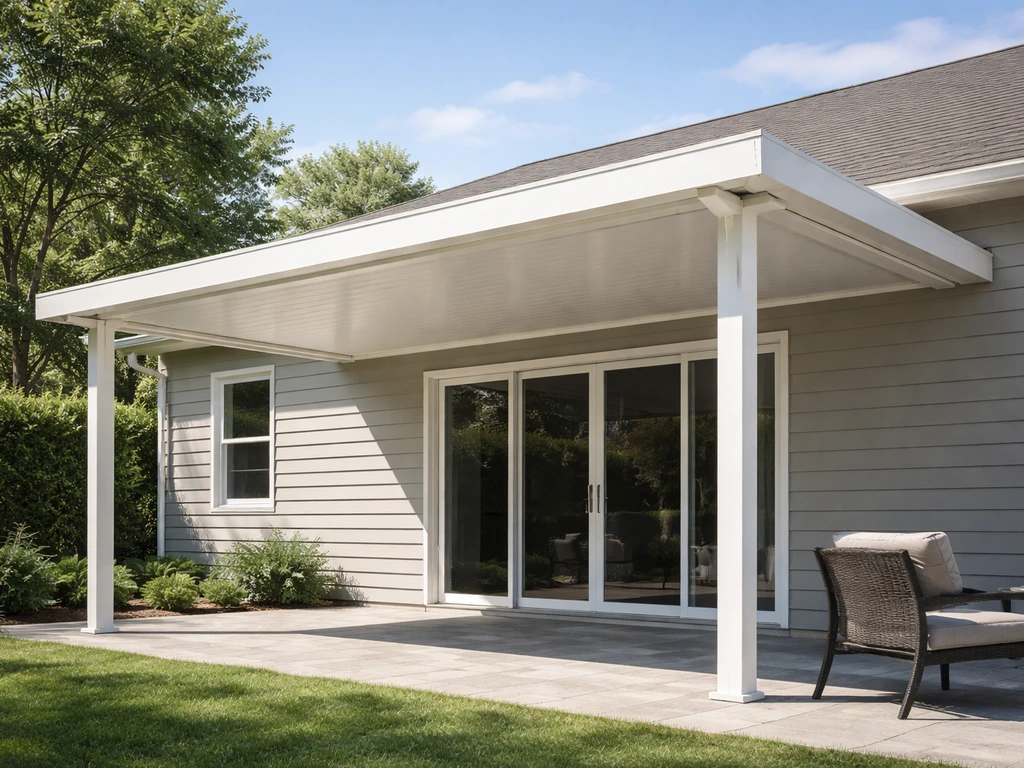
A pergola gives you partial shade, airflow, and a defined outdoor space, but it won't keep you dry in a rainstorm. A covered patio gives you real weather protection and a fully usable outdoor room, but costs more and feels less open. Which one wins depends almost entirely on what you actually plan to do out there and how much rain or sun your yard throws at you.
Pergola vs Covered Patio: Costs, Comfort, and Best Fit

Miles Hart
3 May 2026
The real differences between a pergola and a covered patio
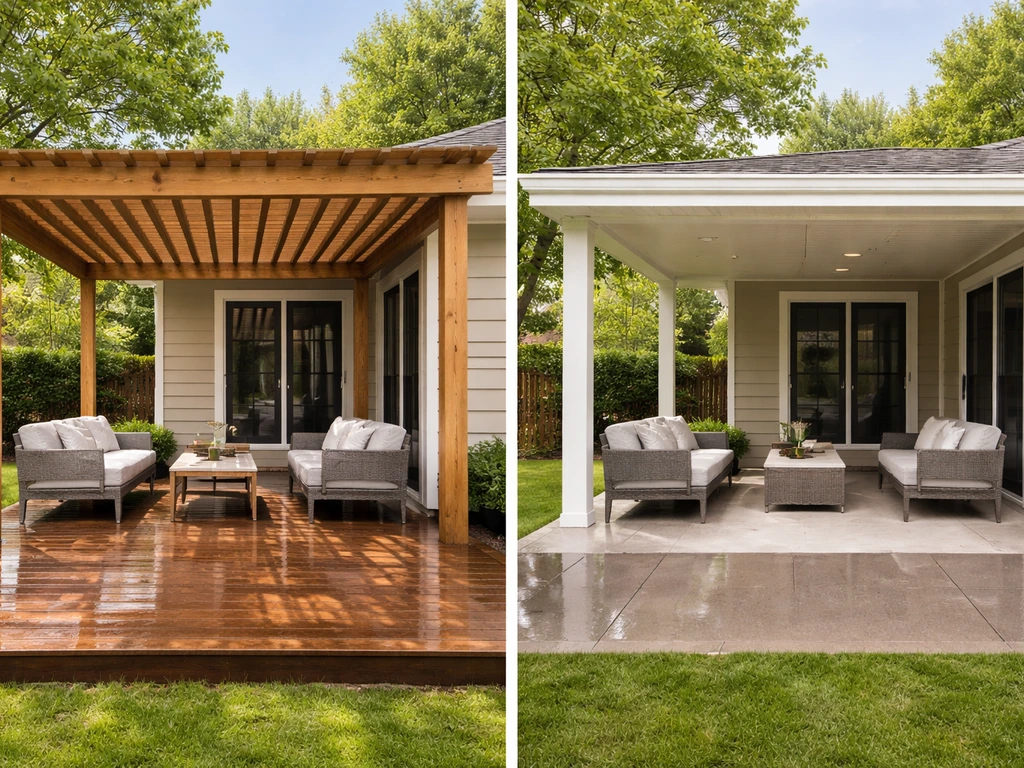
People use these terms loosely, so let's pin them down. A pergola is an open-roof structure, usually with posts supporting a lattice or slatted overhead framework. Some sunlight filters through, air moves freely, and it defines your outdoor space without enclosing it. A covered patio, on the other hand, has a solid or near-solid roof attached to your house or freestanding, designed to block rain, reduce glare, and create actual shade. Think of the difference between a trellis over your head versus a lean-to roof.
The functional gap is bigger than most people expect. A standard slatted pergola might block 30 to 50 percent of direct sunlight depending on slat spacing, but it offers close to zero rain protection. A solid patio cover keeps you completely dry and can drop the temperature underneath by 10 to 15 degrees on a hot afternoon. Louvered pergola systems (motorized aluminum models from brands like Vergola or ALBAU) split the difference, with adjustable blades that open for airflow or close for rain protection, but they cost significantly more than either a basic pergola or a simple patio cover.
| Feature | Pergola | Covered Patio |
|---|---|---|
| Rain protection | None (standard) to full (louvered/solid) | Full |
| Shade level | Partial (30–50%) | Full |
| Airflow | Excellent | Moderate (depends on design) |
| Heat buildup | Low | Can be moderate (solid roofs trap heat) |
| Attached or freestanding | Either | Usually attached to house |
| Visual openness | Open, airy | More enclosed feel |
| Permit requirements | Often required | Almost always required |
| Typical cost range | $30–$60/sq ft | $20–$50/sq ft |
What you'll actually pay: pergola vs covered patio costs
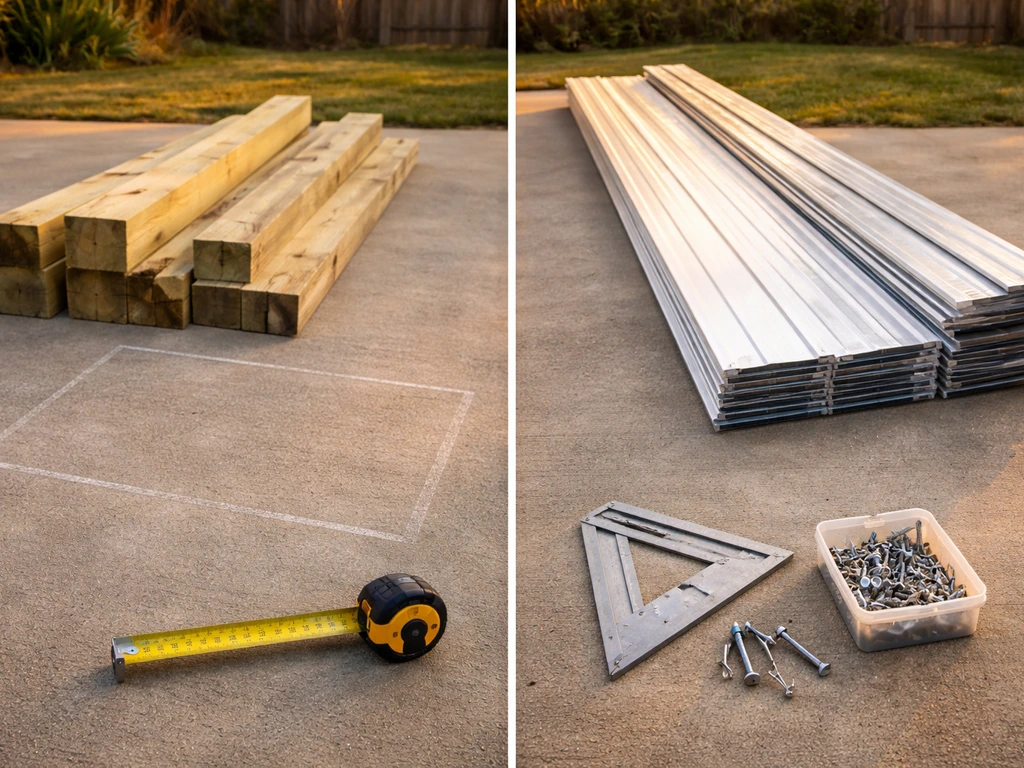
According to 2025 data from HomeAdvisor, building a pergola runs about $30 to $60 per square foot installed, while Angi puts patio cover installation at $20 to $50 per square foot. Those ranges overlap quite a bit, which surprises most homeowners. The bottom line: a basic patio cover can actually cost less than a quality pergola, and a premium louvered pergola system will cost far more than a standard patio cover.
What pushes the price up or down
- Materials: Pressure-treated wood is the cheapest option. Cedar and redwood cost more but last longer. Aluminum is durable and low-maintenance but adds to upfront cost. Vinyl sits in the middle.
- Roof type: Open lattice is cheapest. Polycarbonate panels add cost but trap heat (a real problem in hot climates). Motorized louvered systems are the most expensive, often $15,000 to $50,000+ for a full install.
- Size: A 12x16 structure (192 sq ft) at $35/sq ft runs about $6,700. The same footprint at $50/sq ft is $9,600. Size is the biggest single cost lever.
- Footings and posts: Any freestanding structure needs concrete footings. Depth and diameter depend on your soil and local frost line, and it adds $500 to $2,000 to most projects.
- Attachment vs freestanding: Attaching to your house saves money on posts and footings but requires flashing, ledger bolts, and often a structural engineer sign-off.
- Permits and inspections: Most municipalities require permits for any permanent structure. Budget $150 to $500 for permits, and factor in time for plan review.
- Labor vs DIY: Labor typically adds 40 to 60 percent to material cost. A $4,000 materials job can run $6,500 to $7,000 installed.
A ballpark example: a wood pergola with open slats, roughly 200 square feet, will often land around $5,000 to $8,000 installed. A comparable solid-roof patio cover in aluminum could run $4,000 to $10,000 depending on the system and installer. The cost of a pergola vs patio cover is genuinely project-specific, so square footage and roof type matter far more than which category the structure falls into. The cost of a pergola vs patio cover is often why homeowners compare options side by side, especially when budgeting for materials and installation.
When a pergola makes more sense
A pergola is the right call when you want to define outdoor space without closing it in, when you live somewhere with mild summers and infrequent rain, or when you're growing climbing plants like wisteria or jasmine that need the open framework. It's also the better choice aesthetically when your house has an architectural style that looks better with an open wood structure than a solid roof addition. Think craftsman bungalows, farmhouses, and Mediterranean-style homes. A pergola on top of patio can still provide that airy, partially shaded feel while helping you define a real outdoor room.
Pergolas also work well for entertaining setups where you want string lights overhead, a ceiling fan, and a relaxed outdoor dining area that still feels connected to the sky. If your main use case is summer evening dinners with occasional afternoon use, a pergola handles that fine. If you're in a dry climate like the Southwest or Southern California, the lack of rain protection is barely a concern.
When a covered patio is the better choice
If you live somewhere rainy (Pacific Northwest, Southeast, Midwest spring/fall), a covered patio is the practical choice. You'll actually use the space year-round instead of retreating inside every time clouds roll in. Covered patios are also the right call if you have young kids, if you host a lot during unpredictable weather, or if you plan to use the space as an outdoor kitchen or living room that needs real protection.
A covered patio also makes more sense if sun exposure is a serious concern. In full-sun yards in hot climates, an open pergola still lets in significant heat and UV even with slats. A solid roof blocks it entirely. If you're buying furniture, rugs, or electronics for the space, full coverage protects that investment better.
Sun, shade, weather, and actual comfort
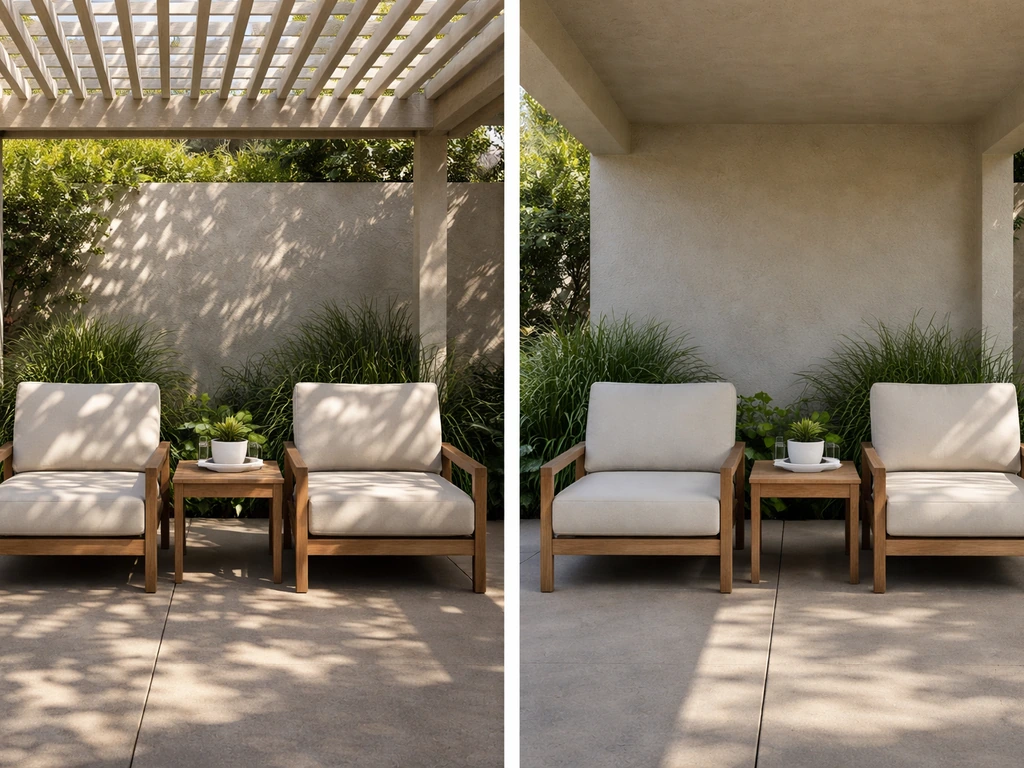
This is where the practical difference really shows up day to day. A standard pergola with 2x6 slats on 6-inch spacing provides dappled shade, similar to sitting under a tree. It takes the edge off but doesn't eliminate glare or heat. A solid patio cover eliminates both completely, but depending on the material, it can trap heat underneath. Polycarbonate panels are the worst offender here, acting almost like a greenhouse on hot days. Metal or insulated panel systems perform much better.
Wind behavior is also different. An open pergola lets breeze through freely, which is a genuine comfort advantage in hot, humid areas. A covered patio with solid walls or screens blocks wind, which is great in cold weather or for privacy but can make the space feel stuffy in summer without ceiling fans. Louvered systems handle this best because you can dial in exactly how much air moves through, and some systems (like those from Vergola and ALBAU) include rain sensors that automatically close the louvers when rain starts.
For year-round usability, the covered patio wins in most climates. For comfort in hot, dry summers, the pergola can actually feel better because of airflow. Neither is universally superior, so match the structure to your actual climate and use pattern.
Design options and materials: what's actually available
Pergola styles and materials
- Open lattice/slatted: The classic look. Best for growing plants, string lights, and airy aesthetics. Pressure-treated pine, cedar, or redwood are common choices.
- Louvered aluminum: Motorized or manual adjustable blades. Most flexible option. Higher upfront cost ($15,000 to $50,000+) but acts as both a pergola and a patio cover depending on settings.
- Fabric canopy pergola: Open frame with a shade sail or retractable fabric attached. Budget-friendly but fabric degrades over time and needs replacement every 5 to 10 years.
- Solid-roof pergola: A hybrid approach where a pergola frame gets a solid panel roof (metal, polycarbonate, or insulated panel). Technically becomes a covered structure but often marketed as a pergola.
Covered patio styles and materials
- Attached aluminum patio cover: The most common and affordable covered option. Extruded aluminum panels in flat or corrugated profiles. Durable, low-maintenance, and widely available.
- Insulated panel systems: Two aluminum skins with a foam core. Better thermal performance and cleaner look than single-skin panels. Costs more but worth it in hot or cold climates.
- Wood-framed with shingles or metal roofing: Matches your house roofline and looks fully integrated. Most expensive option but highest curb appeal and longest lifespan.
- Polycarbonate panels: Translucent, allows some natural light. Inexpensive but can cause heat buildup and yellows over time.
- Partial enclosures: Screen rooms, glass rooms, and sunrooms start as covered patios and add walls. Each level of enclosure adds cost but also comfort and usability.
If you're on the fence between a pergola and a patio cover, a louvered aluminum pergola system is essentially a best-of-both option, but you'll pay for that flexibility. For most budgets, picking one and committing to it makes more financial sense than trying to split the difference with a mid-range hybrid.
DIY vs hiring a contractor
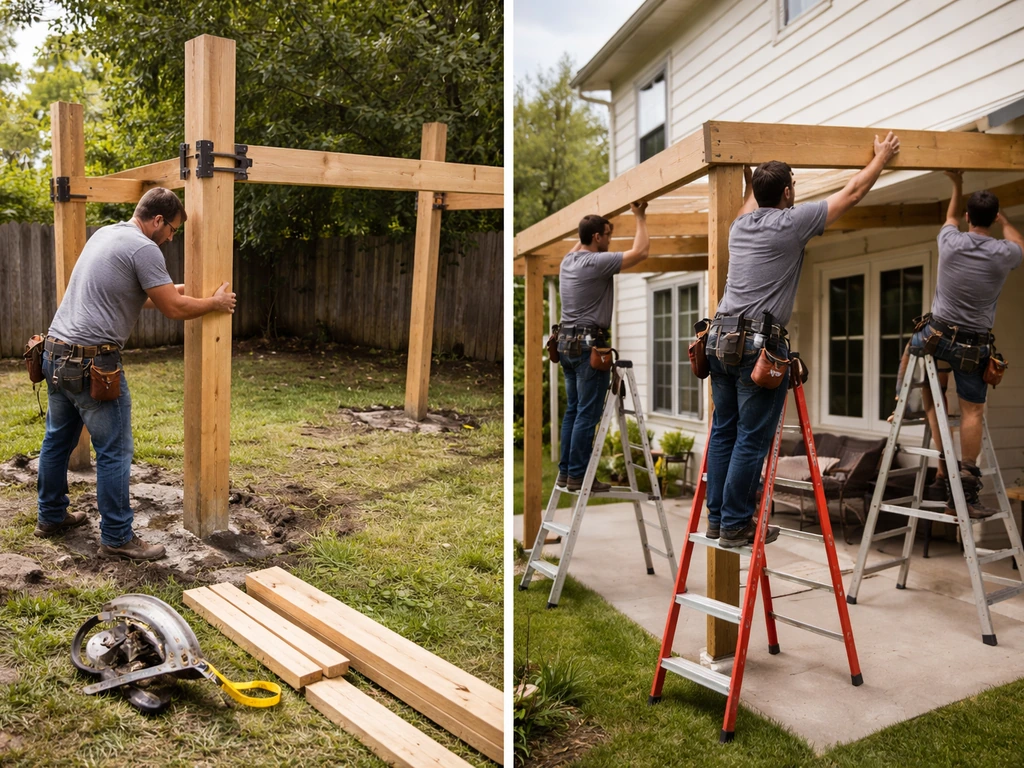
A basic freestanding wood pergola is one of the more DIY-friendly outdoor projects out there. If you're comfortable setting posts in concrete, cutting lumber, and working at height, you can build a solid 12x12 pergola in a weekend with a helper. Kits from home improvement stores simplify the process further, with pre-cut components and included hardware. Expect to spend $1,500 to $3,500 in materials for a kit build, saving $2,000 to $4,000 over a contractor quote.
Covered patios are harder to DIY well. Attaching a structure to your house requires proper ledger connections, flashing, and waterproofing. Getting this wrong causes water intrusion, rot, and structural issues. The International Building Code requires patio covers to handle a minimum vertical live load of 10 pounds per square foot plus dead loads and wind loads, which means structural design matters. If you're attaching to your house or building in a high-wind or seismic zone, hire a contractor and pull the permit. A freestanding patio cover with a prefab aluminum kit is more DIY-friendly, but still involves footing work and roof panel installation that's easier with two people and some experience.
Louvered systems almost always require professional installation. Manufacturers like Haworth specifically note that anchorage requirements vary by seismic zone and local building codes, and most motorized system warranties require certified installation. Don't try to DIY a $20,000 motorized pergola.
Regardless of which structure you choose, check your local permit requirements before you start. Most municipalities require permits for any permanent structure over a certain size (commonly 200 square feet), and some HOAs have aesthetic restrictions on roof materials or colors. Finding this out after you've built is expensive.
How each option affects your home's value
Both pergolas and covered patios add value, but not always in the same way or by the same amount. According to Angi's 2025 data, homeowners typically see a 50 to 80 percent return on investment for patio cover installation, depending on material, design, and regional demand. A $10,000 covered patio addition might add $5,000 to $8,000 in appraised value. Pergolas are similar, with HomeAdvisor noting they can increase property value alongside improving usability.
Practically speaking, a well-built covered patio that extends living space tends to photograph better for listings and appeals to buyers in rainy climates or places where outdoor kitchens are popular. A pergola contributes more to curb appeal and first impressions, especially in the front yard or as a garden feature. Neither is a guaranteed ROI play, and you should build primarily for your own enjoyment rather than resale speculation.
One thing that does hurt resale: unpermitted structures. Buyers and their inspectors flag them, lenders sometimes won't finance homes with unpermitted additions, and you may be required to tear it down or pay to permit it retroactively. Pull the permit. It protects your investment either way.
My recommendation: how to decide today
Here's a simple framework. Answer these four questions and your answer will be pretty clear.
- How often does it rain during your outdoor season? If it rains more than once or twice a month in the months you want to use the space, get a covered patio. Rain-free climates make the pergola decision much easier.
- What's your primary use? Casual dining, lounging, and aesthetics: pergola. Outdoor kitchen, year-round use, protecting furniture, hosting in all weather: covered patio.
- What's your honest budget? Under $6,000 with DIY: wood pergola kit. $5,000 to $15,000 installed: aluminum patio cover or mid-range pergola. $15,000 and up: premium pergola, louvered system, or architectural patio cover.
- What does your house look like? A solid patio cover that doesn't match your roofline or materials can look like an afterthought. If integration matters to you, budget for a properly finished design or consider whether a pergola suits the aesthetic better.
Before you call anyone, take these measurements: the usable width and depth of your patio or intended build area, the height of your eave if you're attaching to the house, and the distance from your house to your property line (setbacks matter). Write down how many people you typically host and whether you want ceiling fans, lights, or an outdoor TV, because those electrical needs affect the build. Then get at least three quotes and ask each contractor to pull permits. If they suggest skipping permits to save money, find someone else.
If you're still on the fence between the two structures, it's worth looking more closely at how costs break down for each specific option, or whether building a pergola on an existing concrete patio slab is the right starting point for your project. If you’re wondering can a pergola be built on a patio, the key is planning the framing and anchoring so it’s safe and properly supported building a pergola on an existing concrete patio slab. There's also real nuance in how patio covers and pergolas differ as product categories, which shapes what you can buy and build within each. If you're weighing patio cover vs pergola, matching the roof style to your sun and rain needs is the real key. The more specific your questions get, the clearer your decision will become.
FAQ
Will a pergola keep my outdoor furniture from getting wet?
Not always. A pergola can protect from some sun but it usually will not keep umbrellas, furniture covers, or people dry. If you want a “use it during rain” space, look for a solid patio cover or a louvered pergola with motorized rain-sensing closure.
Can I add an outdoor TV, ceiling fan, or lighting to either option?
Yes, if the ceiling plane and clearance are planned. Many people can add string lights and a fan under a pergola, but the wiring route and hanging points need to be designed so cables and fixtures are rated for outdoor use and don’t interfere with slats, louvers, or drainage.
How do runoff and drainage differ between a pergola and a covered patio?
Measure twice because the “same square footage” can behave differently. A covered patio with a solid roof often requires gutters or engineered runoff paths, while a pergola relies more on ground and plant/airflow drying. If water will dump near the house, you may need downspout routing or a splash zone to prevent foundation damage.
Can I build a pergola on an existing concrete patio slab safely?
A pergola can be built over an existing patio slab, but you need correct anchoring and footing strategy. Concrete alone often cannot be treated as a substitute for proper structural support, especially for wind loads, so confirm the slab condition, anchor type, and local code requirements.
Which is safer in strong wind areas, pergola or covered patio?
If you are in a high-wind or seismic zone, the installation details matter more than the roof “category.” A pergola can still be engineered for storms, but it typically needs stronger posts, proper bracing, and code-compliant anchorage. Ask for design calculations, not just a material list.
What’s the best option if I want airflow most days but full rain protection sometimes?
Most of the time, a louvered pergola is the better fit if you need both airflow and rain response. If you choose a standard pergola, you may end up relying on umbrellas or moving activities under cover during storms, which defeats the goal of year-round use.
Will a covered patio feel hotter than a pergola?
Covered patios can reduce heat, but they can also trap it if the underside is solid and non-vented. To avoid a “hot ceiling” effect, prioritize an insulated or engineered roof system (or ventilation options) and plan for ceiling fans, especially in humid or very hot climates.
Does a pergola provide enough UV protection for daily sun-heavy use?
Yes, but it depends on roof type and spacing. Pergola louvers slats can allow significant glare and UV, even when you see shade on the ground. If UV protection is a priority for skin or for protecting fabrics, choose solid coverage (or adjustable louvers) and confirm the panel type and expected blockage.
How do permits and HOA rules typically differ for pergolas versus patio covers?
HOAs and municipalities often treat them differently, even when both are “outdoor structures.” A pergola may be easier to get approved when it appears open, while solid roof additions can trigger stricter rules on appearance, setbacks, and roof materials. Ask for written guidance before ordering materials.
Do I need gutters for a covered patio?
It depends on the installer, the roof material, and the site slope. Patio covers often need gutters or designed runoff to prevent water pooling, while pergolas may require planning for how water drips from posts and beams. Get a clear explanation of where water goes, before construction starts.
Will buyers care more about having a pergola or a covered patio, or about permits?
Resale impact is not guaranteed, and inspections matter. Unpermitted work is one of the biggest risks for financing and renegotiations. Even if the structure is attractive, the safest move is to have the contractor pull permits and close out paperwork correctly at the end.
Next Article
How Much Do Patio Covers Cost in 2026? Pricing Guide
2026 patio cover cost ranges plus DIY vs contractor pricing, add-ons, and a step-by-step budget estimator.