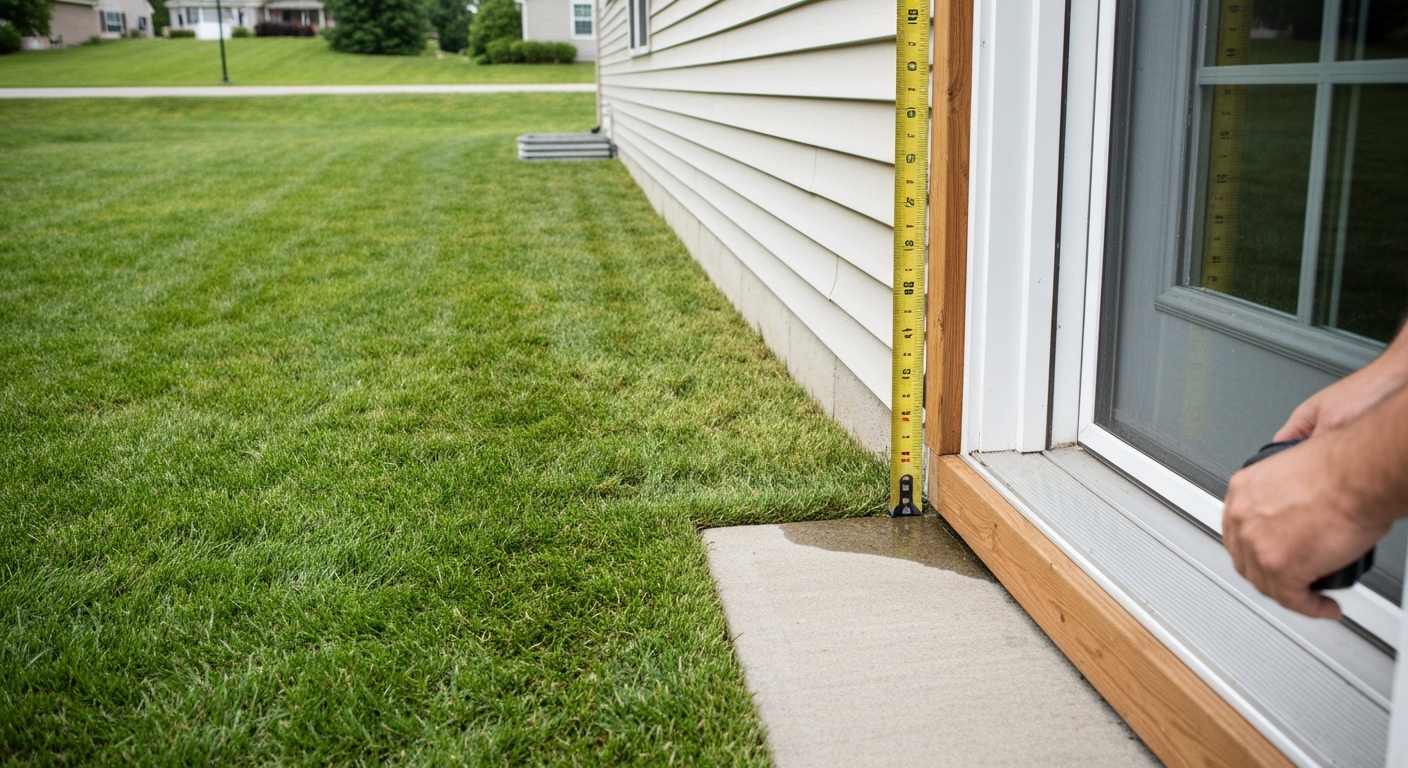
Homeowners insurance usually does cover patio damage, but only when a specific covered peril caused it. A hailstorm cracks your concrete slab? Probably covered. That same slab slowly heaving and cracking over five winters? Almost certainly not. The cause of damage matters far more than the damage itself, and whether your patio is attached to your home or sitting out in the yard determines which part of your policy even applies.
Does Homeowners Insurance Cover Patio Damage? What to Know

Miles Hart
30 Jun 2026
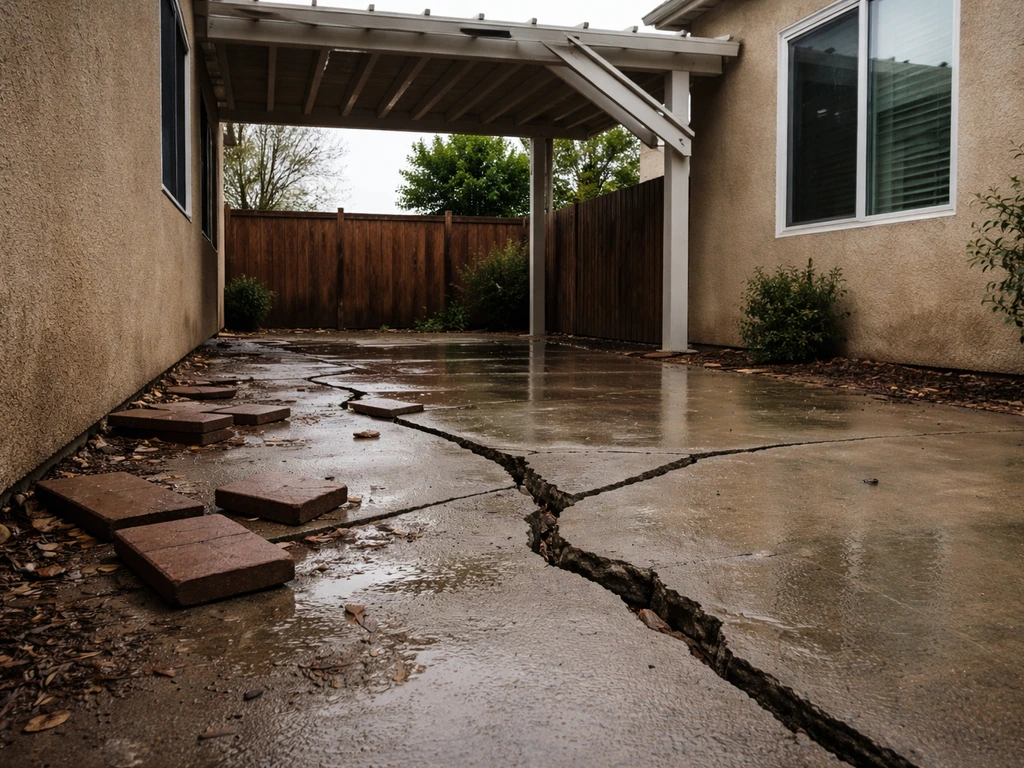
When patio damage is covered vs not: the quick breakdown
Standard homeowners insurance is built around the concept of "covered perils," which are specific sudden, accidental events listed in your policy. The most common policy type, the HO-3 (ISO Homeowners 3 Special Form), covers your dwelling against open perils (meaning most causes unless specifically excluded) and covers other structures and personal property against named perils only. Your patio almost always falls under one of two buckets: Coverage A (dwelling) if it's attached to your home, or Coverage B (other structures) if it's detached or separated by clear space.
The practical result: if a covered peril caused the damage, you have a claim worth pursuing. If the damage built up gradually, resulted from neglect, or came from a source your policy excludes (like flooding), you're typically on your own. Knowing which bucket your patio falls into and which perils are actually listed in your policy is how you figure out where you stand before you even call your insurer.
| Situation | Likely Covered? | Coverage Bucket |
|---|---|---|
| Hail cracks patio pavers or concrete | Yes | Coverage A or B depending on attachment |
| Wind blows a tree onto your patio cover | Yes | Coverage A or B (falling object peril) |
| Fire damages attached patio structure | Yes | Coverage A (dwelling) |
| Vandal breaks patio lights, furniture bolts | Yes (structure damage, not furniture) | Coverage B |
| Concrete slab slowly cracks and shifts over years | No — wear and tear exclusion | N/A |
| Floodwater erodes or lifts your patio slab | No — flood exclusion applies | N/A |
| Patio surface deteriorates from lack of sealing | No — maintenance/neglect exclusion | N/A |
| Burst pipe floods attached patio room | Possibly — depends on cause and duration | Coverage A if attached |
What patio damage is actually covered
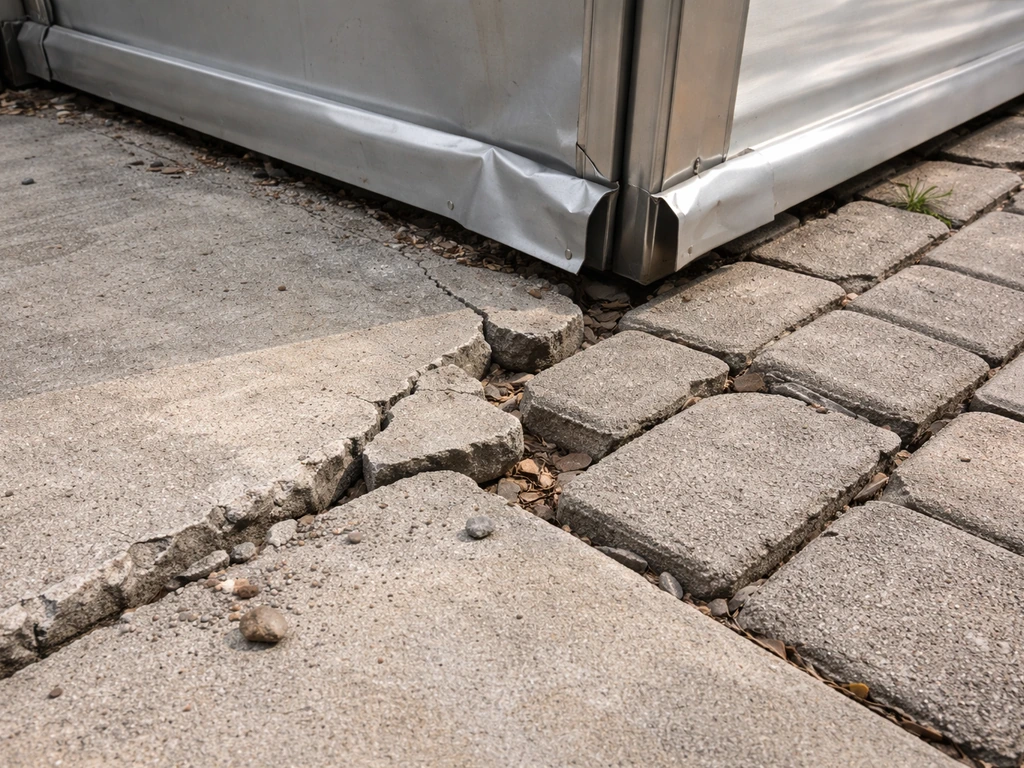
The ISO HO-3 sample policy lists specific named perils that apply to other structures like patios, and most major insurers follow this same framework. These are the events that give you a legitimate shot at a paid claim.
Windstorm and hail
This is the most common covered cause for patio damage. A bad hailstorm can crack or chip concrete, shatter patio pavers, dent aluminum patio covers, and bust up pergola roofing. Straight-line winds can throw debris onto your patio surface or collapse a roof structure over it. Both windstorm and hail are named perils in standard HO-3 policies.
Fire and lightning
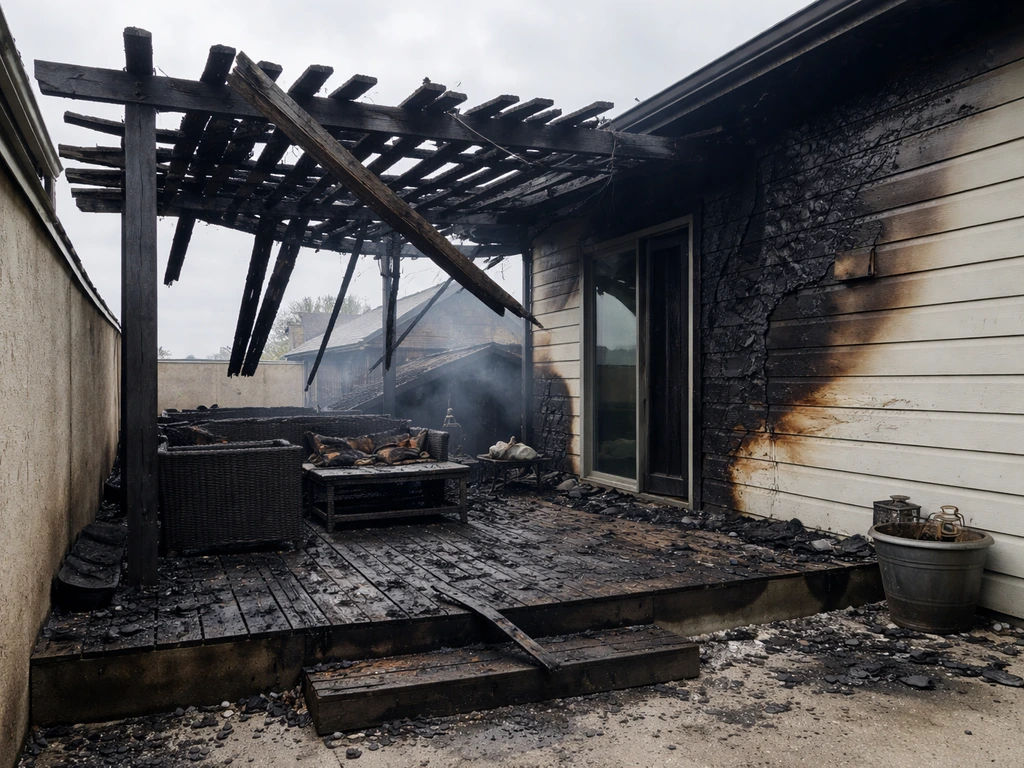
Fire damage to a patio, whether from a house fire spreading to an attached covered patio or a lightning strike igniting a pergola, is covered under the fire or lightning peril. If your attached patio cover burns in the same event as your house, it's treated as part of the dwelling under Coverage A. If the fire only reaches your detached patio structure, it falls under Coverage B.
Falling objects
A tree limb falling onto your concrete patio, a satellite dish crashing down in a storm, or your neighbor's fence blowing over and landing on your paver patio are all examples of the falling objects peril. This one surprises homeowners who think only roof damage counts, but the same named peril applies to your outdoor hardscape if the object causes sudden physical damage.
Weight of ice, snow, or sleet
If heavy snow or ice accumulation collapses a covered patio roof, pergola, or screen enclosure, the weight of ice, snow, or sleet peril covers the resulting structural damage. This is different from the freeze-thaw cycle that causes gradual concrete cracking over multiple winters, which is not covered (more on that below). It has to be a single event causing sudden structural failure.
Vandalism or malicious mischief
Someone spray-paints your concrete patio, smashes patio lights that are attached to your home, or breaks a patio enclosure window. The vandalism or malicious mischief peril covers damage to structures, though this does not extend to patio furniture (that's personal property coverage, which has its own rules). The damage needs to be to the physical structure, not your movable belongings.
Sudden and accidental water discharge
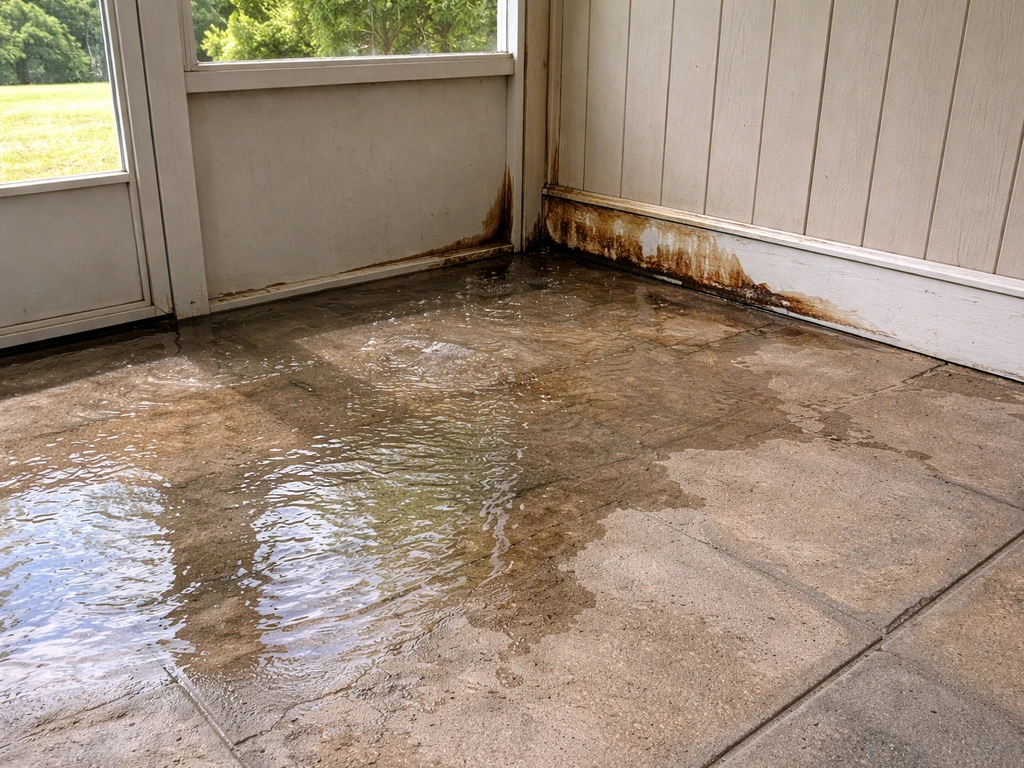
This is the most nuanced covered cause. If a pipe in your home bursts suddenly and the resulting water floods your attached patio room, the accidental discharge of water peril may cover the damage. The word "sudden" is doing a lot of work here. Insurers distinguish sharply between a pipe that bursts overnight and floods the space (covered) versus a slow drip or seepage that has been going on for weeks (not covered). Some carriers invoke a rough 14-day rule: if a leak was ongoing for more than roughly 14 days, they treat it as something you should have noticed and repaired.
What patio damage is not covered
This is where most homeowners get surprised. The exclusions in an HO-3 policy are broad, and several of them directly apply to the types of damage that patios typically experience over time.
Wear and tear, deterioration, and settling
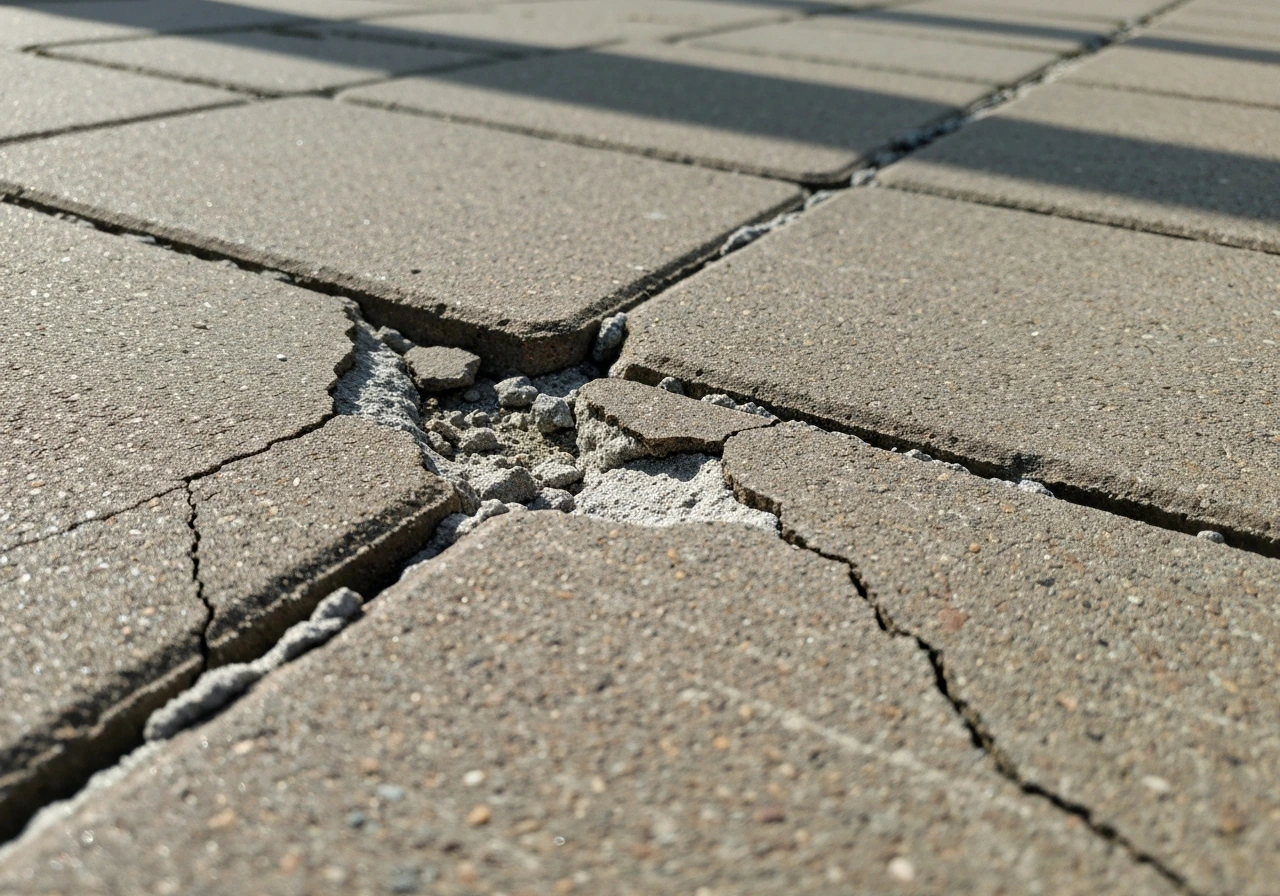
Concrete cracks. Pavers shift. Grout fails. Mortar crumbles. All of this is considered normal deterioration, and the ISO HO-3 explicitly excludes settling, shrinking, bulging, or expansion, including resulting cracking in slabs, walls, and floors. If your patio slab has been slowly heaving or cracking over the years, no insurer is going to pay for that. It's wear, not a peril.
Lack of maintenance and neglect
Policies require homeowners to maintain their property. If your concrete patio was never sealed and surface water has been infiltrating and degrading it for years, or if you ignored visible cracking that eventually led to a bigger structural problem, the insurer can deny the claim on the basis of neglect. This is especially common with covered patios where wood rot or mold develops gradually. The ISO HO-3 also specifically excludes mold and wet rot as part of the standard exclusion set.
Flooding and surface water
Flood damage is excluded from every standard homeowners policy. If a rainstorm causes surface water runoff that undermines your patio slab, erodes the base material, or causes water intrusion into an enclosed patio, your HO policy will not pay for it. Flood coverage requires a separate NFIP or private flood policy. The water exclusions in the HO-3 also bar coverage for water that backs up through drains or sewers (unless you have a sewer backup endorsement added to your policy) and water below the surface of the ground pressing against or seeping through slabs.
Construction defects and faulty installation
If your patio was poured or installed incorrectly, cracked because of poor base preparation, or failed because the contractor didn't properly account for drainage, that's a construction defect. Standard homeowners policies do not cover design or installation defects. Your recourse there is with the contractor, their liability insurance, or any workmanship warranty they provided, not your homeowners policy.
Ordinance or law (code upgrade costs)
If you file a covered claim and the repair requires upgrading your patio to meet current building codes (for example, adding rebar to a slab that didn't have it originally), your standard policy typically won't cover the cost of those upgrades. The ISO HO-3 excludes ordinance or law enforcement costs by default. Some insurers offer an ordinance or law endorsement that adds this coverage, so it's worth checking if yours does.
How to read your policy and spot the exclusions that matter
Most homeowners never open their policy until something goes wrong. Here's what to look for before you call your insurer.
- Find Section I of your policy. This is where Coverage A (dwelling) and Coverage B (other structures) are defined, along with the perils insured against and the exclusions. It's usually the longest section.
- Check how "dwelling" is defined. Policies typically define the dwelling as the structure where you live plus attached structures and materials used in construction. If your patio is physically attached to your home (shares a wall, roof connection, or foundation), it likely falls under Coverage A. If it's a standalone slab or detached structure, it's Coverage B.
- Look up your Coverage B limit. Standard HO-3 and HO-5 policies set Coverage B at 10% of your Coverage A dwelling limit by default. If your home is insured for $400,000, your other structures coverage is typically $40,000 — which sounds like a lot until you realize a fully built outdoor enclosure can cost $20,000 to $50,000 or more to replace.
- Read the perils insured against section for Coverage B. Unlike Coverage A (which covers open perils), Coverage B on an HO-3 is often limited to named perils only. This means the specific events listed are what's covered, and anything not listed isn't.
- Read the exclusions carefully. Look for the words 'deterioration,' 'settling,' 'seepage,' 'flood,' 'surface water,' 'continuous or repeated leakage,' and 'mold.' These are the language anchors insurers use to deny patio damage claims.
- Check for relevant endorsements. Sewer and water backup, ordinance or law coverage, and extended replacement cost endorsements can all change what gets covered. Look at the endorsements page of your declarations.
- Note your deductible — especially for wind and hail. Many policies now have a separate wind and hail deductible expressed as a percentage (often 1% to 2% of the dwelling value) rather than a flat dollar amount. On a $400,000 home, a 2% wind/hail deductible means you'd pay the first $8,000 out of pocket.
Filing a claim: what to document, how to estimate, and what to expect

If you have a legitimate covered loss, how you document it and manage the claims process makes a real difference in what you get paid. Here's how to handle it from the moment damage happens.
Document before you do anything else
Take extensive photos and video of the damage from multiple angles before making any repairs, moving anything, or clearing debris. Get date-stamped images if your phone supports it. This is critical because insurers can and will contest claims if they don't have evidence of the original damage. Alongside photos, write down the date and time the damage occurred, what caused it (storm, fallen tree, etc.), and any witnesses. Texas Department of Insurance guidance is explicit on this point: do not discard or permanently repair damaged property before the insurer's adjuster inspects it.
Make emergency-only temporary repairs
You're expected to prevent further damage after a covered event. Cover a damaged patio enclosure roof with a tarp. Board up broken windows in a screened patio room. Bag up and save any broken pavers or structural materials. Keep all receipts for emergency repair materials, because those costs are typically reimbursable under your policy. But don't do permanent repairs or full replacement work until after the adjuster has seen the damage.
Know the timelines
Insurers have legal deadlines for responding to claims, and these vary by state. In Washington state, for example, an insurer must acknowledge receipt of a claim within ten working days and has 30 days from the claim filing date to inspect your property. Texas has its own set of statutory deadlines including a requirement for insurers to accept or reject the claim within a set timeframe after receiving all required documentation.
Texas Department of Insurance guidance also notes that insurers must accept or reject a claim within a set timeframe after receiving the required information [accept or reject the claim within a set timeframe](https://www. tdi. texas. gov/tips/documents/filing-home-claim.
pdf). If your insurer misses these deadlines, your state insurance department is the right place to escalate. Keep a written log of every call and email with your insurer, including dates, names, and what was said.
Get independent contractor estimates
Don't rely solely on the insurer's adjuster estimate. Get two or three independent contractor quotes for the repair or replacement work. This gives you a baseline to compare against the adjuster's number and real leverage if they come in low. Make sure the contractor estimates break out labor and materials separately, reference current local pricing, and note whether the damage requires any code-compliance upgrades. A written estimate on contractor letterhead carries more weight than a verbal quote when you're negotiating with an adjuster.
Maintain a proof-of-maintenance paper trail
If there's any chance the insurer could argue neglect or lack of maintenance, pull together records that show you've maintained the patio: sealing receipts, cleaning service invoices, photos of the patio before the damage event, prior inspection records. If the damage claim involves water, showing that you had proper drainage, sealed joints, and no prior history of leaks strengthens your position significantly.
Patios vs decks, porches, garages, and covered enclosures
Where a structure falls in your policy depends a lot on how it's physically connected to your home. Screened in patio value is often about how it changes usability, but the same coverage logic for attached versus detached patio damage still matters for potential claims. This distinction matters because Coverage A (dwelling) and Coverage B (other structures) can have very different limits and peril lists. Insurance.com says “other structures” generally refers to items not attached to the home and that Coverage B commonly uses about a 10% of dwelling limit under standard HO-3 or HO-5 policies about a 10% of dwelling limit for Coverage B.
| Structure Type | Typically Covered Under | Default Limit | Notes |
|---|---|---|---|
| Attached patio/patio room | Coverage A (dwelling) | Full dwelling limit | Must share wall, roof, or foundation with home |
| Detached concrete patio slab | Coverage B (other structures) | 10% of Coverage A | No attachment to home means separate structure classification |
| Attached deck | Coverage A (dwelling) | Full dwelling limit | Treated as part of dwelling if structurally attached |
| Detached deck or pergola | Coverage B (other structures) | 10% of Coverage A | Separated by clear space from home |
| Attached garage | Coverage A (dwelling) | Full dwelling limit | Standard classification for attached garages |
| Detached shed or garage | Coverage B (other structures) | 10% of Coverage A | Classic example of separate structure |
| Screened patio enclosure (attached) | Coverage A (dwelling) | Full dwelling limit | Attached enclosures generally follow dwelling treatment |
| Freestanding pergola or gazebo | Coverage B (other structures) | 10% of Coverage A | No attachment to home = Coverage B |
The "clear space" test is key. The ISO HO-3 defines structures separated from the dwelling by clear space as other structures, even if they're connected by a fence, utility line, or walkway. So a pergola that's physically separate from your house but connected by a paved path is still Coverage B. An enclosed patio room that shares a wall and roof with your home is Coverage A. This classification directly affects how much coverage applies and which peril list governs your claim.
It's also worth thinking about this distinction when you're planning an outdoor upgrade. Adding a covered patio enclosure, a screened room, or a permanent pergola that attaches to your home changes how that structure is classified for insurance purposes, and it likely increases the replacement value of your home in a way that your current Coverage A limit might not fully reflect. If you're considering improvements like these, it's worth revisiting whether enclosing a patio adds enough value and cost to warrant updating your coverage limits at the same time.
What to do if your claim is denied or underpaid
A denial or low settlement offer isn't necessarily the final word. Here's a practical path forward if you think you've been treated unfairly.
- Read the denial letter carefully. The letter must state the specific policy language or exclusion the insurer is relying on to deny or limit your claim. Find that exact section in your policy and read it yourself. Sometimes denials are based on a misapplication of the exclusion, or the adjuster misclassified the cause of loss.
- Request a written explanation if you didn't get one. Insurers are required to provide a reason for denial. If the letter is vague, write back and ask for the specific policy provision they're relying on.
- Get a public adjuster or contractor to document damage cause. If the insurer is arguing wear and tear but you believe the damage was caused by a specific storm event, a public adjuster or structural contractor who can tie the damage to that event with documentation can help rebut the denial.
- File a formal appeal with the insurer. Most insurers have an internal claims appeal process. Submit your appeal in writing with supporting documentation: contractor estimates, weather data showing the storm event, photos, maintenance records, and the public adjuster's report if you have one.
- Use your state's appraisal or umpire process. Many HO policies include an appraisal clause that allows both sides to hire independent appraisers when there's a dispute about the amount of loss. This doesn't resolve coverage disputes (whether something is covered at all) but it can resolve disputes about the dollar amount.
- File a complaint with your state insurance department. Every state has a department or commissioner that handles consumer insurance complaints. Texas Department of Insurance and Washington's Office of the Insurance Commissioner both have formal complaint processes that put pressure on insurers to respond. This costs you nothing and is often effective.
- Consider a public insurance attorney. If the denial involves a significant amount and you believe the insurer acted in bad faith, a policyholder attorney who works on contingency may be worth consulting. Many will do a free initial review.
Practical next steps for homeowners right now
Whether you're dealing with damage today or planning an outdoor project and thinking ahead about coverage, here's what to actually do. If you're planning to add or replace a patio cover, you can also weigh whether it's a good investment based on cost, durability, and likely impact on your property is a patio cover a good investment.
- If you have damage right now: stop, photograph everything, make only temporary protective repairs, and call your insurer to open a claim before doing anything permanent.
- Pull out your policy declarations page and find your Coverage B limit. If it's set at the standard 10% of your dwelling value, check whether that would actually cover the replacement cost of any significant outdoor structures you have.
- If you're planning to add a covered patio, pergola, screened room, or other permanent enclosure, call your insurer before construction starts to understand how the new structure will be classified and whether you need to increase your coverage limits.
- If your patio enclosure or outdoor structure increases the insured replacement value of your home meaningfully, update your Coverage A limit at renewal. Underinsured homes are a common problem after major claims.
- For ongoing maintenance documentation: keep a simple folder (paper or digital) with receipts for any patio sealing, repairs, power washing, or contractor work. This is cheap insurance against a future maintenance-related claim denial.
- If you're deciding between a detached pergola, an attached patio cover, or a full enclosure, know that attachment to your home doesn't just affect livability and value, it affects how your insurance treats the structure. An attached covered patio room is insured at your full dwelling limit; a freestanding pergola is capped at 10% of that.
Thinking about whether a patio cover is a good investment or whether adding a screened patio enclosure adds real value to your home? That same question comes up with patio awnings too, especially when you consider how weather exposure and repair costs can change what you actually get back a patio cover is a good investment. Both of those decisions have an insurance dimension that's easy to overlook. Any permanent improvement that increases your home's replacement cost should trigger a coverage review, not just a contractor conversation.
FAQ
If the patio is cracked, will my homeowners insurance automatically pay to replace it?
Often, yes, but only if the damage came from a covered peril and the patio is part of the dwelling or other-structures sections of your policy. For example, cracked concrete from hail or a snapped patio cover from wind can qualify, but replacement of deteriorated joints or worn surfaces without a qualifying event usually will not.
What if the patio was already aging, then a storm hits and makes the damage worse?
If the patio got damaged during a listed covered event, you can typically claim the structure damage, even if the cause later leads to visible deterioration. However, if the insurer decides the current failure is mainly long-term wear, they may deny the claim or pay only for the portion tied to the sudden event.
Does homeowners insurance cover patio damage from heavy rain that causes runoff or puddling?
Usually not. Homeowners insurance typically does not cover damage from floods, and it also blocks many forms of water intrusion tied to runoff, seepage below ground level, or sewer or drain backups unless you have specific endorsements like sewer backup.
A water line started leaking weeks ago, then worsened and damaged the patio. Can that be covered?
You may still have options, but they depend on the cause. If a slow leak in the plumbing led to damage over time, the insurer may treat it as not “sudden” and deny. If you can show a specific burst date and immediate discharge, your chances improve.
How does attached versus detached patio placement affect coverage limits?
Yes, if it is truly connected to the dwelling. If the patio is attached or shares a roof or wall, the dwelling portion usually applies, which can affect coverage limits and which peril list governs. If it is detached or separated by clear space, it generally falls under other-structures coverage instead.
If hail breaks my patio furniture and damages the concrete, what does homeowners insurance pay for?
Coverage applies to the structure, not your personal belongings. Patio furniture, grills, cushions, and movable items are usually personal property, and they may have different deductibles and coverage limits than the patio structure itself.
If a covered storm damages part of my patio cover, will the insurer pay to replace the whole structure?
In many cases, yes, if the damage stems from the covered peril you are claiming. For example, if wind or hail damaged the patio cover and you must replace fasteners, roofing panels, or supporting parts, that repair may be included. But if the adjuster treats the remaining issues as normal deterioration, those parts might be excluded.
Will my claim cover code upgrades, like adding rebar or new safety requirements?
Only if a covered event triggered the need for upgrades, and your policy includes ordinance or law coverage. Otherwise, code-required changes are commonly excluded. Some insurers offer an endorsement, so it can be worthwhile to ask your agent specifically whether you have an ordinance or law rider.
Is concrete cracking from winter freeze-thaw cycles covered?
It depends on the “sudden” element and how the damage presents. A sudden collapse from heavy ice or snow accumulation is often treated differently than repetitive freeze-thaw cracking. Freeze-thaw wear is usually treated as normal deterioration rather than a qualifying event.
If my patio was poured wrong and is failing, does insurance cover a construction defect?
Not if it was due to improper design, construction errors, or a contractor installation mistake. Those issues are commonly treated as a construction defect and handled through contractor liability or warranty, not through the standard homeowners policy.
What proof should I gather to avoid a denial for neglect or poor maintenance?
Yes, and it can materially change outcomes. If you have receipts and photos showing regular maintenance, sealing, repairs, and no prior leak history, it helps counter arguments that the damage resulted from neglect or lack of maintenance.
Can I start repairs right away to prevent more damage, or will it hurt my claim?
Often you can, but do it carefully. Emergency tarping, boarding, and keeping damaged materials can be reimbursable if they prevent further loss, but full replacement or permanent repairs before the adjuster’s inspection can lead to disputes. Ask your insurer what they consider “emergency” in your specific case.
Next Article
Grass Is Higher Than Patio: Causes, Fixes & Deck vs Patio
Grass higher than patio? Causes, slope checks, repair options, lower lawn, raise patio, or build a deck, with costs & DIY