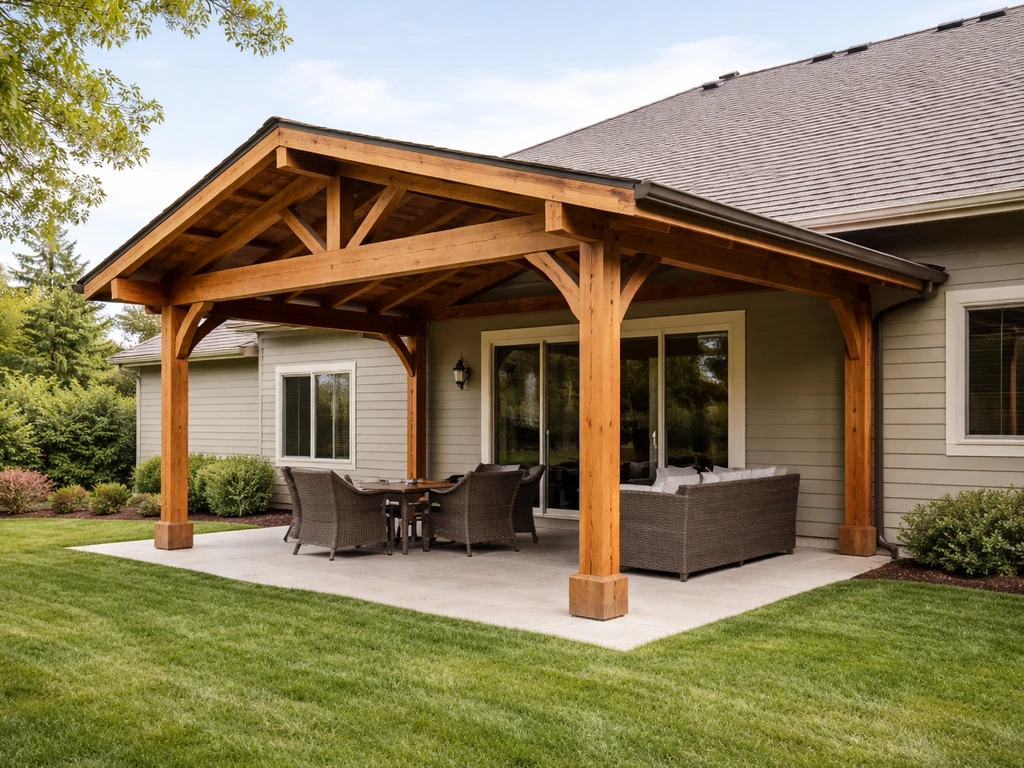
Alumawood wins on low maintenance and long-term durability, while traditional wood wins on upfront cost flexibility, DIY familiarity, and a natural look that some buyers still prefer. Neither is universally better. The right call depends on your climate, how much hands-on upkeep you want to do, and whether you plan to sell the house in the next few years. If you hate the idea of resealing a deck every two or three years and you live somewhere with heavy sun, moisture, or termites, Alumawood is almost certainly the smarter buy. If you want the real warmth of natural wood and you're willing to maintain it, a pressure-treated wood structure can look great and last decades.
Alumawood vs Wood Patio: Costs, Maintenance, Lifespan

Miles Hart
5 Jul 2026
What Alumawood actually is (it's not vinyl)
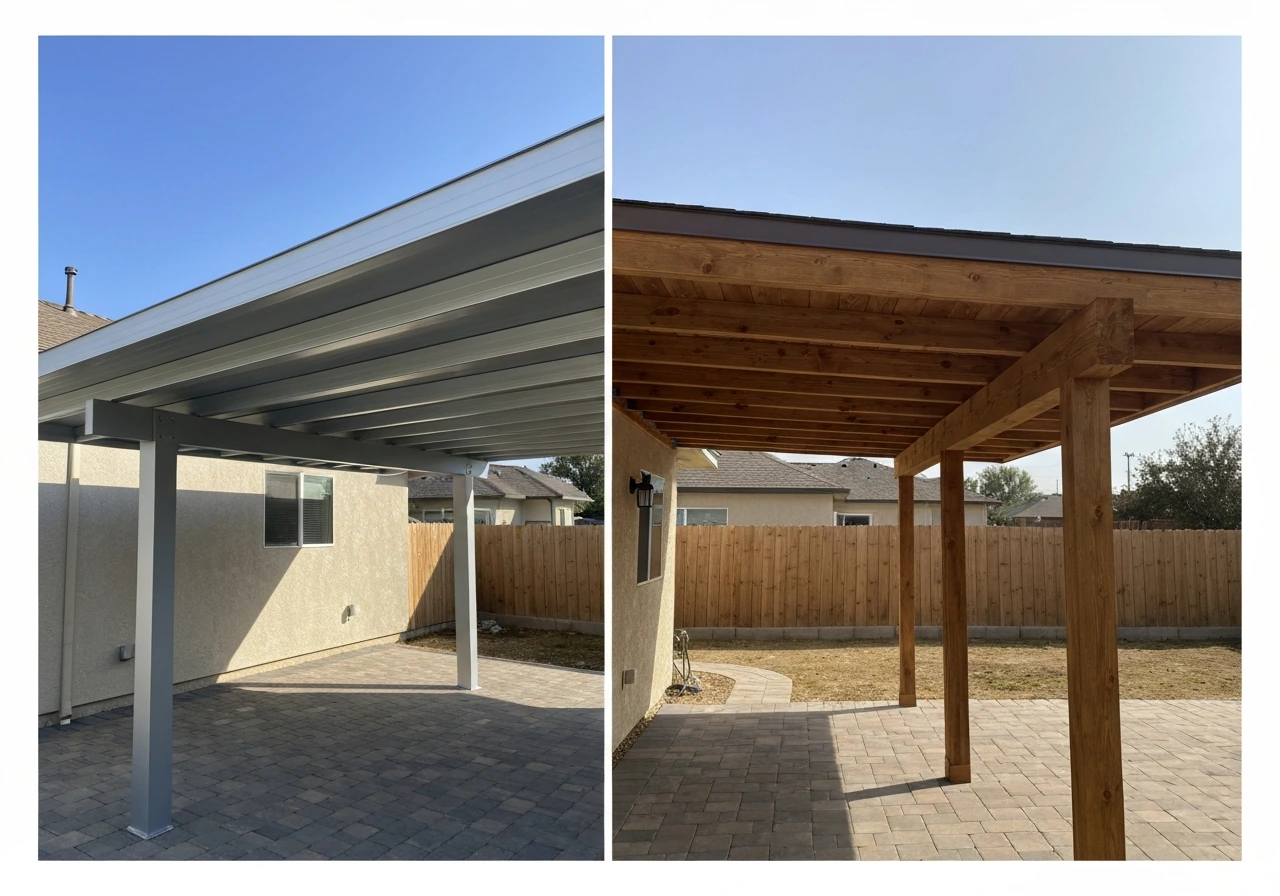
Alumawood is a brand name from Amerimax that has become a generic term in much the same way people say Kleenex for tissue. The structure is aluminum, not wood and not vinyl. Specifically, it uses extruded aluminum beams, posts, and roofing panels with a baked-on finish that mimics the look of painted or stained wood grain. Some people see "faux wood" and assume it must be vinyl, but Alumawood is a fully metal system. That distinction matters because aluminum behaves very differently from vinyl in heat, cold, and under structural load.
The product line includes solid-roof patio covers (insulated and non-insulated panels), lattice covers, carport kits, and awning systems. Amerimax sells pre-cut kit versions that are designed for DIY installation, which is part of the appeal. The kits come with the aluminum framing, roofing panels, and hardware already sized. You still need to handle footings, posts, and attachment to the house, but the main components arrive ready to assemble. Amerimax backs the product with a lifetime finish warranty for the original purchaser, covering splitting, chipping, peeling, flaking, and blistering under normal wear conditions. That warranty is described as transferable, which matters if you sell the house.
Alumawood is engineered to meet building code requirements. ICC-ES evaluation reports (ESR-1398P and ESR-2560) document compliance with the 2021 IBC and IRC, and describe the structural, water penetration, and wind uplift testing the system has passed under ICC-ES AC340. That means when you pull a permit, you have engineering documentation to hand to the inspector rather than starting from scratch with a custom wood design.
What a wood patio cover actually involves
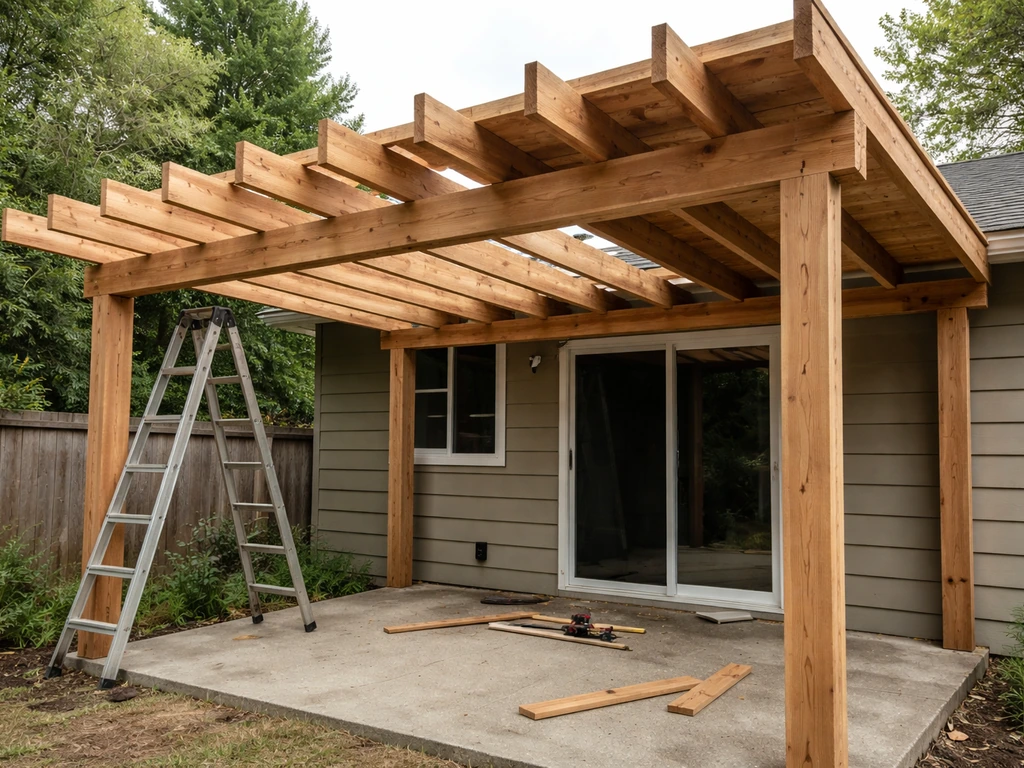
Wood patio structures cover a wide range of builds: a simple pergola or shade structure made from rough-sawn cedar, a solid-roof patio cover framed with dimensional lumber, a full deck platform with a covered overhead, or a freestanding pavilion. Wood patio covers are often called by simple terms like a wooden patio cover or wood pergola, depending on the style. The material choices matter a lot here. Pressure-treated pine is the most common choice for structural framing because it resists rot and insect damage. Cedar and redwood are popular for visible surfaces because they're naturally rot-resistant and look better unpainted. Composite decking is worth mentioning here as a surface option, though the framing underneath is almost always still wood.
For any wood patio structure that's exposed to weather, the AWPA Use Category system guides what kind of pressure-treated lumber you need. Above-ground exposed framing (UC3B) has lower chemical retention requirements than ground-contact members (UC4A for general use, UC4B for heavy-duty). If a post sits in a concrete footing or touches the ground, it needs UC4A or better. Getting the wrong treatment level is a common DIY mistake that shortens the structure's life significantly.
Fasteners are another pitfall: copper-based preservatives used in modern treated lumber react with standard zinc nails, so you need hot-dipped galvanized, stainless steel, or specifically rated fasteners throughout. If you're wondering do i need pressure treated wood for a patio cover, start by matching the treatment to where each member sits, especially for any post in concrete or touching the ground pressure-treated lumber.
Wood fits best in projects where you want maximum design flexibility, where the natural grain and texture matter to you, where you're comfortable with periodic maintenance, or where a contractor is quoting the job at a price that makes wood significantly more cost-effective than an aluminum system. It's also the dominant choice in regions with mild, dry climates where rot and termite pressure are lower.
Cost: upfront, maintenance, and over 20 years
Installed prices for both options overlap more than most people expect. Alumawood patio covers run roughly $18 to $55 per square foot installed, depending on the region, the product line (lattice vs. solid insulated panels), and whether you're doing part of the work yourself. A basic lattice Alumawood cover over a 200-square-foot patio might come in around $3,600 to $5,000, while a solid insulated system over the same footprint can push $8,000 to $11,000.
Wood patio covers land in a similar range: roughly $20 to $60 per square foot installed, with the variation driven by wood species, roof type, and local labor costs. If you're deciding between a wood patio cover and aluminum, the upfront sticker price is only part of the story wood patio covers land in a similar range.
Where the numbers really diverge is over time. A wood patio cover needs sealing or staining roughly every one to three years depending on your climate, sun exposure, and the specific product you use. Each round costs $200 to $600 in materials for a mid-size structure, plus time or a contractor fee. Repairs for cracked boards, rotted posts, or warped framing add up. Alumawood's maintenance cost is closer to zero for the finish itself. You clean it periodically with mild soap and water, address any caulk gaps, and deal with occasional oxidation on the aluminum surface if the finish degrades. That's a meaningful cost and time difference over a 15 to 20-year span.
| Factor | Alumawood | Wood (Pressure-Treated/Cedar) |
|---|---|---|
| Installed cost (per sq ft) | $18–$55 | $20–$60 |
| DIY kit availability | Yes (pre-cut kits from Amerimax) | Yes (standard framing materials) |
| Sealing/staining | Not required | Every 1–3 years |
| Estimated 20-year maintenance cost | Low ($200–$600 total) | Moderate to high ($2,000–$6,000+) |
| Expected lifespan (maintained) | 30+ years | 20–30 years with consistent upkeep |
| Warranty | Lifetime finish (original purchaser, transferable) | None (material warranty only on treated lumber) |
How each holds up in real weather
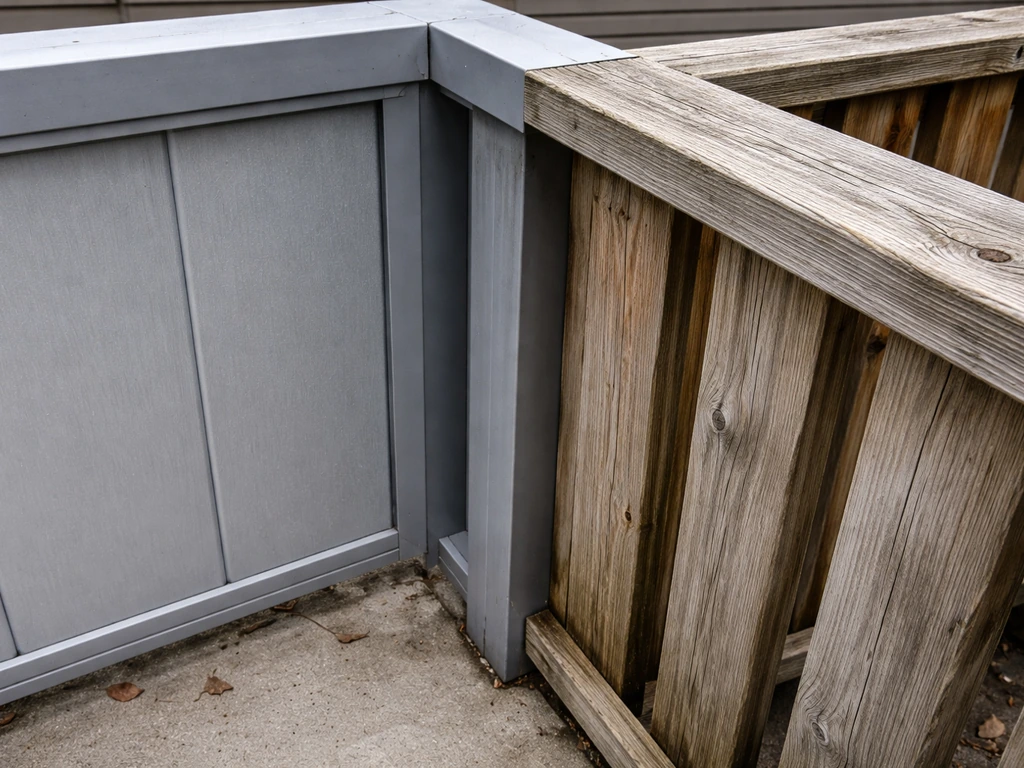
This is where Alumawood has a clear edge in most climates. Aluminum doesn't rot, it doesn't attract termites, and it doesn't warp or crack under UV exposure. The main weathering issue is finish oxidation, which is a cosmetic breakdown of the factory coating rather than structural degradation of the metal itself. A chalky white film on older aluminum is the finish oxidizing, not the aluminum corroding through. It can be cleaned and, if needed, repainted. The structural aluminum underneath stays solid.
Pressure-treated wood holds up well when it's properly specified and maintained, but it has real vulnerabilities. Even UC3B-rated treated lumber can experience surface checking, splitting, and warping as it cycles through wet and dry seasons. Ground-contact posts without the right UC4A or UC4B rating will begin to decay at the base, often invisibly, until they fail. Termites are a legitimate concern in the Southeast, Gulf Coast, and parts of California. US Forest Service long-term durability research confirms that pressure-treated wood performs significantly better than untreated wood in exposed conditions, but treatment doesn't make it immune. Maintenance frequency is the primary driver of whether a wood structure reaches 20 or 30 years versus needing major repairs at 10.
- Rot: Alumawood is immune. Wood needs proper treatment grade and sealing to resist it.
- Termites: Alumawood is immune. Wood requires appropriate preservative treatment and sometimes additional pest management.
- Warping/cracking: Alumawood won't warp. Pressure-treated wood can split and check even when maintained.
- UV/fade: Alumawood's baked finish resists fading significantly longer than painted wood. Wood needs periodic re-coating.
- Rust/corrosion: Alumawood won't rust. Fasteners in wood structures can corrode if not properly specified for treated lumber.
Maintenance reality check for each option
Alumawood's care routine is genuinely minimal. Amerimax's care instructions call for periodic washing with mild soap and water. For stubborn contaminants like tar or caulking residue, mineral spirits can be used in reasonable amounts. The main thing you're protecting is the factory finish, so avoiding abrasive cleaners and harsh chemicals is the primary rule. Caulk joints at the house connection should be inspected annually and re-caulked if you see gaps or cracking. That's about it. The finish warranty requires that you follow the care instructions, so it's worth keeping a copy on file.
Wood is a different story. Pressure-treated lumber should be allowed to dry out after installation before you seal it, because trapping moisture under a coating leads to peeling and doesn't let the preservative fully cure. Once dry, staining or sealing annually or every two to three years is the standard cadence depending on exposure.
You're also looking at occasional board replacement when splitting or rot appears, fastener inspection for corrosion (especially if you used ACQ-treated lumber and didn't specify corrosion-rated hardware), and repainting or restaining any painted surfaces on a similar cycle. National Deck Authority recommends inspecting fasteners that contact ACQ-treated lumber for corrosion and replacing them with corrosion-rated hardware such as stainless or properly specified galvanized types fastener inspection for corrosion (especially if you used ACQ-treated lumber and didn't specify corrosion-rated hardware).
None of this is technically difficult, but it adds up in time and cost.
DIY difficulty comparison
Alumawood kit systems are designed for homeowner installation. The pre-cut components mean you're assembling rather than cutting and sizing. The challenge is the footing and post work, the ledger attachment to the house, and getting the roof slope right. Alumawood systems require a minimum slope of roughly 1/4 inch per foot toward the gutter/downspout for proper drainage. Getting that pitch wrong leads to water pooling, which can work back under flashings and cause leaks at the house connection. That's the most common installation complaint: leaks at the fascia or roofline where the cover meets the home.
Wood builds have a higher DIY skill ceiling but are more familiar to most handy homeowners. You can find plans, permit drawings, and material lists easily. The framing logic is conventional carpentry. The challenge is specifying the right treatment grades, using the right fasteners for treated lumber, and passing inspection.
If you're comfortable with a circular saw and basic framing, a simple wood pergola or patio cover is a reasonable DIY project. If you’re asking, “can a patio be made of wood,” the answer is yes, but the durability depends heavily on treatment and ongoing maintenance. A structural solid-roof cover attached to the house is more complex and usually benefits from at least a contractor consultation on the ledger and footing design.
Appearance, customization, and how each ages
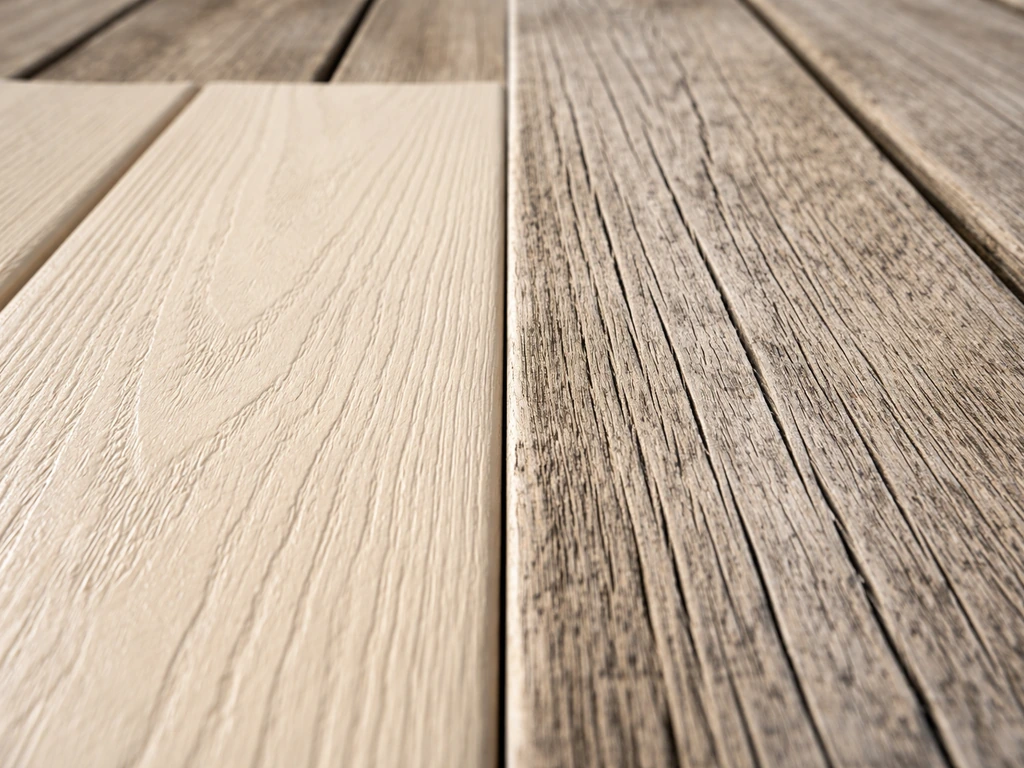
Alumawood comes in a range of painted colors and finishes designed to mimic wood grain. The most common options are white, beige, tan, and wood-tone browns. The texture reads as wood from a distance but up close it's clearly painted metal. For most buyers and homeowners, that's fine. The finish stays consistent over time without the graying and staining that natural wood develops. If you want to change the color later, you can repaint aluminum patio covers, but it requires proper prep and paint adhesion is more involved than painting wood.
Wood has a clear advantage here for people who want genuine natural character. The grain, texture, and warmth of real cedar or redwood is something aluminum can approximate but not replicate. Painted wood gives you maximum color flexibility at installation. Natural-finish wood will gray and silver over time if left unsealed, which some people love and others don't. With consistent staining, you can maintain a rich, warm tone for decades. Wood also gives you more architectural flexibility: curved elements, built-in planters, custom beam sizes, and decorative details that are harder to achieve in an aluminum kit system.
Comfort under the cover: shade, heat, noise, and airflow
A solid Alumawood insulated panel cover does an excellent job blocking sun and heat. The insulated panels have a reflective core that reduces heat transfer compared to a single-layer metal roof. In Arizona or Southern California where a patio cover is essentially a necessity for summer use, this matters a lot. The tradeoff is noise: rain on a metal roof is noticeably louder than rain on a wood-frame cover with a shingle or translucent panel roof. If you live somewhere with frequent rain and you use the patio during storms, that's worth thinking about.
Lattice-style covers (both Alumawood lattice and wood lattice pergolas) sacrifice shade depth for airflow and a lighter feel. They let in filtered light and allow heat to rise out rather than building up underneath. A solid wood-frame cover with a built-up roof behaves similarly to the Alumawood solid panel in terms of shade and heat reduction, but wood doesn't have the same reflective properties unless you add a radiant barrier. Drainage on both systems depends on slope and gutter placement. For Alumawood, the built-in gutter system handles this if installed with adequate pitch. For wood roofs, standard roofing drainage practices apply.
Home value, curb appeal, and permits
Both a well-built Alumawood cover and a quality wood patio cover add usable outdoor living space, which buyers in most markets respond to positively. Alumawood has an advantage in markets where buyers are specifically looking for low-maintenance outdoor spaces, particularly in the Sun Belt. The transferable lifetime finish warranty is a tangible selling point you can put in front of a buyer. A wood structure in excellent condition reads as high quality to many buyers, but it can also raise questions about maintenance history. A wood cover that's obviously been neglected, with peeling paint and gray boards, actively hurts your presentation.
Permits matter for both options and you should not skip them. Most jurisdictions require a permit for any attached patio cover or freestanding structure above a certain size (commonly 120 to 200 square feet, but your local AHJ sets the threshold). Alumawood has an advantage here because the ICC-ES reports provide pre-engineered documentation that satisfies many permit requirements without custom calculations. For a wood cover, you'll typically need to submit scaled construction drawings showing lumber species, member sizes, spacing, footing details, and ledger attachment. A jurisdiction like Douglas County, for example, requires structural framing plans and caisson footing details as standard submittals. In both cases, check setback requirements with your local planning department before you design anything.
Questions to ask your contractor before signing anything
- Are you pulling the permit, or do I need to apply? Who handles the engineering documents?
- What footing depth and diameter are you using, and is that based on a soil report or a standard local assumption?
- For Alumawood: what's the roof slope, and where are the downspouts going? How is the ledger flashed at the house?
- For wood: what treatment grade (UC category) are you specifying for posts, beams, and ground-contact members? What fasteners?
- What's the maintenance schedule I should follow after installation, and what voids the warranty?
- Do you have ICC-ES documentation (for Alumawood) or stamped engineering drawings (for wood) if my inspector asks?
What to measure and check before you start
- Measure the usable patio footprint you want to cover, including any setback from property lines or easements.
- Note the height of your existing eave or fascia where an attached cover would connect. This sets your ceiling height.
- Check local zoning for setback rules, height limits, and whether a freestanding vs. attached structure has different requirements.
- Identify where downspouts would drain without causing erosion or drainage issues against your foundation.
- Look at your soil: expansive clay soils require deeper footings and may need a soils report for permit approval.
- Get at least three bids and ask each contractor to specify materials, treatment grades, and fastener types in writing.
Which one should you actually choose
If you're in a hot, humid, or termite-active climate, want to minimize ongoing maintenance, and are comfortable with an aluminum system that looks like wood but isn't, Alumawood is the stronger choice for most homeowners. The lifetime finish warranty, pre-engineered permit documentation, and near-zero maintenance schedule are real advantages that compound over time. The installed price is comparable to a quality wood build, and the long-term lifecycle cost is lower.
If you want the real look and feel of natural wood, have a dry mild climate, are comfortable with a maintenance routine, or are doing a fully custom architectural build that a kit system can't accommodate, wood is a perfectly solid choice. A well-built, properly maintained wood patio cover can last 25 to 30 years and look better than most aluminum systems to buyers who appreciate natural materials. The key is specifying the right treatment grades, using the right fasteners, and actually doing the maintenance on schedule. Skipping those steps is what turns a wood patio from an asset into a liability.
One last thing worth knowing: these two aren't always mutually exclusive. Some homeowners use Alumawood for the roof cover (for weatherproofing and low maintenance) and incorporate natural wood elements in the posts, beams, or decking underneath for aesthetics. That hybrid approach can get you the best of both and is worth discussing with a contractor if the look of all-aluminum doesn't appeal to you.
FAQ
Can I repaint or restain an Alumawood cover if the color no longer matches?
Yes, but you should treat it as a re-coat project, not a simple touch-up. Aluminum needs cleaning and proper prep to remove chalky oxidation before you apply new paint or coating, otherwise adhesion can fail and you will see premature peeling in sun-exposed areas.
Which option is more likely to leak at the house connection, and what causes it?
If you have roof panels, membranes, or any transition flashing between the patio cover and the house, the correct underlayment and flashing detail matters more than the material choice. With Alumawood, leaks usually trace back to incorrect slope or a poor ledger connection, so verify the 1/4 inch per foot pitch and inspect all seams after installation.
Do I always need a permit for a wood pergola or freestanding patio cover?
It depends on what “attached” means locally. Many areas treat attached patio covers differently from fully freestanding pergolas, and setbacks and height limits can change whether a permit is required. Even when permits are not required, engineering stamped details may still be needed when you attach to the house.
What climate factors should I weigh first when choosing alumawood vs wood?
Your best “climate checklist” is sun and moisture patterns. For heavy sun, prioritize UV-stable finish systems and proper drainage. For humid or coastal areas, plan for more frequent cleaning and pay closer attention to any sealants at wall and ledger joints. For termites, treatment grade and inspection cadence are critical even with pressure-treated lumber.
Will pressure-treated wood always look “good” for the full life of the patio cover?
With wood, yes, because treated lumber still reacts to wet-dry cycling. Expect end grain checks and surface splits in many climates, and plan for occasional board-level replacement. The key is catching problems early, especially around posts and any member that sits close to sprinklers or standing water.
What’s the most common mistake with treated lumber, fasteners, or treatment grades for patio covers?
Don’t assume “pressure-treated” is the same across the whole frame. Posts in contact with concrete or soil typically require a higher Use Category (UC4A/UC4B), and every fastener must be compatible with the chemicals in the treated wood to avoid corrosion. Mixing the wrong grade or using standard nails is one of the fastest ways to shorten service life.
How can I verify the roof pitch and drainage are correct once installed?
Add a simple drainage test. After installation, confirm the water path to the gutter or downspout, then look for water pooling anywhere under the roofline during a rain event. With Alumawood, a pitch mistake is a common root cause, but with wood you can also get pooling from framing irregularities or an inconsistent roof build-up.
If I choose composite decking on a wood patio, does that change the maintenance comparison?
It’s a practical question, because composite decking often sits on wood framing. Composite surfaces can reduce deck-top maintenance, but the structure underneath still requires the same wood treatment-grade decisions, fastener compatibility, and sealant inspections.
Does resale value differ between alumawood and a maintained wood patio cover?
Yes, if your goal is the ability to sell quickly and confidently. A well-documented Alumawood installation with the care instructions kept on file can reduce buyer concerns, especially when you can show transferable warranty coverage. For wood, buyers may discount value if paint is peeling or if there is visible rot at post bases.
Can I mix Alumawood and natural wood (for example, wood posts) without losing performance?
Usually, but you should plan it as a two-system approach. Alumawood is designed as a kit system with its own engineered components, while wood structural members around it may still require correct treatment grades and compatible fasteners. A hybrid build can work well for aesthetics, but you should confirm connections and flashing details with a contractor to prevent hidden water paths.
Next Article
What Do You Call a Wooden Patio Cover? Names and Options
Learn common names for a wooden patio cover and how to distinguish it from pergolas, awnings, decks and gazebos.